BookBrief
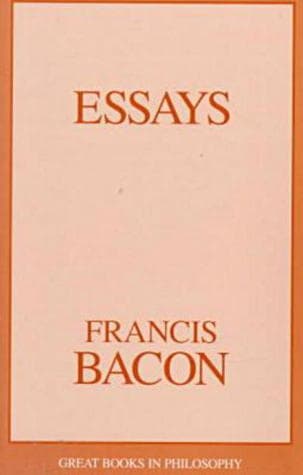
Essays cover
Archivist's Choice

Essays

Francis Bacon (1618)

Genre

Politics / History / Science / Philosophy

Reading Time

180 min

Key Themes

See below

Track Your Reading

Sign in to track this book

Francis Bacon's 'Essays' distills the cunning pragmatism of a Renaissance statesman into a glittering mosaic of human nature, from the architecture of gardens to the treachery of ambition.

Core Idea

Francis Bacon's 'Essays' collects concise, aphoristic meditations on human nature, public life, and moral philosophy, drawing upon classical wisdom and practical observation. Bacon dissects universal themes such as truth, death, revenge, friendship, and power, offering pragmatic advice and astute psychological insights for navigating personal conduct and political affairs. The work emphasizes reason, prudence, and a clear understanding of the world's complexities, often contrasting ideal virtues with the realities of human ambition and societal dynamics.
Reading time
180 min
Difficulty
Medium
✓ Read this if...
You are interested in foundational philosophical essays, early modern political thought, or concise reflections on ethics and human behavior from a historical perspective. Also, if you appreciate dense, aphoristic prose that demands careful consideration.
✗ Skip this if...
You prefer narrative-driven non-fiction, contemporary self-help, or a highly structured, argumentative style. Readers looking for in-depth historical analysis or scientific explanation will also find this less suitable.

Core idea

The central argument and framework that powers the entire book.

Francis Bacon's 'Essays' collects concise, aphoristic meditations on human nature, public life, and moral philosophy, drawing upon classical wisdom and practical observation. Bacon dissects universal themes such as truth, death, revenge, friendship, and power, offering pragmatic advice and astute psychological insights for navigating personal conduct and political affairs. The work emphasizes reason, prudence, and a clear understanding of the world's complexities, often contrasting ideal virtues with the realities of human ambition and societal dynamics.

At a glance

Reading time

180 min

Difficulty

Medium

Read this if...

You are interested in foundational philosophical essays, early modern political thought, or concise reflections on ethics and human behavior from a historical perspective. Also, if you appreciate dense, aphoristic prose that demands careful consideration.

Skip this if...

You prefer narrative-driven non-fiction, contemporary self-help, or a highly structured, argumentative style. Readers looking for in-depth historical analysis or scientific explanation will also find this less suitable.

Key Takeaways

1

Of Truth: The Peril of Preferring Lies

Truth is a 'naked and open day-light' often avoided for the 'twilight' of falsehood.

Quote

A mixture of a lie doth ever add pleasure.

Bacon argues that humanity often shies away from absolute truth, finding comfort and even pleasure in a 'mixture of a lie.' He posits that people prefer the 'twilight' of falsehood to the 'naked and open day-light' of truth because truth can be burdensome and restrictive, while lies offer a sense of freedom, imagination, or convenience. This is not just about malice; it is about the human tendency to embellish, to create more agreeable realities, or to avoid harsh facts. He laments this preference, seeing it as a fundamental flaw in h...

Supporting evidence

Bacon's philosophical observation on the human inclination to embrace 'fables and poetical fictions' and the 'vanity of minds' that find more delight in 'deceit and cozenage' than in the unvarnished truth.

Apply this

Cultivate a rigorous self-honesty. Before acting or forming an opinion, challenge your own comfortable narratives and seek out objective facts, even if they are unpalatable. Question sources that offer overly simple or pleasing explanations.


truthdeceptionhuman-naturephilosophy
2

Of Death: A Spectacle to Be Mastered

Death's terrors are often exaggerated by imagination and the 'pomp of it', rather than its inherent pain.

Quote

Men fear death as children fear to go in the dark.

Bacon demystifies death, asserting that much of its terror stems from imagination and the ceremonial 'pomp' surrounding it, rather than the actual physical suffering. He compares the fear of death to a child's fear of the dark—an irrational, imagined dread. He observes that often, the anticipation of death is worse than the experience itself, and that many who face it do so with surprising fortitude. He suggests that a noble mind should approach death with a philosophical calm, viewing it as a natural end, and even a release. His prag...

Supporting evidence

He cites examples of ancient philosophers like Seneca, who faced death with composure, and notes how 'there is no passion in the mind of man so weak, but it masters the fear of death.'

Apply this

Practice mindfulness around the concept of mortality. Instead of avoiding thoughts of death, contemplate its naturalness. Focus on living a purposeful life, understanding that the fear of death often diminishes when one feels they have lived well.

deathmortalityfearstoicism
3

Of Simulation and Dissimulation: The Art of Concealment

The wise statesman knows when to show, when to hide, and when to pretend.

Quote

The best composition and temperature is, to have openness in fame and opinion; secrecy in habit; dissimulation in seasonable use; and a power to feign, if there be no remedy.

Bacon, ever the pragmatist, discusses the necessity and utility of concealment in human affairs, particularly in politics and leadership. He distinguishes between simulation (pretending to be what one is not) and dissimulation (hiding what one is). While acknowledging that complete openness has its virtues, he argues that a certain degree of secrecy and even artifice is essential for effective governance and personal security. He advises a nuanced approach: maintain a reputation for openness, be secretive in habits, use dissimulation ...

Supporting evidence

Bacon's analysis of how 'great persons' use these tactics to manage perceptions, protect their plans, and gain an advantage over adversaries, comparing it to the 'advantage of a mask.'

Apply this

In professional settings, understand the power of strategic communication. Not every thought needs to be voiced immediately. Learn to discern when to reveal information, when to withhold it, and how to manage expectations without being dishonest.

politicsstrategydeceptionleadershipdiplomacy
4

Of Revenge: A Wild Justice

Revenge provides a fleeting satisfaction but ultimately perpetuates a cycle of harm and disorder.

Quote

Revenge is a kind of wild justice; which the more man's nature runs to, the more ought law to weed it out.

Bacon characterizes revenge as 'wild justice,' a primal urge that, while offering a momentary sense of satisfaction, ultimately undermines order and often causes more harm than the original offense. He argues that while 'it is the more for man's nature,' it is precisely why society and law must strive to suppress it. He notes that the person who seeks revenge keeps their own wounds fresh, whereas forgiveness or ignoring the slight allows for healing. He suggests that private revenge is always inferior to public justice because it lack...

Supporting evidence

His observation that 'in taking revenge, a man is but even with his enemy; but in passing it over, he is superior.'

Apply this

When wronged, resist the immediate urge for retaliation. Instead, channel that energy into productive action, self-improvement, or seeking legitimate avenues of redress. Understand that true power lies in moving beyond the offense.

justicerevengeethicslawforgiveness
5

Of Adversity: The True Test of Virtue

Prosperity reveals vices, but adversity reveals virtues and provides fertile ground for growth.

Quote

Prosperity doth best discover vice, but adversity doth best discover virtue.

Bacon presents a compelling argument for the power of adversity. He contends that while prosperity might expose a person's weaknesses and vices (such as arrogance or complacency), true virtue, resilience, and strength of character are revealed and forged in the face of hardship. He views adversity not as a curse, but as a crucible that refines the soul, much like fire refines gold. He suggests that the 'virtues of prosperity are noble,' but the 'virtues of adversity are more admirable.' This perspective encourages a stoic acceptance o...

Supporting evidence

He draws a parallel with 'the poets' fables' where 'the olive tree, that is barren, is more durable than the vine, that bears much fruit,' symbolizing enduring strength forged in hardship.

Apply this

Reframe challenges and setbacks as opportunities for growth. Instead of despairing during difficult times, actively seek lessons and develop new strengths. Embrace the discomfort as a necessary part of becoming a more capable and virtuous individual.

adversityresiliencevirtuegrowthstoicism
6

Of Empire: The Burdens of Greatness

Rulers of empires face a unique set of anxieties, requiring constant vigilance and difficult compromises.

Quote

It is a miserable state of mind to have few things to desire, and many things to fear.

Bacon offers a stark, unromanticized view of the life of a ruler, particularly one of an empire. He emphasizes that despite outward appearances of power and luxury, such individuals often live in a state of anxiety, having 'few things to desire' (as most desires are already met) but 'many things to fear.' These fears include internal rebellions, external threats, the loyalty of subordinates, and the judgment of history. He details the constant need for vigilance, strategic alliances, and the necessity of maintaining power through forc...

Supporting evidence

He discusses the 'four pillars of empire': religion, justice, counsel, and treasure, and the constant balancing act required to maintain them, citing examples of historical emperors and their challenges.

Apply this

Understand that positions of great power come with immense responsibility and often significant personal sacrifice. Before aspiring to high leadership, reflect on the hidden burdens and the necessary compromises that come with such roles.

leadershippowergovernancepoliticsempire
7

Of Friendship: The Antidote to Solitude

True friendship is essential for mental health, providing counsel, emotional release, and a shared burden.

Quote

A principal fruit of friendship is the ease and discharge of the fullness and swellings of the heart, which passions of all kinds do cause and induce.

Bacon extols the benefits of true friendship, positioning it as an indispensable element for a fulfilling and mentally healthy life. He identifies three main 'fruits' of friendship: the emotional relief gained from sharing one's thoughts and passions, the clarity and wisdom derived from honest counsel, and the ability to distribute and lighten one's burdens through a trusted companion. He argues that without a 'true and faithful friend,' one's heart becomes 'a kind of grave' for unexpressed thoughts and emotions, leading to internal t...

Supporting evidence

He illustrates the 'purgation of the affections' that happens when one shares their heart, comparing it to 'spiritual counsel' and emphasizing the 'double life' one gains through a friend's perspectives and actions.

Apply this

Actively cultivate and nurture deep, meaningful friendships. Prioritize spending time with those you trust, practice active listening, and be willing to share your vulnerabilities and seek honest feedback. Recognize friendship as a cornerstone of well-being.

friendshipwell-beingemotionsrelationshipsmental-health
8

Of Studies: For Delight, Ornament, and Ability

Studies serve practical purposes, enhancing pleasure, communication, and judgment, but must be balanced with experience.

Quote

Studies serve for delight, for ornament, and for ability.

Bacon outlines the utility of 'studies' (reading, learning, contemplation). He categorizes their benefits into three primary areas: providing delight in solitude, serving as an ornament in discourse and communication, and enhancing one's ability for judgment and the disposition of business. He cautions against extremism, warning against studying too much for ostentation, using knowledge solely for argument, or becoming overly reliant on rules. Crucially, he stresses that while studies are vital, they must be tempered and perfected by ...

Supporting evidence

His famous dictum: 'Reading maketh a full man; conference a ready man; and writing an exact man.' He also notes how different types of books (history, poetry, mathematics) cure specific 'diseases of the mind.'

Apply this

Engage in continuous learning, but always seek to apply knowledge practically. Don't just consume information; discuss it, write about it, and test it against real-world scenarios. Balance academic pursuits with hands-on experience and critical thinking.

educationlearningknowledgewisdomexperience
9

Of Innovations: The Peril of Reckless Change

Innovation is necessary, but must be approached with caution, respecting tradition and anticipating consequences.

Quote

It were good, therefore, that men in their innovations would follow the example of time itself; which indeed innovateth greatly, but quietly, and by degrees scarce to be perceived.

Bacon, despite his reputation as a champion of scientific advancement, offers a conservative view on societal and political innovations. He advocates for a gradual, almost imperceptible approach to change, mirroring the slow evolution of nature itself. He warns against the dangers of rapid, radical alterations, which can destabilize society and lead to unforeseen negative consequences. He suggests that reforms should address genuine grievances, be introduced incrementally, and respect existing customs and traditions as much as possibl...

Supporting evidence

He uses the analogy of 'time itself' which 'innovateth greatly, but quietly, and by degrees scarce to be perceived,' suggesting that human innovation should emulate this natural progression.

Apply this

When proposing or implementing significant changes, whether in an organization or personal life, adopt a phased approach. Communicate clearly, involve stakeholders, and allow for adaptation periods. Avoid drastic overhauls that could create instability.

innovationchangetraditionpoliticsreform
10

Of Cunning: The Shadow of Wisdom

Cunning is a lesser, often deceptive, form of wisdom, effective in the short term but lacking true depth.

Quote

Cunning is a sinister or left-handed wisdom.

Bacon dissects 'cunning' as a distinct, yet inferior, quality to true wisdom. He describes it as a 'sinister or left-handed wisdom'—a cleverness focused on immediate, self-serving advantage, often through manipulation or indirect means, rather than through broad understanding and foresight. Cunning individuals are adept at navigating specific situations, exploiting weaknesses, and achieving their goals through shrewd, often underhanded, tactics. However, Bacon implies that cunning lacks the ethical foundation and long-term vision of g...

Supporting evidence

He provides examples of cunning tactics, such as asking questions to gather information without revealing one's own hand, or creating diversions. He contrasts this with 'wisdom' which 'is open, and strikes with the direct beam.'

Apply this

Be aware of cunning tactics in others and avoid employing them yourself. While strategic thinking is valuable, prioritize transparency, integrity, and long-term relationships over short-term manipulative gains. Seek to develop genuine wisdom, not just cleverness.

wisdomcunningethicsmanipulationstrategy

Critical analysis

Notable Quotes

Men fear Death as children fear to go in the dark; and as that natural fear in children is increased with tales, so is the same fear in men with tales of the old wives and effeminate fables.

From the essay 'Of Death,' Bacon reflects on the human fear of mortality.

A man that is young in years may be old in hours, if he have lost no time.

From the essay 'Of Dispatch,' Bacon discusses efficiency and the value of time.

Revenge is a kind of wild justice; which the more man's nature runs to, the more ought law to weed it out.

From the essay 'Of Revenge,' Bacon considers the nature and societal implications of revenge.

For a lie faces God, and shrinks from man.

From the essay 'Of Truth,' Bacon explores the nature of truth and falsehood.

He that hath a wife and children hath given hostages to fortune; for they are impediments to great enterprises, either of virtue or mischief.

From the essay 'Of Marriage and Single Life,' Bacon weighs the pros and cons of family life for ambitious individuals.

Reading maketh a full man; conference a ready man; and writing an exact man.

From the essay 'Of Studies,' Bacon outlines the benefits of different intellectual activities.

Certainly, custom is most perfect when it beginneth in a man's youth; this we call education, which is nothing but an early custom.

From the essay 'Of Custom and Education,' Bacon emphasizes the power of early habits and upbringing.

The greatest trust between man and man is the trust of giving counsel.

From the essay 'Of Counsel,' Bacon discusses the importance and responsibility of providing advice.

It is a strange desire to seek power and to lose liberty; or to seek power over others and to lose power over a man's self.

From the essay 'Of Great Place,' Bacon reflects on the paradoxes of seeking and holding positions of power.

Prosperity is not without many fears and distastes; and adversity is not without comforts and hopes.

From the essay 'Of Adversity,' Bacon offers a balanced view on the nature of good and bad fortune.

Suspicions amongst thoughts are like bats amongst birds, they ever fly by twilight.

From the essay 'Of Suspicion,' Bacon uses a vivid metaphor to describe the nature of suspicion.

Discretion of speech is more than eloquence; and to speak agreeably to him with whom we deal, is more than to speak in good words, or in good order.

From the essay 'Of Discourse,' Bacon highlights the importance of adapting one's speech to the audience and situation.

God Almighty first planted a Garden. And indeed it is the purest of human pleasures.

From the essay 'Of Gardens,' Bacon extols the virtues and pleasures of gardening.

The arch of heaven is a glorious roof; but over-cast with clouds, if there be not a moral light.

From the essay 'Of Superstition,' Bacon suggests that without moral guidance, even the heavens can seem gloomy.

Quiz

Test Your Knowledge

Ready to see how well you understood this book? Take our interactive quiz with 10 questions.

10
Questions
~5
Minutes
?
Best Score

Key Questions (FAQ)

Francis Bacon's Essays are a collection of richly condensed observations and reflections on various aspects of human life, conduct, and society. They cover topics such as truth, death, revenge, ambition, friendship, custom, and even the ordering of gardens, offering pragmatic insights into human passions and pursuits.

About the author