BookBrief
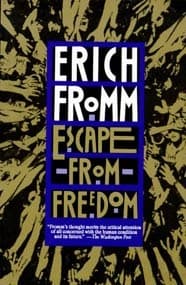
Escape from Freedom cover
Archivist's Choice

Escape from Freedom

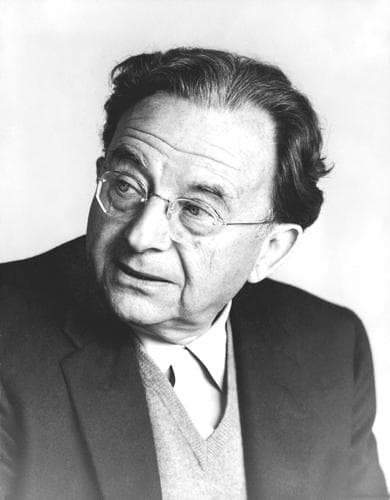
Erich Fromm (1941)

Genre

Politics / Psychology / History / Philosophy

Reading Time

300 min

Key Themes

See below

Track Your Reading

Sign in to track this book

Erich Fromm explains how the burden of modern freedom can make people surrender their independence to authoritarianism.

Core Idea

Erich Fromm argues that modern society has freed people from many old constraints, but this 'freedom from' has also created isolation, anxiety, and powerlessness. Faced with the responsibility of this new independence, many people seek to escape freedom. They do this by giving up their individuality to authoritarian systems, conforming to societal norms, or engaging in destructive acts. Fromm says that true freedom, or 'freedom to,' is not just the absence of external authority. It is the spontaneous activity of a whole person, achieved through love and productive work, which allows people to connect with the world while keeping their unique self.
Reading time
300 min
Difficulty
Hard
✓ Read this if...
You are interested in the psychological underpinnings of totalitarianism, the existential challenges of modern freedom, or the interplay between individual psychology and societal structures.
✗ Skip this if...
You are looking for a light read, prefer empirical psychology over philosophical and psychoanalytic inquiry, or are uninterested in historical analyses of social and political phenomena.

Core idea

The central argument and framework that powers the entire book.

Erich Fromm argues that modern society has freed people from many old constraints, but this 'freedom from' has also created isolation, anxiety, and powerlessness. Faced with the responsibility of this new independence, many people seek to escape freedom. They do this by giving up their individuality to authoritarian systems, conforming to societal norms, or engaging in destructive acts. Fromm says that true freedom, or 'freedom to,' is not just the absence of external authority. It is the spontaneous activity of a whole person, achieved through love and productive work, which allows people to connect with the world while keeping their unique self.

At a glance

Reading time

300 min

Difficulty

Hard

Read this if...

You are interested in the psychological underpinnings of totalitarianism, the existential challenges of modern freedom, or the interplay between individual psychology and societal structures.

Skip this if...

You are looking for a light read, prefer empirical psychology over philosophical and psychoanalytic inquiry, or are uninterested in historical analyses of social and political phenomena.

Key Takeaways

1

The Burden of Freedom

Freedom, while liberating, also brings isolation and anxiety, prompting an escape.

Quote

The more the individual becomes free from the ties of primitive society, the more he is confronted with the problem of himself and the more he is forced to find a new relatedness to the world.

Fromm argues that the historical move towards individual freedom, from feudalism to modern democracy, has not been only positive for everyone. It freed people from oppressive social structures and gave them independence, but it also took away the security and belonging those structures provided. This new independence creates isolation and powerlessness. People, no longer tied to tradition or a set role, must face the world alone, responsible for their own destiny. This intense psychological burden often becomes too much, leading peopl...

Supporting evidence

Fromm traces the historical development from medieval society, where individuals were bound by clear social roles and religious dogma, to the Renaissance and Reformation, which emphasized individual reason and conscience. He highlights how this shift, while liberating, also introduced a new kind of existential insecurity.

Apply this

Recognize that the desire for certainty and belonging is a fundamental human need. When advocating for greater freedom, also consider how to foster communities and support systems that mitigate the isolating effects of individualism.

alienationindividualismexistential-anxiety
2

Mechanisms of Escape

People escape freedom through authoritarianism, destructiveness, and automaton conformity.

Quote

The more an individual has lost his self, in the sense of the spontaneity of his total personality, the more he tries to compensate for this loss by striving for power or by submitting to others.

Fromm identifies three main 'mechanisms of escape' from the burden of freedom. The first is authoritarianism, where people give up their independence to a leader or a system, finding security in submission or by controlling others. The second is destructiveness, an attempt to remove the world or others to lessen feelings of powerlessness, often appearing as violence or hatred. The third, and perhaps most harmful, is automaton conformity. Here, people adopt the personality and beliefs their culture dictates, becoming like million...

Supporting evidence

Fromm extensively analyzes the rise of Nazism and Fascism as prime examples of authoritarian escape, where millions willingly surrendered their freedom for the perceived security and belonging offered by a powerful leader and ideology. He also discusses the subtle conformity pervasive in democratic societies.

Apply this

Be vigilant against the subtle pressures to conform to societal norms and expectations. Cultivate critical thinking and self-awareness to resist the urge to surrender personal autonomy, even for the sake of fitting in or perceived safety.

authoritarianismconformitydestructivenesssubmission
3

The Allure of Authoritarianism

Authoritarian systems thrive by offering an illusion of order and belonging to the anxious.

Quote

The authoritarian character worships the past. What has been, or is, has a magic quality.

Fromm explains the psychological appeal of authoritarianism. He argues that the authoritarian person, whether submissive or dominant, cannot stand alone. They want to merge with something larger than themselves, either by submitting to a powerful external force (leader, state, religion) or by having power over others. This gives a distorted sense of security and belonging, easing the burden of individual decision-making and responsibility. The authoritarian leader offers a simple worldview, clear enemies, and a promise of order. This ...

Supporting evidence

Fromm's analysis of Nazism is central here, explaining how Hitler's charismatic leadership and the Nazi party's rigid ideology provided a ready-made identity and purpose for a population feeling economically and socially dislocated after World War I and the Treaty of Versailles.

Apply this

Recognize that authoritarian tendencies are not just political ideologies but deeply rooted psychological responses to anxiety. Address the underlying anxieties of individuals and communities to prevent the fertile ground for authoritarian movements.

authoritarian-charactertotalitarianismpowersubmission
4

Freedom From vs. Freedom To

True freedom involves active self-realization, not just liberation from external constraints.

Quote

Freedom, though it has brought him independence and rationality, has made him isolated and, thereby, anxious and powerless. This isolation is unbearable and the alternative is either to escape from the burden of this freedom into new dependencies and submission, or to advance to the full realization of positive freedom.

Fromm distinguishes between 'freedom from' and 'freedom to.' 'Freedom from' means being free from external oppression, traditional ties, and restrictive authorities. This is important, but it is only part of the story. 'Freedom to' means positive freedom: the spontaneous activity of a whole, integrated person. It is the freedom to create, to love, to express oneself genuinely, and to reach one's full potential. Many societies, including democracies, provide 'freedom from' but do not develop 'freedom to,' leaving people with empty spac...

Supporting evidence

Fromm critiques modern capitalist societies, arguing that while they offer political freedoms, they often stifle genuine self-expression through consumerism, conformity pressures, and the commodification of human relationships, thereby hindering 'freedom to.'

Apply this

Actively pursue opportunities for creative expression, genuine connection, and personal growth. Encourage educational systems and cultural norms that prioritize critical thinking, empathy, and authentic self-expression over rote learning and conformity.

positive-freedomnegative-freedomself-actualizationspontaneity
5

The Role of Education and Society

Societal structures and education often inadvertently foster conformity and hinder true freedom.

Quote

Modern man lives under the illusion that he knows what he wants, while he actually wants what he is supposed to want.

Fromm critiques how modern society, despite talking about freedom, often trains people for conformity. Education systems often prioritize memorization, obedience, and fitting into set roles over critical thinking, creativity, and independent judgment. Economic systems, driven by mass production and consumption, encourage people to have standardized desires and personalities, turning them into 'automatons' who think their thoughts and feelings are their own, when they are just reflections of societal expectations. This process starts e...

Supporting evidence

Fromm discusses how modern advertising and mass media contribute to the creation of 'pseudo-needs' and 'pseudo-selves,' where individuals are encouraged to desire things and adopt personalities that are commercially beneficial or socially approved, rather than genuinely fulfilling.

Apply this

Challenge conventional educational paradigms and advocate for approaches that foster critical thinking, creativity, emotional intelligence, and self-awareness from an early age. Be mindful of media consumption and question the origins of your desires and beliefs.

socializationeducationconformitypseudo-selfconsumerism
6

Spontaneity as the Path to True Freedom

Authentic self-expression and genuine connection are the hallmarks of positive freedom.

Quote

Positive freedom consists in the spontaneous activity of the total integrated personality.

For Fromm, the answer to the anxieties of freedom is 'spontaneous activity.' This is not impulsive or illogical behavior, but the real, uninhibited expression of one's emotional, intellectual, and sensory abilities. It means loving, creating, and experiencing the world genuinely, instead of conforming to set roles or suppressing one's true self. Spontaneity allows for real connection with others and with the world, overcoming the isolation that freedom often brings. When people act spontaneously, they affirm their unique self and also...

Supporting evidence

Fromm cites examples of artistic creation, genuine love, and productive work as forms of spontaneous activity where individuals express their true selves and connect with the world in a meaningful way.

Apply this

Engage in activities that allow for genuine self-expression, whether through art, hobbies, meaningful conversations, or acts of kindness. Prioritize authentic relationships over superficial ones, allowing for vulnerability and true connection.

spontaneityauthenticitycreativityloveself-realization
7

The Psychological Roots of Totalitarianism

Totalitarianism exploits deep-seated psychological needs for security and belonging.

Quote

The most important psychological factor for the understanding of Fascism is the fact that it appeals to the deeply rooted human craving for submission and domination.

Fromm gives a psychological explanation for the rise of totalitarian regimes like Nazism. He argues that these systems do not just impose themselves through force; they gain support by appealing to specific psychological needs common in a population burdened by freedom. The economic and social problems after World War I, combined with the individualistic pressures of modern life, left many Germans feeling powerless, isolated, and anxious. Nazism offered a powerful, clear ideology, a strong leader, and a sense of collective identity an...

Supporting evidence

Fromm analyzes the characteristics of the 'authoritarian character' – individuals who are simultaneously submissive to those above them and domineering towards those below. He links this character type to the social structures that fostered Nazism.

Apply this

Understand that economic instability and social fragmentation can create psychological vulnerabilities that make populations susceptible to demagoguery and authoritarian appeals. Advocate for policies that promote economic security, social cohesion, and mental well-being.

totalitarianismnazismpsychological-vulnerabilitydemagoguery
8

The Illusion of Choice in Modern Society

Modern democracies offer many choices but often lack genuine freedom of thought and feeling.

Quote

The individual is free in the sense that he is not subject to overt authorities, but he is not free in the sense of being an individual, having his own thoughts, feelings, and will.

Fromm observes that modern democratic societies, while celebrating individual choice (e.g., consumer goods, political parties), often encourage a subtle form of conformity that weakens real freedom. People are shown many options, but the underlying values, desires, and even thoughts are often set by cultural norms, advertising, and peer pressure. This creates 'automaton conformity' where people believe they are making independent choices, but are just playing roles society has given them. The freedom to choose between different brands...

Supporting evidence

Fromm points to the emphasis on 'personality' in modern society, where individuals are encouraged to 'sell' themselves and their attributes, rather than cultivating genuine character. This commodification of self leads to a focus on surface-level traits over deep authenticity.

Apply this

Practice critical self-reflection to discern between genuinely held beliefs and desires versus those imposed by external forces. Actively seek diverse perspectives and challenge conventional wisdom to cultivate independent thought.

consumerismconformityillusion-of-choicepseudo-selfcritical-thinking
9

Love as a Solution to Isolation

Genuine, productive love offers a path to overcome isolation without sacrificing individuality.

Quote

Love is the only way to overcome the feeling of isolation, without giving up the integrity of one's own self.

In contrast to the escape mechanisms, Fromm says that genuine, productive love is the best solution to the isolation in freedom. Unlike relationships where one person controls or submits, or escape relationships based on shared anxieties, productive love means keeping one's individuality and integrity while also achieving deep union with another. It requires care, responsibility, respect, and understanding. Through this kind of love, people can go beyond their separateness without losing themselves, finding a deep sense of belonging a...

Supporting evidence

Fromm often refers to the concept of 'productive orientation,' which includes productive love, productive thinking, and productive work, all characterized by spontaneity and the full use of one's faculties.

Apply this

Cultivate relationships based on mutual respect, understanding, and personal growth, rather than dependency or control. Practice empathy and active listening to truly connect with others while maintaining your own sense of self.

productive-loveintegrityconnectionempathyindividuality
10

The Ongoing Challenge of Freedom

The struggle to embrace positive freedom is a perpetual task for individuals and societies.

Quote

The problem of freedom is not an ontological but a historical problem.

Fromm concludes that the challenge of freedom is not a static philosophical question but an ongoing historical and psychological struggle. People constantly face a choice: either to retreat from the responsibilities and anxieties of freedom into various forms of authoritarianism and conformity, or to bravely move towards 'positive freedom.' This requires continuous self-awareness, critical thinking, and developing genuine spontaneity and love. It is a never-ending process for both individuals and societies to create conditions that su...

Supporting evidence

Fromm's work was written during WWII, directly addressing the conditions that led to the rise of Nazism, demonstrating the immediate and historical relevance of his analysis of freedom's challenges.

Apply this

Remain engaged in civic life, advocating for policies and cultural shifts that support individual autonomy, critical thinking, and social justice. Continuously examine your own choices and motivations to ensure they align with genuine self-expression and not just societal pressures.

societal-progressself-awarenesshistorical-contextpolitical-psychology

Critical analysis

Notable Quotes

The problem of freedom is not an abstract philosophical problem, but a concrete human problem.

Fromm's core argument about the practical nature of freedom.

Man is not a machine that can be programmed; he is a living organism that grows and develops.

Critique of mechanistic views of humanity, emphasizing organic growth.

The more the individual is 'free' in the sense of being alone, isolated, and in danger, the more he is driven to seek submission.

Explaining the paradox of negative freedom leading to authoritarian tendencies.

Freedom, though it has brought him independence and rationality, has made him isolated and, thereby, anxious and powerless.

Describing the burden of freedom and its psychological consequences.

The authoritarian character worships the past. What has been, or is, has a magic hold over him.

Analyzing a characteristic of the authoritarian personality type.

Modern man, freed from the bonds of pre-individualistic society, has not achieved freedom in the positive sense of the realization of his individual self.

Distinguishing between negative freedom (freedom from) and positive freedom (freedom to).

The individual has to give up his individuality, to become an automaton, to be like millions of other automatons, in order to feel secure.

Discussing conformity as a means of escaping the burden of freedom.

The history of mankind is the history of man's ever-increasing individuation, but it is also the history of his ever-increasing isolation.

Summarizing the dual nature of historical progress in terms of individual development and social connection.

The quest for certainty is not a quest for truth, but for security.

Highlighting the psychological motivation behind the desire for absolute answers.

The more he is driven to escape from himself, the more he tries to become like others, to conform, to lose his self.

Elaborating on the psychological mechanisms of escape from freedom through conformity.

Freedom is not a fixed quality, but an achievement.

Emphasizing that freedom is an ongoing process and effort, not a given state.

Man's main task in life is to give birth to himself, to become what he potentially is.

Defining the core purpose of human existence as self-actualization.

Sadism and masochism are not isolated phenomena, but represent two aspects of the same fundamental drive: the urge to escape from the burden of freedom.

Connecting seemingly disparate psychological phenomena to the central theme of escaping freedom.

Only if man develops his reason and his love, if he can grasp the world in an active, productive way, can he overcome the anxiety which is the result of his isolation.

Offering a solution to the problem of isolation and anxiety through positive human faculties.

Quiz

Test Your Knowledge

Ready to see how well you understood this book? Take our interactive quiz with 10 questions.

10
Questions
~5
Minutes
?
Best Score

Key Questions (FAQ)

The central idea of 'Escape from Freedom' is that if humanity cannot cope with the inherent dangers and responsibilities of freedom, it is likely to revert to authoritarianism. Fromm argues that while democracy offers freedom, it can also lead to feelings of alienation and dehumanization, prompting individuals to seek escape from this burden.

About the author