BookBrief
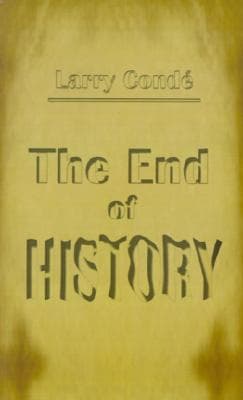
End of History cover
Archivist's Choice

End of History

Larry Conde (2001)

Genre

General

Reading Time

12 Minutes

Key Themes

See below

Track Your Reading

Sign in to track this book

Larry Conde's "End of History" argues that modern society's abandonment of historical meaning in favor of political correctness threatens Western Civilization, urging a confrontation with history's implications for our lives and culture.

Core Idea

Larry Conde's "End of History" posits that the advent of liberal democracy and market capitalism, particularly after the Cold War, marks the final stage of humanity's ideological evolution. Drawing parallels with Francis Fukuyama's original thesis, Conde argues that the fundamental questions of political and economic organization have been definitively answered, leading to a global convergence towards this model. He asserts that while challenges and regional conflicts may persist, they are not indicative of a viable alternative ideological system, but rather transitional frictions within an increasingly homogenized global order. Conde further elaborates that this 'end' does not imply an end to events, but rather an end to the historical dialectic of competing major ideologies. He suggests that future struggles will primarily revolve around the implementation, refinement, and expansion of liberal democratic principles, rather than a fundamental questioning of the system itself. The book explores the implications of this ideological victory for international relations, economic development, and cultural identity in a world where the 'big questions' have, in his view, already been settled.
Difficulty
Medium

Core idea

The central argument and framework that powers the entire book.

Larry Conde's "End of History" posits that the advent of liberal democracy and market capitalism, particularly after the Cold War, marks the final stage of humanity's ideological evolution. Drawing parallels with Francis Fukuyama's original thesis, Conde argues that the fundamental questions of political and economic organization have been definitively answered, leading to a global convergence towards this model. He asserts that while challenges and regional conflicts may persist, they are not indicative of a viable alternative ideological system, but rather transitional frictions within an increasingly homogenized global order. Conde further elaborates that this 'end' does not imply an end to events, but rather an end to the historical dialectic of competing major ideologies. He suggests that future struggles will primarily revolve around the implementation, refinement, and expansion of liberal democratic principles, rather than a fundamental questioning of the system itself. The book explores the implications of this ideological victory for international relations, economic development, and cultural identity in a world where the 'big questions' have, in his view, already been settled.

At a glance

Difficulty

Medium

Key Takeaways

1

The Peril of Presentism in Historiography

How trivializing history for contemporary political correctness erodes its fundamental meaning.

Quote

If history has no meaning, then it is proper for history to be revised according to the current politically correct point of view. Yet, if history has meaning, it must be confronted, for the meaning of history conclusively affects our lives.

Conde argues that a danger of the 21st century is the tendency to revise history not to deepen understanding, but to align it with current fashionable or politically correct narratives. This approach, he contends, strips history of its meaning, transforming it from a record of human experience into a tool for contemporary agendas. When history is viewed as meaningless, its revision becomes an exercise in ideological conformity, rather than a pursuit of truth. This trivialization prevents societies from learning from the past, leaving ...

Supporting evidence

Conde's observation of 'revisionist historians rewriting history to suit the purposes of various pressure groups' is central to this point, highlighting the politicization of historical narratives.

Apply this

To counter this, individuals should seek out diverse historical perspectives, engage with primary sources, and critically evaluate historical interpretations, especially those that align too neatly with current political trends. Support historians committed to objective inquiry, even when their findings challenge prevailing orthodoxies.


2

Relativism's Assault on Western Standards

The erosion of foundational Western Civilization standards by pervasive moral and intellectual relativism.

Quote

The standards that have upheld Western Civilization have given way to relativism.

Conde posits that the standards and values that historically underpinned Western Civilization are being dismantled by the rise of relativism. This philosophical stance, which denies absolute truths or universal moral principles, leads to a state where all values, beliefs, and historical interpretations are considered equally valid, or merely products of their time or culture. The consequence is a loss of a shared moral compass and intellectual framework, making it difficult for society to distinguish between progress and decline, or t...

Supporting evidence

The book explicitly states that 'the standards that have upheld Western Civilization have given way to relativism,' presenting this as a core problem facing contemporary society.

Apply this

Individuals should critically examine the implications of relativism in their own lives and communities, advocating for the importance of shared values, ethical reasoning, and objective truth in public discourse. Engage in robust debates about foundational principles rather than dismissing them as mere constructs.

3

The Meaning of History: A Confrontation

Understanding history's inherent meaning is crucial for navigating societal challenges and personal lives.

Quote

If history has meaning, it must be confronted, for the meaning of history conclusively affects our lives.

Conde argues that history has intrinsic meaning that impacts human existence. To ignore or distort this meaning, he warns, is to risk societal decline. Confronting history means engaging with its complexities, its triumphs, and its failures without sanitization or ideological filters. This confrontation is not merely an academic exercise; it is an act of self-preservation for any civilization. By understanding the true trajectory and lessons of the past, individuals and societies can make informed decisions about their future, shaping...

Supporting evidence

The repeated emphasis on 'the meaning of history' and its 'conclusive effect on our lives' serves as the central thesis, framing the entire discussion around the imperative of confronting historical truth.

Apply this

Actively seek out historical knowledge from reputable sources, engage in critical thinking about historical narratives, and consider how past events and ideas continue to shape present realities and future possibilities. Support educational initiatives that prioritize deep, meaningful historical engagement.

4

The Historian's Role: Beyond Chronicle

Defining the historian's responsibility in uncovering and interpreting history's ultimate meaning.

Quote

This essay looks at this question, not only through the eyes of the historian, but also with references to the philosophical and theological implications of this problem.

Conde explores the role of the historian, asserting that it extends beyond merely chronicling events. A historian, in his view, must grapple with the deeper philosophical and even theological implications of history. This means seeking to understand the 'why' behind events, the underlying currents, and the ultimate purpose or direction of human experience. He implies that a historian who succumbs to presentist pressures or reduces history to a series of disconnected facts fails in their duty. This expanded definition challenges histor...

Supporting evidence

The book explicitly examines 'the different definitions of history, the role of the historian, and various philosophies of history,' indicating a deliberate exploration of the historian's function.

Apply this

Support historical scholarship that demonstrates intellectual rigor and a willingness to explore profound questions about human experience. As consumers of history, prioritize works that offer comprehensive interpretations rather than just factual recounting.

5

Providence and the Purpose of History

Exploring the theological dimension of history and the concept of a guiding divine purpose.

Quote

The role of Providence in history is also examined, as well as the final purpose and goal of history.

A distinctive aspect of Conde's analysis is his willingness to engage with the theological implications of history, specifically the concept of Providence. He doesn't shy away from asking whether there is a divine hand guiding historical events, or if history is merely a chaotic sequence of human actions. This exploration moves beyond purely secular historiography, suggesting that for some, the ultimate meaning and 'final purpose and goal' of history might be found in a transcendent framework. This perspective offers a counter-narrati...

Supporting evidence

The book's explicit mention of examining 'The role of Providence in history' and 'the final purpose and goal of history' confirms this theological dimension.

Apply this

Individuals interested in this perspective can explore theological histories and philosophies of history that integrate spiritual or providential elements. Consider how different worldviews influence the interpretation of historical events.

6

Culture's Dependence on Historical Meaning

How a society's understanding of its past directly influences its cultural vitality and survival.

Quote

This focus on the meaning of history in our civilization is necessary as we face the threats of the new millennium, if our society and culture are to survive and thrive, rather than decline and decay.

Conde argues that a strong understanding of history is necessary for cultural survival. When history is rendered meaningless or constantly revised to suit fleeting trends, a society loses its collective memory, its sense of identity, and its ability to learn from past experiences. This historical amnesia, he warns, leads to cultural decline, making societies vulnerable to internal fragmentation and external threats. A strong historical consciousness, conversely, provides a shared narrative, a foundation for common values, and resilien...

Supporting evidence

Conde directly links the 'meaning of history in our civilization' to the ability of 'our society and culture to survive and thrive, rather than decline and decay,' especially in the face of 'threats of the new millennium.'

Apply this

Support cultural institutions that preserve and interpret history authentically (museums, archives, historical societies). Engage in intergenerational dialogue to transmit historical knowledge and cultural values. Advocate for robust history education that fosters critical thinking and a sense of shared heritage.

7

The Threat of Meaningless History

A meaningless history leads to an inability to learn, adapt, and ultimately, to societal decline.

Quote

If history has no meaning, then it is proper for history to be revised according to the current politically correct point of view. This in effect makes history meaningless.

Conde identifies a critical feedback loop: the belief that history is meaningless justifies its revision, which in turn reinforces its meaninglessness. This circular reasoning, he contends, is dangerous. A history devoid of inherent meaning cannot offer lessons, precedents, or warnings. It becomes a malleable narrative, constantly shifting to serve transient political or social agendas. The consequence is a society perpetually adrift, unable to anchor itself in a stable understanding of its past. This inability to learn from history's...

Supporting evidence

Conde's direct statement that 'if history has no meaning, then it is proper for history to be revised' and that this 'in effect makes history meaningless' clearly outlines this destructive cycle.

Apply this

Resist the urge to simplify or distort complex historical events to fit contemporary narratives. Demand intellectual honesty in historical discourse and recognize that confronting uncomfortable truths from the past is essential for genuine growth.

8

Philosophies of History: Diverse Lenses

Examining different philosophical frameworks for understanding history's trajectory and purpose.

Quote

It's thesis delves into the different definitions of history, the role of the historian, and various philosophies of history.

Conde's work engages with 'various philosophies of history.' This indicates an exploration of different schools of thought, from cyclical to linear, deterministic to contingent, and those emphasizing great individuals versus broad social forces. By examining these diverse lenses, the book suggests that the way one defines history and the role of human agency within it shapes one's interpretation of events and their meaning. This comparative approach is valuable because it encourages readers to consider the assumptions underlying any h...

Supporting evidence

The direct mention of delving into 'various philosophies of history' confirms this analytical approach to different historical frameworks.

Apply this

Familiarize yourself with major philosophies of history (e.g., linear progression, cyclical theories, dialectical materialism) to better understand the implicit biases and frameworks used by different historians and commentators. This critical awareness enhances historical literacy.

9

Confronting the New Millennium's Threats

A meaningful understanding of history is imperative for navigating contemporary societal challenges.

Quote

This focus on the meaning of history in our civilization is necessary as we face the threats of the new millennium, if our society and culture are to survive and thrive, rather than decline and decay.

Conde frames his entire inquiry within the context of the 'threats of the new millennium.' This grounds the abstract discussion of history's meaning in urgent contemporary relevance. He implies that the challenges of the 21st century—be they political instability, cultural fragmentation, or existential risks—cannot be effectively addressed without a solid historical foundation. Without understanding the historical roots of these threats, and without a shared narrative to unite society, cultures are ill-equipped to respond. This argume...

Supporting evidence

The explicit statement that focusing on history's meaning is 'necessary as we face the threats of the new millennium' directly links historical understanding to contemporary challenges.

Apply this

Apply historical knowledge to current events, identifying patterns, precedents, and potential consequences. Advocate for policies and educational reforms that prioritize historical literacy as a crucial component of civic responsibility and national security.

Critical analysis

Notable Quotes

Quiz

Test Your Knowledge

Ready to see how well you understood this book? Take our interactive quiz with 10 questions.

10
Questions
~5
Minutes
?
Best Score

Key Questions (FAQ)

Conde argues that contemporary society is attempting to escape the implications of history, replacing it with fashionable or politically correct narratives. He contends that this trivialization and politicization of history, driven by revisionist agendas, renders it meaningless and jeopardizes Western Civilization.

About the author