BookBrief
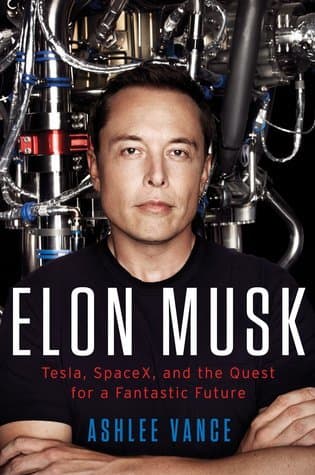
Elon Musk: Tesla, SpaceX, and the Quest for a Fantastic Future cover
Archivist's Choice

Elon Musk: Tesla, SpaceX, and the Quest for a Fantastic Future

Ashlee Vance (2013)

Genre

Business / Biography / Leadership / Technology / Science

Reading Time

12 Minutes

Key Themes

See below

Track Your Reading

Sign in to track this book

Ashlee Vance chronicles Elon Musk's journey from a South African childhood to leading revolutions in space and sustainable energy, showing him as a modern industrial titan aiming to invent humanity's future.

Core Idea

Ashlee Vance's biography of Elon Musk presents a comprehensive look into the life and mind of one of the most ambitious and controversial entrepreneurs of our time. The book argues that Musk's relentless drive, visionary thinking, and unwavering commitment to his goals—even in the face of immense setbacks and personal sacrifices—are the primary forces behind the revolutionary advancements seen in companies like Tesla and SpaceX. It delves into his formative years, his early successes with Zip2 and PayPal, and the often-brutal journey of building his current empires, highlighting his unique leadership style, engineering prowess, and his ultimate quest to solve humanity's biggest challenges and ensure its long-term survival through space colonization and sustainable energy.
Difficulty
Medium

Core idea

The central argument and framework that powers the entire book.

Ashlee Vance's biography of Elon Musk presents a comprehensive look into the life and mind of one of the most ambitious and controversial entrepreneurs of our time. The book argues that Musk's relentless drive, visionary thinking, and unwavering commitment to his goals—even in the face of immense setbacks and personal sacrifices—are the primary forces behind the revolutionary advancements seen in companies like Tesla and SpaceX. It delves into his formative years, his early successes with Zip2 and PayPal, and the often-brutal journey of building his current empires, highlighting his unique leadership style, engineering prowess, and his ultimate quest to solve humanity's biggest challenges and ensure its long-term survival through space colonization and sustainable energy.

At a glance

Difficulty

Medium

Key Takeaways

1

The 'Hardcore' Engineering Mindset

Musk's belief in first principles thinking as the key to disruptive innovation.

Quote

Musk's approach to problems was rooted in physics: break things down to their fundamental truths and reason up from there.

This book shows Musk's strong commitment to first principles thinking. This method breaks down complex problems to their most basic parts instead of using analogies. This allowed him to question old industry ideas in aerospace and automotive. For instance, when told rockets were expensive, Musk didn't agree; he asked about the cost of raw materials and manufacturing, which led to SpaceX's vertical integration and reusable rocket designs. This demanding mindset is presented as the main reason his companies achieve what was once thought...

Supporting evidence

SpaceX's development of reusable rockets (Falcon 9) and significant cost reductions in space launch, directly attributed to Musk's questioning of traditional aerospace manufacturing and material costs.

Apply this

To apply this, identify a complex problem in your field and list all its assumed constraints. Then, for each constraint, ask 'why?' until you reach a fundamental truth, not just a historical precedent. This can reveal entirely new solutions.
2

Unrelenting Work Ethic & Demands

Musk's extreme demands on himself and employees drive unparalleled progress but also create immense strain.

Quote

Musk expected people to work with the same intensity and dedication as he did, which was often superhuman.

Vance clearly shows Musk's famous work ethic: 100-hour weeks, sleeping at the factory, and a strong dislike for inefficiency. This intensity is directly tied to the fast progress at Tesla and SpaceX, especially during critical times like early Falcon 1 launches or Model S production. But the book also covers the high human cost, detailing high employee turnover, public firings, and a widespread culture of fear and exhaustion. While this approach speeds up progress, it also raises questions about sustainability, employee well-being, an...

Supporting evidence

Accounts of employees sleeping under desks at SpaceX, Musk's own practice of sleeping at the Tesla factory during critical production phases, and numerous stories of demanding deadlines and high-pressure situations.

Apply this

Leaders can adopt elements of Musk's focus and drive by setting ambitious goals and dedicating significant personal effort, but it's crucial to balance this with strategies for employee engagement, mental health, and sustainable work-life integration to avoid the negative consequences of extreme demands.

3

The Visionary as a 'Reality Distortion Field'

Musk's ability to inspire and demand the seemingly impossible from his teams.

Quote

Musk had the ability to bend people's perceptions of what was possible, similar to Steve Jobs's 'reality distortion field.'

One of the book's best ideas is how Musk, like Jobs, can influence reality. He sets deadlines and demands that seem impossible, but with his strong will, intelligence, and belief in his vision, he often inspires his teams to meet them. This is not just about motivation; it's about changing how people see what can be done in a certain time or with current resources. Vance describes times when engineers, at first doubting Musk's demands (like building an electric car from scratch quickly, or landing a rocket booster), eventually deliver...

Supporting evidence

The rapid development of the Tesla Roadster and Model S, the successful vertical landing of Falcon 9 boosters after multiple failures, all under aggressive timelines set by Musk.

Apply this

Leaders can cultivate a 'visionary' aspect by clearly articulating audacious goals, demonstrating unwavering belief in their attainment, and empowering teams to find innovative ways to overcome obstacles, rather than immediately dismissing ambitious targets as unrealistic.

4

Embracing Failure as a Stepping Stone

Musk's resilience in the face of repeated setbacks and near-bankruptcy.

Quote

Musk's defining characteristic was his resilience. He was willing to fail, learn, and try again, even when others would have given up.

The book carefully details Musk's many failures and near-disasters, especially early on at SpaceX and Tesla. From the first Falcon 1 rocket launch failures that almost bankrupted SpaceX to the huge production problems and financial crises at Tesla, Musk always showed a great ability to handle setbacks, learn from them, and stick to his vision. His willingness to put all his personal money into his projects, even when close to collapse, shows this resilience. This story challenges the romantic idea of instant success, highlighting that...

Supporting evidence

The multiple failures of the Falcon 1 rocket before its successful launch, the near-bankruptcy of Tesla during the 2008 financial crisis, and Musk investing his last dollars into both companies.

Apply this

Individuals and organizations should foster a culture that views failures as learning opportunities, not terminal events. Implement rapid prototyping, feedback loops, and ensure leadership demonstrates resilience and a commitment to continuous improvement even after significant setbacks.

5

The 'Alien' Social Intelligence

Musk's unconventional interpersonal style and its impact on leadership.

Quote

Musk often struggled with empathy and social cues, leading to an almost alien-like communication style that could be both brutal and inspiring.

Vance explores Musk's often difficult relationships, which come from what is shown as a very logical, almost unemotional view of the world. His direct, often blunt communication, lack of obvious empathy, and sometimes unpredictable behavior are repeated themes. While this can lead to honest and quick decisions, it also causes high employee turnover and tense relationships with colleagues and even family. The book suggests that this 'different' social intelligence, though challenging, is linked to his ability to focus intensely on engi...

Supporting evidence

Numerous anecdotes from employees and former partners detailing Musk's blunt feedback, dismissive attitudes, and emotional outbursts, contrasted with his ability to inspire intense loyalty in others.

Apply this

While not advocating for a lack of empathy, leaders can learn from Musk's ability to prioritize objective problem-solving and direct communication, but should consciously work on developing emotional intelligence to foster a more supportive and sustainable team environment.

6

Mission-Driven vs. Profit-Driven

Musk's primary motivation is to advance humanity, not merely accumulate wealth.

Quote

Musk didn't want to just make money; he wanted to solve the biggest problems facing humanity and ensure a fantastic future.

This is perhaps the book's most important insight into Musk's character. Unlike many Silicon Valley entrepreneurs mainly driven by money or market power, Musk is consistently shown as being driven by a larger, almost selfless, vision for humanity's future. His investments in SpaceX (making humanity multi-planetary) and Tesla (speeding up the world's move to sustainable energy) are framed not as business chances first, but as essential needs. This deep sense of mission allows him to take big risks, make huge personal sacrifices, and in...

Supporting evidence

Musk's public statements about colonizing Mars and combating climate change, his willingness to invest his entire PayPal fortune into SpaceX and Tesla when they were struggling, and his focus on long-term, ambitious goals rather than short-term profits.

Apply this

Businesses and leaders should clearly articulate a purpose beyond profit. A compelling, mission-driven narrative can attract top talent, foster loyalty, and provide a powerful internal compass during challenging times, driving innovation that genuinely benefits society.

7

The Symbiotic Relationship of Musk's Ventures

How Tesla, SpaceX, and SolarCity are interconnected facets of a grander vision.

Quote

Musk saw his companies not as disparate entities, but as pieces of a larger puzzle to secure humanity's future.

Vance effectively shows that Musk's companies—SpaceX, Tesla, and SolarCity (less covered in the book)—are not separate businesses. They are parts of one big strategy to solve humanity's biggest problems. SpaceX offers ways for space exploration and colonization, helping humanity survive long-term. Tesla speeds up the shift to sustainable energy on Earth, and SolarCity (now part of Tesla) provides that energy's infrastructure. This connection allows for technology sharing, common engineering principles, and strengthens Musk's main miss...

Supporting evidence

Musk's public articulation of his 'master plan' for Tesla, which includes energy generation and storage, and the shared engineering culture across his companies.

Apply this

Entrepreneurs and business strategists should consider how seemingly disparate ventures might be integrated into a larger ecosystem that mutually reinforces a core mission, creating a more robust and impactful overall strategy.

8

The Scarcity of 'Builder' Personalities

Musk as a rare breed of entrepreneur who builds rather than just optimizes.

Quote

Musk represented a return to the industrialist-inventor, a builder of physical things, in an age dominated by software and services.

The book presents Musk as a modern industrialist, like Henry Ford or Thomas Edison, who is deeply involved in building and manufacturing. In a time when much of the tech industry focuses on software, services, and improving existing systems, Musk's dedication to creating entirely new physical products—rockets, electric cars, solar panels—stands out. This 'builder' mindset needs a different kind of leadership, one that deals with the complexities of supply chains, manufacturing, and hardware engineering. Vance argues that this lack of ...

Supporting evidence

Musk's hands-on involvement in engineering design at SpaceX and Tesla, his focus on factory automation and production lines, and his direct engagement with manufacturing challenges.

Apply this

Societies and educational systems should recognize and foster 'builder' skill sets – engineering, manufacturing, and hardware development – alongside software and service-oriented skills, to ensure a balanced approach to innovation and economic growth.

9

The Media & Public Persona Paradox

Musk's complex relationship with public perception and media scrutiny.

Quote

Musk was simultaneously a media darling and a lightning rod for criticism, a figure both revered and reviled.

Vance explores Musk's public image: seen by many as a visionary, but often involved in arguments and public scrutiny. The book details times when Musk's unfiltered communication, especially on Twitter, created both great excitement for his projects and significant negative reactions, sometimes affecting stock prices or regulatory relationships. This paradox shows the double-edged nature of a very visible, charismatic leader in the digital age. While his direct involvement can build a passionate community and bypass traditional media, ...

Supporting evidence

Musk's controversial tweets, his public feuds with critics, and the intense media attention (both positive and negative) surrounding Tesla's production goals and SpaceX's launches.

Apply this

Leaders of high-profile companies must develop sophisticated media strategies that balance direct communication with careful consideration of public perception and potential backlash. Transparency can be powerful, but it requires discipline and an understanding of the amplified nature of digital communication.

10

The Future of American Innovation

Musk as a symbol of America's capacity for technological resurgence.

Quote

Musk embodied the spirit of American innovation, proving that the nation of inventors could still lead in a fiercely competitive global landscape.

The book ends by presenting Elon Musk not just as a smart person, but as a key part of America's future in global innovation. Vance argues that Musk, despite his South African background, represents the United States' lasting ability to create major technological advancements, especially in 'hard' industries like aerospace and automotive. His story is an optimistic counter to worries about America's declining competitiveness, suggesting that with the right mix of visionary leadership, risk-taking capital, and a culture that values bol...

Supporting evidence

The establishment and growth of SpaceX and Tesla in the US, creating new industries and jobs, and challenging established global competitors.

Apply this

Policymakers and educators should analyze the conditions that allowed Musk's ventures to flourish (e.g., access to capital, engineering talent, a culture of ambition) and work to replicate these conditions to foster future generations of 'builders' and innovators.

Critical analysis

Notable Quotes

Quiz

Test Your Knowledge

Ready to see how well you understood this book? Take our interactive quiz with 10 questions.

10
Questions
~5
Minutes
?
Best Score

Key Questions (FAQ)

Elon Musk is a prominent entrepreneur and innovator, best known for founding and leading companies like SpaceX, Tesla, and SolarCity. He also played a key role in the development of PayPal.

About the author

Ashlee Vance

Ashlee Vance is a technology journalist and author renowned for his in-depth reporting on the tech industry. His most notable work is the New York Times bestseller "Elon Musk: Tesla, SpaceX, and the Quest for a Fantastic Future," which provided an unprecedented look into the life and ventures of the entrepreneur. Vance's writing is characterized by its thorough research and compelling narrative, making complex technological subjects accessible to a broad audience.