BookBrief
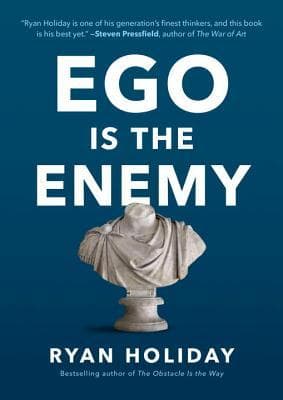
Ego Is the Enemy cover
Archivist's Choice

Ego Is the Enemy

Ryan Holiday (2016)

Genre

Business / Productivity / History / Philosophy / Self-Help

Reading Time

240 min

Key Themes

See below

Track Your Reading

Sign in to track this book

Learn how history's greatest achievers mastered themselves, not just the outside world, by fighting their own egos to reach success and impact.

Core Idea

Ego, in its many forms—ambition, self-absorption, entitlement, and the need for recognition—stops us from achieving true mastery, lasting success, and fulfillment at all stages of life: when we aspire, when we succeed, and when we fail. The book says ego twists our judgment, prevents learning, distorts reality, and leads to self-sabotage. This keeps us from doing meaningful work and living a good life. The solution is humility, discipline, and a focus on the work itself, not on ourselves.
Reading time
240 min
Difficulty
Medium
✓ Read this if...
You are ambitious and want to achieve great things but suspect your own self-importance or need for external validation might be holding you back. This book is for anyone seeking practical philosophical guidance on how to temper their ego to become more effective, resilient, and grounded.
✗ Skip this if...
You are looking for a highly academic or theoretical deep dive into philosophical concepts, or if you prefer purely tactical, step-by-step business or productivity advice without a strong emphasis on character development and internal struggle.

Core idea

The central argument and framework that powers the entire book.

Ego, in its many forms—ambition, self-absorption, entitlement, and the need for recognition—stops us from achieving true mastery, lasting success, and fulfillment at all stages of life: when we aspire, when we succeed, and when we fail. The book says ego twists our judgment, prevents learning, distorts reality, and leads to self-sabotage. This keeps us from doing meaningful work and living a good life. The solution is humility, discipline, and a focus on the work itself, not on ourselves.

At a glance

Reading time

240 min

Difficulty

Medium

Read this if...

You are ambitious and want to achieve great things but suspect your own self-importance or need for external validation might be holding you back. This book is for anyone seeking practical philosophical guidance on how to temper their ego to become more effective, resilient, and grounded.

Skip this if...

You are looking for a highly academic or theoretical deep dive into philosophical concepts, or if you prefer purely tactical, step-by-step business or productivity advice without a strong emphasis on character development and internal struggle.

Key Takeaways

1

Aspirations: The Silent Killer

Ego sabotages learning and growth before you even begin.

Quote

When we are aspiring, ego is a seductive liar. It tells us what we want to hear, primarily that we're special, that we deserve success, and that we're exempt from the rules.

Before any real achievement, ego appears as an overblown sense of importance and a dislike for the hard, often dull work needed for mastery. It tells us our ideas are brilliant, our potential endless, and that we are already 'ahead.' This false self-perception stops us from getting honest feedback, accepting mentors, and committing to the basic learning needed for true skill. Instead of gaining knowledge and experience, we chase recognition, early praise, and the look of success, often mistaking ambition for actual accomplishment. Thi...

Supporting evidence

Holiday points to figures like young prodigies who burn out because they believe their innate talent negates the need for disciplined practice, or entrepreneurs who focus on fundraising and media buzz before validating their product.

Apply this

Cultivate a 'student of the game' mindset. Embrace anonymity, seek out demanding mentors, and focus on the process of learning and doing rather than the outcome or recognition. Prioritize deliberate practice and feedback over self-congratulation.
beginner's-mindhumility
2

Success: The Blinding Light

Ego turns success into a trap, leading to complacency and isolation.

Quote

Success can be an intoxicant, and too much of it can lead to a dangerous overconfidence, a sense of invincibility that makes us believe we are above the rules or immune to failure.

Once success arrives, ego becomes a more hidden danger: pride. It tells us our achievements are only due to our genius, not to hard work, luck, or others' help. This inflated self-image makes us refuse to change, unable to hear criticism, and dangerously confident. We become lazy, believing old methods will always work, and cut ourselves off from different opinions and uncomfortable truths. The very traits that brought success – hard work, constant learning, and self-awareness – are dropped for an unquestioning belief in our own perfe...

Supporting evidence

The story of Howard Hughes, whose early genius gave way to eccentric isolation and a loss of touch with reality, serves as a powerful example of ego unchecked by success.

Apply this

Maintain a beginner's mindset even after success. Actively seek criticism, surround yourself with truth-tellers, and constantly question your assumptions. Remember that past success doesn't guarantee future results; continuous effort and adaptation are essential.

hubriscomplacency
3

Failure: The Amplified Wound

Ego intensifies the pain of failure, making recovery nearly impossible.

Quote

When failure comes, ego prolongs the pain, distorts the lessons, and makes it harder to recover. It tells us we are victims, that we are owed, and that the world is unfair.

When faced with failure, ego prevents useful self-reflection. Instead, it makes the blow worse and pushes us toward self-pity, blame, or denial. It tells us the failure was unfair, an attack, or due to things we could not control, instead of a chance to learn and grow. This victim mindset stops us from looking at mistakes objectively, taking responsibility, and changing our approach. The pain becomes too much because ego has tied our self-worth completely to outside results. Instead of seeing failure as feedback, we see it as a person...

Supporting evidence

Holiday discusses figures who, after a significant failure, retreated into bitterness or blamed others, never truly recovering or learning from their experience.

Apply this

Practice radical honesty about your role in failures. Detach your self-worth from external results. Embrace the stoic practice of viewing obstacles as opportunities for growth and resilience, focusing on what you can control: your response.

resiliencestoicism
4

The Danger of 'Talking' vs. 'Doing'

Ego prioritizes the appearance of work over actual accomplishment.

Quote

The great danger is that we begin to believe our own hype. We confuse talking about doing with actually doing.

Ego often makes us prefer talking about goals, planning endlessly, or seeking praise for ideas, rather than putting in the quiet, steady effort needed to do the work. It is easier to dream big and discuss grand plans than to face the daily grind, the inevitable problems, and the often-unseen work that brings real results. This 'talker's ego' makes us believe that saying an idea is like achieving it, or that outside praise for potential is more valuable than actual output. This leads to procrastination, shallow work, and a lack of true...

Supporting evidence

Holiday highlights the common pitfall of aspiring artists or entrepreneurs who spend more time networking and pitching than actually creating their art or building their product.

Apply this

Focus on 'the work' above all else. Prioritize execution over ideation or discussion. Adopt a bias towards action and measure your progress by tangible output, not by the amount of attention or praise you receive.

action-biasexecution
5

Staying a Student, Always

True mastery requires a lifelong commitment to learning and adaptation.

Quote

The pretense of knowledge is our most dangerous vice, because it prevents us from getting to the truth.

One of the best ways to fight ego is to commit to always being a student. This means admitting there is always more to learn, that expertise is never complete, and that the world changes constantly. Ego, on the other hand, tells us we have 'arrived,' that we know enough, and that our current understanding is sufficient. This closes us off to new information, different views, and the critical feedback needed for growth. True masters, from Bill Belichick to Eleanor Roosevelt, knew their success depended on their ability to keep learning...

Supporting evidence

Bill Belichick, despite multiple Super Bowl wins, is known for his relentless preparation and constant search for new strategies, never resting on past laurels.

Apply this

Actively seek out opportunities to learn. Read widely, ask questions, and be open to having your assumptions challenged. Embrace feedback, even when it's uncomfortable, and view every experience as a chance to deepen your understanding.

lifelong-learninggrowth-mindset
6

The Power of Purpose Beyond Self

Subordinate your ego to a larger cause for true impact.

Quote

True greatness is not about us; it's about what we do, what we create, and the impact we have on the world.

Ego makes us believe everything centers on 'me' – my recognition, my achievements, my legacy. This self-focused view limits our potential and often leads to disappointment, as outside praise is brief and not enough. The most impactful people in history, however, were those who went beyond personal desires and gave themselves to a purpose bigger than themselves. When you put your ego aside for a cause, a mission, or to help others, your energy becomes focused, your resilience stronger, and your actions gain deeper meaning. This shift f...

Supporting evidence

Eleanor Roosevelt, despite her prominent position, dedicated her life to humanitarian causes and social justice, often working behind the scenes for the greater good rather than personal glory.

Apply this

Identify a purpose or cause that resonates deeply with you and is larger than your individual ambitions. Frame your work not as a means to personal glory, but as a contribution to this greater purpose. Focus on service and impact.

altruismtranscendence
7

The Discipline of Humility

Humility is an active choice, not a passive trait.

Quote

Humility is not thinking less of yourself, it's thinking of yourself less.

Humility is often misunderstood as weakness or self-criticism, but Holiday says it is a strong and active way to fight ego. It is the conscious choice to let others lead, to admit your limits, to focus on the task at hand rather than your personal feelings or image. This means swallowing pride, admitting when you are wrong, and being willing to do the unglamorous work. It is about having a realistic view of yourself – not underestimating or overestimating your abilities. Practicing humility allows for continuous learning, better teamw...

Supporting evidence

Katharine Graham, publisher of The Washington Post, despite her immense power, demonstrated humility by admitting she didn't know everything and relied heavily on the expertise of her team during the Pentagon Papers crisis.

Apply this

Consciously practice self-awareness. Regularly ask for feedback, even if it's critical. Be willing to do tasks beneath your perceived station. Prioritize listening over speaking and seek to understand before being understood.

self-awarenessmoderation
8

Beware the 'Isms' and Ideologies

Ego weaponizes beliefs, making us dogmatic and resistant to truth.

Quote

Ego can attach itself to anything: a cause, a political party, a philosophy, a company. Once it does, it makes us dogmatic, inflexible, and incapable of seeing nuance or truth.

Ego not only inflates our sense of self; it also attaches to ideas, beliefs, or groups, turning them into parts of our identity. When this happens, any challenge to the idea feels like a personal attack, making us defensive, rigid, and unable to think objectively. We become more interested in 'being right' or 'winning' than in seeking truth or finding good solutions. This can show up as tribalism, intellectual arrogance, and an unwillingness to consider other views. It stops intellectual growth and keeps us from adapting to new inform...

Supporting evidence

Holiday refers to historical examples of political movements or philosophical schools that became so entrenched in their dogma that they lost touch with reality, leading to disastrous outcomes.

Apply this

Hold your beliefs lightly. Practice intellectual humility by actively seeking out opposing viewpoints and engaging in good-faith debate. Be willing to change your mind when presented with compelling evidence, even if it's uncomfortable.

intellectual-humilityopen-mindedness
9

The Value of Being 'Nobody'

Anonymity fosters focused work and genuine growth.

Quote

The less we are concerned with the outside world's opinion of us, the more time and energy we have to do the work that actually matters.

In a world focused on personal branding and public fame, ego constantly pushes us toward visibility and praise. However, Holiday says there is great power in choosing to be 'nobody' – to work quietly, to focus only on the craft, and to avoid or even reject the spotlight. When you are not always seeking outside approval, you are free from the pressure of keeping up an image, performing for an audience, or conforming to others' expectations. This anonymity allows for deep, uninterrupted work, real experimentation, and the freedom to fai...

Supporting evidence

Many great artists and thinkers spent years toiling in obscurity, perfecting their craft before gaining any public recognition, precisely because they were focused on the work itself.

Apply this

Embrace periods of focused, unglamorous work without seeking public acknowledgment. Resist the urge to constantly share your progress or seek validation. Find satisfaction in the process and the results of your labor, not in the applause.

intrinsic-motivationfocus
10

Memento Mori: The Great Equalizer

Conscious awareness of mortality shrinks ego and clarifies priorities.

Quote

Death is the great equalizer. It reminds us that we are not special, that our time is limited, and that our legacy is not about us, but about what we leave behind.

The Stoic practice of 'memento mori' – remembering that you will die – helps counter ego. Ego makes us feel immortal, essential, and entitled to endless time, leading to procrastination, small concerns, and an inflated sense of importance. By thinking about our own death, we gain perspective. The small worries that ego makes bigger shrink. It forces us to face what truly matters, prioritize meaningful work, and act with urgency and purpose. This awareness reminds us that our time is limited, our achievements temporary, and that true l...

Supporting evidence

The Stoics, like Seneca, regularly meditated on death to cultivate virtue and live more fully. Roman generals were reminded 'memento mori' during their triumphs.

Apply this

Regularly reflect on your mortality. Ask yourself if your current actions align with your deepest values if this were your last day. Use this awareness to cut through ego's distractions and focus on what genuinely matters.

memento-moristoicismperspective

Critical analysis

Notable Quotes

Ego is the enemy of what you want and of what you have.

The central thesis of the book, introducing the pervasive nature of ego.

The first principle is that you must not fool yourself—and you are the easiest person to fool.

Highlighting the self-deceptive nature of ego and the importance of self-awareness.

When we are no longer able to change a situation, we are challenged to change ourselves.

Emphasizing resilience and adapting one's perspective when external circumstances are fixed.

To be a philosopher is not merely to have subtle thoughts, nor even to found a school, but so to love wisdom as to live according to its dictates, a life of simplicity, independence, magnanimity, and trust.

Drawing from Thoreau, defining true philosophy as living out one's principles, free from ego's distractions.

The only way to beat ego is through a new, more humble practice.

Proposing humility and continuous learning as the antidote to ego.

Where there is a will, there is a way. Where there is a way, there is an ego waiting to take credit.

A cynical but realistic take on how ego can corrupt even successful endeavors.

Becoming a student, remaining a student, is the only way to avoid the trap of ego.

Advocating for a perpetual state of learning and curiosity to keep ego in check.

Greatness comes from humble beginnings; it comes from grunt work. It means you're the least important person in the room—until you prove otherwise.

Highlighting the importance of starting small and earning success through hard work, not entitlement.

The greatest enemy of learning is knowing.

A powerful statement on how perceived expertise can close one off to new knowledge and growth.

What is rare is not talent, but the humility to remain a student.

Underscoring that sustained growth requires a humble mindset, beyond mere ability.

Don't think about 'what I want to be'—think about 'what I want to do.'

Shifting focus from identity-based goals (which can fuel ego) to action-oriented, purpose-driven goals.

Mediocrity is a powerful opponent. And it's one that ego loves to make excuses for.

Illustrating how ego can rationalize average performance and hinder improvement.

Live with a spirit of 'What can I do for others?' instead of 'What can I get from others?'

Encouraging a service-oriented mindset over a self-serving one, which can be driven by ego.

We don’t just fight ego in the good times. We fight ego in the bad times too.

Emphasizing that ego can manifest in struggles (e.g., self-pity, blaming others) just as it does in success.

Quiz

Test Your Knowledge

Ready to see how well you understood this book? Take our interactive quiz with 10 questions.

10
Questions
~5
Minutes
?
Best Score

Key Questions (FAQ)

'Ego Is the Enemy' argues that our ego, not external circumstances, is the primary obstacle to true success and fulfillment at every stage of life. It explores how ego hinders learning, blinds us in success, and magnifies failure.

About the author