BookBrief
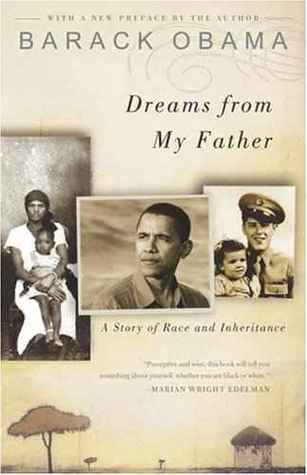
Dreams from My Father: A Story of Race and Inheritance cover
Archivist's Choice

Dreams from My Father: A Story of Race and Inheritance

Barack Obama (1995)

Genre

Politics / Biography / Memoir / History

Reading Time

900 min

Key Themes

See below

Track Your Reading

Sign in to track this book

Barack Obama's personal journey explores his American and Kenyan heritage, forming an identity from the stories and facts of his absent father.

Core Idea

Dreams from My Father is a memoir about Barack Obama's journey to understand his biracial identity and the legacies of his absent Kenyan father and white American mother. It tracks his search for belonging and self-definition across continents and cultures, dealing with the idealized image of a father he barely knew and the realities of race in America. The book suggests that identity comes from an ongoing process of storytelling, historical understanding, and community involvement, finding resolution in a varied past and a chosen future.
Reading time
900 min
Difficulty
Medium
✓ Read this if...
You are interested in the formative experiences and intellectual development of Barack Obama, the complexities of biracial identity in America, or the personal quest for belonging and understanding one's heritage.
✗ Skip this if...
You are looking for a political manifesto or a detailed account of Obama's presidential policies, as this book predates his major political career and focuses on personal identity.

Core idea

The central argument and framework that powers the entire book.

Dreams from My Father is a memoir about Barack Obama's journey to understand his biracial identity and the legacies of his absent Kenyan father and white American mother. It tracks his search for belonging and self-definition across continents and cultures, dealing with the idealized image of a father he barely knew and the realities of race in America. The book suggests that identity comes from an ongoing process of storytelling, historical understanding, and community involvement, finding resolution in a varied past and a chosen future.

At a glance

Reading time

900 min

Difficulty

Medium

Read this if...

You are interested in the formative experiences and intellectual development of Barack Obama, the complexities of biracial identity in America, or the personal quest for belonging and understanding one's heritage.

Skip this if...

You are looking for a political manifesto or a detailed account of Obama's presidential policies, as this book predates his major political career and focuses on personal identity.

Key Takeaways

1

The Weight of Mythic Absence

An absent father's myth can be more formative than his presence, shaping identity through aspiration and void.

Quote

For the most part, my father remained a myth to me, a figure in a photo, a distant voice on the phone, a story I told myself as a way of explaining who I was.

Obama's early life is shaped by the almost mythical image of his Kenyan father, Barack Obama Sr. This absence creates a powerful void, pushing Obama to form his own identity and understanding of Blackness in America. His father's story, gathered from family anecdotes and his mother's memories, becomes a core narrative for Obama. This mythical figure, though physically absent, strongly influences Obama's curiosity and his later trip to Kenya. The search for his father is not just for a man, but for a origin story that can make sense of...

Supporting evidence

Obama's early memories of his father are almost entirely through photographs, letters, and the stories told by his mother and grandparents. The news of his father's death is the catalyst for the entire memoir, highlighting how a figure known more through narrative than direct interaction can still profoundly impact a life.

Apply this

Reflect on the 'myths' or narratives that have shaped your own understanding of family, heritage, or personal identity, especially concerning absent or distant figures. Consider how these stories, whether true or embellished, influence your self-perception and life choices. Actively seek to understand the origins and impact of these foundational narratives.

absent-father-narrativeidentity-formationmyth-makingbiracial-experience
2

Navigating Racial Ambiguity

Being biracial in a binary world necessitates a constant negotiation of identity and belonging.

Quote

I was trying to raise myself to be a black man in America, and that meant coming to terms with the history of the place.

Obama deals with the challenges of being biracial in a society that often puts people into strict racial categories. He is not fully Black or fully White in the usual sense, leading to feelings of being an outsider and a constant search for a clear place. His experiences in Hawaii, with his white mother and grandparents, and later in Indonesia, further complicate this understanding. He chooses to embrace his Black identity, not to reject his white heritage, but as a deliberate personal and political stance in America. This choice resp...

Supporting evidence

Obama recounts instances of racial confusion and microaggressions, such as being mistaken for other ethnicities or feeling the pressure to 'perform' Blackness. His decision to move to Chicago as a community organizer is a direct manifestation of his desire to connect with and serve the Black community, solidifying his chosen identity.

Apply this

Recognize that identity is not monolithic or static, especially for those with diverse backgrounds. Challenge binary thinking about race and encourage nuanced conversations about belonging. For individuals navigating similar experiences, actively seek communities and narratives that affirm your complex identity.

biracial-identityracial-ambiguityidentity-politicsmulticulturalism
3

The Hawaiian Crucible

Hawaii, a melting pot of cultures, provided Obama a unique, yet complex, foundation for his identity.

Quote

Hawaii was a place where race was fluid, a place where people of every hue lived side by side and intermarried, a place where the ordinary rules of racial classification seemed to melt away.

Obama's upbringing in Hawaii, mostly by his white mother Ann Dunham and white grandparents, contrasts sharply with racial dynamics on the U.S. mainland. Hawaii's diverse population and more flexible racial categories give him a unique way to see race. While it offers a sense of racial harmony, it also leaves him without a clear understanding of what it means to be Black in America. This environment allows for an early innocence regarding racial conflict, but also creates a subtle longing for a more defined racial belonging. It is a fo...

Supporting evidence

Obama describes his childhood friends in Hawaii as a 'rainbow coalition' of ethnicities (Japanese, Chinese, Filipino, Portuguese, native Hawaiian). His grandparents, especially Stanley Dunham, instill in him a sense of ambition and an appreciation for education, irrespective of racial background.

Apply this

Appreciate how diverse environments can shape an individual's worldview on race and identity. Consider the benefits and challenges of growing up in a 'post-racial' or highly multicultural context versus one with clearer racial lines. Actively seek to understand how geographical and cultural contexts influence personal development.

multicultural-upbringinghawaiian-identityracial-fluiditycultural-melting-pot
4

The Burden of African Heritage

Confronting his African roots reveals the complexities of post-colonialism and the weight of familial expectations.

Quote

My father's story was not just his own; it was the story of Africa, of colonialism and its aftermath, of the promises and betrayals of independence.

Obama's trip to Kenya is the emotional high point of the book, where he faces the realities of his paternal family's life and his father's unfulfilled potential. He finds a family broken by polygamy, poverty, and the lasting effects of colonialism, far from the romanticized image he had. This encounter forces him to reconcile the myth of his brilliant, ambitious father with the reality of a man who struggled with alcoholism, multiple marriages, and a difficult relationship with his own family. The trip shows the complex web of kinship...

Supporting evidence

Obama's interactions with his half-sister Auma, his step-grandmother Sarah, and numerous other relatives reveal the intricate family dynamics and the stories of his father's life, including his academic brilliance, his conflicts with the Kenyan government, and his personal failings. The visits to his father's grave and the ancestral village are pivotal.

Apply this

Recognize that understanding one's heritage often involves confronting uncomfortable truths and complex legacies, not just idealized narratives. Be prepared for cultural clashes and the need to adapt to different family structures and expectations when exploring ancestral roots. Embrace the full, often messy, picture of your family history.

african-diasporapost-colonialismfamilial-reconciliationcultural-clash
5

Finding Identity in Activism

Engaging in community organizing offers a path to purposeful identity and connection for the searching individual.

Quote

I realized that the only way I would ever make sense of my life was to root myself in the struggles of others.

After years of personal struggle and intellectual exploration, Obama finds purpose and belonging through community organizing in Chicago. This work lets him directly address the challenges faced by the Black community and turn his understanding of race and injustice into action. It is in the difficult work of building power among marginalized groups that he begins to form a clear identity, not just as a biracial man, but as a Black American committed to social change. This period is important for solidifying his political awareness an...

Supporting evidence

Obama details his work with church groups and community leaders in Chicago's South Side, organizing residents around issues like job training and neighborhood revitalization. He describes the initial resistance and skepticism he faced, but also the eventual triumphs and the profound sense of connection he felt with the people he served.

Apply this

Consider how active participation in community or social causes can provide a powerful sense of identity and purpose, especially when personal identity feels fragmented. Seek opportunities to move beyond abstract understanding to tangible action, understanding that true connection often comes through shared struggle.

community-organizingsocial-justicepurpose-driven-lifecollective-identity
6

The Enduring Power of Stories

Stories, both personal and collective, serve as crucial frameworks for understanding and shaping identity.

Quote

Stories were the only way to make sense of what was happening, to find the patterns, the truths, the larger meanings.

Obama consistently uses storytelling as a way to discover himself and connect with others throughout the memoir. He puts together his father's life through fragmented stories, learns about his mother's family history through anecdotes, and ultimately creates his own story by writing. The book itself shows how narrative can create meaning from different experiences. He understands that identity is not just inherited but also actively made through the stories we tell ourselves and others. This narrative framework allows him to weave his...

Supporting evidence

The entire memoir is structured around Obama's quest to gather and synthesize stories—from his father's letters, his mother's memories, his grandparents' histories, and the oral traditions of his Kenyan relatives. His ability to articulate these stories is central to his political appeal later in life.

Apply this

Actively engage in telling your own story and listening to the stories of others to foster deeper understanding and empathy. Recognize that narratives, both personal and historical, are powerful tools for shaping identity and constructing meaning. Practice reflective writing or oral history to connect with your own past.

narrative-identityoral-historystorytelling-powermeaning-making
7

The Legacy of Colonialism

Colonialism's shadow extends far beyond independence, impacting individual lives and national trajectories.

Quote

The legacy of colonialism in Kenya was visible everywhere: in the divisions between tribes, in the corruption of the government, in the poverty of the people.

Obama's journey to Kenya shows him the deep and lasting impact of British colonialism on the nation and his own family. He sees how the arbitrary borders, imposed governance, and economic exploitation of the colonial era continue to shape Kenyan society, leading to tribal divisions, political instability, and ongoing poverty. His father's struggles, despite his intelligence, are understood within this post-colonial setting, where opportunities were limited and the promise of independence often failed. This experience gives Obama a dee...

Supporting evidence

Obama observes the stark economic disparities in Nairobi, the tribal tensions that persist, and the stories from his relatives about the challenges his father faced in a newly independent Kenya trying to find its footing amidst inherited colonial structures and corruption.

Apply this

Seek to understand the historical context of global issues, recognizing that many contemporary challenges have roots in colonial legacies. Challenge simplistic narratives about developing nations and appreciate the complex interplay of history, politics, and economics. Support initiatives that address systemic inequalities stemming from colonial pasts.

colonial-legacypost-colonial-africaglobal-inequalityhistorical-context
8

Reconciling Divided Inheritance

True reconciliation of a complex heritage comes from embracing all its parts, even the contradictory ones.

Quote

I had finally reconciled my divided inheritance, had finally found a home for myself in the most unlikely of places: in the story of my father, and in the story of all those who had come before him.

The memoir's final achievement is Obama's ability to reconcile his 'divided inheritance'—his white American mother's lineage and his Black Kenyan father's heritage. This is not about choosing one over the other, but about combining both into a coherent, multifaceted self. He learns that his identity is not a zero-sum game but a rich blend of diverse threads. His journey allows him to move past the internal conflict of feeling 'half' of one thing and 'half' of another, to embracing the fullness of his unique background. This reconcilia...

Supporting evidence

The final chapters of the book, particularly after his return from Kenya, show Obama's newfound peace and clarity about his identity. He feels a greater sense of belonging and purpose, which directly informs his decision to attend law school and pursue a career in public service, now grounded in a more complete understanding of himself.

Apply this

Embrace the complexity of your own heritage, recognizing that contradictions and multiple influences can enrich, rather than diminish, identity. Actively seek to understand all facets of your background, even those that seem disparate, as they contribute to your unique narrative. Strive for integration over fragmentation in self-understanding.

integrated-identityheritage-reconciliationself-acceptancemulticultural-integration
9

The Role of Mentors and Matriarchs

Strong female figures and unexpected mentors provide crucial guidance in the absence of a patriarchal anchor.

Quote

My mother's faith in me was boundless, a quiet, steady force that always pulled me forward.

Without a consistent paternal presence, Obama's life is significantly shaped by strong female figures—his mother, Ann Dunham, and his maternal grandmother, Madelyn Dunham ('Toot'). His mother gives him a love for learning, an expansive worldview, and a belief in human potential, despite her own unconventional life. His grandmother provides stability, practicality, and a sense of 'Americanness' rooted in Kansas values. Later, in Kenya, his step-grandmother Sarah, and his half-sister Auma, offer important insights into his father's life...

Supporting evidence

Obama repeatedly highlights his mother's intellectual curiosity and unconventional spirit, and his grandmother's stoic resilience and financial acumen. He describes his grandmother's work at a bank and his mother's academic pursuits, both of which demonstrate independent strength and ambition.

Apply this

Value and acknowledge the diverse sources of mentorship and support in your life, particularly from non-traditional or often overlooked figures. Recognize the profound impact that strong female role models and matriarchs can have on personal development and identity formation. Actively seek out and cultivate relationships with those who inspire and guide you.

matriarchal-influencementorshipunconventional-familyfemale-role-models
10

The Universal Quest for Belonging

Beneath specific racial and familial narratives lies a fundamental human desire for connection and rootedness.

Quote

I was looking for a community, a place where I belonged, a story that made sense of my life.

While Obama's journey is personal and specific to his biracial identity and family history, it connects with a universal human quest: the search for belonging and a clear sense of self. His struggle to reconcile his different origins, to understand his place in the world, and to find a community where he feels at home speaks to a basic human need. Whether dealing with racial identity, family legacy, or cultural displacement, the underlying drive is to find meaning and connection. His ultimate reconciliation is not just about his speci...

Supporting evidence

Obama's recurring feelings of being 'other,' whether in Hawaii, Indonesia, or among Black communities in America, underscore his persistent search for a place where he truly fits. His eventual commitment to community organizing in Chicago and his embrace of his full heritage signify a resolution to this universal quest.

Apply this

Recognize that the search for belonging is a shared human experience, even if the specifics differ. Cultivate empathy for others navigating complex identities or feeling 'out of place.' Actively seek out and build communities where you feel accepted and understood, and contribute to creating such spaces for others.

universal-belonginghuman-connectionexistential-identitysearch-for-meaning

Critical analysis

Notable Quotes

I was an outsider, a black man in a white world, and I knew it. But I also knew that I was an American, and that my story was part of the larger American story.

Reflecting on his identity and place in America.

The great task of the American experiment, then, is to find a way to accommodate all our differences, to give each of us a stake in the success of the whole.

Discussing the challenge and promise of American pluralism.

I learned that the world is a complicated place, and that there are no easy answers. But I also learned that it is a place of hope, and that change is always possible.

Reflecting on his experiences and political awakening.

It was a story of a black man and a white woman, separated by race and culture and continent, who somehow found each other and fell in love.

Describing the improbable love story of his parents.

There was a certain freedom in being an outsider, a sense that one could observe things more clearly, without the biases of convention or expectation.

Considering the advantages of his outsider perspective.

My father's life had been a series of grand plans and crushing disappointments.

Summarizing the trajectory of his absent father's life.

I began to understand that my father's story was not just his story, but the story of a generation, a story of hope and disillusionment, of promise and betrayal.

Connecting his personal narrative to broader historical themes.

The past is never dead. It's not even past.

Reflecting on the enduring influence of history and personal past.

I had walked into a history I did not understand, and found myself a part of it.

Describing his immersion in the complexities of racial politics in Chicago.

Maybe that was the lesson: that in the face of so much division, so much anger, so much despair, the only way forward was to keep talking, to keep listening, to keep building bridges.

Contemplating the path to progress amidst societal challenges.

I had learned that true solidarity was not about shared victimhood, but about shared struggle.

Reflecting on the nature of collective action and social change.

The search for my father, then, was not just about finding the man, but about finding myself.

Explaining the deeper personal significance of his quest to understand his father.

We are all immigrants to this place, even if we were born here. Our ancestors arrived from somewhere else, and they brought with them their hopes and their fears, their dreams and their disappointments.

Emphasizing the shared immigrant experience in America.

What I couldn't explain was the way that, in the midst of all the chaos and confusion, there was a deep and abiding sense of hope.

Describing the resilience and optimism he found within communities.

Quiz

Test Your Knowledge

Ready to see how well you understood this book? Take our interactive quiz with 10 questions.

10
Questions
~5
Minutes
?
Best Score

Key Questions (FAQ)

'Dreams from My Father' explores Barack Obama's journey to understand his biracial identity and reconcile his African and American heritage. It delves into his search for a sense of belonging and meaning as a Black American, shaped by his complex family history.

About the author

Barack Obama

Barack Obama is a former President of the United States and the author of the bestselling memoirs "Dreams from My Father" and "The Audacity of Hope." His writings explore themes of race, identity, and the American experience, reflecting his background as a community organizer and constitutional lawyer. His work is characterized by its thoughtful prose and insightful analysis of social and political issues.