Synopsis
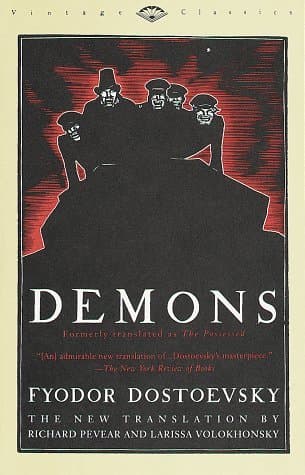
Dostoyevsky's "Demons" examines how nihilistic and revolutionary ideas destroy a society with intellectual vanity, spiritual emptiness, and a desire for radical change. The book's long story, set in a town where revolutionaries conspire, argues that abstract, foreign ideas, especially those that reject traditional morals and religion, lead to tyranny, chaos, and a loss of individual freedom and human dignity. The author believes that seeking a perfect society, without ethics and driven by its creators' self-deception, releases humanity's 'demons'—violence, betrayal, and self-destruction. This results in the collapse of social order and individual souls.
The book says that when God is abandoned, destructive ideas quickly fill the void, often presented as progress or liberation. It questions the 'beautiful lie' of revolutionary passion, showing the hypocrisy and moral compromises of those who preach radical change but are often driven by personal complaints, vanity, or a desire for power. "Demons" warns against the appeal of ideas separated from humanity, tradition, and spiritual truth. It says that real redemption and social stability come from confession, humility, and a return to basic moral principles, not from violent overthrow or abstract intellectual constructs.
✓ Read this if...
You are fascinated by the psychological and societal impact of radical political ideologies, the corrosive effects of nihilism, and the moral dilemmas faced by intellectuals grappling with revolutionary fervor. Essential for understanding the roots of totalitarian thought and its human cost.
✗ Skip this if...
You prefer fast-paced plots with clear heroes and villains, or you're not prepared for a lengthy, dense philosophical novel with a large cast of characters and intricate ideological debates. This is not light reading.