BookBrief
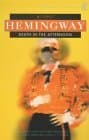
Death in the Afternoon cover
Archivist's Choice

Death in the Afternoon

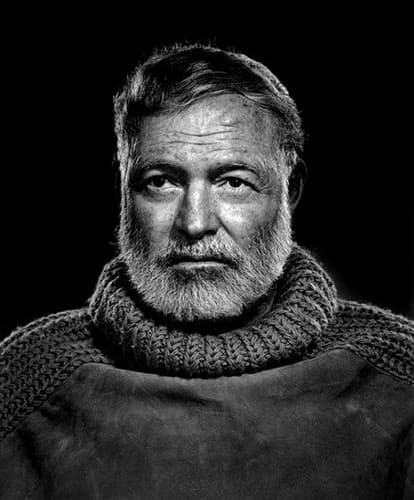
Ernest Hemingway (1920)

Genre

Lifestyle / History

Reading Time

480 min

Key Themes

See below

Track Your Reading

Sign in to track this book

Hemingway examines bullfighting, showing its beauty, tragedy, and lessons on courage and death, alongside his sharp observations on life and art.

Core Idea

Ernest Hemingway's "Death in the Afternoon" explores Spanish bullfighting, presenting it not just as a sport but as a complex, ancient art. Hemingway details the rules, rituals, and history of the corrida, arguing for its aesthetic and ethical importance. He explores the dance between man and bull, the matador's courage and skill, and the beauty and tragedy of a spectacle where death is central. The book is an impassioned defense and explanation of bullfighting, written by an experienced fan.
Reading time
480 min
Difficulty
Medium
✓ Read this if...
You are fascinated by bullfighting, Spanish culture, the nature of courage and death, or want to understand Hemingway's worldview and prose style through a unique lens.
✗ Skip this if...
You are sensitive to detailed descriptions of animal death and violence, or have no interest in bullfighting as a cultural phenomenon.

Core idea

The central argument and framework that powers the entire book.

Ernest Hemingway's "Death in the Afternoon" explores Spanish bullfighting, presenting it not just as a sport but as a complex, ancient art. Hemingway details the rules, rituals, and history of the corrida, arguing for its aesthetic and ethical importance. He explores the dance between man and bull, the matador's courage and skill, and the beauty and tragedy of a spectacle where death is central. The book is an impassioned defense and explanation of bullfighting, written by an experienced fan.

At a glance

Reading time

480 min

Difficulty

Medium

Read this if...

You are fascinated by bullfighting, Spanish culture, the nature of courage and death, or want to understand Hemingway's worldview and prose style through a unique lens.

Skip this if...

You are sensitive to detailed descriptions of animal death and violence, or have no interest in bullfighting as a cultural phenomenon.

Key Takeaways

1

Bullfighting as Tragic Art

More than sport, bullfighting is a ritualistic display of life, death, and aesthetic beauty.

Quote

Bullfighting is the only art in which the artist is in danger of death and in which the degree of brilliance in the performance is strictly in proportion to the fighter's honor.

Hemingway argues that bullfighting is more than a sport; it is an art rooted in ancient ritual. It is a choreographed ballet where the matador is not just an athlete but an artist whose medium is life and death. The 'art' is in the matador's ability to control the bull, not with brute force, but with grace, knowledge, and a deep understanding of the animal. The performance is judged not only on technical skill but on the emotional intensity and spiritual connection between man and beast, ending in a moment of truth and beauty. This da...

Supporting evidence

Hemingway meticulously details the three acts (tercios) of the bullfight, explaining the roles of picadors, banderilleros, and the matador, emphasizing the precision and artistry required in each phase, particularly the 'faena' and the 'estocada' as the ultimate test of the matador's skill and courage.

Apply this

Appreciate art forms that involve risk and direct confrontation with primal forces, recognizing the beauty in controlled chaos and the discipline required to master it. Seek out experiences that challenge conventional notions of performance and artistry.
ritual-artgrace-under-pressureaesthetic-danger
2

The Matador's Code

Bravery, honor, and a profound understanding of death define the true matador.

Quote

The great matador is one who works close to the bull, not one who performs tricks at a safe distance.

Hemingway's study of the matador's character is central to the book. He separates true bravery from mere showmanship, arguing that real courage is in facing death directly, working 'close' to the bull, and executing passes with integrity and style. The matador's honor is linked to this closeness and the purity of his technique. This is not about recklessness but a calculated courage from deep knowledge of the bull's movements and a firm commitment to the fight's aesthetic ideal. The matador, in Hemingway's view, follows a specific cod...

Supporting evidence

Hemingway profiles various matadors, contrasting the 'modern' matadors who prioritize safety and spectacle with 'classic' figures like Juan Belmonte, who revolutionized bullfighting by standing his ground and drawing the bull closer, embodying the ideal of 'valor in repose'.

Apply this

In any challenging pursuit, prioritize integrity and genuine effort over superficial displays. Understand that true mastery often requires embracing discomfort and vulnerability, rather than seeking shortcuts or maintaining a safe distance.

matador-ethoscourage-disciplinehonor-performance
3

Death as a Spectacle

The bullfight confronts mortality directly, offering a raw, unvarnished view of life's ultimate end.

Quote

Man has been trying to avoid death for a long time. This is one of the places where he doesn't avoid it.

One compelling part of 'Death in the Afternoon' is its direct look at death. Hemingway sees the bullfight as a necessary, even healing, confrontation with death in a world increasingly separated from its realities. The spectacle forces both participants and observers to acknowledge the limited nature of life, the brutality of the natural world, and the dignity found in facing one's end. It is not a celebration of violence for its own sake but an exploration of how humans respond to inevitable loss and the deep emotional and spiritual ...

Supporting evidence

Hemingway describes the death of the bull in explicit detail, from the precise aim of the 'estocada' to the final collapse, and also discusses the very real risk of the matador's own death, recounting instances where matadors were gored or killed.

Apply this

Engage with uncomfortable truths about life and death, rather than shying away. Recognize that confronting mortality, even symbolically, can foster a greater appreciation for life and a more profound understanding of the human condition.

mortality-confrontationprimal-spectacledignity-in-death
4

The Aficionado's Eye

True appreciation requires deep knowledge, empathy, and a willingness to understand cultural nuances.

Quote

To understand bullfighting, you must understand the rules, the history, the men, and the bulls. Without this knowledge, it is just a spectacle of cruelty.

Hemingway does not just describe bullfighting; he teaches the reader how to see it. He insists that a quick look leads only to disgust, while real appreciation comes from an informed fan's perspective. This requires understanding the historical context, the specific vocabulary, the physical and psychological traits of the bull, and the matador's techniques. He argues that the 'cruelty' seen by outsiders often comes from not knowing the sport's internal logic and ethical rules. The book is a masterclass in cultural immersion, showing...

Supporting evidence

Hemingway includes an extensive glossary of bullfighting terms, detailed explanations of bull breeding and selection, and historical anecdotes about famous fights and matadors, all designed to educate the uninformed reader.

Apply this

When encountering unfamiliar or controversial cultural practices, invest time in deep learning and understanding before forming judgments. Seek out expert perspectives and historical context to gain a more nuanced appreciation.

cultural-literacyinformed-appreciationnuanced-perspective
5

The Writer's Craft

Bullfighting serves as a metaphor for the discipline, danger, and beauty inherent in the creative process.

Quote

I was trying to learn to write, commencing with the simplest things, and one of the simplest things of all and the most fundamental is violent death.

Beyond its main subject, 'Death in the Afternoon' reflects on the art of writing. Hemingway often compares the matador's performance to the writer's craft. Both require great discipline, courage in the unknown, an understanding of form, and the ability to remove what is not essential to show fundamental truths. The matador's 'grace under pressure' mirrors the writer's struggle to express complex ideas clearly and precisely, especially when dealing with difficult or violent subjects. The book itself, with its direct prose and careful d...

Supporting evidence

Hemingway intersperses his descriptions of bullfighting with direct commentary on writing, discussing how he approaches subjects like death and emotion, and his commitment to 'telling the truth' as he sees it, even if it's unpleasant.

Apply this

View creative endeavors, especially writing, as a form of disciplined combat with ideas and language. Embrace the 'danger' of confronting difficult themes and strive for clarity, precision, and honesty in expression.

writing-as-combatcreative-disciplinetruth-in-art
6

The Nature of Cowardice

The bullfight provides a stark arena for exposing and scrutinizing human fear and its manifestations.

Quote

There are no secrets in the bullring; only what a man does or fails to do.

Hemingway uses the bullring to examine human nature, especially fear and cowardice. He criticizes matadors who use tricks or stay too far from the bull, not just for poor artistry but for a lack of true courage. The arena, with its immediate results, exposes pretense and shows a man's true character. Cowardice is not just a failure of nerve; it is a moral failure that harms the performance's integrity and the ritual's dignity. This scrutiny extends beyond the matador to the audience and, by extension, to individuals in daily life who ...

Supporting evidence

Hemingway describes specific instances of matadors showing fear, such as 'alardes' (superficial gestures meant to impress but lacking true valor) or failing to properly execute the 'estocada' due to hesitation, contrasting them with those who face danger unflinchingly.

Apply this

Reflect on situations where you might avoid discomfort or truth, and consider the 'integrity' of your actions. Strive for genuine courage in confronting challenges, rather than seeking easy outs or superficial solutions.

fear-exposuremoral-courageauthenticity-under-pressure
7

A World of Ritual and Tradition

Bullfighting's power derives from its deep roots in Spanish culture and historical continuity.

Quote

Bullfighting is not a sport; it is a tragedy. And it is not a fight; it is a ritual.

The book emphasizes that bullfighting cannot be understood apart from its rich cultural and historical background. It is presented not as a modern invention but as a deep tradition, evolving over centuries, with its own rules, aesthetics, and moral codes. Hemingway explores the sport's history, the breeding of bulls, and the social importance of the 'fiesta brava' in Spain. This historical depth shows that the bullfight is more than entertainment; it is a living tradition that connects society to ancient practices and beliefs, reflect...

Supporting evidence

Hemingway provides historical context on the evolution of bullfighting from its ancient origins to its modern form, discusses different regional styles, and explains the profound connection of the bull to Spanish identity and mythology.

Apply this

When evaluating cultural practices, consider their historical lineage and traditional significance, rather than judging them solely through a contemporary or foreign lens. Recognize the value of preserving rituals that embody collective memory and identity.

cultural-traditionhistorical-continuityritual-significance
8

Beauty in the Brutal

The aesthetic pleasure of bullfighting arises from the controlled elegance within a violent context.

Quote

The great passes are those that are made slowly, with the man and the bull in perfect accord, and the cloth held low.

Hemingway consistently highlights the paradox of finding beauty in a brutal spectacle. For him, bullfighting's aesthetic appeal is in the matador's ability to bring grace, control, and artistry to a chaotic and dangerous force. The slow, elegant passes, the precise cape movements, and the matador's calm transform raw violence into a dance. It is a beauty born of tension, where the closeness of death increases appreciation for moments of sublime control and harmony. This is not about celebrating bloodshed but recognizing the human abil...

Supporting evidence

Hemingway vividly describes the 'faena,' the series of passes with the muleta, emphasizing the beauty of a matador's 'natural' passes, the way the cape flows, and the bull's response when skillfully guided, creating a fluid, harmonious sequence.

Apply this

Seek out and appreciate beauty in unexpected or challenging contexts, understanding that aesthetic value can arise from tension, contrast, and the skillful imposition of order upon chaos. Recognize the artistry in mastering difficult situations.

aesthetic-violencecontrolled-eleganceharmony-in-chaos
9

The Observer's Role

The book challenges readers to actively engage with difficult subjects and form their own informed opinions.

Quote

It is not for me to tell you what you should feel, only what I have felt and what I believe to be true.

Hemingway does not just give information; he actively engages the reader, often through a conversational dialogue with an imagined 'Old Lady' character. This allows him to anticipate and address common objections to bullfighting, making the reader confront their own biases. He challenges the reader to move beyond simple moral judgments and to truly 'see' the subject through an informed perspective. This approach shows how one should engage with complex, controversial topics: with an open mind, a willingness to learn, and a commitment ...

Supporting evidence

The recurring 'dialogues' with the 'Old Lady' where Hemingway directly addresses criticisms of bullfighting as cruel or immoral, systematically explaining the nuances and historical context to counter her objections.

Apply this

Actively challenge your own assumptions and engage in critical thinking when encountering controversial subjects. Seek out diverse perspectives and strive for a comprehensive understanding before formulating an opinion, rather than defaulting to preconceived notions.

critical-observationchallenging-biasinformed-judgment
10

The Enduring Fascination

Despite its brutality, bullfighting's raw intensity offers a timeless allure that speaks to universal human experiences.

Quote

For those who understand it, it is a thing of such beauty and tragedy that it is not soon forgotten.

Ultimately, 'Death in the Afternoon' explains why bullfighting holds such a strong appeal for its followers. It connects to basic human concerns: life, death, courage, fear, ritual, and art. The raw intensity of the bullring offers an experience rare in modern life—a direct confrontation with fundamental truths without filtering or softening. This intensity, combined with the aesthetic beauty of a well-executed fight, creates a powerful emotional and intellectual draw. Hemingway suggests that its lasting appeal is precisely its abilit...

Supporting evidence

Hemingway conveys his own deep, personal passion for bullfighting throughout the book, describing the profound emotional impact it has had on him and other aficionados, and the sense of authenticity it provides.

Apply this

Seek out experiences that offer genuine intensity and challenge, pushing you beyond your comfort zone to confront fundamental aspects of life and human nature. Embrace experiences that, though potentially difficult, offer deep insights and lasting impact.

primal-allureexistential-dramaunforgettable-experience

Critical analysis

Notable Quotes

No, that is the great fallacy: the wisdom of old men. They do not grow wise. They grow careful.

Hemingway's reflection on aging and the perceived wisdom of the elderly.

The great thing is to last and get your work done and see it through and feel the water long enough to be a part of it.

A broader philosophical statement about perseverance and immersion in one's craft or passion.

All modern American literature comes from one book by Mark Twain called Huckleberry Finn.

Hemingway's famous and somewhat controversial declaration about the genesis of American literature.

There is no money in that, but there is much pleasure.

Referring to the pursuit of passions or activities for their intrinsic joy rather than financial gain.

Bullfighting is the only art in which the artist is in danger of death and in which the degree of brilliance in the performance is strictly in proportion to the honesty of the artist's danger.

Hemingway's core argument for bullfighting as a unique and dangerous art form.

The first quality of a good writer is to be a good observer.

A general observation on the necessary traits for effective writing, applicable beyond bullfighting.

I was trying to write then and I found that to write I had to get rid of the things that were not true.

Hemingway's personal struggle and commitment to truth in his writing.

The only time that you can be absolutely sure that you have an animal is when you have him in your arms.

A practical, somewhat blunt statement about certainty, often applied to the hunt or the bullfight.

If you don't know what it is, don't write about it.

A concise piece of advice on the importance of experience and knowledge for a writer.

The great thing in life is not to be happy, but to be strong.

A stoic perspective on the priorities in life, emphasizing resilience over fleeting happiness.

An intelligent man is sometimes forced to be drunk to spend time with his fools.

A cynical observation on social interaction and the coping mechanisms of intelligent individuals.

When you go to a country you must learn to speak the language.

A straightforward piece of advice on cultural immersion and respect for local customs.

It is better to be a good writer than a bad bullfighter.

A humorous, self-aware comment on his own priorities and skills.

The only way to learn about death is to look at it.

Reflecting on the direct confrontation with mortality, particularly in the context of bullfighting.

Never think that the bull has no brains.

A warning to bullfighters (and perhaps life in general) against underestimating an opponent or challenge.

Quiz

Test Your Knowledge

Ready to see how well you understood this book? Take our interactive quiz with 10 questions.

10
Questions
~5
Minutes
?
Best Score

Key Questions (FAQ)

'Death in the Afternoon' is Ernest Hemingway's comprehensive and passionate exploration of bullfighting. It delves into the technical aspects, history, and cultural significance of the sport, reflecting his deep admiration and understanding.

About the author

Ernest Hemingway

Ernest Miller Hemingway was an American novelist, short-story writer, and journalist. His economical and understated style—which included his iceberg theory—had a strong influence on 20th-century fiction, while his adventurous lifestyle and public image brought him admiration from later generations. Hemingway produced most of his work between the mid-1920s and the mid-1950s, and he was awarded the 1954 Nobel Prize in Literature. He published seven novels, six short-story collections, and two nonfiction works. Three of his novels, four short-story collections, and three nonfiction works were published posthumously. Many of his works are considered classics of American literature.