“We have thrown overboard all the principles of cut-throat bourgeois morality. We have created a new morality.”
— Rubashov reflecting on the Party's ideology.


Arthur Koestler (2015)
Genre
Politics / Thriller / Historical Fiction
Reading Time
6-7 hours
Key Themes
See below
Sign in to track this book
During Stalin's purges, a broken revolutionary confronts the chilling paradox of his life's devotion to a system now devouring its own.
Nikolai Salmanovich Rubashov, a prominent Old Bolshevik and former People's Commissar, is arrested in the middle of the night by two state agents, Gletkin and Bogrov. He is taken to a political prison, a familiar environment for a revolutionary. Rubashov immediately begins introspective monologues, reflecting on his past actions and the Party's ideology. His first interrogator is an old acquaintance, Ivanov, a former comrade from the Civil War. Ivanov tries to engage Rubashov in intellectual debate, attempting to break him down psychologically rather than physically. He suggests that Rubashov's 'deviation' is a logical consequence of his own past doctrines, which prioritized collective good over individual conscience. This initial phase sets the stage for Rubashov's internal conflict and his re-evaluation of the Party's methods.
Confined to his cell, Rubashov struggles with a severe toothache, which becomes a recurring motif for his physical and moral decay. He taps messages to his fellow prisoners using a coded system, communicating with 'No. 402' in the adjacent cell, a former White Guard officer, and 'No. 406,' a young Communist. These interactions, though brief and secret, provide a semblance of human connection and a counterpoint to his isolation. His toothache, though a minor ailment, symbolizes the creeping discomfort and moral decay he feels, a constant reminder of his physical vulnerability and the Party's insidious methods. The cell becomes a place for his thoughts, where he revisits his past decisions and the ideological justifications for his actions.
Ivanov, Rubashov's first interrogator, uses intellectual persuasion. He argues that Rubashov's 'deviation' is not betrayal but a logical, though incorrect, extension of the Party's own principles. Ivanov asserts that the Party, in its pursuit of a utopian future, must eliminate all opposition, even those who were once instrumental in its creation. He appeals to Rubashov's sense of historical materialism, suggesting that individual suffering is a necessary sacrifice for the collective good. Ivanov's goal is to secure a confession by convincing Rubashov that his actions, even if well-intentioned, objectively harmed the Party and thus the revolution. He offers Rubashov a chance to 'rehabilitate' himself by admitting his 'errors' and serving the Party one last time.
Through flashbacks, Rubashov recalls two significant episodes from his past that show his ruthless adherence to Party discipline. The first involves Arlova, his secretary and lover, whom he allowed to be executed on false charges to protect himself and the Party's image. The second concerns Richard, a German Communist he denounced for 'deviationism,' leading to Richard's disappearance and presumed death. These memories resurface, forcing Rubashov to confront the human cost of his ideological purity. He grapples with the moral implications of these actions, recognizing the hypocrisy of condemning others for the same 'errors' he now faces. These flashbacks reveal the dehumanizing effect of the Party's demands and Rubashov's complicity in its atrocities.
After Ivanov fails to secure a confession, Gletkin, a younger, more ruthless interrogator from the new generation of Party officials, takes over. Gletkin's methods differ from Ivanov's. He uses relentless sleep deprivation, keeping Rubashov awake for days, and uses bright lights and harsh questioning to break his spirit. Gletkin represents the brutal, unyielding face of the new regime, without the intellectual nuances that characterized the Old Bolsheviks. He manipulates Rubashov's physical and mental state, forcing him to confront the sheer power of the state. Gletkin's approach is less about intellectual debate and more about extracting a confession through sheer will and psychological pressure, aiming to crush Rubashov's individuality entirely.
During his interrogations and solitary reflections, Rubashov constantly battles with the concept of the 'grammatical fiction' — the individual 'I' — versus the collective 'we' of the Party. He begins to question the Party's absolute right to demand the sacrifice of individual conscience for historical necessity. His long-suppressed 'small I' — his individual moral compass and human empathy — starts to reassert itself. He remembers the faces of those he condemned and the suffering he inflicted, leading to moral doubt. This internal struggle is central to his character arc, as he grapples with the ethical implications of a system that justifies any means to achieve its ends. The 'grammatical fiction' becomes a metaphor for the individual's struggle against totalitarian ideology.
In a cruel twist, Ivanov, Rubashov's initial interrogator, is himself arrested and executed for 'insufficient zeal' in prosecuting Rubashov and for his 'humanitarian' approach. This event affects Rubashov deeply, revealing the Party's indiscriminate nature and its willingness to consume its own. Ivanov's death shows the precarious position of anyone, even loyal Party members, within the totalitarian system. It demonstrates that no one is safe from the purges and that loyalty is a fleeting concept. This incident reinforces Rubashov's growing disillusionment, showing him that even those who serve the Party faithfully can be sacrificed.
Under Gletkin's relentless pressure, compounded by sleep deprivation, physical deterioration, and the news of Ivanov's execution, Rubashov's resistance finally breaks. He succumbs to the psychological torture and agrees to sign a confession to fabricated charges of treason, conspiracy, and sabotage. Gletkin systematically breaks down Rubashov's will, using logical fallacies and the sheer weight of state power to force him into compliance. Rubashov's confession is not an admission of guilt in the conventional sense, but a strategic surrender, a final act of obedience to the Party's perceived historical necessity, even as his internal doubts about its morality intensify. He recognizes that his individual truth is irrelevant in the face of the Party's 'truth'.
Rubashov is prepared for his public trial, where he is expected to publicly confess to all charges. He understands that his confession is not about justice, but about serving the Party's propaganda needs — to discredit the Old Bolsheviks and consolidate power. He accepts his role as a necessary sacrifice for the Party, believing that even in his disgrace, he can still contribute to the 'greater good' by providing a cautionary tale. This decision is a complex mix of lingering loyalty, intellectual resignation, and the deep impact of the psychological torture he endured. He views his confession as a final, perverse act of service to the revolution he once championed, even as it demands his moral annihilation.
On the night before his execution, Rubashov engages in a final, deep internal monologue. He contemplates the nature of revolution, the inherent contradictions of the Party's ideology, and the ultimate meaning of his life. He recognizes the terrible irony of his fate — a revolutionary consumed by the revolution he helped create. He questions the 'historical necessity' that justified so much suffering and begins to formulate a nascent understanding of individual morality and the 'grammatical fiction' as something more than an illusion. As he is led to his execution, his thoughts are a mix of resignation, intellectual clarity, and a quiet reassertion of individual human value, even in the face of absolute power. He is shot in the back of the neck, a final, impersonal act by the state.
The Protagonist
Rubashov begins as a hardened ideologue who gradually questions the Party's methods, rediscovering his individual conscience before ultimately sacrificing himself for the Party's narrative.
The Supporting
Ivanov begins as an interrogator trying to save Rubashov's soul for the Party but is ultimately consumed by the very system he serves.
The Antagonist
Gletkin remains a static, unyielding force, representing the unchanging brutality of the totalitarian system.
The Mentioned
Her story highlights Rubashov's past ruthlessness and his subsequent guilt.
The Mentioned
His story illustrates the Party's intolerance for dissent and Rubashov's past complicity.
The Supporting
Serves as a static symbolic presence, representing the shared fate of prisoners.
The Supporting
Serves as a static symbolic presence, representing the naive loyalty of younger Party members.
The Mentioned
They represent the static, oppressive force that consumes the Old Bolsheviks.
The novel dissects the mechanisms of totalitarian power and how a revolutionary movement can betray its initial ideals. The Party, once dedicated to liberation, becomes an oppressive force that demands absolute obedience, crushes individuality, and justifies any atrocity in the name of 'historical necessity.' Rubashov's arrest and trial exemplify this betrayal, as he, an architect of the revolution, is consumed by its purges. The narrative shows how the Party systematically dehumanizes its members, turning them into cogs in a machine, as seen in Gletkin's unfeeling interrogation and Ivanov's ultimate demise.
“The Party had to be right; the Party was the Party, and it was always right. Even if it was wrong, it was right. For if it were not right, then the world would be an absurdity.”
This is the novel's central moral dilemma. Rubashov, a proponent of the collective, slowly re-evaluates the cost of sacrificing individual conscience for the 'greater good' of the Party. His internal monologues are a battle between the 'grammatical fiction' of the individual 'I' and the all-encompassing 'we' of the Party. He grapples with the moral implications of his past actions—sacrificing Arlova and denouncing Richard—which were justified by Party dogma but now weigh heavily on his soul. The novel questions whether true progress can be achieved through the suppression of individual human values and empathy, highlighting the dehumanizing effect of such an ideology.
“The greatest mass-movement in history, which had stirred the millions, was reduced to a few dozen men in the lead, and a few hundred 'deviationists' who were to be sacrificed.”
Koestler explores how totalitarian regimes manipulate language and redefine truth to maintain power. Confessions are extracted not for actual crimes, but to serve the Party's narrative and discredit opposition. Words like 'treason' and 'deviation' lose their objective meaning and become tools for political control. Rubashov's struggle with his confession is a battle over the definition of truth itself — whether it's an objective reality or a construct dictated by the Party. The public trials become theatrical performances where individuals are forced to affirm the Party's version of reality, regardless of personal conviction. This theme highlights the psychological warfare waged against the individual's mind.
“A crime is a crime when one is caught. All else is merely an error of judgment.”
The novel goes deep into Rubashov's psychological torment as he confronts his past actions and the guilt associated with them. His toothache symbolizes his internal moral decay and the physical manifestation of his distress. He betrayed others, including Arlova and Richard, for the Party, and now he faces the same fate. His ultimate confession, while forced, is also a form of self-betrayal, as he sacrifices his personal truth for the Party's perceived historical necessity. The novel meticulously charts the breaking of a man's spirit, showing how even a hardened revolutionary can be brought to question the very foundations of his beliefs through isolation, torture, and introspection.
“The 'I' was a grammatical fiction. The 'I' was the sum of the people, the sum of the Party.”
Rubashov's extensive internal reflections drive the narrative and explore his psychological state.
The majority of the novel takes place within Rubashov's mind as he reflects on his past, the Party's ideology, and his impending fate. These internal monologues serve as the primary vehicle for exploring the themes of individual conscience versus collective good, the nature of totalitarianism, and the corruption of truth. They provide deep insight into Rubashov's complex character, his intellectual struggles, and his moral awakening. This device allows Koestler to present the ideological debates and philosophical questions central to the book without relying solely on external dialogue, making the reader privy to Rubashov's agonizing internal conflict.
A means of clandestine communication and human connection in the prison.
Rubashov communicates with his fellow prisoners, No. 402 and No. 406, through a tapping code on the prison walls. This device serves multiple functions: it breaks Rubashov's isolation, offers glimpses into the diverse backgrounds and perspectives of other prisoners, and symbolizes the enduring human need for connection and communication even under extreme oppression. It also highlights the ingenuity and resilience of individuals in finding ways to resist the dehumanizing effects of imprisonment, providing a small but significant counterpoint to the Party's absolute control over information and interaction.
A physical ailment symbolizing Rubashov's moral and physical decay.
Rubashov's persistent and agonizing toothache is a recurring motif that serves as a physical manifestation of his internal suffering, moral decay, and the psychological torment he endures. It grounds his intellectual struggles in a visceral, bodily reality. The pain acts as a constant, inescapable reminder of his vulnerability and the insidious nature of his situation. As his moral conscience reawakens, the toothache seems to intensify, linking his physical discomfort to his burgeoning guilt and the breakdown of his ideological certainty. It symbolizes the creeping discomfort and decay within a system that appears outwardly strong.
Recollections of Rubashov's past actions and betrayals.
The novel frequently employs flashbacks to reveal key moments from Rubashov's past, particularly his involvement in the denunciation and sacrifice of individuals like Arlova and Richard. These flashbacks are crucial for understanding Rubashov's character arc, illustrating his past ruthless adherence to Party discipline and setting the stage for his present guilt and moral re-evaluation. They provide concrete examples of the ideological compromises and human costs he inflicted, making his internal struggle more tangible and demonstrating the dehumanizing impact of the Party's demands on its members.
“We have thrown overboard all the principles of cut-throat bourgeois morality. We have created a new morality.”
— Rubashov reflecting on the Party's ideology.
“The only morality which has my approval is the one which says: the end justifies the means.”
— Gletkin explaining the Party's pragmatic approach to justice.
“The people will be taught to think in the future perfect tense.”
— Rubashov contemplating the Party's control over historical narrative.
“A man's value is determined by his usefulness to the Party.”
— An implicit principle guiding the interrogations and trials.
“The individual is a cell in the organism of the Party. The cell must be ready to sacrifice itself for the organism.”
— A core tenet of the Party's collectivist philosophy.
“Every step in history is paid for with a pound of flesh.”
— Rubashov's cynical view of historical progress and its cost.
“The greatest temptation for the revolutionary is to give up the struggle, to become an individual again.”
— Rubashov battling his own conscience and past.
“There are only two possibilities: either the Party is infallible, or it is not. If it is infallible, then all our actions are justified. If it is not, then we are nothing.”
— Rubashov wrestling with the absolute authority of the Party.
“We are living in a time when the world is being remade, and for that, a certain ruthlessness is necessary.”
— Gletkin justifying the harsh methods of the Party.
“One does not make a revolution with silk gloves.”
— A common refrain among the Party members, justifying violence.
“The people is a child, and the Party is its educator.”
— Rubashov's internal monologue on the Party's role.
“The ultimate truth is that the masses are stupid, and the Party knows best.”
— A cynical but prevalent belief within the Party.
“Every confession is a victory for the Party.”
— The underlying principle of the show trials.
“The Party is the embodiment of the historical necessity.”
— Rubashov's final acceptance of the Party's role and his own fate.
Ready to see how well you understood this book? Take our interactive quiz with 10 questions.
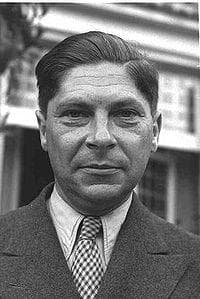
Arthur Koestler, was a Hungarian-born author and journalist. Koestler was born in Budapest and, apart from his early school years, was educated in Austria. In 1931, Koestler joined the Communist Party of Germany, but he resigned in 1938 after becoming disillusioned with Stalinism.

Brett Casper
5.0

Dirk Uffelmann
4.7

Winston S. Churchill
4.5

Chimamanda Ngozi Adichie
4.5

Will Durant
4.4

Thomas Sowell
4.4
W.E.B. Du Bois
4.3

Alan Moore
4.3