BookBrief
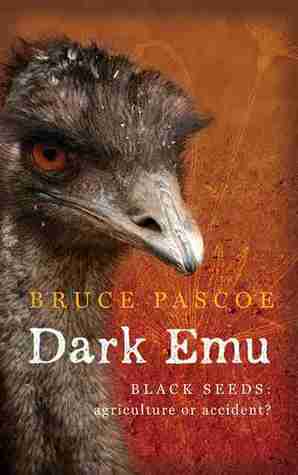
Dark Emu cover
Archivist's Choice

Dark Emu

Bruce Pascoe (2014)

Genre

Politics / History / Science

Reading Time

3-4 hours

Key Themes

See below

Track Your Reading

Sign in to track this book

Bruce Pascoe's "Dark Emu" uses historical records to challenge the idea that pre-colonial Aboriginal Australians were only hunter-gatherers, showing they were skilled farmers, irrigators, and land managers whose practices colonizers ignored.

Core Idea

Bruce Pascoe's "Dark Emu" directly counters the long-held colonial story that pre-colonial Aboriginal Australians were just hunter-gatherers, lacking advanced farming or permanent homes. Pascoe uses historical records, early European explorer journals, and anthropological accounts to show evidence of complex Aboriginal land management, cultivation of native grains and tubers, aquaculture, and the building of lasting homes and food storage. The book claims that purposely ignoring Aboriginal agricultural innovation was a 'convenient lie' to justify Terra Nullius and the taking of Indigenous lands. This re-writes a part of Australian history and calls for a new look at Indigenous land use and society.
Reading time
3-4 hours
Difficulty
Medium
✓ Read this if...
You are interested in Australian history, Indigenous studies, environmental history, or want to challenge conventional understandings of pre-colonial societies and agricultural development. Essential for those seeking a critical perspective on colonial narratives.
✗ Skip this if...
You are not open to re-evaluating established historical narratives, particularly concerning Indigenous cultures, or prefer a purely academic, detached historical analysis without a strong political and social commentary.

Core idea

The central argument and framework that powers the entire book.

Bruce Pascoe's "Dark Emu" directly counters the long-held colonial story that pre-colonial Aboriginal Australians were just hunter-gatherers, lacking advanced farming or permanent homes. Pascoe uses historical records, early European explorer journals, and anthropological accounts to show evidence of complex Aboriginal land management, cultivation of native grains and tubers, aquaculture, and the building of lasting homes and food storage. The book claims that purposely ignoring Aboriginal agricultural innovation was a 'convenient lie' to justify Terra Nullius and the taking of Indigenous lands. This re-writes a part of Australian history and calls for a new look at Indigenous land use and society.

At a glance

Reading time

3-4 hours

Difficulty

Medium

Read this if...

You are interested in Australian history, Indigenous studies, environmental history, or want to challenge conventional understandings of pre-colonial societies and agricultural development. Essential for those seeking a critical perspective on colonial narratives.

Skip this if...

You are not open to re-evaluating established historical narratives, particularly concerning Indigenous cultures, or prefer a purely academic, detached historical analysis without a strong political and social commentary.

Key Takeaways

1

Beyond the Hunter-Gatherer Myth

Pre-colonial Aboriginal Australians were sophisticated agriculturalists, not just foragers.

Quote

The evidence insists that Aboriginal people right across the continent were using domesticated plants, sowing, harvesting, irrigating and storing – behaviours inconsistent with the hunter-gatherer tag.

Pascoe questions the long-held colonial idea that Aboriginal Australians were only nomadic hunter-gatherers. He gathers evidence, much of it from early European explorer diaries, showing widespread land management, plant cultivation, aquaculture, and food storage. This was systematic agriculture and engineering, not just random foraging. The 'hunter-gatherer' label, Pascoe argues, served a political purpose, justifying taking land by calling it 'unoccupied' or 'unimproved.' This re-evaluation calls for a complete change in how Austral...

Supporting evidence

Pascoe cites numerous explorer accounts, such as Major Thomas Mitchell's observations in 1836 of 'well-fenced' yam fields along the Lachlan River, or George Augustus Robinson's descriptions of extensive eel traps and aquaculture systems in Victoria, demonstrating deliberate cultivation and resource management.

Apply this

Challenge historical narratives and 'convenient truths' by seeking out primary sources and alternative perspectives. When encountering broad classifications, question their origins and potential biases.


colonial-narrativeindigenous-agricultureland-management
2

Engineers of the Land

Sophisticated engineering and land management transformed the Australian landscape.

Quote

The sheer scale of some of the engineering feats described by explorers beggars belief if we continue to insist on the hunter-gatherer tag.

Aboriginal people actively shaped and managed their environment through complex engineering. Pascoe points to extensive aquaculture systems, like those at Budj Bim (a UNESCO World Heritage site), where volcanic rock created weirs, channels, and traps for eels and fish over thousands of years. Similarly, fire-stick farming was a calculated method to promote new growth, manage animal populations, and prevent larger, destructive wildfires. These practices show a deep understanding of ecology and sustainable resource management, challengi...

Supporting evidence

The detailed descriptions of the Gunditjmara people's aquaculture system at Budj Bim, featuring hundreds of meters of engineered channels, dams, and traps, are a prime example. Pascoe also references accounts of controlled burning creating 'park-like' landscapes, noted by early settlers.

Apply this

Recognize that 'natural' landscapes often bear the imprint of long-term human interaction and stewardship. Advocate for Indigenous land management practices in contemporary conservation efforts.

aquaculturefire-stick-farmingsustainable-resource-management
3

The 'Convenient Lie' of Terra Nullius

The hunter-gatherer myth justified the seizure of Aboriginal lands.

Quote

The 'hunter-gatherer' label was not just a misclassification; it was a political tool to justify the dispossession of land.

Pascoe directly links the mischaracterization of Aboriginal people as hunter-gatherers to 'Terra Nullius' (land belonging to no one). If Aboriginal people were just wandering foragers who did not 'improve' the land through farming or permanent settlement, then the land could be seen as empty and available for colonial use. This allowed European settlers to ignore thousands of years of sophisticated land management, cultivation, and spiritual connection. Pascoe argues this deliberate misrepresentation was key to the colonial project, g...

Supporting evidence

Pascoe repeatedly contrasts the detailed explorer accounts of cultivated fields and permanent structures with the later colonial rhetoric that painted Aboriginal people as primitive and nomadic, effectively erasing their claim to the land.

Apply this

Critically examine the underlying motivations behind historical classifications and legal doctrines. Understand how narratives can be constructed to serve political and economic interests.

terra-nulliuscolonialismland-dispossession
4

Cultivating the Continent

Widespread plant domestication and cultivation across diverse ecosystems.

Quote

It is difficult to reconcile the idea of a nomadic hunter-gatherer with the descriptions of fields of grain, root crops, and even fruit orchards.

Pascoe shows compelling evidence that Aboriginal people grew many plants, including grains, root vegetables like yams and murrnong, and some fruits. This was not just gathering; it involved sowing, tending, harvesting, and storing seeds and produce. He details accounts of large yam fields, sometimes protected by fences, and large-scale grain harvesting, especially in drier regions, where clever methods processed and stored flour for long periods. This level of farming points to a settled or semi-settled life, with a deep understanding...

Supporting evidence

Explorer Charles Sturt's observations of 'great heaps of grain' along the Darling River, and numerous accounts of extensive yam fields, particularly the murrnong (microseris lanceolata), which was a staple food source, are key examples.

Apply this

Re-evaluate assumptions about 'primitive' societies and appreciate the complexity of pre-industrial agriculture. Support research into traditional Indigenous foods and agricultural techniques.

plant-domesticationindigenous-cropssustainable-agriculture
5

Permanent Settlements and Food Storage

Evidence of settled life and advanced food preservation techniques.

Quote

The existence of large, permanent dwellings and extensive food storage facilities further dismantles the nomadic hunter-gatherer stereotype.

The 'hunter-gatherer' stereotype suggests a constant, moving existence, but Pascoe finds evidence of substantial, sometimes permanent, settlements and advanced food storage. He describes stone or timber dwellings that housed large groups, showing a more settled life than previously recognized. He details methods for preserving and storing food, such as dried fish, processed grains, and root vegetables, which allowed communities to survive lean seasons and support larger populations. This ability to store surplus food is a sign of farm...

Supporting evidence

Pascoe refers to explorer accounts of 'villages' with dozens of huts, some quite substantial, and specific mentions of granaries or storage pits for processed seeds and dried foods found across various regions of Australia.

Apply this

Recognize that 'nomadic' and 'settled' are not mutually exclusive categories, and that many societies exhibit a spectrum of mobility. Appreciate the ingenuity of traditional food preservation methods.

permanent-settlementsfood-preservationsocietal-complexity
6

Challenging Academic Inertia

Why did academia cling to the hunter-gatherer narrative despite evidence?

Quote

The refusal to acknowledge the clear evidence of Aboriginal agriculture is a stain on academic honesty.

Pascoe does not just present new evidence; he confronts the academic and historical establishment for sticking to the hunter-gatherer idea. He suggests that colonial bias, intellectual inertia, and perhaps a reluctance to change old theories prevented a fair assessment of the evidence. Even when faced with clear facts from primary sources, many historians and anthropologists either ignored them or reinterpreted them to fit the existing story. This criticism goes beyond Australia, showing how dominant historical ideas can resist change...

Supporting evidence

Pascoe points out that many of the explorer diaries containing evidence of agriculture were available for centuries, yet their contents were either overlooked or dismissed by mainstream historians, who continued to propagate the hunter-gatherer myth.

Apply this

Be skeptical of long-standing 'truths' in any field, particularly when they involve marginalized groups. Advocate for interdisciplinary approaches and critical re-examination of historical records.

academic-biashistorical-revisionismparadigm-shift
7

Beyond the 'Noble Savage'

Moving past romanticized or derogatory stereotypes to true appreciation.

Quote

To truly appreciate Aboriginal culture, we must move beyond both the 'noble savage' and the 'primitive wanderer' stereotypes.

Pascoe's work aims to recognize the full complexity, ingenuity, and diversity of pre-colonial Aboriginal societies. By highlighting their farming and engineering skills, he elevates their status from 'survivors' to 'innovators' and 'stewards' of the land. This understanding allows for a deeper appreciation of their sophisticated social structures, spiritual connections to country, and sustainable living practices. It invites a view of Indigenous cultures not as past relics, but as dynamic, adaptable, and intelligent societies with muc...

Supporting evidence

The sheer breadth of evidence presented – from aquaculture to grain harvesting to complex land management – showcases a highly adaptable and intelligent people, moving beyond simplistic characterizations.

Apply this

Seek out nuanced understandings of all cultures, avoiding oversimplified stereotypes. Learn from Indigenous knowledge systems, particularly in areas of environmental stewardship and sustainable living.

cultural-complexityindigenous-knowledgeenvironmental-stewardship
8

Reclaiming Identity and History

Pascoe's work empowers Indigenous Australians and challenges national identity.

Quote

This re-evaluation of history is not just academic; it is vital for the identity and self-esteem of Aboriginal people.

Beyond academic debate, 'Dark Emu' has important effects on contemporary Aboriginal identity and the broader Australian national story. By revealing a history of advanced farmers and engineers, Pascoe provides a powerful counter-narrative to centuries of colonial insults. This re-framing validates Indigenous heritage and knowledge, building pride and strengthening calls for recognition, sovereignty, and land rights. For non-Indigenous Australians, it forces a confrontation with a founding myth of the nation, demanding a more honest an...

Supporting evidence

The very act of publishing and widely disseminating this evidence, much of which was previously ignored, serves as a powerful reclamation of history for Aboriginal people.

Apply this

Support Indigenous voices and initiatives that seek to correct historical injustices. Engage in critical self-reflection about national histories and their impact on present-day inequalities.

indigenous-identityreconciliationnational-history
9

A Legacy of Innovation and Sustainability

Ancient Aboriginal practices offer lessons for modern environmental challenges.

Quote

The sustainable practices of Aboriginal people, honed over millennia, offer profound lessons for our current environmental crisis.

The advanced land management, farming techniques, and aquaculture systems in 'Dark Emu' were sustainable. Developed over tens of thousands of years, these practices allowed Aboriginal people to thrive without using up resources or causing wide ecological damage. Pascoe suggests that these ancient methods, especially fire-stick farming and water management, offer valuable lessons for current environmental problems like climate change, biodiversity loss, and sustainable food production. By dismissing these practices as primitive, modern...

Supporting evidence

The long-term success and ecological balance maintained by Aboriginal communities for millennia, as evidenced by their continued presence and the detailed explorer accounts of flourishing landscapes, serve as proof.

Apply this

Actively seek out and integrate Indigenous ecological knowledge into modern conservation and agricultural strategies. Support policies that empower Indigenous communities to manage their traditional lands.

ecological-wisdomclimate-changesustainable-living
10

The Power of Primary Sources

Re-examining original accounts reveals a different truth.

Quote

The beauty of this argument is that almost all the evidence comes from the records and diaries of the Australian explorers, impeccable sources.

One of the most compelling parts of 'Dark Emu' is Pascoe's use of the very sources that built the 'hunter-gatherer' story: the journals and diaries of early European explorers and settlers. By carefully re-reading and highlighting specific passages, Pascoe shows that evidence for Aboriginal farming and advanced land management existed all along. This shows the importance of returning to primary sources with an open mind, rather than relying only on secondary interpretations, which can be influenced by bias or common beliefs. It is a p...

Supporting evidence

The book itself is a testament to this, as Pascoe directly quotes numerous explorers like Mitchell, Sturt, and Robinson, allowing their own words to reveal the truth about Aboriginal practices, often in stark contrast to the later colonial interpretations.

Apply this

Always question interpretations and seek out original sources when possible. Practice critical reading, looking for details that may contradict prevailing narratives.

primary-sourceshistorical-methodologycritical-analysis

Critical analysis

Notable Quotes

The Biggest Estate on Earth, by Bill Gammage, demonstrated that Aboriginal people were not just hunter-gatherers, but managed the landscape with fire and other techniques to increase food production.

Introducing the core argument about sophisticated Aboriginal land management.

The evidence of Aboriginal people cultivating and storing food, building permanent houses, and managing the land for increased production challenges the long-held myth of them as solely nomadic hunter-gatherers.

Summarizing the central thesis of the book.

It is difficult to understand why the agricultural efforts of Aboriginal people were ignored or dismissed for so long.

Questioning the historical oversight and bias.

They were not just gathering what nature provided, but actively shaping their environment to ensure abundance.

Highlighting active rather than passive interaction with the environment.

The sheer scale of Aboriginal engineering, particularly in water management and grain harvesting, is breathtaking.

Emphasizing the advanced nature of Aboriginal technology.

The idea that Aboriginal people were too primitive to farm was a convenient justification for dispossession.

Linking the myth to the political motivations of colonization.

Our understanding of what constitutes 'agriculture' needs to be broadened to include the sophisticated methods used by Aboriginal people.

Arguing for a redefinition of agricultural practices.

If we accept that Aboriginal people were farmers, then the whole edifice of terra nullius collapses.

Directly connecting agricultural evidence to the legal and political concept of 'empty land'.

The evidence is not new; it has been there in the journals of explorers and the reports of early settlers, often misinterpreted or ignored.

Pointing out that the information was always available but overlooked.

The book is not about creating a new history, but about correcting a distorted one.

Clarifying the purpose and methodology of the book.

Fire was not just a tool for clearing, but a sophisticated instrument for managing ecosystems, promoting growth, and increasing biodiversity.

Detailing the nuanced use of fire in land management.

The structures for grain storage, often described as 'huts' by Europeans, were in fact sophisticated granaries.

Reinterpreting colonial descriptions of Aboriginal infrastructure.

Acknowledging this history is not about guilt, but about understanding and building a better future.

Framing the importance of historical truth for contemporary society.

The sheer quantity of grain harvested and stored suggests a sedentary or semi-sedentary lifestyle for many groups, contrary to the nomadic stereotype.

Connecting agricultural practices to lifestyle implications.

Quiz

Test Your Knowledge

Ready to see how well you understood this book? Take our interactive quiz with 10 questions.

10
Questions
~5
Minutes
?
Best Score

Key Questions (FAQ)

Dark Emu challenges the long-held belief that precolonial Aboriginal Australians were solely hunter-gatherers. Instead, it presents extensive evidence suggesting they engaged in sophisticated agricultural practices, including plant domestication, sowing, harvesting, irrigation, and food storage, which are inconsistent with the 'hunter-gatherer' label.

About the author

Bruce Pascoe

Bruce Pascoe is an Australian writer, editor, and educator. He is best known for his controversial and influential book "Dark Emu," which challenges conventional understandings of pre-colonial Aboriginal Australian societies. Pascoe's work often explores Indigenous history, culture, and agriculture, drawing on historical records and archaeological evidence.