
Biography coming soon.

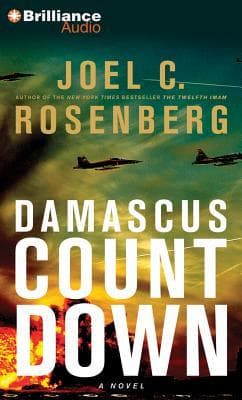
Joel C. Rosenberg (2013)
Genre
Politics / Thriller / Historical Fiction
Reading Time
12 Minutes
Key Themes
See below
Sign in to track this book
As Israel launches a preemptive strike on Iran's nuclear facilities, a CIA operative races to prevent the detonation of two surviving warheads by a vengeful regime poised for apocalyptic retaliation.
The novel opens with a dramatic, successful Israeli military operation, 'Operation Scorched Earth.' Israeli F-15s and F-16s, using advanced bunker-buster bombs, conduct a planned first strike against Iran's known nuclear sites, including Natanz, Fordow, and Arak. The operation aims to stop Iran's nuclear weapons program, which Israel believes is about to produce warheads. The attack is effective, destroying the facilities and six of Iran's nuclear warheads. This act immediately increases Middle East tensions and draws condemnation from the international community, including a strong response from American President William Jackson.
After the Israeli strike, global outrage erupts. The United Nations Security Council holds an emergency session, with many nations, especially Arab states, calling for actions against Israel. U.S. President William Jackson, under pressure and fearing a wider regional conflict, takes a firm stance against Israel, publicly condemning the 'unprovoked and unwarranted acts of aggression.' He threatens to support a U.N. Security Council resolution that would impose sanctions on Israel, showing a shift in U.S.-Israeli relations and leaving Israel feeling isolated.
Inside the Iranian regime, CIA operative David Shirazi, an Iranian-American agent, has infiltrated high-level circles. Shirazi intercepts intelligence that reveals a truth: not all of Iran's nuclear warheads were destroyed in the Israeli attack. The intelligence indicates that two fully functional nuclear warheads survived 'Operation Scorched Earth' and have been moved to a secure location. This discovery changes the mission from damage assessment to a race against time, as the remaining warheads are a threat.
Unknown to much of the world, Iran's spiritual leader, the Twelfth Imam, is a radical Islamist with apocalyptic beliefs. Angered by the Israeli strike, he sees it as a fulfillment of prophecy and a divine call for devastating retaliation. He plans to use the surviving nuclear warheads to launch a counter-attack against Israel, aiming to destroy the Jewish state. Shirazi's intercepted intelligence confirms the Imam's deadly intentions, showing the urgent need to find and stop the remaining weapons.
With the revelation of the two surviving warheads and the Twelfth Imam's intentions, David Shirazi and his small team are sent on a mission. They must navigate post-strike Iran, where paranoia and security are high. Their objective is clear: find the hidden nuclear warheads before they can be used. This task is made more dangerous by the war's chaos, the hostile governments in the region, and the constant threat of exposure to the Iranian regime.
As Shirazi and his team investigate, they face obstacles from the Iranian Revolutionary Guard Corps and betrayal from within their own network. Trust is fragile, and Shirazi must constantly decide who he can rely on. At the same time, the geopolitical situation continues to change. President Jackson's stance against Israel hardens, while other nations begin to reconsider their positions as the extent of the Iranian nuclear threat becomes clear.
The Israeli strike and Iran's threats plunge the Middle East into instability. Border skirmishes increase, and proxy conflicts erupt across the region. Syria, Lebanon, and Gaza become flashpoints, as factions align and prepare for a wider war. The global community watches, fearing that a single mistake could ignite a large-scale conflict. Shirazi's mission becomes even more important, as finding and stopping the warheads is the only way to prevent a regional collapse.
Through intelligence gathering and undercover work, Shirazi uncovers a lead pointing towards Damascus, Syria. It appears the surviving warheads have been moved, or are intended to be moved, through Syria, possibly to a launch site or a more secure hiding place within the Syrian regime's territory. This revelation adds another layer of complexity to the mission, forcing Shirazi and his team to operate in an even more volatile environment, where multiple state and non-state actors are engaged in their own power struggles.
Following the Damascus lead, Shirazi and his team infiltrate war-torn Syria. They navigate through areas controlled by rebel factions, government forces, and terrorist organizations, avoiding detection and confronting hostile elements. Time is short, as intelligence suggests the Twelfth Imam's timeline for retaliation is near. Shirazi must use all his skills and resources to find the exact location of the warheads amidst the chaos, knowing that failure would mean a nuclear catastrophe for the region.
Shirazi and his team finally locate the two remaining nuclear warheads, deep within Syrian territory. They launch a desperate operation to seize or neutralize the devices before they can be launched. This leads to a tense and violent confrontation with Iranian and Syrian forces loyal to the Twelfth Imam. Shirazi finds himself in a direct battle, where personal sacrifice and quick decisions determine the fate of millions. The mission ends in a dramatic showdown, with the world watching, as the potential for nuclear devastation hangs in the balance.
The Protagonist
Shirazi evolves from a lone wolf operative to a leader who inspires loyalty and makes difficult ethical choices under extreme pressure, ultimately preventing a regional nuclear war.
The Supporting
Jackson starts by condemning Israel and threatening sanctions, but gradually comes to understand the true existential threat posed by Iran, leading to a shift in his policy and support for Shirazi's mission.
The Antagonist
The Twelfth Imam's arc is one of escalating fanaticism and a relentless pursuit of his apocalyptic vision, culminating in his near-successful attempt to unleash nuclear devastation.
The Supporting
The Prime Minister endures international isolation and criticism but is ultimately vindicated in his assessment of the Iranian threat, leading to a potential realignment of international support.
The Supporting
Amir remains a steadfast and reliable ally throughout the mission, demonstrating unwavering courage and commitment in the face of extreme danger.
The Supporting
General Soleimani relentlessly pursues the execution of the Twelfth Imam's plan, serving as a primary obstacle to Shirazi's mission until his eventual defeat or neutralization.
The novel explores the dangers of nuclear weapons in the hands of unstable or extremist regimes. It shows how nations pursuing nuclear capabilities, like Iran, can trigger preemptive strikes, escalate conflicts, and bring the world to the brink of war. The survival of even two warheads after an attack highlights the ongoing threat and the difficulty of complete disarmament. This theme emphasizes that these weapons inherently destabilize global peace.
“The world had just witnessed the unthinkable: a nuclear power on the verge of unleashing Armageddon, and the terrifying realization that even a successful first strike might not be enough to prevent it.”
The book details how international alliances can break under pressure, especially when controversial military actions occur. Israel's preemptive strike, though seen as necessary for its survival, leads to global condemnation and a strained relationship with the United States. This theme explores the dilemmas nations face when national security conflicts with international norms and diplomatic pressures. It highlights the complex, often unpredictable nature of international relations and how quickly a nation can become isolated.
“In the eyes of the world, Israel had crossed a line. And in the shifting sands of global politics, even the strongest allies could become adversaries overnight.”
A main theme is the potential of religious extremism when combined with political power and access to weapons of mass destruction. The Twelfth Imam's apocalyptic vision and intentions drive the conflict, showing how radical interpretations of faith can justify horrific acts. The novel suggests that such extremism is not just a political idea but a deep belief system that prioritizes perceived divine mandates over human life, making negotiation difficult. This theme is a warning about fanaticism.
“For the Twelfth Imam, this was not merely war; it was the unfolding of prophecy, a divine command to cleanse the world of infidels, no matter the cost.”
The novel celebrates the heroism of intelligence operatives who work in secret, risking their lives to prevent global disasters. David Shirazi embodies this theme, operating with courage and skill in hostile environments, often without recognition or support. His mission highlights the role of human intelligence and covert action in international security, especially when diplomacy or military intervention is not enough. It shows the personal sacrifices made by those who navigate moral ambiguities to protect millions from unseen threats.
“The fate of nations often rested not on the speeches of presidents, but on the silent, desperate actions of men and women operating far beyond the light of public scrutiny.”
The impending nuclear retaliation creates urgent suspense.
The 'ticking clock' device is central to the novel's relentless suspense. From the moment Shirazi discovers the two surviving warheads, the narrative is driven by the urgent race against time to locate and neutralize them before the Twelfth Imam can launch his genocidal counter-attack. This creates constant tension, as every scene and every decision is underscored by the imminent threat of nuclear devastation. The escalating timeline for retaliation keeps the stakes incredibly high and propels the plot forward with a sense of desperate urgency, forcing rapid action and difficult choices.
Shirazi's deep cover as an Iranian insider.
David Shirazi's successful infiltration of the Iranian regime through mistaken identity or deep cover is a key plot device. His ability to blend in, speak Farsi fluently, and appear to be a loyal Iranian insider allows him access to critical intelligence and high-level circles that would otherwise be impenetrable. This device creates constant peril for Shirazi, as his true identity could be exposed at any moment, leading to immediate capture or death. It also allows the narrative to explore the inner workings of the antagonist's world from a unique, intimate perspective.
The two surviving Iranian nuclear warheads.
The two surviving Iranian nuclear warheads serve as the central MacGuffin of the story. While their destructive potential is immense and directly drives the plot, their primary function is to propel the characters' actions and motivations. The search for these specific warheads dictates Shirazi's mission, forces diplomatic maneuvers, and raises the stakes for all involved. Their existence is the catalyst for the entire conflict, providing a tangible, high-stakes objective that unites various plotlines and character arcs, even as their exact location remains elusive for much of the narrative.
Ready to see how well you understood this book? Take our interactive quiz with 10 questions.
Biography coming soon.

Brett Casper
5.0

Dirk Uffelmann
4.7

Winston S. Churchill
4.5

Chimamanda Ngozi Adichie
4.5
Will Durant
4.4
Thomas Sowell
4.4

W.E.B. Du Bois
4.3
Alan Moore
4.3