BookBrief
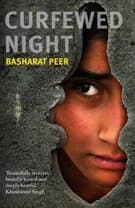
Curfewed Night cover
Archivist's Choice

Curfewed Night

Basharat Peer (2008)

Genre

Politics / Biography / Memoir / History

Reading Time

6-8 hours

Key Themes

See below

Track Your Reading

Sign in to track this book

In a land where ancient Sufi shrines are destroyed and temples become army bunkers, a Kashmiri's firsthand account exposes the brutality and 'painful romances' that draw youth into a separatist movement, changing paradise into a curfewed night.

Core Idea

Basharat Peer's "Curfewed Night" is a personal and difficult account of growing up in Indian-administered Kashmir during the escalating insurgency of the late 1980s and 1990s. Through his memoir, Peer details how a once-peaceful valley became a militarized zone, where everyday Kashmiri life includes curfews, checkpoints, arrests, torture, and constant violence from both Indian security forces and militant groups. The book explores the deep psychological and social cost of long-term conflict, showing how a generation's innocence was lost and how the fight for self-determination mixed with personal loss and moral questions. It recalls the human cost of political conflict and acts as a strong way to remember in the face of global indifference. Peer's main point is that the Kashmir conflict is not just a geopolitical dispute, but a personal tragedy for its people. It involves the steady loss of civil liberties, cultural heritage, and society itself. He shows how the early passion of militancy led to disappointment, and how the cycle of violence created a generation caught between the oppressive state and destructive insurgency. The memoir highlights individual stories in challenging official histories and witnessing unacknowledged suffering, suggesting that memory itself resists erasure and silence.
Reading time
6-8 hours
Difficulty
Medium
✓ Read this if...
You want a deeply personal and unflinching account of life under military occupation, are interested in the human impact of the Kashmir conflict, or seek to understand the complexities of political violence from an insider's perspective.
✗ Skip this if...
You are looking for a detached historical analysis without personal narrative, prefer books with a clear political agenda rather than nuanced personal experience, or are sensitive to graphic descriptions of violence and torture.

Core idea

The central argument and framework that powers the entire book.

Basharat Peer's "Curfewed Night" is a personal and difficult account of growing up in Indian-administered Kashmir during the escalating insurgency of the late 1980s and 1990s. Through his memoir, Peer details how a once-peaceful valley became a militarized zone, where everyday Kashmiri life includes curfews, checkpoints, arrests, torture, and constant violence from both Indian security forces and militant groups. The book explores the deep psychological and social cost of long-term conflict, showing how a generation's innocence was lost and how the fight for self-determination mixed with personal loss and moral questions. It recalls the human cost of political conflict and acts as a strong way to remember in the face of global indifference.

Peer's main point is that the Kashmir conflict is not just a geopolitical dispute, but a personal tragedy for its people. It involves the steady loss of civil liberties, cultural heritage, and society itself. He shows how the early passion of militancy led to disappointment, and how the cycle of violence created a generation caught between the oppressive state and destructive insurgency. The memoir highlights individual stories in challenging official histories and witnessing unacknowledged suffering, suggesting that memory itself resists erasure and silence.

At a glance

Reading time

6-8 hours

Difficulty

Medium

Read this if...

You want a deeply personal and unflinching account of life under military occupation, are interested in the human impact of the Kashmir conflict, or seek to understand the complexities of political violence from an insider's perspective.

Skip this if...

You are looking for a detached historical analysis without personal narrative, prefer books with a clear political agenda rather than nuanced personal experience, or are sensitive to graphic descriptions of violence and torture.

Key Takeaways

1

The Everyday Terror of Occupation

Life in Kashmir is defined by the constant, unpredictable threat of violence and surveillance.

Quote

The normalcy of a curfewed night, the rhythm of fear that dictated every waking hour, became the only life we knew.

Peer's memoir clearly shows that the Kashmir conflict is not just a political idea, but a deeply personal, lived reality for its people. The 'curfewed night' is not just a metaphor; it is a literal and psychological state where freedom of movement, speech, and even thought are controlled. The constant presence of armed forces, random checkpoints, and the threat of violence turn daily routines into acts of survival. This creates widespread anxiety and helplessness, where ordinary citizens are caught between militants and the state, oft...

Supporting evidence

Peer recounts numerous instances of curfews, searches, and the omnipresent sight of soldiers. He describes the fear of encountering militants or being caught in crossfire, illustrating how even simple tasks like going to school or buying groceries become fraught with risk.

Apply this

When discussing geopolitical conflicts, move beyond statistics and consider the ground-level human experience. Seek out firsthand accounts to understand the psychological toll of prolonged conflict on civilian populations, emphasizing their agency and resilience amidst adversity.


military-occupationcivilian-experiencepsychological-impact
2

The Seduction of Militancy

Despair and perceived injustice drive Kashmiri youth towards militant groups, despite the brutal realities.

Quote

For many young men, the gun became a perverse symbol of liberation, a desperate answer to years of humiliation and voicelessness.

Peer explores the complex reasons young Kashmiris join militant groups. It is not simply blind extremism but a mix of factors: deep anger against the Indian state, the appeal of 'godfathers' who promise dignity and purpose, and the widespread feeling of hopelessness that civilian life offers. The book highlights how a lack of economic opportunity, political exclusion, and daily state repression create conditions for radicalization. While the author acknowledges the brutality of militancy, he also humanizes the choice, framing it as a ...

Supporting evidence

Peer himself was sent away from Kashmir by his family to prevent him from being 'mesmerized' by militants. He describes the stories of peers and acquaintances who joined the movement, detailing their initial idealism and the subsequent disillusionment or violent ends.

Apply this

To address radicalization, understand the root causes beyond ideology. Focus on alleviating systemic injustices, fostering economic opportunities, and providing avenues for political participation to offer constructive alternatives to disillusioned youth.

radicalizationyouth-disillusionmentpolitical-grievance
3

The Torture Chambers Within Paradise

State-sponsored torture is a horrifying, systematic tool used to crush dissent and instill fear.

Quote

The refurbished torture chambers, once places of mundane administration, now echoed with the screams of those deemed enemies of the state.

Peer's account directly exposes the grim reality of torture as a regular tool of state control in Kashmir. He details how ordinary buildings become places of extreme brutality, where people are subjected to physical and psychological torment not just for information, but to break their spirit and send a chilling message to the wider population. The description of these 'refurbished torture chambers' shows that such practices are institutionalized, suggesting a deliberate and systematic approach rather than isolated incidents. This sys...

Supporting evidence

The book details accounts of politicians and ordinary citizens being tortured, with specific mentions of 'refurbished torture chambers.' While not explicitly naming locations, the narrative implies widespread knowledge of these sites and practices within the community.

Apply this

Advocate for human rights and accountability in conflict zones, pushing for independent investigations into allegations of torture and demanding transparency from state actors. Support organizations that document abuses and provide legal aid to victims.

state-violencehuman-rights-abuseinstitutionalized-torture
4

Cultural Erasure and Sacred Destruction

The conflict devastates not only lives but also Kashmir's unique cultural and religious heritage.

Quote

Temples became army bunkers, Sufi shrines decapitated in blasts – the very soul of Kashmir was under siege.

Beyond the immediate human cost, Peer highlights the deep damage done to Kashmir's rich cultural and religious heritage. The change of sacred sites — temples into military bunkers, Sufi shrines into bomb targets — symbolizes a deeper attack on the region's identity and history. This is not just accidental damage; it is a form of cultural erasure, where the physical signs of a people's heritage are either taken over or destroyed, weakening their sense of continuity and belonging. Kashmir, historically a mix of diverse spiritual traditi...

Supporting evidence

Peer explicitly states how 'temples have converted into army bunkers while ancient Sufi shrines have been decapitated in bomb blasts,' illustrating the direct impact of the conflict on religious and cultural sites.

Apply this

Recognize that conflict impacts cultural heritage as profoundly as human lives. Support efforts to document, preserve, and restore cultural sites in conflict zones, and advocate for international protections against cultural destruction as a war crime.

cultural-heritage-destructionreligious-desecrationidentity-erosion
5

The Loss of Innocence and Childhood

Kashmiri children are robbed of their childhood, forced to confront the brutal realities of war.

Quote

Childhood in Kashmir was a fragile thing, easily shattered by the sound of gunfire or the sight of a soldier's boot.

The memoir clearly shows how the conflict steals the innocence of Kashmiri children. Peer tells moving stories, such as a mother watching her son forced to hold an exploding bomb, which show the extreme psychological trauma inflicted on the youngest generation. Children are not just witnesses; they are often direct victims or exploited pawns in the conflict. Their playgrounds become battlefields, their education is interrupted, and their understanding of the world is shaped by violence and fear. This early exposure to brutality not on...

Supporting evidence

The summary mentions 'how a mother watches her son who is forced to hold an exploding bomb,' a direct and chilling example of childhood trauma within the conflict.

Apply this

Prioritize the protection and psychological well-being of children in conflict zones. Support educational programs, trauma counseling, and safe spaces that allow children to reclaim some semblance of normalcy and process their experiences.

child-traumaimpact-on-childrenstolen-childhood
6

The Arbitrary Nature of Violence

Landmines and indiscriminate attacks create a constant, unpredictable threat to civilian life.

Quote

The landmines did not distinguish between militant and civilian, between man and child; they were instruments of blind, indiscriminate terror.

Peer emphasizes the terrifying randomness of violence in Kashmir, especially through the widespread threat of landmines. Villages 'rigged with landmines' show how the conflict extends beyond direct combat, turning everyday landscapes into deadly traps for innocent civilians. This indiscriminate violence creates a deep sense of insecurity and helplessness, as danger can be anywhere, at any time. It erodes trust in the environment and in any sense of order. The constant threat of accidental death or injury from unseen dangers adds anoth...

Supporting evidence

The book explicitly states 'how villages have been rigged with landmines which kills innocent civilians,' demonstrating the widespread and indiscriminate danger.

Apply this

Advocate for the banning and clearance of landmines and other indiscriminate weapons in conflict-affected areas. Support organizations working on demining efforts and providing aid to victims of such devices.

indiscriminate-violencelandminescivilian-casualties
7

The Silence of the World

The global community's relative silence on Kashmir perpetuates the suffering and sense of abandonment.

Quote

Our screams often felt unheard, lost in the mountains, while the world looked away, or perhaps, simply didn't know.

A repeated, unspoken theme in 'Curfewed Night' is the deep feeling of abandonment felt by Kashmiris. While the book focuses on the conflict's internal dynamics, the lack of significant international action or sustained global attention adds to the despair. This silence, whether due to geopolitical complexities, strategic interests, or simple ignorance, allows the brutality to continue with less accountability. For those living under constant threat, the world's indifference can be as painful as the violence itself, reinforcing the fee...

Supporting evidence

The very act of writing and publishing this memoir, for a global audience, implies a need to break through a perceived silence and bring attention to the Kashmiri experience.

Apply this

Actively seek out and amplify voices from underreported conflict zones. Support international human rights organizations and independent journalism that shed light on forgotten conflicts, urging greater global awareness and diplomatic engagement.

international-indifferenceglobal-awarenesshumanitarian-crisis
8

The Poet's Awakening to Faith

Extreme suffering can lead to unexpected spiritual or philosophical awakenings.

Quote

It was in the crucible of loss, when all else was stripped away, that a poet discovered the raw, undeniable truth of his religion.

Peer introduces a deep observation about the human response to unimaginable loss, shown by the poet who finds religion after his entire family is killed. This story suggests that extreme suffering, while devastating, can also lead to deep personal change and spiritual awakening. When ordinary comforts and earthly ties are violently broken, some individuals turn to faith not as a pre-existing belief, but as a newly discovered anchor, a source of meaning and comfort in a world without justice. This is not a simple endorsement of religio...

Supporting evidence

The book mentions 'how a poet discovers his religion when his entire family is killed,' a specific, powerful example of spiritual awakening born from extreme tragedy.

Apply this

Recognize that trauma and loss can manifest in diverse ways, including spiritual or philosophical quests. Approach individuals' coping mechanisms with empathy, understanding that profound suffering can lead to unexpected paths to meaning and resilience.

spiritual-awakeninggrief-and-faithresilience-in-trauma
9

Memory as Resistance

Bearing witness and documenting atrocities is an act of defiance against erasure.

Quote

To forget would be to betray them, to let their suffering vanish into the silence that the powerful desired.

Peer's memoir itself shows the power of memory as a form of resistance. In a conflict where stories are debated and truths are hidden, carefully documenting personal experiences and collective trauma becomes important. By sharing 'first-hand experiences' and 'heart-rending accounts,' Peer challenges attempts to clean up history or erase the suffering of Kashmiris. This act of remembering is not just about telling the past; it is about asserting identity, demanding justice, and ensuring that victims are not forgotten. The book argues t...

Supporting evidence

The entire book is a 'beautifully scripted account' of 'first-hand experiences' and 'heart-rending accounts,' serving as concrete evidence of memory as resistance.

Apply this

Support oral history projects, independent archives, and memoirs from conflict zones. Understand that narratives of victims are crucial for historical accuracy and for laying the groundwork for peace and reconciliation.

collective-memoryhistorical-justicenarrative-resistance
10

The Personal Cost of Witnessing

The author's own journey reflects the profound psychological toll of living through conflict.

Quote

I was sent out of Kashmir by my family, just to keep me away from these painful romances with the militants, but Kashmir never truly left me.

Basharat Peer's personal story is woven with the larger story of Kashmir, showing the deep psychological impact of conflict on individuals, even those who avoid direct involvement. His family's decision to send him away shows the desperate measures parents take to protect their children from radicalization and violence. Yet, as the memoir shows, physical distance does not mean emotional detachment. Peer carries the burden of his homeland's suffering, and his writing is both a way of processing his own trauma and a commitment to witnes...

Supporting evidence

The summary notes that 'the author was sent out of Kashmir by his family, just to keep him away from these painful romances with the militants,' directly illustrating his personal connection and the trauma he escaped but still carries.

Apply this

When engaging with narratives of conflict, acknowledge the author's personal journey and potential trauma. Support mental health resources for journalists, writers, and individuals who have lived through or reported on conflict zones.

author-as-witnessintergenerational-traumamemoir-as-healing

Critical analysis

Notable Quotes

Living in Kashmir has meant living with a curfew, a word that has shaped my childhood, my adolescence, and now my adulthood.

The author reflects on the pervasive nature of curfews throughout his life in Kashmir.

The conflict in Kashmir is not just about land or religion; it's about dignity, about the right to live without fear.

Peer broadens the understanding of the Kashmir conflict beyond simplistic explanations.

Every Kashmiri has a story, a personal history etched with the violence and the beauty of this land.

Emphasizing the individual experiences that collectively form the narrative of Kashmir.

Memory in Kashmir is a dangerous thing, constantly under threat of erasure, constantly being rewritten.

Discussing the struggle to preserve personal and collective memory in a conflict zone.

We were not just victims; we were also survivors, trying to make sense of a world that had gone mad.

Reflecting on the resilience and agency of Kashmiris amidst the violence.

The silence of the international community was often as deafening as the gunshots.

Critiquing the lack of global attention and intervention in the Kashmir conflict.

Hope in Kashmir is a fragile thing, often flickering, sometimes extinguished, but never entirely gone.

Describing the persistent, if tenuous, nature of hope in a protracted conflict.

A photograph can capture a moment, but it can never capture the weight of history that led to that moment.

Reflecting on the limitations of visual media in conveying complex historical narratives.

To be a journalist in Kashmir is to walk a tightrope, balancing truth with survival.

Describing the perilous and challenging role of journalists reporting from the region.

The beauty of Kashmir often felt like a cruel joke, a stunning backdrop to so much suffering.

Highlighting the poignant contrast between Kashmir's natural beauty and its human tragedy.

There are no easy answers in Kashmir, only shades of gray and a constant struggle for understanding.

Emphasizing the complexity and moral ambiguity of the conflict.

The act of writing this memoir was an attempt to reclaim my own story, to give voice to what had been silenced.

Peer explains his motivation for writing the book.

Every time I returned to Kashmir, it was like stepping into a different time, a different reality, yet always the same pain.

Describing the cyclical and unchanging nature of suffering upon each return to his homeland.

Quiz

Test Your Knowledge

Ready to see how well you understood this book? Take our interactive quiz with 10 questions.

10
Questions
~5
Minutes
?
Best Score

Key Questions (FAQ)

'Curfewed Night' is a non-fiction memoir by Basharat Peer that offers a first-hand account of the separatist movement and the resulting conflict and brutality in Kashmir since India's independence. It details the human cost of the conflict, from families torn apart to the destruction of cultural sites.

About the author

Basharat Peer

Basharat Peer is a Kashmiri writer and journalist whose work focuses on conflict and its human impact. His notable book, "Curfewed Night," offers a poignant firsthand account of life in Kashmir during a period of intense unrest. Peer's journalism has appeared in The New York Times, The New Yorker, and other international publications, bringing a critical and empathetic lens to complex geopolitical issues.