“To go wrong in one's own way is better than to go right in someone else's.”
— Razumikhin's advice to Raskolnikov, emphasizing individuality and personal struggle.


Fyodor Dostoyevsky (2002)
Genre
Philosophy
Reading Time
1500 min
Key Themes
See below
Sign in to track this book
Haunted by a murder he committed to prove his superiority, a desperate St. Petersburg student descends into guilt, paranoia, and the relentless pursuit of an astute investigator, finding potential salvation in an unexpected place.
“To go wrong in one's own way is better than to go right in someone else's.”
— Razumikhin's advice to Raskolnikov, emphasizing individuality and personal struggle.
“Pain and suffering are always inevitable for a large intelligence and a deep heart. The really great men must, I think, have great sadness on earth.”
— Raskolnikov's internal monologue, reflecting on the nature of genius and suffering.
“What if man is not really a scoundrel, man in general, I mean, the whole human race—then all the rest is prejudice, simply artificial terrors and there are no barriers and it's all as it should be!”
— Raskolnikov's contemplation on human nature and the possibility of transcending moral norms.
“Power is given only to those who dare to lower themselves and pick it up. Only one thing matters, one thing only: to be able to dare!”
— Raskolnikov's internal justification for his 'extraordinary man' theory, emphasizing the will to power.
“It was not the old woman I killed, but myself.”
— Raskolnikov's realization after the murder, acknowledging the self-destructive nature of his crime.
“Crime? What crime? . . . That I killed a nasty, harmful, wicked old woman, a usurer, who was of no use to anyone, for whose murder a hundred sins would be forgiven?”
— Raskolnikov's initial rationalization of his crime, viewing it as a utilitarian act.
“Man is a scoundrel, that's the truth of it! And he who understands it, he is wise.”
— Svidrigailov's cynical view of human nature, contrasting with Raskolnikov's more complex struggles.
“Suffering, too, is a good thing. . . . There's an idea in suffering.”
— Sonia's belief in the redemptive power of suffering, trying to guide Raskolnikov.
“When reason fails, the devil helps!”
— Raskolnikov's desperate thought as he struggles with his plan, suggesting an irrational force at play.
“Life is given to me only once, and I shall never have it again. I don't want to wait for 'the happiness of all.' I want to live myself, or else it's better not to live at all.”
— Raskolnikov's rejection of collective happiness for personal fulfillment, reflecting his egoism.
“Poverty is not a vice, but destitution is.”
— Marmeladov's lament, distinguishing between honorable poverty and the degrading state of destitution.
“Conscience without God is a horror. It can even devour itself.”
— A reflection on the nature of morality without a spiritual foundation, a key theme in the novel.
“A hundred hares will never make one horse, a hundred suspicions will never make one proof.”
— Porfiry Petrovich's shrewd observation, highlighting his methodical approach to investigation.
“The man who has a conscience suffers whilst acknowledging his sin. That is his punishment.”
— Porfiry Petrovich's psychological insight into Raskolnikov's torment, implying internal punishment.
Ready to see how well you understood this book? Take our interactive quiz with 10 questions.

Fyodor Mikhailovich Dostoevsky, sometimes transliterated as Dostoyevsky, was a Russian novelist, short story writer, essayist and journalist. Numerous literary critics regard him as one of the greatest novelists in all of world literature, as many of his works are considered highly influential masterpieces.

Jeff Olson
4.4
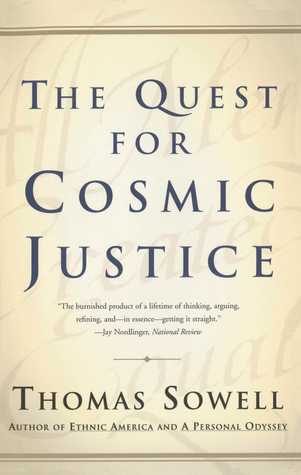
Thomas Sowell
4.4
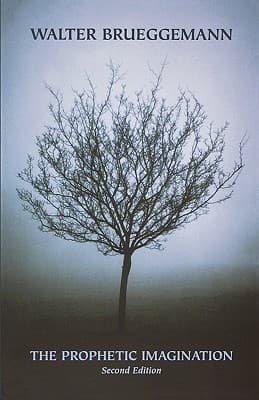
Walter Brueggemann
4.3
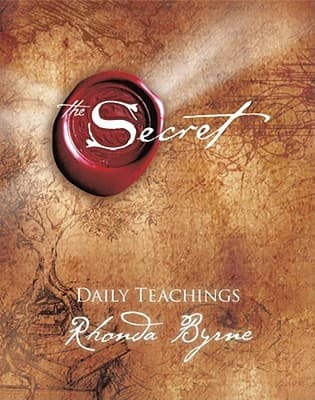
Rhonda Byrne
4.3

Robin Wall Kimmerer
4.3
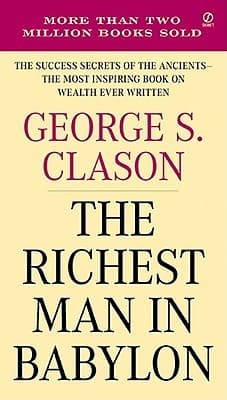
George S. Clason
4.3
Elliot Aronson
4.3

Joseph Campbell
4.3