BookBrief
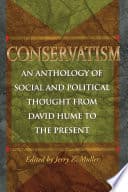
Conservatism cover
Archivist's Choice

Conservatism

Jerry Z. Muller (1997)

Genre

Philosophy

Reading Time

12 Minutes

Key Themes

See below

Track Your Reading

Sign in to track this book

Jerry Z. Muller traces conservatism's intellectual history from Enlightenment critiques to modern thought, showing its unique identity and repeated arguments across centuries and cultures.

Core Idea

Jerry Z. Muller's "Conservatism" offers a comprehensive intellectual history of conservative thought, tracing its evolution from Edmund Burke to the late 20th century. Rather than presenting a monolithic ideology, Muller reveals conservatism as a diverse and often contradictory set of responses to modernity, characterized by skepticism toward radical change, an emphasis on tradition, hierarchy, and established institutions, and a recognition of human imperfection. The book highlights how conservative ideas have adapted across different historical contexts and national traditions, focusing on the recurrent themes of order, liberty, property, and the role of the state, all while acknowledging the internal tensions and transformations within conservative movements.
Difficulty
Hard

Core idea

The central argument and framework that powers the entire book.

Jerry Z. Muller's "Conservatism" offers a comprehensive intellectual history of conservative thought, tracing its evolution from Edmund Burke to the late 20th century. Rather than presenting a monolithic ideology, Muller reveals conservatism as a diverse and often contradictory set of responses to modernity, characterized by skepticism toward radical change, an emphasis on tradition, hierarchy, and established institutions, and a recognition of human imperfection. The book highlights how conservative ideas have adapted across different historical contexts and national traditions, focusing on the recurrent themes of order, liberty, property, and the role of the state, all while acknowledging the internal tensions and transformations within conservative movements.

At a glance

Difficulty

Hard

Key Takeaways

1

Conservatism's Enlightenment Roots

Modern conservatism emerged not as a rejection, but as a critical response to the Enlightenment.

Quote

Conservatism has been a recurring response to the problems of modernity, a modernity itself born of the Enlightenment.

Muller's best insight is his new view of conservatism's beginnings. He argues it is not simply against the Enlightenment. Instead, he shows how thinkers like Edmund Burke, often called the father of modern conservatism, were deeply involved with Enlightenment ideas, especially about reason, individual rights, and progress. Their 'conservatism' was a careful critique of some Enlightenment extremes, like radical rationalism and abstract universalism. They supported keeping existing institutions, traditions, and social hierarchies as sou...

Supporting evidence

Muller's analysis of Edmund Burke's 'Reflections on the Revolution in France,' where Burke critiques the abstract rationalism of the revolutionaries while acknowledging the need for gradual reform.

Apply this

When evaluating political movements, look beyond simplistic 'pro' or 'anti' labels; understand that many ideologies, even seemingly opposing ones, often share common intellectual origins and engage in internal critiques.

2

The Perils of Abstract Reason

Conservatism warns against the dangers of applying pure, abstract reason to complex social realities.

Quote

The conservative mind has consistently been wary of the application of abstract, universal reason to the complex and contingent realities of human society.

Muller often points out conservatives' doubt about abstract, universal reason when applied to government and social reform. Thinkers like Burke and Michael Oakeshott argued that society is too complex, too reliant on unspoken knowledge, inherited customs, and evolved institutions to be remade entirely by rational plans. Attempts to impose grand, theoretical schemes—like those during the French Revolution—often cause unexpected problems, disorder, and tyranny. This is not a rejection of reason itself, but a call for a more modest, prac...

Supporting evidence

Burke's critique of the French Revolutionaries' attempt to rebuild society 'from scratch' based on abstract rights, leading to the Reign of Terror.

Apply this

Before implementing large-scale changes, consider the potential unintended consequences and the value of existing, even imperfect, systems. Prioritize pilot programs and incremental adjustments over sweeping reforms.

3

The Importance of Intermediate Institutions

Conservatives emphasize the crucial role of mediating bodies between the individual and the state.

Quote

Conservatives have consistently affirmed the vital role of intermediate institutions – family, church, community, voluntary associations – in fostering social cohesion and individual character.

Muller emphasizes the conservative focus on 'intermediate institutions'—family, church, local communities, voluntary groups—as important defenses against both isolated individualism and an overly powerful state. These institutions give people a sense of belonging, teach moral values, and build civic virtues that cannot be created by law alone. They act as training grounds for self-governance and responsibility, connecting individuals to the larger state. Without them, people become isolated, more easily controlled by the state, and le...

Supporting evidence

Alexis de Tocqueville's observations on American voluntary associations as crucial for democratic stability, which Muller connects to conservative thought.

Apply this

Actively participate in local community groups, support non-governmental organizations, and strengthen family bonds to build resilience against societal fragmentation and state overreach.

4

Human Imperfection and Moral Order

Conservatism acknowledges the inherent flaws in human nature and the necessity of external moral frameworks.

Quote

A persistent feature of conservative thought is a realistic, often pessimistic, view of human nature, emphasizing its fallen or imperfect character.

Muller identifies a consistent conservative belief in the flawed nature of humanity, leading to skepticism about perfect societies and human perfectibility. Conservatives generally believe that individuals are prone to vice, irrationality, and self-interest, and thus need strong moral frameworks, social norms, and legal limits to maintain order. This view sharply contrasts with more optimistic Enlightenment ideas of human perfectibility through reason. For conservatives, institutions like religion, law, and tradition are not just arbi...

Supporting evidence

The writings of Joseph de Maistre, who emphasized the necessity of a strong, often authoritarian, state and religious authority to control human depravity.

Apply this

When designing policies or managing teams, anticipate potential abuses or unintended negative behaviors, and build in safeguards rather than assuming universal good intentions.

5

Tradition as Accumulated Wisdom

Tradition is viewed not as mere habit, but as a repository of tested knowledge and practical wisdom.

Quote

For conservatives, tradition is not simply the dead hand of the past, but rather the accumulated wisdom of generations, a guide to navigating the complexities of the present.

Muller clarifies the conservative respect for tradition, not as blind loyalty to the past, but as a recognition of its value as accumulated wisdom. Unlike radical reformers who might dismiss tradition as irrational or old-fashioned, conservatives argue that customs, institutions, and social practices have often evolved through generations of trial and error, embodying practical solutions to lasting human problems. This 'presumption in favor of existing arrangements' suggests that what has survived the test of time likely contains valu...

Supporting evidence

Burke's argument that traditions are like an inheritance, carefully passed down and improved, rather than a blank slate for each generation to rewrite.

Apply this

Before discarding established procedures or norms, take time to understand their historical context and the problems they were designed to solve. Seek to understand 'why' something is done a certain way before proposing radical alternatives.

6

Property Rights and Social Order

Private property is seen as fundamental to individual liberty, social stability, and economic prosperity.

Quote

The defense of private property has been a central and consistent tenet of conservative thought, linking economic liberty with social order and individual independence.

A consistent theme in conservative thought, as Muller shows, is the strong defense of private property. This is not just an economic preference but a core principle tied to individual liberty, social stability, and responsible citizenship. Conservatives argue that property ownership gives individuals autonomy, a stake in society, and a reason for productive work and responsible management. Secure property rights are seen as essential for economic prosperity, encouraging investment and long-term planning. Moreover, widespread property ...

Supporting evidence

John Locke's theories on property, which, though foundational to liberalism, were integrated into later conservative defenses of established rights and order.

Apply this

Understand how property rights influence economic behavior and social stability in different political systems. Advocate for policies that secure property rights while also considering equitable access.

7

Skepticism of Equality and Meritocracy

Conservatism often views radical equality as unnatural and detrimental to social hierarchy and individual excellence.

Quote

While not rejecting equality before the law, conservatives have often been skeptical of attempts to enforce radical equality of condition, seeing it as both unnatural and corrosive to necessary social distinctions.

Muller highlights conservative skepticism towards radical equality, especially equality of outcome. While generally accepting equality before the law, conservatives often argue that natural differences in talent, effort, and virtue lead to social hierarchies and disparities. Attempts to enforce absolute equality of condition are seen as unrealistic, requiring coercive state power, and ultimately harmful to individual liberty and excellence. They believe that a healthy society needs distinctions and hierarchies to reward merit, encoura...

Supporting evidence

The arguments of thinkers like Alexis de Tocqueville, who, while recognizing the democratic impulse, warned against the 'tyranny of the majority' and the leveling effects of radical equality.

Apply this

When evaluating social policies, consider the potential trade-offs between equality of outcome and individual liberty, merit, and incentives for productivity. Look for ways to foster opportunity without mandating specific outcomes.

8

The Nation-State and Cultural Identity

Conservatism often ties national identity and cultural cohesion to the stability and legitimacy of the state.

Quote

For many conservatives, the nation-state serves as the primary locus of identity and loyalty, embodying a shared history, culture, and destiny.

Muller explores how conservatism often connects with a strong sense of national identity and cultural unity. For many conservative thinkers, the nation-state is not just a political construct but a repository of shared history, language, customs, and values that bind a people together. This shared culture provides a sense of belonging, purpose, and moral order, which is essential for political stability and legitimacy. They often view cosmopolitanism and radical multiculturalism with suspicion, fearing they can weaken the common bonds...

Supporting evidence

The writings of German Romantics and later conservative nationalists who emphasized the organic, historical development of national character and institutions.

Apply this

Recognize the powerful role of national narratives and cultural identity in shaping political discourse and policy. Understand how appeals to tradition and national heritage can mobilize populations.

9

Prudence and Practicality in Politics

Conservative statecraft prioritizes prudence, gradualism, and a realistic assessment of limits over ideological purity.

Quote

The conservative statesman is characterized by prudence, a keen sense of the possible, and a preference for gradual amelioration over radical transformation.

A key aspect of conservative thought, as detailed by Muller, is the emphasis on prudence and practicality in political action. This contrasts with ideological passion or utopian visions. Conservative leaders are often characterized by a cautious, incremental approach to reform, a deep respect for existing institutions, and a pragmatic assessment of what is achievable given human nature and social reality. They prioritize stability and order, believing that even imperfect systems are better than the chaos that can result from radical, ...

Supporting evidence

Otto von Bismarck's 'realpolitik' is an example of pragmatic, conservative statecraft, prioritizing national interest and stability over ideological purity.

Apply this

In leadership roles, adopt a pragmatic approach, focusing on achievable, incremental improvements rather than grand, untested visions. Prioritize stability and avoid unnecessary disruptions.

10

Distinction from Orthodoxy and Reaction

Muller clearly differentiates conservatism from mere orthodoxy or outright reaction, highlighting its dynamic intellectual engagement.

Quote

Conservatism, as an intellectual tradition, is distinct from mere orthodoxy, which resists all novelty, and from reaction, which seeks to undo modernity.

This takeaway is important for understanding Muller's contribution: he carefully distinguishes conservatism from similar but different ideologies. Orthodoxy, he argues, is a static adherence to established doctrines, often religious, that rejects any deviation or innovation. Reaction, on the other hand, is a desire to actively reverse historical changes and restore a previous, often idealized, social order. Conservatism, as Muller presents it, is more dynamic. It is a critical engagement with modernity, seeking to preserve valuable el...

Supporting evidence

Muller's comparative analysis of Burke (conservative) with Joseph de Maistre (reactionary) and traditional religious authorities (orthodox), highlighting their differing approaches to social change and intellectual inquiry.

Apply this

When analyzing political ideologies, avoid conflating similar-sounding terms. Look for subtle distinctions in their core principles, attitudes towards change, and proposed solutions to understand their true nature.

Critical analysis

Notable Quotes

Quiz

Test Your Knowledge

Ready to see how well you understood this book? Take our interactive quiz with 10 questions.

10
Questions
~5
Minutes
?
Best Score

Key Questions (FAQ)

Jerry Muller argues that modern conservatism has its roots in the Enlightenment, distinguishing it from mere orthodoxy. He traces recurring features of conservative thought across different historical periods and national contexts.

About the author