BookBrief
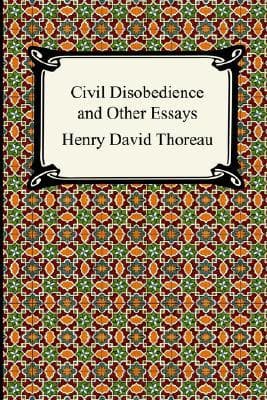
Civil Disobedience and Other Essays cover
Archivist's Choice

Civil Disobedience and Other Essays

Henry David Thoreau (2016)

Genre

Politics / History / Philosophy

Reading Time

240 min

Key Themes

See below

Track Your Reading

Sign in to track this book

Thoreau argues for individual moral conviction over unjust laws, urging readers to resist societal conformity and embrace a life of deliberate, principled action in nature.

Core Idea

Thoreau argues that individual conscience has more authority than civil law, especially when a law is unjust. He advocates for active, nonviolent resistance against government policies that violate one's moral compass, even if it means personal sacrifice. The book supports the individual's power to create change by withdrawing consent and cooperation from an immoral state. It asserts that true freedom and justice come from principled action, not blind obedience or majority rule.
Reading time
240 min
Difficulty
Medium
✓ Read this if...
You are interested in the philosophical foundations of civil disobedience, individual liberty, and the relationship between the citizen and the state. Ideal for those who question authority and seek to understand the moral imperative behind nonviolent resistance.
✗ Skip this if...
You prefer a purely historical account of political movements without deep philosophical inquiry, or if you are looking for practical, step-by-step guides to political action rather than theoretical arguments for individual moral autonomy.

Core idea

The central argument and framework that powers the entire book.

Thoreau argues that individual conscience has more authority than civil law, especially when a law is unjust. He advocates for active, nonviolent resistance against government policies that violate one's moral compass, even if it means personal sacrifice. The book supports the individual's power to create change by withdrawing consent and cooperation from an immoral state. It asserts that true freedom and justice come from principled action, not blind obedience or majority rule.

At a glance

Reading time

240 min

Difficulty

Medium

Read this if...

You are interested in the philosophical foundations of civil disobedience, individual liberty, and the relationship between the citizen and the state. Ideal for those who question authority and seek to understand the moral imperative behind nonviolent resistance.

Skip this if...

You prefer a purely historical account of political movements without deep philosophical inquiry, or if you are looking for practical, step-by-step guides to political action rather than theoretical arguments for individual moral autonomy.

Key Takeaways

1

Conscience Above Law

Moral obligation supersedes legal statute when the state acts unjustly.

Quote

The only obligation which I have a right to assume is to do at any time what I think right.

Thoreau's main argument in 'Civil Disobedience' is that individual conscience is the ultimate judge of right and wrong. This moral duty, he says, is more important than human law. He believes citizens are not obligated to blindly follow laws they see as unjust or immoral, even if those laws were democratically passed. To do so, he argues, would make them agents of injustice. Instead, when the government demands complicity in wrongdoing, individuals have a moral duty to refuse and resist. This is not an endorsement of anarchy, but a ca...

Supporting evidence

Thoreau's refusal to pay his poll tax for six years in protest against slavery and the Mexican-American War, leading to his brief imprisonment.

Apply this

Identify a policy or action by your government or institution that you believe is fundamentally unjust. Reflect on what forms of non-violent resistance, if any, your conscience compels you to consider, from vocal dissent to direct action.

civil-disobediencemoral-imperativeconscience
2

Minimal Government, Maximum Freedom

The ideal state is one that governs least, allowing individuals to flourish.

Quote

That government is best which governs least.

Thoreau supports a vision of limited government, believing the state often hinders individual liberty and moral progress. He sees government not as inherently good, but as a necessary evil at best, prone to inefficiency, corruption, and suppressing individual conscience. The less government interferes in citizens' lives, the more freedom individuals have to develop morally and intellectually. His ideal is not the absence of government, but a government so efficient and discreet that it allows individuals to live by their own principle...

Supporting evidence

His critique of the American government for its role in perpetuating slavery and engaging in an unjust war, arguing that it had become a tool for the powerful rather than a servant of the people.

Apply this

Evaluate areas in your society where government intervention feels excessive or counterproductive. Consider how individual or community-led initiatives might address those needs more effectively, fostering greater autonomy.

limited-governmentindividual-libertyself-reliance
3

The Tyranny of the Majority

Democratic rule does not inherently guarantee justice; the individual must remain vigilant.

Quote

A government in which the majority rule in all cases cannot be based on justice, even as far as men understand it.

While often praised, majority rule, according to Thoreau, does not automatically mean justice. He argues that a majority can be as oppressive as an autocrat if its decisions are not based on moral principles. The number of people agreeing on something does not make it right, especially if that agreement infringes upon the rights or moral standing of a minority or an individual. This insight is important for understanding the limits of democratic legitimacy. Thoreau emphasizes that individuals must not give up their moral judgment to t...

Supporting evidence

His strong condemnation of the majority's complicity in the continuation of slavery, despite it being a legally sanctioned institution, illustrating how popular will can uphold profound injustice.

Apply this

When faced with a popular opinion or policy, pause to critically assess its ethical implications, especially for marginalized groups, rather than simply accepting it because it's widely supported.

majority-ruletyrannyjustice
4

Life Without Principle

The modern pursuit of wealth and shallow living distracts from genuine purpose.

Quote

The mass of men lead lives of quiet desperation.

In 'Life Without Principle,' Thoreau criticizes the widespread materialism and lack of deeper purpose he sees in society. He condemns the constant pursuit of wealth and superficial achievements, arguing that these efforts distract individuals from cultivating their intellect, conscience, and connection to nature. People become parts of an economic machine, sacrificing their true selves for temporary gains. He sees this as a form of 'quiet desperation,' where individuals are too busy earning a living to truly live. Thoreau advocates fo...

Supporting evidence

His observation of people's preoccupation with news of gold rushes and financial speculation, rather than intellectual or spiritual pursuits, in 'Life Without Principle.'

Apply this

Conduct a 'time audit' for a week, noting how you spend your time. Identify activities that contribute to genuine personal growth and those that feel like distractions, then consciously reallocate your time towards the former.

materialismpurposeful-livingintrospection
5

The Wild is Essential

Nature is not merely a resource but a vital source of spiritual and intellectual renewal.

Quote

In wildness is the preservation of the world.

Thoreau's essays, especially 'Walking' and 'Wild Apples,' express deep respect for wild nature. He sees it not just as a place for recreation, but as an essential part of human well-being. He argues that civilization, with its artificial structures and demands, often dulls our senses and spirits. True vitality and intellectual energy are found by directly engaging with the untamed, 'wild' parts of the world. Nature offers comfort for the soul, a source of inspiration, and a mirror for understanding deeper truths about existence. He ch...

Supporting evidence

His detailed descriptions of walks through forests and fields, meticulous observations of plants and animals, and his argument that uncultivated 'wild' apples are superior in flavor and spirit to domesticated ones.

Apply this

Regularly seek out and immerse yourself in natural environments, even small patches of 'wildness' in urban settings. Practice mindful observation, allowing nature to inspire reflection and renewal.

naturewildnessspiritual-renewal
6

True Wealth is Time

The freedom to live deliberately is more valuable than accumulated possessions.

Quote

The cost of a thing is the amount of what I will call life which is required to be exchanged for it, immediately or in the long run.

Thoreau radically redefines wealth, changing it from material possessions to the invaluable currency of time and life itself. He suggests that every purchase, every job, every societal expectation comes with a 'cost' measured not in dollars, but in the hours, days, and years of one's life that must be spent to get or keep it. This view forces a critical evaluation of consumerism and career choices. If a job demands too much of one's time and energy, leaving little for intellectual pursuits, connection with nature, or personal growth, ...

Supporting evidence

His own experiment at Walden Pond, where he simplified his life to minimize his need for money, allowing him ample time for writing, observation, and reflection.

Apply this

Before making a significant purchase or committing to a new project, calculate its 'life cost' – how many hours of your life you'll need to work to afford it or maintain it. Use this to inform your decisions.

deliberate-livingtime-valueanti-consumerism
7

The Power of One

An individual's moral stand, however solitary, can be a potent force for change.

Quote

It is not so important that many should be as good as you, as that there be some absolute goodness somewhere; for that will leaven the whole lump.

Thoreau's philosophy empowers the individual, stating that even one person, acting on principle, can start significant change. He rejects the idea that one must wait for a majority or a group movement to act against injustice. Instead, he believes that a single act of moral defiance, a refusal to cooperate with an immoral system, has an inherent power to expose hypocrisy and inspire others. This 'leavening' effect means that one person's integrity can gradually raise the moral awareness of a community or even a nation. His own impriso...

Supporting evidence

His own solitary act of tax refusal and subsequent imprisonment, which, though seemingly minor, became a foundational text for non-violent resistance movements globally, including those led by Gandhi and Martin Luther King Jr.

Apply this

Identify a small but significant act of moral courage you can take in your own life – perhaps speaking up against an injustice in your workplace or community, even if you are the only one.

individual-actionmoral-couragesocial-change
8

The Dangers of Blind Patriotism

Uncritical loyalty to the state can lead to complicity in its injustices.

Quote

All men recognize the right of revolution; that is, the right to refuse allegiance to, and to resist, the government, when its tyranny or its inefficiency are great and unendurable.

Thoreau critically examines patriotism, arguing that it often becomes an unthinking loyalty to the state, regardless of its actions. He challenges the idea that a good citizen must always support their government, even when that government acts immorally. For Thoreau, true patriotism is not blind obedience but a commitment to the highest ideals of justice and liberty that a nation should represent. When the state deviates from these ideals, especially through aggression or injustice like slavery or unjust wars, citizens have a right...

Supporting evidence

His condemnation of the Mexican-American War and the institution of slavery, arguing that the government had forfeited its moral authority and therefore citizens were justified in resisting its demands.

Apply this

When confronted with calls for national unity or loyalty, critically evaluate the underlying actions and policies of the government. Ask whether these align with your personal ethical framework and universal principles of justice.

patriotismdissentgovernment-accountability
9

The Call for a Higher Law

Beyond human statutes lies a natural, universal moral code that demands adherence.

Quote

Law never made men a whit more just; and, by means of their respect for it, even the well-disposed are daily made the agents of injustice.

Thoreau implies and states that a 'higher law' exists—a universal moral code or natural justice that is above man-made statutes. He argues that human-made laws are often imperfect, fallible, and even immoral, and that simply following them does not guarantee justice. In fact, he suggests that misplaced respect for law can turn otherwise good people into tools of injustice. An individual's primary loyalty should be to this higher law, which is accessible through conscience and reason, rather than to the state's commands. This concept p...

Supporting evidence

His unwavering stance against slavery, which was legal at the time, and his support for abolitionists like John Brown, whose actions, though illegal, he viewed as morally justified under a higher law.

Apply this

When encountering a legal or societal norm, reflect on whether it aligns with your deepest moral convictions. If there's a conflict, explore the roots of that conflict and consider how to advocate for a more just alignment.

natural-lawmoral-philosophyconscience
10

Embrace the Outlier

The independent thinker, often solitary, is crucial for societal progress.

Quote

If a man does not keep pace with his companions, perhaps it is because he hears a different drummer. Let him step to the music which he hears, however measured or far away.

Thoreau celebrates individuals who dare to think and act independently, even if it means differing from societal norms or the majority opinion. He suggests that real progress and moral insight often come not from the conformity of the masses, but from the unique perspective of the 'outlier'—the person who 'hears a different drummer.' These individuals, though often marginalized or misunderstood in their time, are the ones who challenge stagnant ideas, expose injustices, and open new paths for thought and action. His own life, spent la...

Supporting evidence

His own unconventional lifestyle at Walden Pond, his radical political views that alienated him from many contemporaries, and his defense of figures like John Brown, who were widely condemned.

Apply this

Identify an area in your life where you feel pressure to conform. Reflect on your own unique perspective or 'drummer,' and consider how you might more authentically express it, even if it means standing apart.

individualismnon-conformityindependent-thought

Critical analysis

Notable Quotes

I heartily accept the motto,—“That government is best which governs least”; and I should like to see it acted up to more rapidly and systematically.

Opening lines of 'Civil Disobedience,' setting the tone for his political philosophy.

The only obligation which I have a right to assume is to do at any time what I think right.

Arguing for individual conscience over state law.

Under a government which imprisons any unjustly, the true place for a just man is also a prison.

Justifying his own imprisonment for refusing to pay a poll tax.

It is not a man's duty, as a matter of course, to devote himself to the eradication of any, even the most enormous wrong; he may still properly have other concerns to engage him; but it is his duty, at least, to wash his hands of it, and, if he can not give it no further thought, at least not to give it practically his support.

Explaining the minimum responsibility of an individual regarding injustice.

I saw that, if there was a wall of stone between me and my townsmen, there was a still more difficult one to climb or break through, before they could get to be as free as I was.

Reflecting on his time in jail and the true nature of freedom.

I went to the woods because I wished to live deliberately, to front only the essential facts of life, and see if I could not learn what it had to teach, and not, when I came to die, discover that I had not lived.

Explaining his motivation for living at Walden Pond.

Our life is frittered away by detail. An honest man has hardly need to count more than his ten fingers, or in extreme cases he may add his ten toes, and lump the rest.

Critiquing the complexity and distractions of modern life.

Rather than love, than money, than fame, give me truth.

A powerful declaration of his ultimate value.

The mass of men lead lives of quiet desperation.

A famous observation on the unfulfilled lives of many people.

If a man does not keep pace with his companions, perhaps it is because he hears a different drummer. Let him step to the music which he hears, however measured or far away.

Advocating for individuality and following one's own path.

Read the best books first, or you may not have a chance to read them at all.

Emphasizing the importance of discerning reading and intellectual pursuits.

It is never too late to give up our prejudices. No way of thinking or doing, however ancient, can be trusted without proof.

Encouraging critical thinking and challenging long-held beliefs.

I perceive that, when an acorn and a chestnut fall side by side, the one does not remain inert to make way for the other, but both obey their own laws, and spring and grow and flourish as best they can, till one, perhaps, overshadows and destroys the other.

Using a natural metaphor to illustrate the independent growth of individuals and ideas.

Why should we be in such desperate haste to succeed and in such desperate enterprises? If a man does not keep pace with his companions, perhaps it is because he hears a different drummer.

A more complete version of the 'different drummer' quote, questioning societal pressures.

To be awake is to be alive. I have never yet met a man who was quite awake. How could I have looked him in the face?

A profound statement on the rarity of true awareness and engagement with life.

Quiz

Test Your Knowledge

Ready to see how well you understood this book? Take our interactive quiz with 10 questions.

10
Questions
~5
Minutes
?
Best Score

Key Questions (FAQ)

The main idea is that individuals should not permit governments to overrule or atrophy their consciences. Thoreau argues that people have a moral obligation to refuse to cooperate with injustice, even if it means breaking the law, as long as they do so peacefully and accept the consequences.

About the author