BookBrief
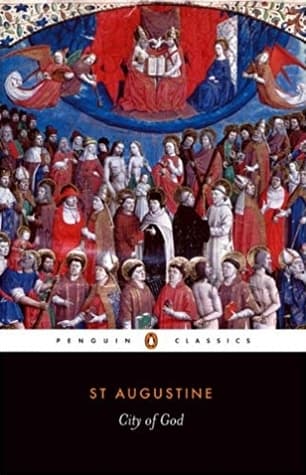
City of God cover
Archivist's Choice

City of God

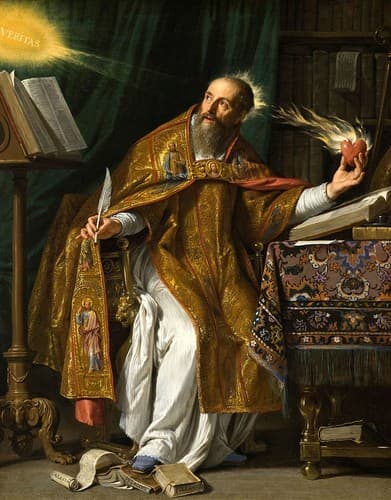
Augustine of Hippo (2017)

Genre

General

Reading Time

2400 min (approx.)

Key Themes

See below

Track Your Reading

Sign in to track this book

With the Roman Empire collapsing, Augustine defends Christianity, arguing for an eternal 'City of God' whose values last longer than human cities.

Core Idea

Augustine's "City of God" defends Christianity against pagan criticism, especially after the Sack of Rome. He describes two cities: the earthly city, driven by self-love and the desire for temporary power and pleasure, which will decay; and the City of God, made of those who love God and live by faith, meant for eternal happiness. Augustine says that true peace and justice are not found in earthly empires, which are flawed and temporary. They are only found in God's order and God's plan. He traces human history from creation to the Last Judgment, interpreting events through a Christian view, addressing evil, original sin, and the need for God's grace. He states the lasting hope and ultimate win for the faithful.
Reading time
2400 min (approx.)
Difficulty
Hard
✓ Read this if...
You are interested in the foundational texts of Western theology and political thought, want to understand the early Christian worldview, or are grappling with the relationship between faith and worldly power.
✗ Skip this if...
You are looking for a light, quick read, or have no interest in dense theological and historical arguments.

Core idea

The central argument and framework that powers the entire book.

Augustine's "City of God" defends Christianity against pagan criticism, especially after the Sack of Rome. He describes two cities: the earthly city, driven by self-love and the desire for temporary power and pleasure, which will decay; and the City of God, made of those who love God and live by faith, meant for eternal happiness. Augustine says that true peace and justice are not found in earthly empires, which are flawed and temporary. They are only found in God's order and God's plan. He traces human history from creation to the Last Judgment, interpreting events through a Christian view, addressing evil, original sin, and the need for God's grace. He states the lasting hope and ultimate win for the faithful.

At a glance

Reading time

2400 min (approx.)

Difficulty

Hard

Read this if...

You are interested in the foundational texts of Western theology and political thought, want to understand the early Christian worldview, or are grappling with the relationship between faith and worldly power.

Skip this if...

You are looking for a light, quick read, or have no interest in dense theological and historical arguments.

Key Takeaways

1

Two Cities, Two Loves

Humanity is divided into two allegorical cities, defined by their ultimate loves.

Quote

Accordingly, two cities have been formed by two loves: the earthly by the love of self, even to the contempt of God; the heavenly by the love of God, even to the contempt of self.

Augustine describes two main parts of human life: the City of God and the Earthly City. These are not real places but represent two different groups, each defined by its main love. The Earthly City, including all people not trying for God's grace, is driven by 'love of self' (amor sui). This self-love, when taken to its extreme, causes pride, unfairness, and ignoring God's will. Its search for earthly peace, though sometimes good, is temporary and based on selfish desires. The City of God, made of those chosen for salvation and united...

Supporting evidence

Augustine dedicates significant portions of Books XIV and XV to elaborating on the origins and characteristics of these two cities, tracing their lineage from Cain and Abel, respectively, and defining them by their contrasting 'loves.'

Apply this

Reflect on your own motivations and the collective aims of your community or nation. Are they primarily driven by self-interest and temporal gain, or by a transcendent purpose and a love for something beyond oneself? This framework encourages a critical evaluation of personal and societal values.

amor-suiamor-deidualismoriginal-sin
2

The Problem of Evil

Evil is not a substance but a privation of good, a corruption of God's perfect creation.

Quote

For what is that which we call evil but the absence of good?

One of Augustine's most lasting ideas is his explanation for evil in a world made by a good, powerful God. He rejects the Manichaean idea that evil is a separate, opposing force or thing. Instead, Augustine says evil is a 'lack of good' (privatio boni) — an absence or damage of what God first made good. Just as darkness is the absence of light, evil is the absence of goodness in a being that should have it. God made everything good; evil comes from rational beings (angels and humans) misusing free will when they choose lesser good thi...

Supporting evidence

Augustine tackles the problem of evil extensively in Book XI, particularly in response to the Manichaean dualism he once adhered to. He argues that even seemingly evil things, when viewed in the context of the whole creation, can serve a purpose in the divine order, much like shadows in a painting.

Apply this

When confronted with suffering or injustice, instead of questioning God's existence or benevolence, consider how human choices and the absence of virtuous action contribute to the 'evil' present. This encourages a focus on restoring good and rectifying privations, rather than battling an abstract force.

theodicyprivatio-bonifree-willmanichaeism
3

Original Sin and its Legacy

Adam's sin corrupted human nature, making all subsequent generations prone to sin and requiring divine grace.

Quote

For in Adam all die, and the disobedience of Adam was the cause of the death not only of himself but of all his posterity.

Augustine's idea of Original Sin greatly shaped Western theology and views of human nature. He says that Adam and Eve's disobedience in Eden was not just one act but a terrible fall that damaged human nature itself. This 'original sin' is passed down to all future generations, not as personal blame for Adam's act, but as a birth defect — a damaged will, disordered desire, and an inability to perfectly obey God without divine help. This fallen state means humans naturally lean towards sin and cannot achieve salvation on their own. This...

Supporting evidence

Augustine's extensive refutations of Pelagianism throughout *City of God* (and other works) solidify his doctrine of original sin. He cites Romans 5:12, arguing that 'in Adam all die' refers to a transmission of guilt and corruption, not merely imitation.

Apply this

Recognize the inherent biases and inclinations towards self-interest and error in yourself and others. This perspective fosters humility, compassion for human failings, and a greater appreciation for any good achieved, seeing it as potentially divinely assisted. It also underscores the need for moral education and societal structures that account for human imperfection.

original-sinconcupiscencepelagianismgrace
4

True Peace vs. Earthly Tranquility

Earthly peace is a temporary good, but true peace lies in alignment with God's eternal order.

Quote

Peace is the tranquility of order.

Augustine defines peace as 'the order of tranquility' — the organized arrangement of parts in their correct place and job. He separates the limited, often weak peace possible in the Earthly City from the perfect peace found in the City of God. The Earthly City, driven by self-love, seeks a temporary peace that serves its own goals, even through war and control. This peace, though good in some ways and needed for human life, is unstable, prone to conflict, and not enough. True peace, however, is found when the will fully submits to God...

Supporting evidence

Augustine elaborates on the concept of peace in Book XIX, arguing that even the 'wicked' desire some form of peace, but their peace is always disordered, temporary, and ultimately serves their own ends rather than God's. He contrasts this with the eternal peace of the heavenly city.

Apply this

Evaluate your own pursuits of 'peace.' Are you seeking merely the absence of conflict or a deeper, more fundamental alignment with moral and spiritual principles? Work towards creating ordered systems in your life and community, but recognize their inherent limitations and strive for a deeper, more enduring sense of peace found in virtuous living and spiritual connection.

tranquility-of-orderearthly-peaceeternal-peacedivine-order
5

History as Linear Progression

History is not cyclical but a purposeful, linear journey guided by divine providence towards a predetermined end.

Quote

For God, who knows all things before they come to pass, and whose foreknowledge cannot be deceived, has arranged the whole course of human history.

Augustine changed the Western idea of history. Against the common pagan view of history as repeating, Augustine introduced a linear model with a goal. For him, history is not meaningless events but a purposeful story, ordered by God and moving towards a specific end. God, through his unseen plan, arranges all events, even the rise and fall of empires, to bring about the salvation of the City of God. This view gives human history deep meaning and importance, showing that every event, no matter how chaotic or sad, plays a part in God's ...

Supporting evidence

Augustine extensively critiques pagan historians and philosophers (like Plato and Virgil) who posited cyclical views of history in Books X-XVIII, contrasting their views with the Judeo-Christian narrative of creation, fall, redemption, and final judgment.

Apply this

View current events, both personal and global, not as random occurrences but as part of a larger, unfolding narrative. This can provide a sense of purpose and resilience in times of uncertainty, encouraging a long-term perspective and a focus on contributing to lasting good, even when immediate outcomes are unclear.

teleologydivine-providenceeschatologylinear-history
6

The Impermanence of Earthly Empires

All earthly kingdoms, even the mightiest, are transient and ultimately subservient to God's eternal plan.

Quote

What are kingdoms but great robberies?

Augustine's critique of Rome's fall is a main point in City of God. While acknowledging Rome's successes, he says that all earthly empires, including the strong Roman Empire, are flawed and temporary. Their rise and fall are not due to pagan gods or Christian abandonment, but to God's will, who uses them for His own purposes, often to correct or teach humanity. Earthly kingdoms, even when they achieve some justice and order, are driven by self-love and the desire for temporary power. Their 'peace' is often kept through force and vio...

Supporting evidence

Augustine dedicates the first five books to refuting the pagan claim that the sack of Rome in 410 AD was due to the abandonment of their gods for Christianity. He meticulously details Rome's internal moral failings and the capricious nature of its 'fortunes,' demonstrating its inherent fragility.

Apply this

Cultivate a healthy skepticism towards political leaders and nationalistic fervor. While participating in civic life is important, avoid placing ultimate hope or faith in any human government or institution. Understand that their successes are temporary and their failures are inevitable, fostering a focus on transcendent values.

earthly-cityroman-empirepolitical-theologytransience
7

The Role of Government

Earthly government, though flawed, serves a divinely ordained purpose in maintaining order and restraining sin.

Quote

A people is an assemblage of reasonable beings bound together by a common agreement as to the objects of their love.

Despite his criticism of earthly empires, Augustine does not support chaos. He recognizes that government, even in the fallen world, serves an important, God-given purpose. Because of original sin and human tendency towards disorder, civil government is needed to keep some peace and justice, control evil, and protect its citizens. Its main job is to enforce laws, manage justice, and provide for the common good, allowing God's citizens to pursue their spiritual goals in relative peace. While not the source of salvation or true justice,...

Supporting evidence

Augustine discusses the nature and necessity of government in Book XIX, particularly when defining a 'people' and how their 'common agreement as to the objects of their love' shapes their society and its laws. He also acknowledges that temporal rulers can be instruments of God's will.

Apply this

Participate in civic life, uphold just laws, and advocate for good governance, not out of naive belief in its perfectibility, but out of a recognition of its essential role in maintaining order and creating conditions conducive to human flourishing. Support policies that promote justice and restrain harmful actions, even while recognizing the government's limitations.

political-philosophycommon-goodsocial-ordercivic-duty
8

The Pilgrimage of Faith

Life for the believer is a journey of faith, a temporary sojourn in the Earthly City while yearning for the Heavenly.

Quote

The heavenly city, while on pilgrimage on earth, calls citizens out of all nations.

For Augustine, a Christian's life in the world is a 'pilgrimage.' Citizens of the City of God are not of this world, even though they live in it. They are 'travelers' or 'exiles' in the Earthly City, using its goods and systems but never fully identifying with them or placing their ultimate hope in them. This journey is marked by faith, patience, and a constant longing for their true home in the Heavenly City. They take part in earthly society, marry, raise families, and work, but their main loyalty and hopes are elsewhere. This idea ...

Supporting evidence

Augustine frequently uses metaphors of pilgrimage, exile, and sojourning throughout the work, especially in Book XIX, when discussing how the heavenly city 'uses' the peace of Babylon (the earthly city) while on its journey.

Apply this

Cultivate a sense of detachment from worldly possessions, status, and temporary pleasures. While enjoying and using the good things of this life, remember they are transient. Focus on building an inner life of virtue and faith, recognizing that your ultimate identity and fulfillment come from beyond the present world.

pilgrimagesojournerheavenly-cityeschatological-hope
9

The Enduring Power of Grace

Humanity's fallen state necessitates divine grace as the sole means of salvation and true righteousness.

Quote

For without grace, what is man but a beast?

Given human corruption through original sin, Augustine states that salvation depends entirely on God's undeserved grace. Human free will, though still present, is so damaged that it cannot start or maintain true goodness or achieve salvation alone. Grace is a divine gift that allows humans to desire, choose, and do good works. It is not earned by merit but freely given, showing God's power and mercy. This idea was a big change from more hopeful views of human ability and firmly established how central divine help is in the Christian u...

Supporting evidence

Augustine's persistent arguments against Pelagius, who emphasized human free will and the ability to earn salvation through good works, are woven throughout *City of God*. He consistently champions the absolute necessity and efficacy of divine grace.

Apply this

Recognize that any good you accomplish or virtue you possess is, at least in part, a gift. Cultivate humility and a reliance on a higher power for guidance and strength in overcoming personal failings. Avoid self-righteousness and extend grace to others, understanding their own struggles with human imperfection.

divine-gracefree-willsalvationpelagianism
10

The Ultimate Goal: Eternal Beatitude

The final destiny of the City of God is eternal life, perfect peace, and unceasing worship of God.

Quote

There we shall rest and see, see and love, love and praise. This is what shall be in the end without end.

Augustine ends his large work by describing the final destiny of the City of God: eternal happiness in God's presence. This is the 'end without end,' a state of perfect peace, joy, and goodness where all suffering, sin, and death are gone. God's citizens will experience the 'beatific vision,' seeing God face to face, and will live in endless worship and praise. This future vision gives ultimate meaning and purpose to the pilgrimage of faith, making all earthly troubles seem small compared to the promised eternal reward. It offers deep...

Supporting evidence

Augustine dedicates the final books (XX-XXII) to the Last Judgment, the resurrection of the body, and the eternal state of the blessed in the Heavenly City, drawing heavily from scriptural accounts of Revelation.

Apply this

Maintain an eternal perspective in your daily life. Let the hope of a greater, more perfect future inform your decisions and priorities. While working to improve the present world, remember that ultimate fulfillment lies beyond it, motivating you to pursue lasting values and spiritual growth.

beatific-visioneschatologyheavenly-cityeternal-life

Critical analysis

Notable Quotes

You have made us for yourself, O Lord, and our heart is restless until it rests in you.

Augustine reflects on the human condition and the ultimate purpose of existence.

The earthly city glories in itself, the Heavenly City glories in the Lord.

Contrasting the values of the City of Man and the City of God.

What then is time? If no one asks me, I know what it is. If I wish to explain it to him who asks, I do not know.

Augustine's philosophical inquiry into the nature of time in his Confessions, referenced in City of God.

For it is one thing to see the land of peace from a wooded ridge... and another to tread the road that leads to it.

Describing the difference between understanding spiritual truth and living it out.

The peace of the celestial city is the perfectly ordered and harmonious enjoyment of God, and of one another in God.

Defining the ultimate peace found in the City of God.

Thus, in this life, virtue is not the absence of evil desires, but the ability to resist them.

Discussing the nature of virtue and human struggle against sin.

For God judged it better to bring good out of evil than to suffer no evil to exist.

Explaining the problem of evil and God's providence.

The love of self, even to the contempt of God, made the earthly city; the love of God, even to the contempt of self, made the heavenly city.

Summarizing the foundational principles of the two cities.

True justice is found only in that republic whose founder and ruler is Christ.

Arguing that perfect justice is unattainable in earthly societies.

For no one can be good who does not will to be good, nor can anyone will it unless helped by God.

Emphasizing the role of divine grace in human goodness.

The peace of all things is the tranquility of order.

Defining peace as the proper ordering of things according to God's design.

Thus the two cities were created by two kinds of love: the earthly by the love of self, the heavenly by the love of God.

Reiterating the core distinction between the two cities.

For what is the life of the saints but a hymn to God?

Describing the purpose and nature of a holy life.

The good man, though a slave, is free; the wicked, though a king, is a slave.

Contrasting true freedom based on virtue with worldly bondage.

Quiz

Test Your Knowledge

Ready to see how well you understood this book? Take our interactive quiz with 10 questions.

10
Questions
~5
Minutes
?
Best Score

Key Questions (FAQ)

Augustine argues that human history is defined by the conflict between two symbolic cities: the City of God, representing those devoted to spiritual values and God's eternal kingdom, and the City of Man, representing those focused on earthly desires and temporal power. He uses this framework to explain the fall of Rome and assert Christianity's role in history.

About the author

Augustine of Hippo

Augustine of Hippo was a prominent early Christian theologian and philosopher whose lifetime writings profoundly influenced Western Christianity and philosophy. His seminal works, 'Confessions' and 'City of God,' offer deep introspection and theological arguments that remain influential. He is revered as a Doctor of the Church and one of the most important figures in the development of Western thought.