BookBrief
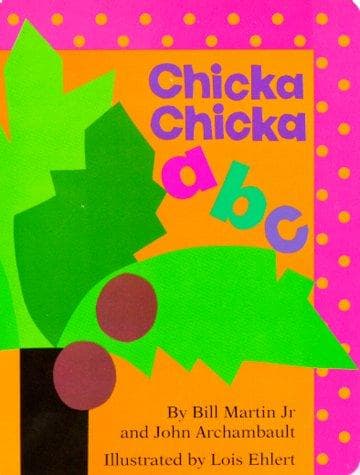
Chicka Chicka ABC cover
Archivist's Choice

Chicka Chicka ABC

Bill Martin

Genre

General

Reading Time

3 min

Key Themes

See below

Track Your Reading

Sign in to track this book

An exuberant alphabet adventure where lower-case letters race to the top of a coconut tree, only to tumble down in a delightful, rhyming heap.

Core Idea

Chicka Chicka ABC is a vibrant and rhythmic children's book that uses the engaging narrative of lowercase letters climbing a coconut tree to teach the alphabet. The central idea revolves around the playful personification of letters, their individual identities, and the collective challenge they face, culminating in a comforting resolution provided by the uppercase letters. This story emphasizes early literacy through an adventurous journey, making the learning of letters a dynamic and memorable experience for young readers.
Reading time
3 min
Difficulty
Easy
✓ Read this if...
You want a fun, rhyming, and visually engaging way to introduce the alphabet to toddlers and preschoolers, or if you're looking for a book that encourages phonological awareness and letter recognition through a simple, exciting story.
✗ Skip this if...
You are looking for a book with a complex plot, deep character development, or advanced vocabulary for older children.

Core idea

The central argument and framework that powers the entire book.

Chicka Chicka ABC is a vibrant and rhythmic children's book that uses the engaging narrative of lowercase letters climbing a coconut tree to teach the alphabet. The central idea revolves around the playful personification of letters, their individual identities, and the collective challenge they face, culminating in a comforting resolution provided by the uppercase letters. This story emphasizes early literacy through an adventurous journey, making the learning of letters a dynamic and memorable experience for young readers.

At a glance

Reading time

3 min

Difficulty

Easy

Read this if...

You want a fun, rhyming, and visually engaging way to introduce the alphabet to toddlers and preschoolers, or if you're looking for a book that encourages phonological awareness and letter recognition through a simple, exciting story.

Skip this if...

You are looking for a book with a complex plot, deep character development, or advanced vocabulary for older children.

Key Takeaways

1

Alphabetical Ascent

The journey of letters climbing a coconut tree illustrates the sequential nature of the alphabet.

Quote

Chicka Chicka Boom Boom! Will there be enough room?

The core narrative of 'Chicka Chicka ABC' revolves around all 26 lowercase letters of the alphabet attempting to climb to the top of a coconut tree. This simple yet effective storyline provides a highly visual and engaging method for children to grasp the concept of alphabetical order. As each letter 'climbs,' it implicitly reinforces its position relative to the others, creating a memorable sequence. The accumulation of letters at the top, and their subsequent tumble, also introduces the idea of cause and effect in a playful context,...

Supporting evidence

The sequential introduction of 'A and B and C' followed by 'and D and E and F' as they ascend the tree.

Apply this

Use physical letter cutouts or magnetic letters to 'climb' a vertical surface, reciting the alphabet as each letter is placed.

alphabet-recognitionsequential-learningearly-literacy
2

Phonological Play

The rhythmic text and repetitive phrases enhance phonological awareness and letter sound recognition.

Quote

Skit skat skoodle doot. Flip flop flee. Everybody running to the coconut tree.

The book's distinctive rhythm and rhyming structure are crucial for developing phonological awareness in young readers. Phrases like 'Chicka Chicka Boom Boom' and 'Skit skat skoodle doot' are not just catchy; they highlight the sounds within words, helping children segment and blend sounds, a foundational skill for reading. The repetition of these phrases provides consistent auditory cues, allowing children to anticipate and participate in the storytelling, thereby strengthening their auditory memory and ability to distinguish differe...

Supporting evidence

The consistent use of alliteration and assonance throughout the narrative, such as 'look! there's L, M, N, O, P!'

Apply this

Encourage children to clap along to the rhythm of the book, emphasizing the stressed syllables and rhyming words to internalize the sound patterns.

phonological-awarenessrhyme-and-rhythmauditory-memory
3

Lowercase Focus

The deliberate emphasis on lowercase letters introduces children to their most common written forms.

Quote

A told B, and B told C, 'I'll meet you at the top of the coconut tree.'

Unlike many introductory alphabet books that feature only uppercase letters, 'Chicka Chicka ABC' predominantly uses lowercase letters. This is a significant pedagogical choice because lowercase letters appear far more frequently in written English text (approximately 95% of all letters). By familiarizing children with their shapes and forms early on, the book provides a more realistic and practical introduction to reading. This focus helps children transition more smoothly from letter recognition to word recognition, as most words the...

Supporting evidence

Every letter character depicted climbing the tree is in its lowercase form.

Apply this

When practicing writing, encourage children to focus on forming lowercase letters correctly before moving onto uppercase, reinforcing the book's emphasis.

lowercase-lettersletter-recognitionreading-readiness
4

Problem-Solving Narrative

The letters' fall and subsequent rescue introduce a simple problem-solution structure to young readers.

Quote

Oh, no! Chicka Chicka Boom Boom! All the letters fell out of the coconut tree!

Beyond just alphabet learning, the book presents a rudimentary problem-solving scenario. The initial excitement of climbing is followed by the 'problem' of all the letters falling down due to overcrowding. This creates a moment of suspense and then a resolution as the 'mamas and papas and uncles and aunts' come to rescue their respective letters. This narrative arc, though simple, helps children understand basic story structure: introduction of characters, rising action, a problem, and a resolution. It teaches them that challenges can...

Supporting evidence

The vivid depiction of the letters tumbling down and the subsequent appearance of their uppercase counterparts to help them up.

Apply this

After reading, ask children 'What was the problem in the story?' and 'How was it solved?' to encourage critical thinking about narrative elements.

narrative-structureproblem-solutionstory-comprehension
5

Parental Support

The uppercase 'family' members rescuing the lowercase letters symbolizes nurturing guidance in learning.

Quote

'Help us up!' cried A, B, C.

A poignant element of the story is the arrival of the uppercase 'mamas and papas and uncles and aunts' to help their bruised and tangled lowercase children. This act of rescue serves as a powerful metaphor for the supportive role of adults in a child's learning journey. The uppercase letters represent the protective, guiding figures who provide comfort and assistance when challenges arise. This imagery reinforces the idea that learning is a process that can involve difficulties, but also that there is always a network of support to he...

Supporting evidence

The specific lines describing 'mama and papa and uncles and aunts' coming to 'dust them off, then pat them on the head and say, 'Oh, you are much too tall, my little, little dear!''

Apply this

When discussing the book, highlight how the 'big' letters help the 'little' letters, drawing parallels to how parents or teachers help children learn new things.

parental-guidancelearning-supportemotional-security
6

Visual Engagement

The vibrant illustrations and dynamic characterizations make letter learning highly appealing and memorable.

Quote

Chicka Chicka Boom Boom! Look! There goes D, E, F, G.

The artwork in 'Chicka Chicka ABC' is as integral to its success as the text. Lois Ehlert's bold, colorful, and expressive illustrations bring the letters to life, giving each character a distinct personality through their posture and interaction. This visual dynamism transforms abstract symbols into relatable entities, making the alphabet less daunting and more inviting for young learners. The vibrant palette and clear, uncluttered pages ensure that the focus remains on the letters, while the action depicted – climbing, falling, gett...

Supporting evidence

The distinct, colorful rendering of each letter and their animated expressions as they climb and fall.

Apply this

Encourage children to draw their favorite letter from the book, giving it a unique expression or action based on the story.

visual-learningillustration-impactcharacter-design
7

Early Literacy Foundation

The book serves as a robust primer for multiple pre-reading skills simultaneously.

Quote

Is there, is there, is there enough room?

Beyond simple letter recognition, 'Chicka Chicka ABC' is a multifaceted tool for building a strong foundation in early literacy. It simultaneously addresses letter identification (both uppercase and lowercase), alphabetical order, phonological awareness through rhythm and rhyme, and basic narrative comprehension. The engaging format ensures that children are not just memorizing, but actively participating in a rich language experience. This integrated approach to pre-reading skills is crucial for developing a holistic understanding of...

Supporting evidence

The simultaneous presentation of letters, their sounds (implied through rhythm), and their order within a story context.

Apply this

Use the book as a springboard for various literacy activities: letter hunts, matching uppercase to lowercase, or sounding out simple CVC words that start with the featured letters.

pre-reading-skillsliteracy-developmentalphabet-knowledge
8

Repetitive Joy

The predictable, repetitive structure provides comfort and builds confidence for young learners.

Quote

Chicka Chicka Boom Boom!

The repetitive nature of 'Chicka Chicka ABC', particularly the recurring 'Chicka Chicka Boom Boom' refrain, is highly beneficial for young children. This predictability creates a sense of comfort and mastery, allowing children to anticipate what comes next and participate actively in the reading process. This active engagement builds confidence, as they feel successful in 'reading along.' Repetition is a key learning strategy for young minds, reinforcing new concepts and strengthening memory pathways. It transforms passive listening i...

Supporting evidence

The phrase 'Chicka Chicka Boom Boom' is repeated multiple times throughout the book, marking key transitions in the narrative.

Apply this

Encourage children to chime in with the repetitive phrases during storytime, allowing them to take ownership of parts of the narrative.

repetition-learningconfidence-buildingpredictable-text
9

Playful Exploration

The book encourages a playful and imaginative approach to learning the alphabet.

Quote

A, B, C, D, E, F, G, H, I, J, K, L, M, N, O, P, Q, R, S, T, U, V, W, X, Y, Z! Chicka Chicka Boom Boom!

'Chicka Chicka ABC' doesn't just present the alphabet; it turns letter learning into an adventure. By personifying letters as characters who climb, fall, and interact, the book taps into a child's natural inclination for play and imagination. This imaginative framing makes the abstract concept of letters more concrete and exciting. Children are more likely to engage with and retain information when it's presented in a fun, story-driven context rather than through dry memorization. This playful exploration fosters a positive associatio...

Supporting evidence

The entire premise of letters having adventures, getting 'skinned-knee D and stubbed-toe E and patched-up F,' and being 'all in a tangle.'

Apply this

Invent new adventures for the letters after reading the book, encouraging children to use their imagination to create new scenarios for the alphabet characters.

play-based-learningimagination-developmentengagement-strategies

Critical analysis

Notable Quotes

A told B, and B told C, 'I'll meet you at the top of the coconut tree.'

The initial setup of the letters planning to climb the tree.

Whee! said D to E F G, 'Look who's coming! It's H I J!'

More letters joining the climb.

And K and L M N O P, and Q R S, and T U V.

A rapid succession of letters joining the growing group.

Still more—W! And X Y Z! The whole alphabet up the — Oh, no!

All the letters reaching the top, just before the disaster.

Chicka chicka BOOM BOOM! Skit skat skoodle doot. Flip flop flee. Everybody running to the coconut tree.

The letters falling down from the tree.

Mamas and papas and uncles and aunts hug their little dears then dust their pants.

The adult letters coming to comfort and help the fallen young letters.

'Help us up,' cried A B C.

The first letters asking for help after their fall.

Next from the pile, all banged up shins, L M N O P and Q R S.

Describing the condition of more letters after the fall.

And T U V. Still more—W! And X Y Z! The whole alphabet up the — Oh, no!

A repetition of the line from earlier, highlighting the pattern and the fall.

Chicka chicka BOOM BOOM!

The iconic phrase describing the sound of the letters falling.

Look! There's A, all shiny and new, in the treetop, happy and free.

A's return to the top of the tree, signifying resilience.

He wants to climb another coconut tree.

A's determination to climb again, despite the previous fall.

Quiz

Test Your Knowledge

Ready to see how well you understood this book? Take our interactive quiz with 10 questions.

10
Questions
~5
Minutes
?
Best Score

Key Questions (FAQ)

'Chicka Chicka ABC' is a beloved children's picture book that tells the story of all the lowercase letters of the alphabet racing to the top of a coconut tree. As they climb, the tree becomes too full, and they all tumble down, only to be helped up again by the uppercase letters.

About the author