BookBrief
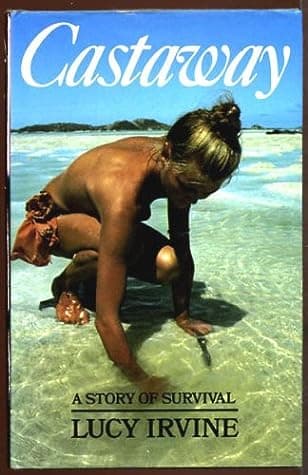
Castaway cover
Archivist's Choice

Castaway

Lucy Irvine (1983)

Genre

Lifestyle / Biography / Memoir

Reading Time

360 min

Key Themes

See below

Track Your Reading

Sign in to track this book

A young woman's dream of an untouched Eden transforms into a stark, unforgiving reality as she braves the brutal beauty and personal antipathy of a remote island with a stranger.

Core Idea

Lucy Irvine's "Castaway" is a memoir that examines the romanticized idea of radical escape and self-sufficiency through her account of spending a year on a remote, uninhabited island with a stranger. The book argues that while leaving societal constraints and returning to a 'primitive' existence is appealing, the reality is a psychological and physical challenge. Irvine shows that human compatibility, the complexities of dependence, and the need for genuine connection shape the experience, often overriding the idea of isolated freedom. The narrative reveals that understanding oneself and freedom comes not from the absence of external pressures, but from confronting the unpredictable challenges of human nature and the environment.
Reading time
360 min
Difficulty
Medium
✓ Read this if...
You are fascinated by extreme survival stories, the psychological impact of isolation, or the deconstruction of romanticized escape narratives. It's also a great read for those interested in unconventional relationships and the resilience of the human spirit.
✗ Skip this if...
You prefer traditional adventure stories with clear heroes and villains, or if you are looking for a straightforward guide on how to survive in the wilderness. The book delves deeply into interpersonal dynamics and internal struggle, which might not appeal to all readers.

Core idea

The central argument and framework that powers the entire book.

Lucy Irvine's "Castaway" is a memoir that examines the romanticized idea of radical escape and self-sufficiency through her account of spending a year on a remote, uninhabited island with a stranger. The book argues that while leaving societal constraints and returning to a 'primitive' existence is appealing, the reality is a psychological and physical challenge. Irvine shows that human compatibility, the complexities of dependence, and the need for genuine connection shape the experience, often overriding the idea of isolated freedom. The narrative reveals that understanding oneself and freedom comes not from the absence of external pressures, but from confronting the unpredictable challenges of human nature and the environment.

At a glance

Reading time

360 min

Difficulty

Medium

Read this if...

You are fascinated by extreme survival stories, the psychological impact of isolation, or the deconstruction of romanticized escape narratives. It's also a great read for those interested in unconventional relationships and the resilience of the human spirit.

Skip this if...

You prefer traditional adventure stories with clear heroes and villains, or if you are looking for a straightforward guide on how to survive in the wilderness. The book delves deeply into interpersonal dynamics and internal struggle, which might not appeal to all readers.

Key Takeaways

1

The Allure of Radical Escape

The powerful, almost mythical draw of abandoning civilization for a return to nature.

Quote

The opportunity to escape from it all was irresistible.

Irvine's decision to answer an advertisement seeking a 'wife' for a year on a tropical island speaks to a human desire for radical escape from the complexities of modern life. This is not just about a vacation; it is about a complete break from societal norms, responsibilities, and one's established identity. The 'desert island dream' represents a fantasy of self-sufficiency, simplicity, and a direct confrontation with the raw elements of existence. Irvine, at a young age, was susceptible to this call, seeing it as an ultimate test an...

Supporting evidence

Irvine's immediate and compelling response to the newspaper advertisement, despite knowing little about the man or the exact conditions, underscores the 'irresistible' nature of the escape itself.

Apply this

Reflect on your own 'escape fantasies.' Are they about true self-sufficiency, or a romanticized ideal? Consider the practicalities and psychological demands before pursuing any drastic life change.

radical-escapeprimal-fantasysocietal-rupture
2

The Myth of Romantic Primitivism

Idealized notions of 'back to nature' often clash violently with the brutal realities of survival.

Quote

The seductive, if cruel, beauty of that untouched Eden, whose power to enslave and enchant her never slackened throughout the whole of her amazing adventure.

Many who dream of a return to nature imagine an idyllic existence free from stress, where food is abundant, and life is simple. Irvine's experience on Tuin Island shatters this myth. While the island had a 'seductive beauty,' it was also 'cruel,' presenting relentless challenges. The initial enchantment quickly gave way to the harsh realities of finding food, securing water, battling insects, enduring extreme weather, and coping with illness without medical aid. The book reminds us that nature is not inherently benevolent or a provide...

Supporting evidence

The constant battle against hunger, thirst, sunstroke, debilitating infections, and the sheer physical labor required for daily existence, far removed from the passive enjoyment of a 'paradise.'

Apply this

Before romanticizing a 'simple' life, research the actual demands and hardships involved. Develop practical skills for self-sufficiency and understand the true cost of abandoning modern infrastructure.

romantic-primitivismsurvival-realitiesnature-indifference
3

The Psychological Crucible of Isolation

Extreme isolation profoundly alters mental states, perception, and interpersonal dynamics.

Quote

A desert island dream which threatened to turn into a nightmare of illness, thirst and personal antipathy.

Beyond the physical hardships, 'Castaway' explores the intense psychological pressures of prolonged, extreme isolation. Being cut off from familiar social structures, stimulation, and external validation forces an inward turning that can be both revelatory and destructive. Irvine's relationship with Gerald, her companion, becomes an amplified example of human interaction, where minor irritations escalate into major conflicts under the stress of confinement. The absence of external perspective distorts self-perception and the perceptio...

Supporting evidence

The escalating 'personal antipathy' between Lucy and Gerald, their cycles of argument and fragile truce, and Lucy's internal struggles with despair, boredom, and the existential weight of their situation.

Apply this

Practice mindfulness and develop robust coping mechanisms for stress. Understand that even small conflicts can become magnified in confined or isolated environments, requiring conscious effort to manage.

psychological-isolationinterpersonal-dynamicsmental-resilience
4

The Unpredictability of Human Compatibility

Shared goals do not guarantee compatibility, especially under extreme duress.

Quote

She found herself alone on a remote desert island with a 'husband' she hardly knew.

Irvine's narrative shows that a shared adventurous spirit or a common objective (survival) is not enough to create a harmonious relationship, especially when thrust into an unforgiving environment. Gerald and Lucy, despite their joint endeavor, were mismatched in personality, expectations, and approaches to problem-solving. Gerald's authoritative nature clashed with Lucy's more adaptable, yet also headstrong, youth. The 'husband' she 'hardly knew' quickly became a source of friction, and the island, instead of uniting them, often made...

Supporting evidence

The frequent arguments, misunderstandings, and periods of stony silence between Lucy and Gerald, stemming from trivial matters magnified by their confinement and differing personalities.

Apply this

Before embarking on significant shared ventures, especially those involving isolation or high stress, thoroughly assess compatibility and establish clear communication protocols with your partners.

interpersonal-compatibilityrelationship-duresscommunication-breakdown
5

The Double-Edged Sword of Dependence

Reliance on another for survival can breed both resentment and reluctant necessity.

Quote

Uncompromisingly candid and sometimes shocking, Castaway is her compulsively readable account of a desert island dream.

'Castaway' portrays the complex dynamics of dependence in a survival situation. Lucy, younger and initially less experienced, relies on Gerald's perceived knowledge and leadership. Yet, she also resents his control and often questionable decisions. Gerald, in turn, needs Lucy for companionship and as a partner in labor, but struggles with her youthful independence and occasional defiance. This creates a volatile mix where survival dictates cooperation, but personal autonomy constantly chafes against it. The candor of the book lies in ...

Supporting evidence

Lucy's internal monologues about Gerald's authority, her moments of rebellion, and the ongoing power struggles over tasks, resources, and decision-making, despite their shared precariousness.

Apply this

In any dependent relationship, strive for clear roles, mutual respect, and opportunities for both parties to contribute and make decisions. Acknowledge and address resentment before it festers.

interdependencepower-dynamicssurvival-relationships
6

The Body's Resilience and Vulnerability

The human body can endure extreme hardship but is ultimately fragile without support systems.

Quote

A desert island dream which threatened to turn into a nightmare of illness, thirst and personal antipathy.

Irvine's account shows the resilience of the human body, capable of adapting to meager diets, harsh sun, and constant physical exertion. Yet, it also reminds us of its vulnerability when stripped of modern medicine and nutrition. Lucy and Gerald suffer from many ailments: sunstroke, debilitating infections, malnutrition, and the constant threat of injury. What would be minor inconveniences in civilization become life-threatening emergencies on the island. The body, pushed to its limits, reveals its dependence on adequate resources and...

Supporting evidence

Detailed descriptions of their physical deterioration, recurring illnesses (e.g., boils, infections, digestive issues), and the struggle to recover without proper medication or medical knowledge.

Apply this

Prioritize health and well-being, understanding that basic needs like clean water, nutritious food, and hygiene are foundational to survival and quality of life. Appreciate the role of modern medicine.

physical-resiliencehuman-vulnerabilitysurvival-medicine
7

The Subjectivity of 'Freedom'

What one perceives as freedom, another may experience as a different form of captivity.

Quote

The opportunity to escape from it all was irresistible.

For Lucy, the initial 'escape' to the island represented ultimate freedom from societal constraints, expectations, and boredom. However, the narrative quickly reveals that this 'freedom' was a trade-off for a different, and arguably more brutal, form of captivity. They were captive to the island's environment, to the demands of survival, and to each other's company. The absence of external rules did not mean true liberty; instead, it imposed the unforgiving laws of nature and the psychological chains of isolation. This takeaway challe...

Supporting evidence

Lucy's growing despair, her longing for contact with the outside world, and her eventual decision to leave the island, despite the initial allure of remaining 'free' from society.

Apply this

Define what 'freedom' truly means to you. Is it liberation from something, or freedom to do something? Recognize that all choices involve trade-offs and new forms of responsibility or constraint.

concept-of-freedomexistential-captivityagency-and-choice
8

The Enduring Power of Storytelling

Even in extreme adversity, the human need to document and share experience persists.

Quote

Uncompromisingly candid and sometimes shocking, Castaway is her compulsively readable account.

Despite the physical and psychological toll of her year on the island, Lucy Irvine’s ability to meticulously record her experiences, both through contemporaneous journal entries and later in her memoir, is remarkable. The book itself shows the human need to make sense of extraordinary events by narrating them. Irvine's account transforms personal suffering into a universal narrative about human endurance, choice, and the allure of the unknown. Her detailed observations of nature, her candid reflections on her relationship with Gerald,...

Supporting evidence

The existence of the book itself, which is a detailed and introspective account, implying careful observation and recollection even during extreme hardship.

Apply this

Keep a journal to document significant life experiences, challenges, and insights. This practice can aid in processing emotions, learning from events, and preserving personal history.

memoir-writingnarrative-therapyhuman-documentation
9

The Unseen Scars of Experience

Profound experiences leave lasting, often complex, psychological imprints.

Quote

The power to enslave and enchant her never slackened throughout the whole of her amazing adventure.

While 'Castaway' culminates in Lucy's return to civilization, the book suggests that such an extreme experience is not simply 'over' once the physical ordeal ends. The island, with its 'power to enslave and enchant,' leaves an indelible mark. Irvine's subsequent life and her decision to write the book indicate a continued processing of the trauma, the lessons, and the unique perspective gained. The 'amazing adventure' undoubtedly reshaped her understanding of herself, humanity, and nature. It likely also left unseen scars—a heightened...

Supporting evidence

The very act of writing the memoir years later, indicating a continued engagement with and processing of the island experience, and her later public life discussing it.

Apply this

Acknowledge that significant life events, both positive and negative, can have long-term psychological impacts. Seek support if needed to process trauma or integrate profound experiences into your identity.

post-traumatic-growthidentity-formationexperiential-impact
10

The Value of 'Knowing Thyself' Under Pressure

Extreme conditions reveal true character and expose personal strengths and weaknesses.

Quote

Uncompromisingly candid and sometimes shocking, Castaway is her compulsively readable account.

Stripped of all social facades, material comforts, and external distractions, Lucy and Gerald were forced to confront their unfiltered selves on Tuin Island. This ultimate test of survival became an exercise in self-discovery, albeit a brutal one. Lucy's account does not shy away from her own moments of weakness, fear, and frustration, alongside her unexpected resilience, resourcefulness, and capacity for endurance. The island was a crucible, burning away superficialities and revealing core character traits that might have remained hi...

Supporting evidence

Lucy's detailed self-reflection throughout the book, her acknowledgment of her own changing emotional states, and her evolving understanding of her companion and herself under duress.

Apply this

Seek out challenges (within safe limits) that push you beyond your comfort zone to better understand your strengths, weaknesses, and true resilience. Engage in self-reflection after difficult experiences.

self-discoverycharacter-under-duresspersonal-resilience

Critical analysis

Notable Quotes

I had come to the island to escape, but I found I had brought myself with me.

Reflecting on the realization that solitude does not erase personal struggles.

The sea does not forgive mistakes; it only teaches those who survive them.

Describing the harsh lessons learned from maritime survival.

In the absence of society, I discovered the society of my own thoughts.

On finding mental companionship during isolation.

We had nothing but time, and yet it was the one thing we could not waste.

Commenting on the paradox of abundance and scarcity in a castaway's life.

The island was both prison and paradise, depending on the day.

Capturing the dual nature of the castaway experience.

Hunger is a relentless teacher; it strips away all pretence.

On the raw, basic needs that dominate survival situations.

I learned to listen to the wind, for it carried news of storms and calm.

Describing the attunement to natural signs for survival.

Solitude is not loneliness if you befriend your own shadow.

Distinguishing between being alone and feeling lonely.

Every sunrise was a promise, every sunset a reckoning.

On the daily cycle of hope and reflection on the island.

We built a world from driftwood and dreams, fragile but ours.

Describing the makeshift life and emotional investment in survival.

The ocean's roar was my lullaby, its silence my alarm.

On how natural sounds dictated the rhythm of life.

In losing everything, I found what I never knew I had.

Reflecting on the unexpected gains from extreme loss.

The stars were our map, the moon our clock.

On using celestial bodies for navigation and timekeeping.

Fear is a fire that either forges you or consumes you.

Describing the transformative power of fear in survival.

Quiz

Test Your Knowledge

Ready to see how well you understood this book? Take our interactive quiz with 10 questions.

10
Questions
~5
Minutes
?
Best Score

Key Questions (FAQ)

Castaway is a memoir about Lucy Irvine's year-long experience on a remote desert island with a stranger she agreed to marry for the adventure. It details her escape from conventional life, the island's beauty, and the harsh realities of survival and personal conflict.

About the author