BookBrief
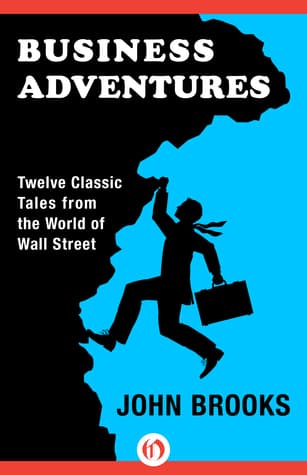
Business Adventures cover
Archivist's Choice

Business Adventures

John Brooks (1969)

Genre

Business / Leadership / History / Economics / Finance

Reading Time

10-12 hours

Key Themes

See below

Track Your Reading

Sign in to track this book

Explore the dramatic stories of corporate America, from Ford's Edsel failure to Xerox's rapid growth, revealing lessons in ambition, innovation, and human error that resonate through business history.

Core Idea

John Brooks' "Business Adventures" argues that lasting principles of business, leadership, and finance are best understood through detailed, real-world accounts of corporate successes and failures, not abstract theories. Each story, from the Ford Edsel's spectacular flop to the intricacies of the 1962 stock market crash, shows how human nature—its brilliance, mistakes, ethical dilemmas, and unexpected innovations—affects the commercial world. The book reveals that while technology and market conditions change, the core challenges of management, the dangers of groupthink, the struggle for ethical conduct, and the unpredictable nature of public perception stay constant, offering lessons for any time. The main idea is that historical deep dives into specific business events offer a richer, more practical understanding of economic forces and corporate dynamics than purely theoretical frameworks. Brooks illustrates how individual personalities, organizational culture, market psychology, and regulations create complex situations that defy simple explanation, emphasizing that the human element is always the most critical and often overlooked factor in business success or failure.
Reading time
10-12 hours
Difficulty
Medium
✓ Read this if...
You are a business leader, investor, or student interested in timeless lessons on corporate strategy, finance, and human behavior derived from meticulously researched historical case studies. This book is for those who appreciate detailed narrative journalism applied to the world of economics and management, offering insights that remain relevant decades later.
✗ Skip this if...
You are looking for a modern, prescriptive business self-help guide with actionable bullet points, or if you prefer abstract economic theory over in-depth historical narratives. Those seeking a quick read or contemporary examples of tech-driven business innovation might find the historical context less immediately applicable to current trends.

Core idea

The central argument and framework that powers the entire book.

John Brooks' "Business Adventures" argues that lasting principles of business, leadership, and finance are best understood through detailed, real-world accounts of corporate successes and failures, not abstract theories. Each story, from the Ford Edsel's spectacular flop to the intricacies of the 1962 stock market crash, shows how human nature—its brilliance, mistakes, ethical dilemmas, and unexpected innovations—affects the commercial world. The book reveals that while technology and market conditions change, the core challenges of management, the dangers of groupthink, the struggle for ethical conduct, and the unpredictable nature of public perception stay constant, offering lessons for any time.

The main idea is that historical deep dives into specific business events offer a richer, more practical understanding of economic forces and corporate dynamics than purely theoretical frameworks. Brooks illustrates how individual personalities, organizational culture, market psychology, and regulations create complex situations that defy simple explanation, emphasizing that the human element is always the most critical and often overlooked factor in business success or failure.

At a glance

Reading time

10-12 hours

Difficulty

Medium

Read this if...

You are a business leader, investor, or student interested in timeless lessons on corporate strategy, finance, and human behavior derived from meticulously researched historical case studies. This book is for those who appreciate detailed narrative journalism applied to the world of economics and management, offering insights that remain relevant decades later.

Skip this if...

You are looking for a modern, prescriptive business self-help guide with actionable bullet points, or if you prefer abstract economic theory over in-depth historical narratives. Those seeking a quick read or contemporary examples of tech-driven business innovation might find the historical context less immediately applicable to current trends.

Key Takeaways

1

The Perils of Unchecked Groupthink

Even the most sophisticated companies can fall victim to internal echo chambers.

Quote

The Edsel, that famous flop, was not so much a failure of design or engineering as it was a failure of market research and internal consensus.

Brooks explains the Edsel failure, showing it as a warning about corporate arrogance and the risks of insulated decision-making. Despite extensive market research, the Edsel's design and placement were largely decided by internal Ford executives. They projected their own preferences onto the 'average American car buyer.' Research data, when it contradicted internal biases, was either misunderstood or ignored. This resulted in a product nobody wanted, showing that even with vast resources, a company can fail if it loses touch with real...

Supporting evidence

The detailed account of the Ford Edsel's development, from its conception through its disastrous launch, highlighting how market research was selectively interpreted and internal biases overrode objective data.

Apply this

Actively solicit and reward dissenting opinions within teams. Implement 'red team' exercises to challenge assumptions before major launches. Create independent review processes for critical projects, ensuring diverse perspectives are heard and given weight, not just paid lip service.


groupthinkmarket-research-biascorporate-hubris
2

Innovation's Unpredictable Rise

Breakthroughs often emerge from unexpected places, defying conventional wisdom.

Quote

Xerox's success was not merely about a better copying machine, but about identifying a latent need and creating an entirely new market.

The rapid growth of Xerox, as told by Brooks, shows the power of true innovation. Before Xerox, carbon paper and mimeographs were standard. Xerox did not just improve existing technology; it introduced a revolutionary one (xerography) that changed how businesses operated. The technology itself existed for years before Xerox commercialized it, showing that genius is often not just in invention, but in the vision to see its use and scale it. This story highlights how disruptive innovations often come from outsiders or smaller players, c...

Supporting evidence

The narrative detailing the development and commercialization of xerography by the Haloid Company (later Xerox), emphasizing its transformative impact on office work and the initial skepticism from larger corporations.

Apply this

Foster an environment that encourages experimentation and tolerates failure. Look beyond incremental improvements in existing products and actively seek out 'moonshot' ideas. Pay attention to technologies and ideas dismissed by larger players, as they might hold the key to the next major disruption.

disruptive-innovationmarket-creationtechnological-breakthrough
3

The Human Element in Finance

Markets are not purely rational; they are deeply influenced by human emotion and psychology.

Quote

The market crash of 1962 was a powerful reminder that Wall Street, for all its complexities, is ultimately driven by human hopes and fears.

Brooks's account of the 1962 'Flash Crash' clearly shows that financial markets, despite their algorithms and models, are very sensitive to human psychology. The sudden, unexplained downturn and recovery were not caused by a fundamental economic shift, but by a cascade of fear, speculation, and herd mentality. This event highlights the irrational enthusiasm and panic that can affect investors, showing that even experienced professionals can be swayed by emotion. It is a reminder that understanding market dynamics requires more than ju...

Supporting evidence

The detailed narrative of the 1962 market crash, including specific anecdotes of investor panic, the role of rumors, and the subsequent recovery, without a clear fundamental economic cause.

Apply this

Develop a disciplined investment strategy that minimizes emotional decision-making. Diversify investments to mitigate risk during volatile periods. Understand cognitive biases (e.g., herd mentality, loss aversion) and actively work to counteract their influence on financial choices.

behavioral-economicsmarket-psychologyfinancial-crashes
4

Ethical Lapses and Corporate Culture

A company's moral compass is a direct reflection of its leadership and internal values.

Quote

The General Electric price-fixing scandal revealed how a culture of 'wink-and-a-nod' can permeate an organization, leading to widespread illegality.

The General Electric price-fixing scandal is a look at how deeply unethical practices can become part of a corporate structure. Brooks reveals that this was not an isolated incident by a few employees, but a systemic problem where illegal agreements were tolerated and implicitly encouraged by management's pressure for profit and market dominance. The scandal exposed a clear failure of leadership to uphold ethical standards, showing that a company's culture, if not carefully managed, can lead to illicit activities being rationalized as...

Supporting evidence

The detailed account of the General Electric price-fixing conspiracies, including the clandestine meetings, code names, and the eventual prosecution of top executives, revealing a pervasive culture of illegal collaboration.

Apply this

Implement robust ethics training and clear reporting mechanisms for misconduct. Leaders must visibly champion ethical behavior and consistently enforce consequences for violations, regardless of seniority. Foster an open culture where employees feel safe to report concerns without fear of retaliation.

corporate-ethicsorganizational-cultureleadership-responsibility
5

The Power of Narrative in Business

How a story is told can be as impactful as the facts themselves, especially in crises.

Quote

The Texas Gulf Sulphur case was as much a battle over public perception and legal interpretation as it was about the actual events.

Brooks's detailed look at the Texas Gulf Sulphur insider trading case illustrates the strong influence of narrative in business, especially during legal and public relations battles. This complex story involved a large mineral discovery, allegations of insider trading, and a long legal fight. It becomes clear that the perception of events—how the company communicated its findings, how executives handled stock purchases, and how the SEC presented its arguments—significantly shaped the outcome. This case shows that in high-stakes situat...

Supporting evidence

The detailed legal and public relations battle surrounding the Texas Gulf Sulphur mineral discovery and subsequent insider trading allegations, emphasizing the role of company statements, press conferences, and legal arguments in shaping public and judicial perception.

Apply this

Develop clear and consistent communication strategies for all stakeholders, especially during times of crisis. Be transparent and proactive in addressing potential issues. Understand that perception often becomes reality, so actively manage your company's story and public image.

crisis-communicationpublic-relationscorporate-narrative
6

Regulation's Double-Edged Sword

Government intervention aims for stability but can also create unintended consequences.

Quote

The attempts by American bankers to save the British pound revealed the complex interplay between national interests, international finance, and regulatory efforts.

The complex story of American bankers' efforts to support the British pound highlights the often-contradictory nature of financial regulation and intervention. While the goal was to stabilize an international currency and prevent wider economic problems, the actions involved complex political maneuvering, private sector collaboration, and significant financial risk. Brooks shows how well-intentioned interventions can lead to moral hazards, create new dependencies, and sometimes merely delay inevitable market corrections. This story is...

Supporting evidence

The detailed account of the efforts by U.S. financial institutions and the government to stabilize the British pound, including the motivations, mechanisms, and the eventual outcome, illustrating the complexities of international financial intervention.

Apply this

Understand the broader economic and political context of regulatory decisions. Advocate for regulations that are adaptable and forward-looking, rather than reactive. Recognize that even the best-intentioned interventions can have unforeseen ripple effects on markets and economies.

financial-regulationinternational-financeeconomic-intervention
7

The Cycle of Boom and Bust

Economic history is a relentless rhythm of expansion and contraction, driven by human nature.

Quote

History, in the financial markets, truly does repeat itself, not in exact events, but in the underlying patterns of human behavior.

Brooks's collection of stories, spanning various decades and industries, collectively shows the cyclical nature of economic activity. From the speculative frenzy leading to the 1962 crash to the rise and fall of particular companies, a recurring pattern emerges: periods of irrational exuberance followed by downturns. This is not just about market mechanics; it is deeply rooted in human psychology—greed driving booms and fear fueling busts. While specific technologies or industries change, the fundamental emotional drivers and resultin...

Supporting evidence

The recurring themes across various chapters, such as the speculative nature of markets, the rise and fall of companies, and the impact of human emotion on economic cycles, tying together different historical events.

Apply this

Study economic history to recognize patterns of speculation and irrationality. Maintain a long-term perspective in investing and business planning, understanding that downturns are inevitable parts of the cycle. Avoid getting swept up in market fads and 'get rich quick' schemes.

economic-cyclesmarket-speculationfinancial-history
8

Leadership's Weight in Crisis

How leaders respond under pressure defines both their legacy and their organization's resilience.

Quote

In times of great uncertainty, the character of leadership is tested most profoundly, and its actions can determine survival or collapse.

Throughout 'Business Adventures,' Brooks shows many instances where leadership was severely tested. Whether it was Ford executives dealing with the Edsel's failure, the Xerox team managing rapid growth, or bankers trying to stabilize international currencies, the decisions and behavior of those at the top were crucial. Leaders are not just strategists; they are the emotional anchors and moral guides during difficult times. Their ability to communicate clearly, make tough decisions, inspire confidence, and take responsibility directly ...

Supporting evidence

Examples from various stories where leaders faced significant challenges, such as Henry Ford II dealing with the Edsel, Joseph C. Wilson of Haloid/Xerox managing rapid expansion, and financial leaders during the 1962 market crash or the British pound crisis.

Apply this

Cultivate strong crisis management skills, including clear communication and decisive action. Prioritize transparency and accountability, especially when mistakes are made. Invest in developing leaders who can remain calm and focused under extreme pressure, inspiring trust rather than panic.

crisis-leadershipcorporate-resiliencedecision-making-under-pressure

Critical analysis

Notable Quotes

The business world, after all, is a human world.

Introductory thought, setting the tone for human element in business.

The price of a stock is not a scientific calculation, but a human judgment.

Discussing the nature of stock market valuations.

The lesson of the Edsel is that you can't force a product on the public, no matter how much money you spend.

Reflecting on the failure of the Ford Edsel.

It is a matter of record that the average American does not like change.

Observation on consumer behavior and resistance to new products.

Perhaps the most significant aspect of the whole affair was the extent to which the government, in effect, collaborated with the business community.

Referring to the 1962 stock market crash and government response.

In the world of big business, a man’s reputation is his most valuable asset.

General observation on corporate culture and personal standing.

The problem with computers is that they make it possible to make bigger mistakes faster.

Discussing the early impact and potential pitfalls of computerization in business.

The qualities that make a man a good manager are not necessarily the same qualities that make him a good leader.

Distinguishing between management and leadership roles.

The stock market is a manic-depressive.

A colorful metaphor for the volatility and mood swings of the market.

One of the surest roads to ruin is to try to please everybody.

A general business principle about strategy and focus.

The most important thing for a company is to know what business it’s in.

Emphasizing the importance of clear mission and identity.

The business adventure is a human adventure.

Concluding thought, reinforcing the central theme of the book.

Success in business often depends on the ability to adapt to changing circumstances.

A key takeaway on corporate longevity and resilience.

There is nothing quite so unsettling as the sight of a large organization trying to change its mind.

Observation on the inertia and challenges of corporate transformation.

Quiz

Test Your Knowledge

Ready to see how well you understood this book? Take our interactive quiz with 10 questions.

10
Questions
~5
Minutes
?
Best Score

Key Questions (FAQ)

'Business Adventures' by John Brooks is a collection of twelve classic New Yorker articles that delve into significant moments in American corporate and financial history. It explores pivotal events and decisions that shaped iconic companies and markets, offering timeless insights into business, leadership, and economics.

About the author