“At the age of thirty-nine, Flory was a bachelor, and in Burma that is a serious matter.”
— Introducing the protagonist, John Flory, and his social standing in colonial Burma.

George Orwell (2023)
Genre
Lifestyle / Historical Fiction
Reading Time
354 pages (approx. 7-8 hours at 50 pages/hour)
Key Themes
See below
Sign in to track this book
In colonial Burma, a timber merchant, fed up with the hypocrisy around him, navigates racial prejudice, political schemes, and a failed romance, eventually breaking under the weight of a system he despises.
The novel begins in Kyauktada, Upper Burma. John Flory, a timber merchant, belongs to the European Club, a place of British colonial prejudice. Flory feels uneasy with the racism of his fellow Europeans, finding comfort only in his friendship with Dr. Veraswami, an Indian surgeon. Meanwhile, U Po Kyin, a corrupt Burmese magistrate, plans to join the European Club to secure his power and avoid a libel suit. He aims to discredit Dr. Veraswami, the only native candidate who could challenge him, by faking evidence of disloyalty to the British.
The arrival of Elizabeth Lackersteen, a young, unmarried Englishwoman, breaks the routine in Kyauktada. Elizabeth, with her aunt and uncle, has come to Burma seeking a husband, as her chances in England are poor. Flory, despite his dislike for colonial society, is immediately attracted to Elizabeth. He sees her as a way out of his lonely life and believes she might understand his complex feelings about Burma. Elizabeth, though at first wary of Flory's birthmark, likes his intelligence and his different perspective compared to other Europeans.
Flory begins to court Elizabeth, taking her on trips into the Burmese countryside, hoping to share his love for the land and its people. He tries to show her the real Burma, not the shallow view held by other Europeans. However, Elizabeth, shaped by her background, finds his anti-colonial ideas and his affection for the Burmese unsettling. She is more interested in the social standing and comfort a husband can provide, and Flory's views make her doubt if he is a suitable partner, causing frustration for both.
U Po Kyin continues his careful plan to frame Dr. Veraswami. He manipulates local villagers, making them sign false accusations against the doctor, claiming disloyalty and rebellion against the British. These fake charges are then brought to the district authorities. Dr. Veraswami, trusting Flory's friendship and British justice, is at first confident he can clear his name. However, the weight of the fake evidence, plus U Po Kyin's influence, puts him in a difficult spot, threatening his career and reputation.
During a hunting trip, a leopard attacks, creating a moment of danger for Flory and Elizabeth. Flory bravely shoots the leopard, impressing Elizabeth with his quick action. This shared experience briefly closes the gap between them, making Elizabeth think Flory is more 'manly' and less unusual than she thought. However, their next conversation shows their basic differences again. Flory tries to share his deeper thoughts about the event and his life in Burma, but Elizabeth dismisses them, preferring a more conventional man.
The European Club election nears, and the question of admitting a native member becomes a main point of argument among the British. Dr. Veraswami, facing increasing pressure from U Po Kyin's schemes, asks Flory to use his influence in the Club to support his membership. Flory, despite his own doubts and the racism of his peers, feels he must support his friend. He tries to gather support for Dr. Veraswami but faces a tough fight against the ingrained prejudices of the other members.
U Po Kyin, in a desperate move to discredit Dr. Veraswami and boost his own standing, arranges a small rebellion in a nearby village. He manipulates villagers into a staged uprising, knowing British authorities will react fast. During the chaos, Flory, by chance, acts heroically, saving a group of Europeans, including Elizabeth, from danger. This brave act temporarily raises Flory's standing with the European community and, importantly, with Elizabeth, making her rethink her doubts about him as a husband.
After Flory's heroic actions during the staged rebellion, Elizabeth's view of him changes greatly. She now sees him as a strong, decisive man, worthy of her affection and a good husband. Overlooking his disfigurement and his unusual views, she accepts Flory's marriage proposal. Flory, overjoyed, believes his dream of finding companionship and escaping his lonely life in Burma is finally within reach. He feels new hope and purpose, imagining a future with someone who understands or at least accepts him.
Just as Flory's happiness seems set, his former Burmese mistress, Ma Hla May, reappears. Abandoned by Flory, she is poor and publicly shames him in front of Elizabeth and other Europeans, demanding money and recognition. This public display of Flory's past relationship with a native woman shocks Elizabeth, who is horrified by the revelation. The strict social rules of colonial Burma make such a relationship unforgivable, especially for a future husband. Elizabeth, feeling betrayed and shamed, immediately breaks off the engagement, destroying Flory's hopes for a future with her.
At the same time as Flory's personal tragedy, U Po Kyin's plans against Dr. Veraswami succeed. The British authorities accept the fake charges of disloyalty, eager to keep order. Dr. Veraswami is publicly disgraced, fired from his job, and faces a grim future. U Po Kyin, having removed his rival and strengthened his own position, is finally elected to the European Club. He achieves his goal, showing the corrupt nature of the colonial system and the power of his ambition.
Crushed by Elizabeth's rejection, public shame, and the complete failure of his hopes, Flory falls into deep despair. He feels totally isolated, cut off from both the British community and the Burmese people he once tried to understand. Ma Hla May's betrayal, the loss of Elizabeth, and U Po Kyin's win all contribute to his feeling of utter failure and hopelessness. Unable to come to terms with his situation or find meaning, John Flory kills himself by shooting, a tragic end to his fight against the oppressive colonial society and his own inner conflicts.
After Flory's death, Elizabeth, free from his unconventional ways, soon marries Verrall, a more traditional British officer. Her life follows a predictable path within the colonial structure. U Po Kyin, despite reaching his goal of joining the European Club and becoming powerful, dies soon after, unfulfilled and knowing he never truly gained the respect he wanted. His death, ironically, comes before he could fully enjoy the results of his schemes. The novel ends with a sense of the widespread futility and moral decay in the colonial enterprise.
The Protagonist
Flory begins as a cynical observer, finds fleeting hope in Elizabeth, but ultimately succumbs to despair when his ideals and desires are crushed by colonial society and his own past.
The Love Interest/Catalyst
Elizabeth arrives seeking a suitable husband, briefly considers Flory after his heroics, but ultimately rejects him for failing to meet colonial social standards, settling for a more conventional match.
The Antagonist
U Po Kyin systematically eliminates rivals and manipulates events to achieve his goal of joining the European Club, only to die unfulfilled shortly after.
The Supporting
Dr. Veraswami starts as a respected professional, but through U Po Kyin's schemes and the British prejudices, he is unjustly disgraced and ruined.
The Supporting/Catalyst
Ma Hla May, initially abandoned, returns to publicly shame Flory, inadvertently triggering his final despair and suicide.
The Supporting
They remain static characters, consistently embodying the British colonial mindset and influencing Elizabeth towards conventional choices.
The Supporting
Ellis remains a static representation of extreme colonial racism throughout the narrative.
The Mentioned
Verrall serves as Elizabeth's eventual, conventional husband, symbolizing her ultimate embrace of colonial societal expectations.
The novel shows how colonialism harms both the colonizers and the colonized. The British expatriates in Kyauktada are shown as morally corrupt, racist, and intellectually dull, their lives filled with small complaints and social snobbery. Flory's inner conflict comes from seeing this corruption. On the other hand, figures like U Po Kyin show how the system encourages corruption among the native people, forcing them to use harsh tactics to survive and gain power within the imposed structure. Dr. Veraswami's unfair treatment highlights the system's injustice.
“''The British Empire is a despotism with a Liberal facade.''”
John Flory feels deeply separated from his fellow Europeans, whose values he dislikes, yet he cannot fully connect with the Burmese because he is white and has his own internal struggles. His disfigured face represents his isolation. This theme is central to his character, driving his desperate search for connection, especially with Elizabeth. His failure to find a true partner who understands his nuanced view of Burma eventually leads to his despair and suicide. Even Elizabeth, with her conventionality, fails to bridge this gap.
“''He was in the position of a man who is trying to swim against a current that is too strong for him.''”
The British community in Kyauktada is full of hypocrisy and open racism. They preach civility while privately (and often publicly) expressing contempt for the native population. Their social interactions follow strict, unwritten rules based on race and class. Elizabeth, despite her initial charm, quickly adopts these prejudices, rejecting Flory once his past with Ma Hla May is revealed. This theme appears in the European Club's discussions about admitting a native member, where hidden racism guides their decisions, and in how easily U Po Kyin uses their prejudices against Dr. Veraswami.
“''The lie that we're here to civilize the natives is the biggest lie of all.''”
Both the British colonizers and characters like U Po Kyin believe they can fully control their surroundings and the people in them. The British think they can maintain order and enforce their will, while U Po Kyin carefully plans to control his own fate. However, the story consistently shows this belief to be false. Flory's life spins out of control due to Ma Hla May's unexpected return and the strict social rules he cannot escape. U Po Kyin, despite reaching his goals, dies soon after, showing the ultimate pointlessness of his schemes. The unpredictable nature of Burma itself, with its rebellions and cultural complexities, also challenges this perceived control.
“''It is a good thing to be a Sahib. But it is a hard thing. It is a thing that wears you out.''”
Flory's main struggle is his search for an authentic life in a world of fakery and social pretense. He wants to live truthfully, to show his love for Burma and his dislike for colonial values, but he is constantly held back by others' expectations and his own fear. His attempt to show his true self to Elizabeth fails because she cannot appreciate it. This theme also appears in Dr. Veraswami's genuine belief in British justice, which the system's lack of authenticity ultimately betrays. The novel suggests that true authenticity is nearly impossible to keep in the oppressive colonial environment.
“''He was a man who wanted to be honest, and was not allowed to be.''”
A physical disfigurement symbolizing his internal and external alienation.
Flory's prominent birthmark on his face serves as a powerful symbol throughout the novel. Physically, it makes him self-conscious and contributes to his feeling of being an outsider, particularly in his romantic pursuits. Metaphorically, it represents his internal moral disfigurement, his inability to fully conform to the colonial ideal, and his struggle with hypocrisy. It also highlights the superficiality of characters like Elizabeth, who initially judges him based on this physical flaw, and how it contributes to his ultimate sense of alienation and unworthiness.
A microcosm of British colonial society and its prejudices.
The European Club in Kyauktada is not merely a setting but a crucial plot device. It functions as a microcosm of the entire British colonial structure, embodying its racism, snobbery, and petty social hierarchies. The debates and decisions made within the club, particularly regarding the admission of a native member, drive significant parts of the plot, directly impacting characters like Dr. Veraswami and U Po Kyin. It serves as a constant reminder of the oppressive social environment Flory inhabits and the forces that ultimately crush him.
A series of calculated manipulations driving the narrative's conflict.
U Po Kyin's elaborate and meticulously planned schemes are a primary plot device, serving as the engine for much of the novel's conflict and tension. His ambition to join the European Club and his systematic efforts to discredit Dr. Veraswami create a continuous thread of rising action. These schemes involve manipulating villagers, fabricating evidence, and even orchestrating a 'rebellion.' They highlight the corrupting influence of power and the lengths to which individuals will go for social advancement within the colonial system, directly contributing to Dr. Veraswami's downfall and indirectly to Flory's despair.
A symbolic refuge and a reflection of Flory's inner state.
The Burmese jungle and countryside serve as a significant symbolic plot device. For Flory, it is a refuge from the stifling atmosphere of the European Club and the superficiality of colonial life. It represents authenticity, beauty, and a connection to something real, contrasting sharply with the artificiality of the British settlement. His attempts to share this love with Elizabeth are unsuccessful. The wildness and untamed nature of the jungle can also reflect Flory's own internal struggles and his desire to escape the confines of his society, ultimately proving to be a place where he cannot find lasting peace.
“At the age of thirty-nine, Flory was a bachelor, and in Burma that is a serious matter.”
— Introducing the protagonist, John Flory, and his social standing in colonial Burma.
“The Burman is a strange creature. He can be very cruel, and he can be very kind. He is never in a hurry.”
— Flory's internal thoughts reflecting on the Burmese people.
“For of all the evils of the Empire, perhaps the worst is that it does not allow you to be a man.”
— Flory's bitter reflection on the emasculating effect of colonial rule on Europeans.
“He knew that the only way to escape the boredom and the futility of his life was to get drunk.”
— Describing Flory's coping mechanism for the ennui of his existence.
“It is a great thing to be a sahib. To be a white man is to be a god.”
— Ellis, a particularly unpleasant character, expressing his views on European supremacy.
“He had a feeling that he was not living his own life, but a life that had been chosen for him.”
— Flory contemplating his lack of agency and the predetermined path of a colonial official.
“The British Empire is a despotism tempered by snobbery.”
— A cynical observation on the nature of British rule in India/Burma.
“He hated the Europeans for their vulgarity, their stupidity, their cruelty, and above all for their power.”
— Dr. Veraswami's internal thoughts, revealing his complex feelings towards the colonizers.
“The sun was a white-hot hammer beating on the earth.”
— A vivid description of the oppressive Burmese climate.
“He saw himself as a lonely, misunderstood genius, a man who was too good for the world he lived in.”
— Flory's self-perception, tinged with self-pity and a sense of superiority.
“The Club was the spiritual citadel of the European community, the holy of holies, the inner sanctuary.”
— Describing the central social institution for the British in Kyauktada.
“His whole life had been a failure, and he knew it.”
— Flory's ultimate despair and self-assessment towards the end of his life.
“There was a kind of spiritual emptiness in the white man's world, a void that nothing could fill.”
— Flory's realization about the inherent lack of meaning in the colonial existence.
“He was a man who hated his own country, but loved the land he was in.”
— A concise summary of Flory's conflicted loyalties and affections.
Ready to see how well you understood this book? Take our interactive quiz with 10 questions.
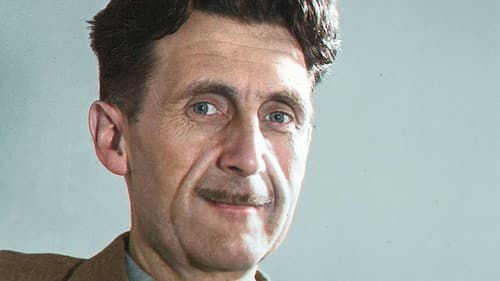
Eric Arthur Blair, better known by his pen name George Orwell, was an English novelist, essayist, journalist, and critic. His work is characterised by lucid prose, social criticism, opposition to totalitarianism, and support of democratic socialism.