BookBrief
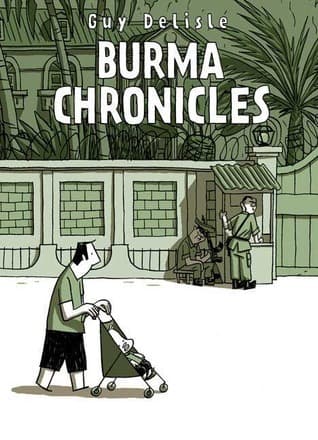
Burma Chronicles cover
Archivist's Choice

Burma Chronicles

Guy Delisle (2017)

Genre

Lifestyle / Biography / Memoir

Reading Time

180 min

Key Themes

See below

Track Your Reading

Sign in to track this book

Through the eyes of a cartoonist, 'Burma Chronicles' offers a witty and humanizing look into the everyday absurdities and quiet resilience of life under a military junta.

Core Idea

Guy Delisle's "Burma Chronicles" gives a personal, often funny, look into daily life in Myanmar under a military dictatorship, seen through an outsider's eyes. Delisle, with his wife on a Doctors Without Borders mission, writes about both the ordinary and the strange, showing the Burmese people's quiet strength and the constant, yet subtle, presence of authoritarian rule. The book discusses isolation, finding meaning in routine, and the ethical issues of having privilege in a repressed society. It also shows how observation and art can help make sense of a confusing world.
Reading time
180 min
Difficulty
Easy
✓ Read this if...
You are interested in graphic memoirs, want a ground-level view of daily life under an authoritarian regime, or appreciate subtle humor and keen observation in storytelling.
✗ Skip this if...
You prefer traditional prose, seek a deep political analysis of Myanmar, or are looking for a fast-paced, action-driven narrative.

Core idea

The central argument and framework that powers the entire book.

Guy Delisle's "Burma Chronicles" gives a personal, often funny, look into daily life in Myanmar under a military dictatorship, seen through an outsider's eyes. Delisle, with his wife on a Doctors Without Borders mission, writes about both the ordinary and the strange, showing the Burmese people's quiet strength and the constant, yet subtle, presence of authoritarian rule. The book discusses isolation, finding meaning in routine, and the ethical issues of having privilege in a repressed society. It also shows how observation and art can help make sense of a confusing world.

At a glance

Reading time

180 min

Difficulty

Easy

Read this if...

You are interested in graphic memoirs, want a ground-level view of daily life under an authoritarian regime, or appreciate subtle humor and keen observation in storytelling.

Skip this if...

You prefer traditional prose, seek a deep political analysis of Myanmar, or are looking for a fast-paced, action-driven narrative.

Key Takeaways

1

The Absurdity of Authoritarianism

Daily life under a military junta is a tapestry of illogical rules and arbitrary power.

Quote

Everyday life in Burma was a constant reminder of the military junta's pervasive, often illogical, control.

Delisle shows how authoritarian regimes affect daily life, making absurd things seem normal. From arbitrary park closures to constant surveillance and needing a black market for basic goods, the book highlights the psychological and practical challenges ordinary people face. This constant, low-level friction, from a system that values control over logic, forces people to adapt in clever and disheartening ways. The humor in Delisle's observations often comes from how ridiculous the situations are, making readers laugh while also feelin...

Supporting evidence

The frequent power outages, the difficulty of obtaining a reliable internet connection, the restrictions on public gatherings (like parks being closed), and the omnipresent military presence, often observed through the lens of ordinary interactions.

Apply this

When evaluating news from authoritarian states, look beyond grand political statements to understand the everyday impact on citizens. Consider how seemingly minor restrictions can accumulate into significant infringements on quality of life and personal liberty.

authoritarianismdaily-life-under-oppressionabsurdity-of-control
2

The Quiet Resilience of the People

Despite oppression, the human spirit finds ways to persist, adapt, and even find joy.

Quote

The Burmese people, despite the difficulties, always seemed to find a way to smile, to help each other, and to make do.

One striking part of Delisle's story is how he shows the Burmese people's quiet strength. Facing economic hardship, political repression, and a lack of basic freedoms, they do not give up. Instead, they show an understated resilience, navigating the system with pragmatism, humor, and mutual support. Delisle's observations of their resourcefulness—whether finding other income, keeping cultural traditions, or just sharing a meal—show the human ability to adapt and find meaning even in tough times. This strength is not shown as heroic de...

Supporting evidence

The interactions with his Burmese language teacher, the family who runs the guesthouse, and the general public he observes in markets and on the street, who despite their circumstances, often display warmth and hospitality.

Apply this

In situations of adversity, focus on small acts of community, resourcefulness, and maintaining a sense of normalcy. Recognize that resilience often manifests not in grand gestures, but in persistent, everyday efforts.

resiliencehuman-spiritcommunity-supportadaptation
3

The Outsider's Perspective

A temporary visitor's unique lens highlights elements often invisible to locals.

Quote

As an outsider, I noticed things that locals had probably grown accustomed to, or simply learned to ignore.

Delisle's strength comes from being an 'outsider.' As a Canadian cartoonist with his wife on an aid mission, he is not directly subject to the regime's full oppression. This allows him a certain observational distance. This detachment, with his artistic eye, lets him notice and record the subtle absurdities and obvious injustices that locals might have internalized or learned to ignore for survival. His perspective offers a fresh, often humorous, way for readers to understand a complex political situation, making the heavy subject mor...

Supporting evidence

His detailed drawings of everyday scenes, his internal monologues questioning local customs or restrictions, and his interactions with locals where he often seeks explanations for seemingly illogical rules.

Apply this

When trying to understand a new culture or complex situation, intentionally seek out the perspective of a thoughtful outsider. Their 'naivety' can often reveal fundamental truths that insiders take for granted.

outsider-perspectivecultural-observationnaivety-as-insighttravel-memoir
4

Monotony and the Search for Meaning

Even in exotic locales, the challenge of filling one's days can be profound.

Quote

My days often revolved around finding ways to pass the time, a challenge in a city with so few distractions.

Beyond political commentary, 'Burma Chronicles' is also a personal memoir about the difficulties of expatriate life, especially for a trailing spouse. Delisle, without an official role, deals with immense boredom and struggles to find purpose in a restrictive environment. His attempts to learn Burmese, draw, explore the city, or just find good coffee become small quests that break up the monotony. This part of the book speaks to anyone who has experienced long periods of unstructured time or felt disconnected from their usual routines...

Supporting evidence

His detailed accounts of trying to learn the language, his drawing sessions, his walks around the city, and his frequent observations about the lack of entertainment or activities.

Apply this

When faced with periods of enforced idleness or a new, unfamiliar environment, actively seek out small, personal projects or learning opportunities to maintain mental well-being and a sense of purpose. Embrace the 'mundane' as an opportunity for observation and creativity.

expatriate-lifeboredomfinding-purposepersonal-growthunstructured-time
5

The Subtle Power of Art and Observation

A cartoonist's pen can reveal truths about society more effectively than traditional reporting.

Quote

My drawings were my way of understanding, of documenting, and perhaps, of sharing what I saw.

Delisle's medium, the graphic novel, is key to the book's impact. His simple yet expressive drawings, combined with his dry wit, let him convey complex political realities and personal frustrations without heavy explanation. The visual story makes abstract ideas of oppression and censorship real, showing rather than telling. A simple panel of a run-down building or a wary glance from a local can say a lot. This approach makes the political context easy to understand and relate to, showing that art, even in its simplest forms, can be a...

Supporting evidence

The visual depiction of censorship (e.g., books with missing pages, the lack of foreign media), the way he draws the military figures, and the expressive faces of the ordinary citizens he encounters.

Apply this

Consider alternative forms of communication and storytelling when trying to convey complex or sensitive information. Recognize that visual narratives can often be more impactful and accessible than purely textual ones.

graphic-novelvisual-storytellingsocial-commentaryart-as-activismobservational-art
6

The Banality of Evil (and Bureaucracy)

Oppressive systems are upheld by layers of seemingly mundane, often illogical, bureaucratic processes.

Quote

The most frustrating aspects weren't always the grand political statements, but the endless, pointless bureaucratic hurdles.

Delisle often faces the bureaucratic mess that supports the military regime's control. These are not always acts of obvious malice, but a system of petty rules, paperwork, and inefficient processes that stifle freedom and progress. From the complex process of getting a visa extension to simply trying to mail a package, the book highlights how seemingly harmless bureaucratic hurdles become tools of control and frustration. This 'banality of bureaucracy' shows how oppressive systems are kept going not just by force, but by a web of mund...

Supporting evidence

His recurring struggles with visa renewals, the censorship of mail, the difficulty of accessing information, and the general inefficiency of government services.

Apply this

When analyzing systems of control, look beyond direct force to understand the role of bureaucratic processes. Identify how seemingly minor administrative hurdles can collectively create significant barriers to freedom and efficiency.

bureaucracybanality-of-evilsystemic-oppressioninefficiencyadministrative-control
7

The Disconnect of Privilege

Even well-intentioned outsiders cannot fully escape the bubble of their privilege.

Quote

Despite my efforts to understand, there was always a barrier, a comfort I could retreat to that locals could not.

While Delisle is empathetic and observant, he is also aware of his privileged position as a temporary Western visitor. He has a passport that allows him to leave, access to foreign money, and a safety net that most Burmese citizens lack. This disconnect creates a subtle tension in the story. He can observe, comment, and even complain about the conditions, but he is not truly subject to them in the same way. This self-awareness adds honesty to the memoir, recognizing the limits of even the best-intentioned outsider's perspective and th...

Supporting evidence

His ability to travel freely (within limits), his wife's work for Doctors Without Borders, his access to certain goods via diplomatic channels, and his eventual departure from the country.

Apply this

When engaging with communities or situations different from your own, always maintain an awareness of your own privilege and how it shapes your perceptions and experiences. Strive for genuine understanding while acknowledging inherent limitations.

privilegeexpat-bubblecultural-disparityobserver-biasempathy-limitations
8

The Power of Small Acts

In oppressive environments, even minor gestures of defiance or kindness hold significant weight.

Quote

Sometimes, the smallest acts of defiance or even just normal human interaction felt like a victory.

Delisle's story, while not showing grand acts of heroism, subtly highlights the importance of small acts. Whether it is a local teacher sharing forbidden information, a vendor discreetly offering a black market item, or a moment of genuine human connection that goes beyond the oppressive atmosphere, these small gestures are powerful. They show that even under severe repression, the human spirit finds ways to assert itself, keep dignity, and build connections. These seemingly insignificant moments chip away at the regime's attempts to ...

Supporting evidence

The interactions with his language teacher who shares insights into the political situation, the quiet smiles and gestures of solidarity from strangers, and the way people find informal ways to circumvent official restrictions.

Apply this

In any challenging environment, recognize the profound impact of seemingly minor acts of kindness, honesty, and quiet resistance. These small contributions can build collective resilience and maintain hope.

small-acts-of-resistancehuman-connectiondignity-under-oppressioneveryday-resistancehope-in-adversity
9

Humor as a Coping Mechanism

Dry wit and observational humor provide a vital release valve in stressful situations.

Quote

Finding the humor in the absurd was often the only way to make sense of things, or at least to keep from going mad.

Delisle's signature dry, understated humor is not just for entertainment; it is a crucial coping mechanism. By framing the often frustrating and illogical parts of life in Burma with a cartoonist's detached amusement, he makes the harsh realities more palatable for himself and the reader. This humor releases tension, turning moments of bureaucratic absurdity or personal inconvenience into relatable, even funny, stories. It shows the psychological importance of finding lightheartedness in dark situations, demonstrating how humor can be...

Supporting evidence

His self-deprecating jokes about his own struggles with the language, his observations about the oddities of local regulations, and the ironic captions accompanying his drawings.

Apply this

Cultivate a sense of humor, especially dry wit, as a coping strategy in stressful or frustrating situations. Use it to gain perspective, relieve tension, and make challenging experiences more manageable.

humor-as-copingdry-witobservational-humorpsychological-resiliencemaking-sense-of-absurdity
10

The Weight of Unspoken Histories

Beneath the surface of daily life lies a history of political turmoil and suffering.

Quote

You could feel the weight of history, of unspoken stories, in the air, even when life seemed to go on normally.

While Delisle focuses on his personal experiences, the book is filled with a sense of the unspoken. The ever-present military, the hushed tones when discussing politics, the lack of information, and the general caution all point to a history of repression and suffering. The reader always knows that beneath the ordinary observations lies a deeper, darker story of political prisoners, human rights abuses, and a struggle for democracy that is rarely stated but always felt. This unspoken history adds seriousness to Delisle's seemingly lig...

Supporting evidence

The subtle fear in people's eyes, the lack of open criticism of the government, the general atmosphere of quietude and caution, and the scarcity of information about political events.

Apply this

When observing any society, actively consider the unspoken histories and underlying political contexts that shape daily life. Understand that what is not said can be as significant as what is openly communicated.

unspoken-historypolitical-contextcollective-memorysubtle-repressionatmosphere-of-fear

Critical analysis

Notable Quotes

The heat is stifling. I sweat just standing still. I'm always thirsty, always tired. It's not a pleasant heat, it's an oppressive one.

Describing the general climate and its impact on daily life in Yangon.

The internet cafe is always packed. People glued to their screens, oblivious to the world outside. It's like a little island of modernity in a sea of tradition.

Observing the popularity of internet cafes and the contrast with the surrounding environment.

It's strange to see so many monks, young and old, walking barefoot, their robes bright orange against the dusty streets.

Reflecting on the ubiquitous presence of monks in Burmese society.

The power cuts are frequent. Sometimes for hours. You learn to live with it, to adapt. Candles become your best friends.

Describing the common occurrence of power outages and the necessity of coping mechanisms.

My wife works, my son goes to school, and I... I draw. It's a bit of an odd existence, but it's mine.

Contemplating his role as a stay-at-home parent and artist in a foreign country.

The street food is delicious, but you have to be careful. You never know what you're really eating.

Commenting on the experience of trying local cuisine and the associated risks.

Every morning, the sound of chanting from the nearby pagoda wakes me up. It's a constant reminder of where I am.

Noting the pervasive sounds of religious practice in his daily routine.

The lack of freedom of expression is palpable. People speak in hushed tones, careful about what they say and to whom.

Observing the societal impact of political repression and censorship.

I try to learn a few words of Burmese, but it's a difficult language. The tones are tricky.

Describing his efforts and challenges in learning the local language.

The stray dogs are everywhere. They roam the streets, thin and wary. It's a sad sight.

Noticing the presence and condition of stray animals in the city.

There's a certain beauty in the chaos, in the way things just... happen. But it can also be frustrating.

Reflecting on the disorganized yet charming nature of Burmese daily life.

My son adapts so quickly. He makes friends easily, oblivious to the cultural differences. Children are amazing that way.

Admiring his son's ability to adjust to a new environment.

The general feels like a ghost. Everywhere, but nowhere. His presence is felt, but he's never seen.

Reflecting on the elusive and powerful figure of the military leader.

I miss cheese. And good bread. Simple things, but they become luxuries here.

Expressing a longing for familiar comforts from home.

Quiz

Test Your Knowledge

Ready to see how well you understood this book? Take our interactive quiz with 10 questions.

10
Questions
~5
Minutes
?
Best Score

Key Questions (FAQ)

'Burma Chronicles' is a graphic memoir by Guy Delisle, documenting his experiences living in Burma (now Myanmar) for a year with his wife, who works for Doctors Without Borders, and their young son. It offers a humorous and observational look at daily life under a military dictatorship, focusing on the mundane alongside the politically charged.

About the author