“Words can be like X-rays if you use them properly—they’ll go through anything. You read and you’re pierced.”
— Mustapha Mond explaining the power of literature and ideas to John the Savage.

Aldous Huxley (1958)
Genre
Politics / Fantasy / Science Fiction / Philosophy
Reading Time
450 min
Key Themes
See below
Sign in to track this book
Huxley's novel portrays a future where genetic engineering and conditioning create a docile populace. It explores the cost of manufactured happiness and how overpopulation and propaganda bring his dystopian vision closer to home.
The novel opens at the Central London Hatchery and Conditioning Centre. The Director of Hatcheries and Conditioning (D.H.C.) tours a group of students. He explains Bokanovsky's Process, which allows for mass production of identical humans (clones), and Podsnap's Technique for accelerating maturation. The students see fetuses being decanted and learn about the five castes: Alpha, Beta, Gamma, Delta, and Epsilon, each engineered and conditioned for specific roles. They observe hypnopaedic conditioning, where social lessons are whispered into children's ears during sleep, ensuring their conformity and contentment. This early exposure shows the dystopian society's principles of stability, community, and identity through scientific control.
Bernard Marx, an Alpha-Plus psychologist, is an anomaly in the World State. He is smaller than other Alphas due to a rumored alcohol mishap during his fetal development. This leads to social awkwardness and a feeling of being an outsider. He dislikes the casual promiscuity encouraged by the state and wants deeper emotional connections, often telling his friend, Helmholtz Watson, about his unhappiness. Helmholtz, an Alpha-Plus lecturer, is also discontent. His struggle comes from his intelligence and a feeling that his talents are not used enough. He finds the state's art and literature shallow and wants to create something meaningful. This desire often gets him in trouble for expressing unconventional ideas. Their friendship comes from a shared feeling of alienation.
Lenina Crowne, a Beta-Minus, is a perfectly conditioned woman who embodies the World State's values: promiscuity, soma consumption, and superficial happiness. She likes Bernard Marx, despite his oddities, and agrees to go with him to the New Mexico Savage Reservation. Bernard, however, is more interested in escaping the World State's rules, even if temporarily, and seeing a different way of life. Lenina sees the trip as just a novelty. Their different reasons for visiting the Reservation show the gap between Bernard's desire for individuality and Lenina's ingrained conformity to the World State's expectations and conditioning.
At the New Mexico Savage Reservation, Bernard and Lenina are horrified by the primitive conditions and the traditional, religious rituals of the indigenous people. They find a woman named Linda and her son, John. To Bernard's surprise, Linda says she is a World State citizen accidentally left behind years ago after a visit with the Director. She explains how she gave birth to John, a scandalous act in the World State, and how they lived among the 'savages.' John, having grown up reading Shakespeare and observing the Reservation's customs, is an outsider in both worlds. Bernard realizes that Linda is the D.H.C.'s lost date, confirming his suspicions about the Director's past.
Bernard sees a chance to avoid exile to Iceland by exposing the Director's past. He brings Linda and John back to London. Upon their return, Bernard confronts the D.H.C. in front of high-caste employees, including Mustapha Mond, the World Controller. Linda, frail and disoriented by the World State's cleanliness and soma, recognizes the D.H.C. as her former lover and John's father. John kneels before the D.H.C. and calls him 'father.' This public revelation of the D.H.C.'s unorthodoxy and 'savage' procreation is a catastrophic scandal. It leads to his immediate resignation and disappearance, saving Bernard from exile.
John the Savage, with his Shakespearean sensibility, is at first captivated by the World State's technology and cleanliness. He becomes a celebrity, called 'The Savage,' with Bernard Marx enjoying the attention. However, John is increasingly disgusted by the casual promiscuity, the pervasive use of soma, and the lack of deep emotion or true art. He finds the World State's citizens childish and superficial. His romantic idealization of Lenina Crowne ends when she tries to seduce him in a way he sees as crude and objectifying. He lashes out violently. He struggles to reconcile his moral code and love for Shakespeare with the hedonistic, controlled reality of the World State.
Linda, given an endless supply of soma, dies from an overdose in a hospital. John is devastated by her death, especially by the indifference of the nurses and the young children being conditioned to see death as a pleasant, trivial event. In grief and rage, John confronts a group of Delta workers receiving their soma ration. He sees it as a poison that keeps them enslaved. He throws the soma out the window, trying to 'free' them from their conditioning. This causes a riot, with the Deltas, used to their soma, attacking John. Bernard and Helmholtz arrive. Helmholtz joins John in the fight, while Bernard hesitates, showing his cowardice.
The police quickly stop the riot, spraying soma vapor to pacify the Deltas. John, Bernard, and Helmholtz are arrested and brought before Mustapha Mond, the World Controller. Mond debates with John, explaining that happiness and stability are prioritized over truth, art, and freedom in the World State. He says that 'unorthodoxy' like theirs is incompatible with societal harmony. He explains the suppression of science, religion, and deep emotional experiences in favor of universal contentment. As a result, Bernard and Helmholtz are exiled to islands, places where other intellectual dissidents can live freely. Helmholtz eagerly accepts this fate, while Bernard remains terrified.
John, refusing exile or integration into the World State, seeks solitude. He finds an abandoned lighthouse on the outskirts of London and tries to live a self-sufficient life of penance. He cultivates a garden and whips himself for purification and atonement for his perceived sins and the World State's corruptions. His reclusive lifestyle is soon discovered by curious Alpha-Plus journalists and 'feelie' producers. They film him, and his self-flagellation becomes a popular spectacle. Crowds of voyeuristic World State citizens come to watch 'The Savage' perform his rituals, further invading his privacy and spiritual quest.
The constant intrusion of crowds at the lighthouse drives John to the brink of madness. One day, a large crowd gathers, demanding to see 'The Savage.' Lenina Crowne is among them. The situation escalates into an 'Orgy-Porgy,' a frenzied communal ritual, fueled by soma and the excitement of the spectacle. Overwhelmed by the sensory overload, the chanting, and Lenina's presence, John is involuntarily swept into the orgy. The next morning, horrified by his actions and the failure of his attempt at purity, consumed by guilt and despair, John hangs himself from the arch of his lighthouse. He twists slowly in the air, a tragic symbol of his inability to reconcile himself with the 'Brave New World.'
The Protagonist/Supporting
Initially seeking to challenge the World State, Bernard ultimately proves too timid and self-serving to truly commit to rebellion, ending in exile.
The Supporting
Lenina remains largely unchanged, a testament to the effectiveness of the World State's conditioning, unable to break free from her programmed contentment.
The Protagonist
John moves from an idealist who hopes for a better world to a tragic figure consumed by despair, unable to reconcile his values with the dystopian reality.
The Antagonist/Supporting
Mond's arc is largely static, as he represents the fully realized and unwavering ideology of the World State.
The Supporting
Helmholtz embraces his nonconformity, willingly choosing exile to a place where he can truly exercise his intellectual and creative freedom.
The Supporting
Linda's return to the World State leads to her rapid decline and death, illustrating the fragility of unconditioned human nature within the World State's artificial happiness.
The Supporting
His public exposure and humiliation lead to his downfall, demonstrating the World State's intolerance for any deviation from its norms, even from its leaders.
The Supporting
Henry's character remains static, serving as a representation of the successful conditioning and stability of the World State.
The novel explores the conflict between an individual's desire for self-expression and societal pressure to conform. The World State eradicates individuality through genetic engineering, hypnopaedia, and soma. This ensures everyone is happy in their role. Characters like Bernard Marx and Helmholtz Watson struggle with their identities, feeling isolated by their inability to conform. John the Savage, raised outside this system, represents the struggle for individual freedom and self-discovery against a society that demands uniformity. This leads to his tragic end. His love for Shakespeare shows a yearning for a rich, complex identity denied by the World State.
“''But I don't want comfort. I want God, I want poetry, I want real danger, I want freedom, I want goodness. I want sin.'”
Huxley critiques unchecked scientific and technological advancement when applied to human life. The World State uses scientific methods – Bokanovsky's Process, hypnopaedia, conditioning, and soma – to control every aspect of human existence, from reproduction to emotional responses. This technological control eliminates disease, suffering, and war, but at the cost of freedom, art, and genuine human experience. The novel warns that a society prioritizing stability and happiness above all else, achieved through scientific manipulation, sacrifices humanity itself. The 'brave new world' is a sterile, emotionless prison disguised as a utopia.
“''We can't allow science to undo its own good work. That's why we have the Controller now.'”
A central theme is the choice between guaranteed happiness and the pursuit of truth. Mustapha Mond argues that the World State has chosen happiness, eliminating suffering, passion, and difficult emotions by suppressing art, religion, and philosophy. John the Savage, who pursues truth, finds the World State's happiness shallow. He prefers the pain and complexity of genuine human experience to the chemically induced contentment of soma. The novel makes readers question if a life without struggle and deep emotion is truly 'happy' or fulfilling, and what such happiness costs.
“''But I like the inconveniences.' 'We don't,' said the Controller. 'We prefer to do things comfortably.'”
The World State is built on consumerism and instant gratification. Citizens are conditioned from birth to crave new goods and to dispose of old ones, fueling the economy. Slogans like 'Ending is better than mending' promote a throwaway culture. Sexual promiscuity is encouraged, and delayed gratification is eradicated, with any discomfort or deep emotion immediately suppressed by soma. This constant pursuit of pleasure and material possessions, without meaningful relationships or intellectual pursuits, creates a superficial society where citizens are distracted and never challenged. This serves the state's economic and social stability.
“''Every one belongs to every one else.'”
The novel shows the role of literature and art in expressing human emotions, challenging norms, and encouraging critical thought. In the World State, 'serious' art and literature, especially Shakespeare, are banned because they evoke strong emotions, celebrate individuality, and explore suffering and tragedy—all against the state's goal of universal contentment. John the Savage's connection to Shakespeare gives him a moral compass and a way to express his discontent. This allows him to articulate his rejection of the World State. Helmholtz Watson also wants meaningful creative expression beyond the trivial 'feelies' and propaganda. The suppression of art shows the World State's fear of real human complexity.
“''You've got to choose between happiness and what people used to call high art. We've sacrificed the high art.'”
A conditioning technique used to instill moral and social values during sleep.
Hypnopaedia is a key conditioning method where children listen to recorded lessons during their sleep, repeatedly absorbing moral and social principles of the World State. These lessons are ingrained into their subconscious, shaping their beliefs, attitudes, and caste-specific contentment. For example, children are taught to love their caste and hate other castes, and to embrace consumerism. This device ensures absolute conformity and prevents critical thought, making the citizens happy with their predestined roles and reinforcing the state's stability without conscious effort.
A powerful tranquilizer and hallucinogen used to control and pacify the population.
Soma is a ubiquitous, government-produced drug that provides instant, consequence-free happiness and suppresses any negative emotions, anxieties, or desires for rebellion. It acts as a tool of social control, ensuring that citizens remain docile, contented, and unquestioning. 'A gramme is better than a damn' is a common slogan, highlighting its role as an escape from reality. The World State encourages its widespread use, effectively drugging the population into submission and preventing any genuine emotional or intellectual introspection, thus maintaining stability.
A method of mass-producing genetically identical human beings (clones).
Bokanovsky's Process is a fictional method of human reproduction where a single egg can be made to bud, producing up to ninety-six identical embryos. This allows for the mass production of uniform individuals, particularly for the lower castes (Gammas, Deltas, and Epsilons), who are then conditioned for repetitive, manual labor. This process epitomizes the World State's scientific control over human life and its prioritization of efficiency and stability over individuality, ensuring a constant supply of specialized workers perfectly suited for their societal roles.
A remote, isolated area where traditional, 'primitive' human life is preserved, serving as a contrast to the World State.
The Savage Reservation functions as a stark contrast to the World State, showcasing a society where traditional family structures, religion, natural birth, and suffering still exist. It is a place of 'otherness,' where the 'savages' live unconditioned lives, experiencing love, pain, aging, and death. This device allows Huxley to introduce John, a character raised with a different set of values, enabling a direct confrontation between the World State's engineered happiness and the raw, complex reality of human nature. It highlights what the World State has sacrificed for its stability.
John the Savage's extensive knowledge of Shakespeare, used to critique the World State.
John the Savage's deep familiarity with Shakespearean plays serves as a crucial literary device. His ability to quote Shakespeare provides him with a rich vocabulary to express complex emotions, moral dilemmas, and the beauty and tragedy of human experience—concepts entirely absent in the World State. The allusions highlight the stark contrast between the depth of human emotion and thought found in classic literature and the superficiality and emotional sterility of the World State. John's quotes often provide ironic commentary on the sterile 'brave new world' he encounters, ultimately underscoring his alienation and the loss of genuine humanity.
“Words can be like X-rays if you use them properly—they’ll go through anything. You read and you’re pierced.”
— Mustapha Mond explaining the power of literature and ideas to John the Savage.
“But I don't want comfort. I want God, I want poetry, I want real danger, I want freedom, I want goodness. I want sin.”
— John the Savage rejecting the World State's values in a passionate outburst.
“A really efficient totalitarian state would be one in which the all-powerful executive of political bosses and their army of managers control a population of slaves who do not have to be coerced, because they love their servitude.”
— From Brave New World Revisited, analyzing modern threats to freedom.
“Ending is better than mending. The more stitches, the less riches.”
— A hypnopaedic slogan promoting consumerism and waste in the World State.
“One believes things because one has been conditioned to believe them.”
— Mustapha Mond discussing the foundations of the World State's ideology.
“Civilization is sterilization.”
— Bernard Marx reflecting on the sanitized, emotionless society.
“The greater a man's talents, the greater his power to lead astray.”
— Mustapha Mond justifying the suppression of individuality and genius.
“Happiness is never grand.”
— John the Savage criticizing the shallow pleasures of the World State.
“You can't make tragedies without social instability. The world's stable now.”
— Mustapha Mond explaining why art and literature are suppressed.
“The optimum population is modelled on the iceberg—eight-ninths below the water line, one-ninth above.”
— From Brave New World Revisited, discussing overpopulation and social control.
“Everybody's happy nowadays.”
— A common phrase repeated by citizens, reflecting enforced contentment.
“The most important Manhattan Projects of the future will be vast government-sponsored inquiries into what the politicians and the participating scientists will call 'the problem of happiness'.”
— From Brave New World Revisited, predicting state control over well-being.
“I ate civilization. It poisoned me; I was defiled. And then... I ate my own wickedness.”
— John the Savage describing his self-flagellation and despair.
“A love of nature keeps no factories busy.”
— Mustapha Mond justifying the eradication of natural beauty for economic efficiency.
Ready to see how well you understood this book? Take our interactive quiz with 10 questions.
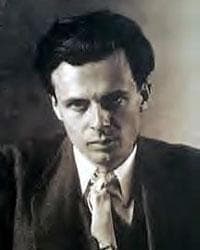
Aldous Leonard Huxley was an English writer and philosopher. His bibliography spans nearly 50 books, including novels and non-fiction works, as well as essays, narratives, and poems.

Brett Casper
5.0
Dirk Uffelmann
4.7

Winston S. Churchill
4.5
Chimamanda Ngozi Adichie
4.5
Will Durant
4.4
Thomas Sowell
4.4
W.E.B. Du Bois
4.3
Alan Moore
4.3