“Human existence is a kind of disease, a sickness that makes us capable of seeing the world, but also of suffering from it.”
— Reflecting on the nature of human consciousness and its inherent pain.

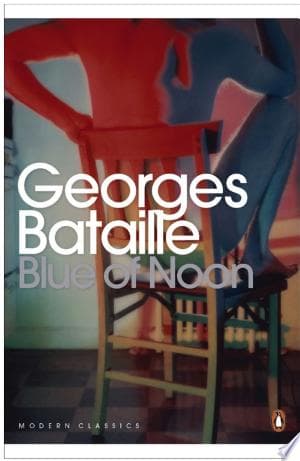
Georges Bataille (2015)
Genre
Philosophy
Reading Time
120 min
Key Themes
See below
Sign in to track this book
Amidst Europe's descent into fascism, a man's surreal odyssey through squalor, sadism, and drunken encounters mirrors civilization's collapse, blurring the lines between victimhood and the monstrous allure of power.
“Human existence is a kind of disease, a sickness that makes us capable of seeing the world, but also of suffering from it.”
— Reflecting on the nature of human consciousness and its inherent pain.
“The world is given to us to be devoured, not to be understood.”
— A statement on the primal, visceral relationship humans have with reality.
“Laughter is the only human response to the absurdity of existence.”
— Considering the role of humor in coping with life's meaninglessness.
“Love is the recognition of one's own nothingness in the nothingness of the other.”
— A radical definition of love, emphasizing its connection to emptiness and dissolution.
“To live is to be torn between the desire for purity and the irresistible pull of defilement.”
— Exploring the tension between spiritual aspiration and carnal desires.
“The sacred is nothing but the excess of the profane.”
— A paradoxical view of the sacred as an extreme manifestation of the ordinary.
“Death is the ultimate orgasmic release, the final transgression.”
— Connecting death to themes of ecstasy and boundary-breaking.
“We are condemned to freedom, to the burden of choosing our own meaning in a meaningless world.”
— Reflecting on existential freedom and the responsibility it entails.
“The only way to truly live is to live without hope.”
— A provocative statement on embracing despair as a path to authentic existence.
“Beauty is a wound that never heals.”
— Describing beauty as something that inflicts a lasting, painful impression.
“The sun, which is the source of all life, also blinds us to the truth.”
— Using the sun as a metaphor for forces that are both creative and destructive.
“To know oneself is to know one's own limits, and then to transgress them.”
— A call for self-knowledge that leads to pushing beyond boundaries.
“The greatest joy lies in the destruction of all that is known and stable.”
— Advocating for the dissolution of order as a source of profound pleasure.
“Silence is the language of the abyss, where all meaning dissolves.”
— Contemplating the profound emptiness and lack of meaning found in silence.
Ready to see how well you understood this book? Take our interactive quiz with 10 questions.
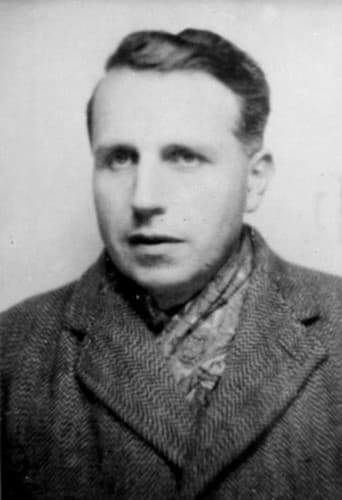
Georges Albert Maurice Victor Bataille was a French philosopher and intellectual working in philosophy, literature, sociology, anthropology, and history of art. His writing, which included essays, novels, and poetry, explored such subjects as eroticism, mysticism, surrealism, and transgression. His work would prove influential on subsequent schools of philosophy and social theory, including poststructuralism.

Jeff Olson
4.4
Thomas Sowell
4.4
Walter Brueggemann
4.3
Rhonda Byrne
4.3

Robin Wall Kimmerer
4.3
George S. Clason
4.3
Elliot Aronson
4.3
Joseph Campbell
4.3