BookBrief
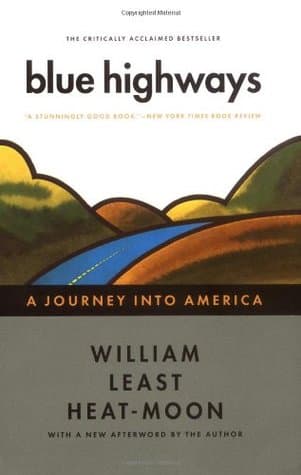
Blue Highways cover
Archivist's Choice

Blue Highways

William Least Heat-Moon (1981)

Genre

Lifestyle / Biography / Memoir / History

Reading Time

12-15 hours

Key Themes

See below

Track Your Reading

Sign in to track this book

William Least Heat-Moon travels America's backroads, finding the nation's unique spirit in its overlooked towns and their residents.

Core Idea

After a personal setback, William Least Heat-Moon drives across the United States, sticking to the less-traveled 'blue highways'—secondary roads not on major maps. His trip is a close look at small-town America, showing the distinct character, history, and strength of places often ignored by modern highways. Through meeting many people and observing the land, the book suggests that understanding America comes not from big stories but from the details of its quiet communities, the wisdom found in being alone, and the unexpected connections made when traveling anonymously.
Reading time
12-15 hours
Difficulty
Medium
✓ Read this if...
You appreciate immersive travelogues, reflective prose, and detailed portraits of forgotten American towns and their inhabitants.
✗ Skip this if...
You prefer fast-paced narratives or are looking for a practical guide to road tripping.

Core idea

The central argument and framework that powers the entire book.

After a personal setback, William Least Heat-Moon drives across the United States, sticking to the less-traveled 'blue highways'—secondary roads not on major maps. His trip is a close look at small-town America, showing the distinct character, history, and strength of places often ignored by modern highways. Through meeting many people and observing the land, the book suggests that understanding America comes not from big stories but from the details of its quiet communities, the wisdom found in being alone, and the unexpected connections made when traveling anonymously.

At a glance

Reading time

12-15 hours

Difficulty

Medium

Read this if...

You appreciate immersive travelogues, reflective prose, and detailed portraits of forgotten American towns and their inhabitants.

Skip this if...

You prefer fast-paced narratives or are looking for a practical guide to road tripping.

Key Takeaways

1

The Allure of the Backroads

Discovering authentic America by avoiding the interstates.

Quote

On the interstates, 'you see nothing but other people driving to see nothing but other people driving.'

Least Heat-Moon's main idea is that the real heart of America, its unique character and people, lives not along the main interstates but on the 'blue highways'—the older, less-used state and county roads often shown in blue on old maps. These routes require a slower pace, leading to unexpected meetings and a deeper look into local cultures. By avoiding major roads, he aimed to escape the similar strip malls and fast-food chains of modern highway travel. Instead, he found the unusual, the historic, and the truly local. This trip is les...

Supporting evidence

His entire journey is a testament to this, as he intentionally navigates solely via the blue lines of an old Rand McNally atlas, often choosing the most circuitous routes to reach seemingly insignificant towns.

Apply this

When planning a trip, intentionally choose a route that avoids major highways. Seek out local diners, small town museums, and independent shops. Allow for unplanned stops and conversations with locals to truly experience a place.
slow-travelamerican-identityroad-trip
2

The Power of Solitude and Reflection

Travel as a means of personal introspection and healing.

Quote

'A man on a journey must be able to live in the present, to be open to what comes, to be ready to change course, to be alone without being lonely.'

Least Heat-Moon starts his trip at a low point, having recently separated from his wife and lost his teaching job. The quiet of the road, the anonymity of constant movement, and the lack of outside pressure give him a unique space for self-reflection and healing. His 'Ghost' van becomes a moving sanctuary, letting him process his sadness and uncertainty. This journey shows how moving physically can often lead to deep internal changes, acting as therapy where the vastness of the landscape reflects the internal space needed for thought....

Supporting evidence

The very impetus for the trip – his 'need to put home behind him' after a marital separation and job loss – directly illustrates this. His internal monologues and observations throughout the book reveal his psychological state and gradual shift.

Apply this

If facing a personal crisis or major life transition, consider a period of focused solitude or a journey that allows for extensive reflection. Disconnect from digital distractions and engage with your surroundings, using the external world as a mirror for internal processing.

self-discoveryhealing-journeyintrospection
3

The Resilience of Small-Town America

Uncovering the unique spirit and struggles of forgotten communities.

Quote

'Those little towns that get on the map—if they get on at all—only because some cartographer has a blank space to fill.'

The book explores America's small towns, many of which are struggling with economic problems and losing importance. Least Heat-Moon finds that despite difficult situations, these communities have remarkable strength, unique character, and strong local pride. He looks into their histories, listens to their residents' stories, and observes their daily lives, showing a mix of different traditions, quirks, and quiet wisdom. These towns, often overlooked, are an important, though sometimes fading, part of the American fabric, offering a di...

Supporting evidence

His visits to towns like Nameless, Tennessee; Dime Box, Texas; and Why, Arizona, where he meticulously records the lives, accents, and philosophies of the local residents, highlighting their distinctiveness and struggles.

Apply this

Actively seek out and support small businesses and local establishments when traveling. Engage in conversations with long-term residents to learn about local history and culture. Recognize the value and contributions of communities outside of major metropolitan areas.

rural-americacommunity-spiritcultural-preservation
4

The Philosophy of Naming Things

How names shape identity, history, and perception.

Quote

'A place is not only its name, but its history, its people, its spirit.'

Least Heat-Moon is interested in the origins and meaning of place names, especially the unusual ones he finds. He explores how names often capture a community's history, hopes, or quirks, and how they can be both a source of pride and a sign of forgotten beginnings. His own chosen name, 'Least Heat-Moon,' shows his Osage background and a wish to connect with his heritage, highlighting the personal importance of naming. This interest extends to the people he meets, understanding that the names we have and the names we give to places ar...

Supporting evidence

His detailed research into the origins of town names like Whynot, Mississippi; Simplicity, Virginia; and his own adopted name, 'Least Heat-Moon,' are recurrent themes and explicit points of discussion.

Apply this

When visiting a new place, research the origin of its name and how it has evolved. Consider the names you use in your own life – for places, pets, or even yourself – and reflect on their meaning and significance. Recognize that names are rarely arbitrary.

etymologyidentityplace-names
5

The Human Connection Amidst Anonymity

Finding profound meaning in fleeting encounters with strangers.

Quote

'To get to know a country, you must know its people.'

Despite his initial need for solitude, Least Heat-Moon consistently seeks out and talks with the people he meets on the blue highways. These meetings, often brief and with people he will never see again, are central to the book. From diner waitresses to gas station attendants, from isolated farmers to small-town eccentrics, each person offers a unique view of American life. He listens carefully, letting their voices and stories paint a rich, detailed picture of the nation. These interactions, marked by real curiosity and respect, show...

Supporting evidence

The numerous vignettes featuring diverse characters: the hermit in Arizona, the ferryman in Kentucky, the waitresses in various diners who share their life stories and philosophies.

Apply this

When traveling or in daily life, make an effort to engage in genuine conversations with strangers. Ask open-ended questions and truly listen to their responses. Be open to the unexpected insights and connections that can arise from brief interactions.

human-connectionempathyoral-history
6

The Impermanence of Landscape and Culture

Witnessing the slow erosion of distinct regional identities.

Quote

'The more common America becomes, the less it remains itself.'

Least Heat-Moon's journey has a touch of sadness as he sees the slow loss of unique regional identities under the forces of modern growth and mass culture. He notes how the distinctiveness of small towns—their local speech, customs, and even appearance—is slowly being replaced by a more uniform, generic American landscape. This is not just about regretting change but recognizing the loss of variety and the unique character that once defined different parts of the country. His travels document what is being lost, a snapshot of an Ameri...

Supporting evidence

His observations comparing the vibrant, distinct small towns with the blandness of interstate exits, and his conversations with older residents who recall a time when their communities were more self-sufficient and unique.

Apply this

Support local businesses and artisans to help preserve unique regional cultures. Document and share stories of your own community's unique history and traditions. Advocate for policies that protect local heritage and prevent over-standardization.

cultural-homogenizationregionalismnostalgia
7

The American Dream Reimagined

Finding fulfillment not in wealth but in autonomy and experience.

Quote

'What you've done becomes the judge of what you're going to do — especially if you're trying to make up for lost time.'

Least Heat-Moon's journey quietly redefines the American Dream. Instead of seeking money or typical success, he looks for independence, self-discovery, and a rich variety of experiences. He lives simply out of his van, valuing freedom and the chance to learn over comfort or possessions. His talks with people often show different ideas of success and happiness; many find contentment in simple lives, strong community ties, or a deep connection to their land. The book suggests that true fulfillment comes not from getting more, but from e...

Supporting evidence

His choice to travel with minimal possessions, his discussions with people who live off the land or in remote areas, and his own personal transformation from a disillusioned academic to a more grounded, self-aware individual.

Apply this

Reflect on your own definition of success and happiness. Prioritize experiences, learning, and personal growth over material acquisition. Consider how you can create more autonomy and meaning in your daily life, even without embarking on a grand journey.

minimalismautonomyexperiential-learning
8

The Cartographic Imperative

Maps as guides not just to places, but to hidden stories.

Quote

'A map is a kind of X-ray that shows something of what is within the land.'

The 'blue highways' themselves, as shown on his old Rand McNally atlas, are more than just routes; they are conceptual frames for his exploration. Least Heat-Moon sees maps not just as navigation tools but as historical documents and invitations to discover. He is drawn to the empty spaces, the unclear names, and the less-traveled roads, understanding that these are where untold stories live. The map becomes a symbol for uncovering the hidden layers of America, suggesting that real understanding requires looking beyond the obvious and...

Supporting evidence

His explicit reliance on an old Rand McNally atlas, specifically focusing on the 'blue highways,' and his constant references to town names and their location on the map as starting points for his inquiries.

Apply this

Before a trip, study detailed maps beyond just GPS. Look for unusual place names, small roads, and areas that seem less developed. Use these as prompts for research or as invitations to explore off the beaten path. View maps as keys to narrative and history.

cartographyexplorationhidden-history
9

Embracing the Unexpected

The journey's true value lies in its unplanned detours and discoveries.

Quote

'The less you plan, the more you are open to what comes.'

A main rule of Least Heat-Moon's travel philosophy is to welcome chance. He starts with a general direction but avoids strict plans, letting the road, the weather, and the people he meets guide his path. This openness to the unexpected is important for his discoveries, leading him to unique towns, surprising talks, and deep insights that would have been missed with a strict schedule. The book supports the idea that some of life's most valuable experiences, and in travel, come from stepping outside planned structures and allowing for s...

Supporting evidence

His frequent detours based on intriguing road signs, recommendations from locals, or simply following an impulse, such as turning off to explore a town simply because its name caught his eye.

Apply this

In your daily life or when traveling, intentionally leave room for spontaneity. Don't overschedule. Be open to changing plans based on new information or unexpected opportunities. Practice saying 'yes' to unplanned invitations or discoveries.

serendipityspontaneityopenness
10

The Art of Listening

True understanding comes from giving voice to others.

Quote

'A good traveler has no fixed plans and is not intent on arriving.'

Least Heat-Moon is an excellent listener. He approaches each meeting with true curiosity, letting people tell their stories in their own words, without judgment or interruption. His detailed records of conversations, capturing speech patterns, rhythms, and personal beliefs, show his dedication to giving a voice to those often unheard. This deep listening allows him to paint such a rich and real picture of America, showing the diverse views and complex realities of its residents. The book stresses that to truly understand a place or cu...

Supporting evidence

His extensive use of direct quotes and detailed dialogue from the people he meets, often dedicating entire sections to their monologues and anecdotes, such as the ferryman's tales or the café owner's philosophy.

Apply this

Practice active listening in your conversations, focusing on understanding rather than formulating your next response. Ask open-ended questions and allow for silence. Seek out diverse voices and perspectives, and give them space to be heard.

active-listeningempathystorytelling

Critical analysis

Notable Quotes

A man who goes on a journey, if he be a man of sense, will not confine himself to the mere geographical features of the country, but will take note of its people and their customs, their history, their industries, and their institutions.

Reflecting on the purpose of his journey and what he hopes to observe.

What you've done becomes the judge of what you're going to do — especially when you're trying to get out of the rut you're in.

Pondering the weight of past actions and the challenge of change.

The more I traveled, the more I realized that fear makes strangers of people who should be friends.

Observing the interactions and attitudes in various small towns.

I was back on the road. It was good. It was better than good. It was what I was for.

Feeling a sense of purpose and belonging while driving his van, 'Ghost Dancing'.

To know a place, you must know its roads, its back roads, its blue highways.

Explaining his philosophy for truly understanding America, by avoiding major interstates.

Loneliness is a kind of tax you have to pay to be a traveler.

Reflecting on the solitary nature of his extended journey.

It is not the destination, but the journey. Unless you're going to a dump, in which case it is the destination.

A humorous take on the common travel adage, showing his pragmatic side.

Most men lead lives of quiet desperation and go to the grave with the song still in them.

A quote he references, reflecting on the unfulfilled lives he observes or imagines.

A good traveler has no fixed plans and is not intent on arriving.

Embracing the spontaneity and open-ended nature of his trip.

What do you do when you get to a place where there's nothing to do? You make something to do.

Describing the resourcefulness and creativity found in remote, quiet towns.

The trip was a kind of self-imposed exile, a way of getting out of the rut of a life that wasn't working.

Defining the personal motivation behind embarking on his extensive road trip.

The past is a foreign country; they do things differently there.

Another referenced quote, applied to the historical and cultural differences encountered across America.

People were like islands, and they had to be discovered.

Reflecting on the unique and often hidden stories of the individuals he met.

There are times when the best thing to do is just drive.

A simple, profound realization about the therapeutic nature of his journey.

Quiz

Test Your Knowledge

Ready to see how well you understood this book? Take our interactive quiz with 10 questions.

10
Questions
~5
Minutes
?
Best Score

Key Questions (FAQ)

'Blue Highways' chronicles William Least Heat-Moon's extensive road trip across the United States, primarily traveling on the old, forgotten 'blue highways' marked on maps. It's a journey of self-discovery, exploring the overlooked small towns and the unique individuals who inhabit them, revealing a hidden America.

About the author