BookBrief
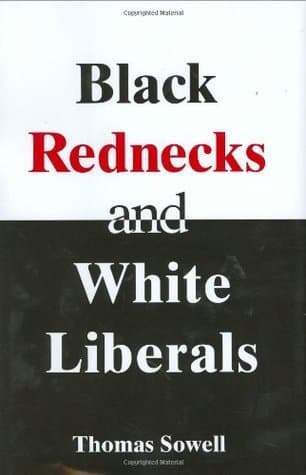
Black Rednecks and White Liberals cover
Archivist's Choice

Black Rednecks and White Liberals

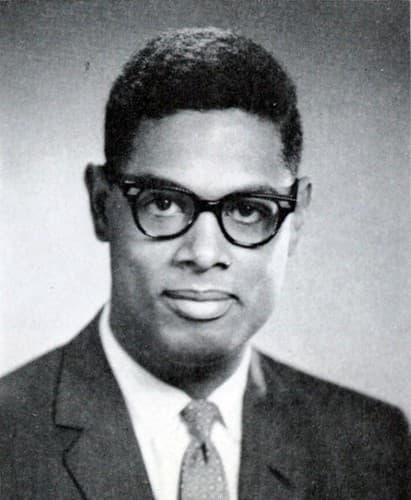
Thomas Sowell (2005)

Genre

Politics / History / Economics / Philosophy

Reading Time

10-15 hours (based on 372 pages)

Key Themes

See below

Track Your Reading

Sign in to track this book

Sowell shows the shared cultural roots of Southern 'rednecks' and some Black communities, arguing that well-meaning white liberals hurt these communities by defending a destructive subculture.

Core Idea

Thomas Sowell argues that many cultural traits and social problems often linked to race or racism in America today are actually from a 'redneck' subculture. This subculture started in the antebellum South and was shared across racial lines. He criticizes 'white liberals' for blaming all disparities on systemic oppression. He says this view ignores history, individual choices, and the strong influence of culture over race. Sowell believes this narrow view stops effective solutions because it misidentifies the real causes of social issues. He calls for understanding these problems through specific historical context, economic realities, and cultural changes, rather than simple racial stories.
Reading time
10-15 hours (based on 372 pages)
Difficulty
Medium
✓ Read this if...
You are interested in a contrarian, evidence-based critique of mainstream explanations for racial disparities in America, focusing on historical subcultures and economic factors over systemic racism.
✗ Skip this if...
You prefer analyses that prioritize systemic racism and white privilege as the primary drivers of contemporary social inequality, or you are uncomfortable with arguments that challenge prevailing progressive narratives on race.

Core idea

The central argument and framework that powers the entire book.

Thomas Sowell argues that many cultural traits and social problems often linked to race or racism in America today are actually from a 'redneck' subculture. This subculture started in the antebellum South and was shared across racial lines. He criticizes 'white liberals' for blaming all disparities on systemic oppression. He says this view ignores history, individual choices, and the strong influence of culture over race. Sowell believes this narrow view stops effective solutions because it misidentifies the real causes of social issues. He calls for understanding these problems through specific historical context, economic realities, and cultural changes, rather than simple racial stories.

At a glance

Reading time

10-15 hours (based on 372 pages)

Difficulty

Medium

Read this if...

You are interested in a contrarian, evidence-based critique of mainstream explanations for racial disparities in America, focusing on historical subcultures and economic factors over systemic racism.

Skip this if...

You prefer analyses that prioritize systemic racism and white privilege as the primary drivers of contemporary social inequality, or you are uncomfortable with arguments that challenge prevailing progressive narratives on race.

Key Takeaways

1

The Southern Subculture of 'Redneck' Behavior

Dysfunctional traits once common among poor Southern whites were transmitted to and persisted within a segment of the Black population.

Quote

Many of the cultural traits considered 'black' today – from speech patterns to a disdain for education and a propensity for violence – originated not in Africa, but in the white Southern 'redneck' subculture.

Sowell traces a subculture that developed among poor, often Scotch-Irish, whites in the American South. This 'redneck' culture had traits like resisting authority, preferring immediate rewards over future planning, a high rate of violence, and a distinct dialect. Observers, and even some Southerners, often noted these traits with concern. As these poor whites moved and assimilated, many of their cultural traits faded. However, Sowell argues that enslaved and later freed Black people in the South absorbed this same subculture through c...

Supporting evidence

Sowell cites numerous historical accounts, travelogues, and sociological studies from the 18th, 19th, and early 20th centuries describing the distinct cultural patterns of poor Southern whites, showing remarkable parallels to later descriptions of urban Black ghettos. He references observations by Frederick Law Olmsted and others.

Apply this

When analyzing social problems within specific communities, look beyond immediate racial or economic factors to investigate the historical transmission and evolution of cultural norms and subcultures that may predate current demographics.

cultural-transmissionsubculturesouthern-historyghetto-culture
2

The Perils of White Liberal Paternalism

Well-intentioned white liberals, by sacralizing dysfunctional 'black redneck' culture, inadvertently impede Black progress.

Quote

The tragic irony is that 'white liberals' often reinforce the very cultural patterns that hold back segments of the black community, mistaking these patterns for authentic 'black culture' and defending them against critique.

Sowell believes that a major barrier to upward mobility for Black individuals caught in the 'black redneck' subculture comes from their 'white liberal friends.' He argues that these allies, wanting to fight racism and show support, often praise and defend harmful parts of this subculture as sacred 'Black identity.' By doing this, they unintentionally discourage criticism, change, and assimilation into more productive societal norms. This creates a situation where problems are romanticized, and Black individuals trying to escape these ...

Supporting evidence

Sowell discusses how certain speech patterns, attitudes towards education, or even criminal behavior are sometimes excused or even celebrated by white liberals as expressions of 'authenticity' or resistance, rather than being critically addressed as impediments to progress. He contrasts this with the historical expectations for self-improvement within Black communities themselves.

Apply this

Critically examine whether efforts to support marginalized groups inadvertently romanticize or defend cultural traits that are demonstrably detrimental to individual and collective progress. Focus on empowering self-critique and fostering pathways to success rather than validating all cultural expressions uncritically.

liberal-paternalismcultural-relativismidentity-politicsunintended-consequences
3

The Myth of 'Generic' Jewish Success

Jewish success is not due to inherent 'generic' traits but specific historical and cultural adaptations.

Quote

The history of Jews, far from being 'generic,' is a highly specific and unique set of circumstances, adaptations, and cultural priorities that led to their distinctive patterns of achievement.

In one chapter, Sowell questions the idea of 'generic' success by examining the history of Jewish people. He looks at their achievements in intellectual and economic fields despite centuries of persecution. He argues against the idea that Jews have some inborn, universal trait for success. Instead, he points to specific cultural adaptations: a strong focus on education and literacy (even for the poor), robust community networks, significant involvement in commerce and finance (often due to limits on land ownership), and a high degree ...

Supporting evidence

Sowell details the historical emphasis on Talmudic study, the development of sophisticated financial networks, and the high rates of literacy and entrepreneurship among Jewish communities across various diasporas, contrasting this with groups lacking such specific cultural priorities.

Apply this

When examining group disparities, avoid attributing success or failure to vague 'generic' characteristics. Instead, delve into the specific historical, cultural, and institutional factors that have shaped a group's opportunities, incentives, and adaptations.

jewish-historycultural-capitalgroup-achievementmeritocracy
4

Slavery's Global Pervasiveness and Uniqueness in the West

Slavery was a global institution, but Western abolitionism was historically unprecedented.

Quote

Slavery was not unique to the West, nor was it even primarily a Western institution for most of human history. What was unique was the rise of an anti-slavery movement *within* Western civilization.

Sowell corrects the common idea that slavery was a unique evil of the West. He shows that slavery was a widespread institution, practiced in almost all civilizations, continents, and races for thousands of years. This includes widespread slavery in Africa, Asia, and the Middle East. He points out that more Africans were enslaved by other Africans and by Arabs than by Europeans, and that Europeans enslaved other Europeans before the transatlantic slave trade. Sowell argues that the unique part of the Western experience is not its pract...

Supporting evidence

Sowell cites historical records detailing slavery in ancient civilizations, the Ottoman Empire, various African kingdoms, and the Barbary Coast. He emphasizes the role of the British Navy in suppressing the slave trade globally after its own abolition.

Apply this

Challenge historical narratives that isolate and demonize specific groups or civilizations by examining the global context of historical phenomena. Recognize that moral progress often emerges from internal critiques within specific cultures, rather than being imposed externally.

history-of-slaveryabolitionismwestern-civilizationglobal-history
5

The Economic Logic of Slavery and Its Demise

Slavery was an economically viable system under specific conditions, and its decline was driven by changing economic and moral factors.

Quote

Slavery persisted not because people were inherently evil, but because, under certain economic conditions, it was the most profitable way to organize labor.

Sowell looks at the economic reasons behind slavery. He argues that it was a very profitable system for thousands of years, especially in farming economies that needed a lot of labor, where supervision was hard, and land was plentiful. The cost of 'free' labor often exceeded the cost of keeping slaves and making them work. However, the Industrial Revolution and the rise of more complex, skilled labor markets gradually made slavery less efficient. Free labor, with its incentives for innovation, skill development, and self-supervision, ...

Supporting evidence

Sowell discusses the economic models of slave-based plantations versus free-labor farms, the costs of maintaining slaves versus wages, and the impact of technological advancements on labor demand. He highlights the profitability of the transatlantic slave trade for centuries.

Apply this

Understand that deeply entrenched social systems, even morally repugnant ones, often have underlying economic logics. Addressing such systems effectively requires understanding both their moral failings and their economic incentives.

economics-of-slaveryindustrial-revolutionlabor-economicsmoral-economy
6

The Irrelevance of Origins for Cultural Traits

The origin of a cultural trait is less important than its current consequences.

Quote

Whether a cultural trait originated in Africa, Europe, or anywhere else is far less important than whether that trait is currently conducive to progress or impediment to it.

A main idea in Sowell's work is that focusing on the historical origins of cultural traits, while interesting, can distract from their current impact. He argues that many debates about 'authentic' Black culture or 'African heritage' get bogged down in historical purity tests. These tests ignore the real consequences of these traits in today's society. If a cultural pattern—no matter where it came from—leads to clearly negative outcomes (e.g., lower education, higher crime, economic stagnation), then its historical background is less i...

Supporting evidence

Sowell applies this principle to the 'black redneck' subculture, arguing that its Southern white origins are less critical than its current deleterious effects on urban Black communities. He challenges the idea that any cultural trait associated with a group must be preserved regardless of its utility.

Apply this

When evaluating cultural practices or beliefs, prioritize their current effects and consequences over their historical origins. Be willing to critically assess and adapt cultural elements that hinder progress, regardless of their 'authenticity' or historical roots.

cultural-consequencespragmatismcultural-evolutionpresent-focus
7

The Misguided Pursuit of 'Representation'

Focusing on proportional representation across all fields can obscure underlying disparities and individual merit.

Quote

The obsession with 'representation' often distracts from the more fundamental questions of individual merit, skill development, and the varied choices and priorities of different groups.

Sowell often criticizes the modern focus on 'representation,' especially the idea that every group should be proportionally represented in every job, institution, or income level. He argues that this focus is misleading and often unhelpful. Different groups, because of varied histories, cultural priorities, geographic distributions, and individual choices, naturally gravitate towards different fields and achieve different results. Expecting perfect proportional representation ignores these complexities. It often leads to lower standar...

Supporting evidence

Sowell points to the historical overrepresentation of certain ethnic groups in specific industries (e.g., Germans in brewing, Jews in finance, Chinese in laundries) not as evidence of discrimination but of specific cultural capital, migration patterns, and entrepreneurial niches. He argues that applying 'representation' metrics to such historical patterns would be absurd.

Apply this

Shift focus from achieving demographic proportionality to ensuring genuine equality of opportunity, fostering merit-based systems, and supporting individual skill development. Recognize that different groups will naturally have different distributions across professions and socioeconomic strata.

equality-of-outcomeequality-of-opportunitymeritocracydemographic-disparities
8

Culture, Not Race, as the Primary Explanatory Factor

Cultural patterns, not inherent racial characteristics, are the most powerful determinants of group outcomes.

Quote

What is often mistaken for 'racial' differences in aptitude or behavior are, in fact, cultural differences that have evolved over generations within specific groups, independent of their genetic makeup.

Throughout the book, Sowell consistently argues against explaining group differences based on race. Instead, he champions culture as the main reason for these differences. He shows how groups of the same race but with different cultural backgrounds (e.g., West Indian Blacks versus American Blacks, or various European ethnic groups) have vastly different social and economic outcomes. Conversely, groups of different races sharing similar cultural patterns can show similar behaviors. This view is central to his 'black redneck' idea, wher...

Supporting evidence

Sowell contrasts the economic and social success of West Indian immigrants in the US with that of native-born American Blacks, attributing the difference to distinct cultural values regarding education, family structure, and entrepreneurship, despite sharing the same racial classification.

Apply this

When analyzing disparities between groups, prioritize the examination of cultural norms, values, and practices over racial or genetic explanations. Focus on how cultural capital is developed and transmitted, and how it impacts opportunities and outcomes.

cultural-determinismrace-vs-culturegroup-disparitiessocial-learning
9

The Dangers of Intellectual Myopia

Narrow ideological frameworks prevent a holistic understanding of complex social phenomena.

Quote

Much of what passes for 'analysis' in intellectual discourse is merely the application of pre-existing ideological templates, rather than an honest examination of inconvenient facts.

Sowell implicitly and explicitly critiques what he sees as intellectual narrowness among academics and public thinkers. He argues that many analyses of race, class, and history are limited by strict ideological frameworks. For example, the idea that all differences must be due to racism, or that all historical events must fit a story of oppression. These frameworks prevent an honest look at inconvenient facts. This intellectual tunnel vision leads to simple explanations, the dismissal of evidence that goes against a belief, and a fail...

Supporting evidence

Sowell's entire approach, from his analysis of slavery's global context to the 'black redneck' subculture, directly challenges prevailing narratives that attribute all Black-white disparities solely to systemic racism, or that portray slavery as a uniquely Western evil. He consistently introduces facts that complicate these narratives.

Apply this

Actively seek out diverse perspectives and data that challenge your pre-existing beliefs or ideological frameworks. Be wary of explanations that attribute complex social phenomena to a single cause, and cultivate intellectual humility when confronting inconvenient truths.

intellectual-biasideologycritical-thinkinghistorical-revisionism
10

The Importance of Historical Context and Specificity

Understanding historical events requires deep dives into specific times, places, and cultural nuances, not broad generalizations.

Quote

Generalizations about 'history' or 'race' often obscure the highly specific and varied realities of human experience across different eras and cultures.

Sowell's work shows the importance of historical context and specific details. He consistently warns against broad generalizations about entire races, continents, or historical periods. Instead, he carefully details the specific conditions, cultural practices, economic incentives, and political structures that existed in particular times and places. For example, his discussion of slavery is not one single account. It distinguishes between various forms of bondage, different slave systems, and how they changed across civilizations. Thi...

Supporting evidence

Sowell's detailed accounts of the distinct cultural traits of poor Southern whites, the specific economic conditions that made slavery viable, or the unique cultural adaptations of various Jewish communities all exemplify his commitment to historical and cultural specificity.

Apply this

When studying history or social issues, resist the urge to overgeneralize. Always ask for specific examples, dates, locations, and cultural contexts to ensure a nuanced and accurate understanding, rather than relying on broad, often misleading, narratives.

historical-contextnuancespecificitycomparative-history

Critical analysis

Notable Quotes

Many of the social pathologies of the ghetto today are not new, nor are they peculiar to blacks. What is new is the concentration of these pathologies in the ghetto, and what is peculiar is the attempt to explain them by racism and poverty.

Sowell critiques common explanations for inner-city problems.

The black redneck culture was not simply a reaction to oppression, but a cultural pattern with its own internal dynamics, which often operated independently of white racism.

Discussing the origins and perpetuation of a particular cultural pattern among some blacks.

The culture of the antebellum South was a hybrid of various cultural streams, but the dominant stream in many ways was that of the white redneck culture, which was then transmitted to black slaves.

Tracing the cultural lineage of the 'black redneck' phenomenon.

The historic role of intellectuals has not been to provide the public with facts, but to provide the public with arguments that justify the conclusions they have already reached.

A critical observation on the role and biases of intellectuals.

What was once called 'common sense' is now often called 'prejudice' if it happens to contradict the dogmas of the anointed.

Sowell contrasts traditional wisdom with modern intellectual trends.

Many of the problems of the poor are not due to lack of money but to lack of human capital—skills, work habits, and cultural patterns conducive to success.

Challenging the simplistic view that poverty is solely a financial issue.

The tragic irony of much of the history of American education is that it has often been a story of great efforts to educate people who were already educated, while neglecting those who were not.

Critiquing the priorities and effectiveness of the American education system.

The 'redneck' culture, whether black or white, was characterized by a casual attitude toward violence, a limited time horizon, and a general resistance to education and upward mobility.

Describing key attributes of the 'redneck' cultural pattern.

The history of the South is crucial to understanding much of American history, and particularly black history, because so many of the cultural patterns that persist today originated there.

Emphasizing the foundational role of Southern culture in American society.

The 'liberal' project, in Sowell's view, often assumes that problems are due to external systemic failures, rather than internal cultural or individual choices.

A central critique of a particular liberal viewpoint.

It is remarkable how often the same social policies, having failed repeatedly, are nevertheless resurrected and tried again, usually with even greater fervor.

Observing the cyclical nature of policy failures and their re-implementation.

The very term 'racism' has become so elastic that it can explain virtually anything, and therefore explains nothing very precisely.

Sowell's take on the broad and often imprecise use of the term 'racism'.

The 'black redneck' culture was not merely poverty, but a culture that made poverty more difficult to escape, even when economic opportunities were available.

Distinguishing between poverty and cultural factors that perpetuate it.

One of the most valuable lessons of history is how many of the things that are considered 'problems' today were once considered 'solutions' to even bigger problems.

A philosophical reflection on the evolution of social issues and their perceived remedies.

Quiz

Test Your Knowledge

Ready to see how well you understood this book? Take our interactive quiz with 10 questions.

10
Questions
~5
Minutes
?
Best Score

Key Questions (FAQ)

Thomas Sowell argues that a dysfunctional 'redneck' subculture, originating in the antebellum South and shared by both poor whites and blacks, has perpetuated negative stereotypes and hindered progress. While many whites and some blacks escaped this subculture, it persists in some urban black communities, exacerbated by well-intentioned but misguided 'white liberal' policies and attitudes.

About the author