BookBrief
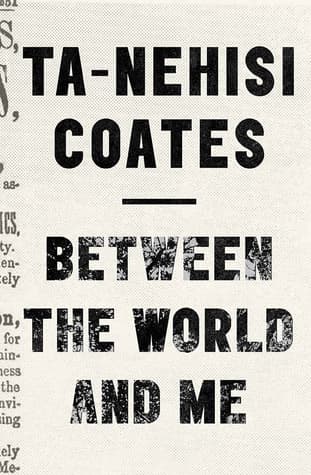
Between the World and Me cover
Archivist's Choice

Between the World and Me

Ta-Nehisi Coates (2015)

Genre

Politics / Biography / Memoir / History

Reading Time

90-120 min

Key Themes

See below

Track Your Reading

Sign in to track this book

In a letter to his son, Ta-Nehisi Coates explores the reality of being black in America, combining personal stories with history to show how race is a social construct and how people continue to fight for freedom.

Core Idea

Ta-Nehisi Coates's "Between the World and Me" is a letter to his son that examines systemic racism in American society and its impact on Black people. Coates argues that the 'American Dream' relies on the exploitation of Black people, and that race is a social idea created to justify this exploitation. He discusses the constant threat of violence and the vulnerability of Black individuals, emphasizing that the fight for dignity and survival is personal and requires constant watchfulness.
Reading time
90-120 min
Difficulty
Medium
✓ Read this if...
You want a raw, introspective, and profoundly personal exploration of race, identity, and the American experience through the lens of a Black man's life, and are prepared to confront uncomfortable truths about systemic injustice.
✗ Skip this if...
You are looking for a prescriptive guide to racial reconciliation or an optimistic vision of America's racial future. This book offers a stark and often bleak analysis rather than easy solutions.

Core idea

The central argument and framework that powers the entire book.

Ta-Nehisi Coates's "Between the World and Me" is a letter to his son that examines systemic racism in American society and its impact on Black people. Coates argues that the 'American Dream' relies on the exploitation of Black people, and that race is a social idea created to justify this exploitation. He discusses the constant threat of violence and the vulnerability of Black individuals, emphasizing that the fight for dignity and survival is personal and requires constant watchfulness.

At a glance

Reading time

90-120 min

Difficulty

Medium

Read this if...

You want a raw, introspective, and profoundly personal exploration of race, identity, and the American experience through the lens of a Black man's life, and are prepared to confront uncomfortable truths about systemic injustice.

Skip this if...

You are looking for a prescriptive guide to racial reconciliation or an optimistic vision of America's racial future. This book offers a stark and often bleak analysis rather than easy solutions.

Key Takeaways

1

The Dream is a Delusion

America's 'Dream' relies on the selective forgetting of its violent racial history.

Quote

The Dream thrives on generalization, on limiting too much nuance, on obscuring too much history.

Coates states that the American Dream, as often understood, is a fabricated fantasy, built on racial exploitation and a deliberate disregard for history. This Dream is not for everyone; its existence for some depends on the use and control of others, especially Black people. The Dream promises safety, wealth, and advancement, but for Black Americans, this promise has consistently been an illusion, always out of reach or violently taken away. To truly understand America's present, one must challenge this comforting but harmful story an...

Supporting evidence

Coates contrasts the idyllic suburban 'Dream' with the constant threat of violence and systemic oppression faced by Black communities. He describes how figures like Bill Cosby, while seemingly embodying the Dream, fail to acknowledge the systemic forces that continue to undermine it for most Black people.

Apply this

Actively interrogate narratives of national exceptionalism and prosperity. Seek out and amplify historical accounts that challenge dominant, often sanitized, versions of American history, especially those pertaining to race and power. Recognize that collective 'progress' often masks persistent, targeted suffering.

american-dreamracial-plunderhistorical-ignorance
2

The Body as the Site of Struggle

For Black Americans, the body is both a vessel for existence and a target of systemic violence.

Quote

The Dream of acting white, of talking white, of being white, was a dream of safety, for in America, the white body was the most precious thing.

Coates strongly states that the Black body is the main target of racial oppression in America. From slavery to modern-day police brutality, the physical body of Black individuals has been used, controlled, and harmed. This constant threat to one's physical self creates ongoing fear and heightened awareness, affecting every part of life. The 'safety' and 'value' given to white bodies contrast sharply with the vulnerability and disposability often assigned to Black bodies, making the simple act of existing a political statement and a co...

Supporting evidence

Coates recounts numerous instances of police brutality, drawing parallels between the historical violence of slavery and contemporary attacks on Black bodies. He vividly describes the fear he felt for his own body and for his son's, particularly after incidents like the murder of Prince Jones by a plainclothes police officer.

Apply this

Acknowledge and validate the lived experiences of those whose bodies are systemically targeted. Support movements and policies that protect bodily autonomy and dismantle systems that disproportionately harm marginalized communities. Educate yourself on the history of violence against specific racial groups.

bodily-autonomypolice-brutalitysystemic-violence
3

The Illusion of Race

Race is a social construct, yet its consequences are brutally real and deeply embedded.

Quote

The people who believe themselves to be white, who believe that they are beyond the African, are without question the most dangerous people in this land.

Coates dismantles the biological idea of race, showing it as a social concept created to justify exploitation and hierarchy. However, he stresses that despite its artificiality, the results of this invention are devastatingly real, shaping laws, institutions, and individual lives. The belief in 'whiteness' as a superior racial identity has fueled centuries of oppression and violence, creating a system where those who identify as white benefit from unearned advantages, often at the direct expense of Black and other marginalized group...

Supporting evidence

Coates discusses how 'whiteness' was an invention, a shifting category designed to consolidate power and property, particularly in the context of American slavery. He points to the historical creation of racial categories to justify the enslavement of Africans and the expropriation of indigenous lands.

Apply this

Challenge the notion of race as a biological reality. Understand how 'whiteness' functions as a social and political category that confers power and privilege. Advocate for policies that address the systemic inequalities created by racialized social structures, rather than simply individual prejudice.

social-constructwhiteness-as-powerracial-hierarchy
4

Howard University: The Mecca

A place of awakening and intellectual liberation, offering a counter-narrative to American history.

Quote

Howard was a machine, constructed to extract beauty from the earth and to cultivate the minds of the children of the damned.

For Coates, Howard University, called 'The Mecca,' was more than just a college; it was a place of change. Here, he began to shed the limited worldview from his upbringing and the dominant American narrative. Howard offered an intellectual community where Black history, culture, and ideas were central and celebrated, not pushed aside. It was a place where 'the children of the damned' could reclaim their intellectual heritage, discuss important ideas, and build a collective identity rooted in strength and resistance. This experience wa...

Supporting evidence

Coates describes the intellectual ferment at Howard, the debates in the dormitories, and the profound impact of professors who taught Black history and philosophy without apology. He mentions discovering authors like Amiri Baraka and learning about figures like Marcus Garvey and Malcolm X in a way that was absent from his prior education.

Apply this

Seek out and support institutions and spaces that center marginalized voices and histories. Actively engage with diverse intellectual traditions that challenge mainstream narratives. Understand the importance of historically Black colleges and universities (HBCUs) as vital spaces for intellectual and cultural development.

howard-universityintellectual-liberationhbc-culture
5

Parental Fear and Protection

A father's constant struggle to shield his son from a world designed to harm him.

Quote

I was writing this letter to you because I know that the Dreamers will not tell you that to make a man black in America is to make him a target.

The book is a letter from Coates to his son, Samori, making the parental fear for a Black child's safety and well-being its emotional center. Coates deals with the heavy responsibility of preparing his son for a world that sees his Black body as inherently suspicious and expendable. He cannot offer the false comfort of the 'Dream' because he knows it is a lie that endangers Black children. Instead, he shares a harsh honesty, a guide for navigating a hostile environment while trying to maintain one's dignity and selfhood. This deep lov...

Supporting evidence

Coates recounts specific instances of his son's interactions with police and the fear he felt, such as when Samori was pushed by a white man on the street. He discusses the constant conversations he has with Samori about how to behave in public, how to speak, and how to carry himself to avoid becoming a 'target.'

Apply this

Recognize the unique burdens placed on parents raising children in marginalized communities. Support initiatives that address systemic injustices that disproportionately harm children of color. Engage in honest conversations with children about the realities of race and power, even when uncomfortable.

parental-anxietyracial-socializationblack-fatherhood
6

The Inevitable Reckoning

True progress demands an unflinching confrontation with America's historical crimes.

Quote

The plunder of Black life has been America’s engine. And America has no future but an honest reckoning with this history.

Coates argues that America cannot move forward or achieve true freedom without an honest, full examination of its history of racial exploitation. This is not just about acknowledging past wrongs but understanding how those wrongs continue to shape today's inequalities. The nation's wealth and power were built on the exploitation of Black people, and denying this fundamental truth perpetuates the 'Dream' and its destructive effects. Without this deep, uncomfortable look at history, any efforts at reconciliation or reform will be superf...

Supporting evidence

Coates repeatedly emphasizes the economic and social benefits derived from slavery and Jim Crow, arguing that the entire American edifice was built upon the exploitation of Black labor and bodies. He points to the lasting wealth gap and systemic disadvantages as direct descendants of this historical plunder.

Apply this

Support and demand comprehensive historical education that accurately depicts the role of race and slavery in American development. Advocate for reparations and other forms of restorative justice that address historical and ongoing harms. Participate in dialogues that challenge comforting national myths.

historical-reckoningreparationsrestorative-justice
7

The Burden of Performance

Black individuals often must perform 'respectability' to survive in a prejudiced world.

Quote

The police are not an alien force. They are the men and women of your country and they are your country in its most lethal form.

Coates shows the constant pressure on Black individuals to act 'respectably' to avoid becoming targets of state violence, especially from law enforcement. This performance is not about true self-expression but about self-preservation, a desperate attempt to seem non-threatening in a society that views Blackness with suspicion. This burden extends beyond interactions with police, affecting daily life and forcing individuals to constantly watch their words, actions, and even appearance. It is a tiring, dehumanizing process that denies f...

Supporting evidence

Coates reflects on his own childhood and the lessons his father taught him about navigating the streets of Baltimore, emphasizing obedience and caution around authority figures. He describes the implicit and explicit rules Black people learn to follow to minimize risk, even when innocent.

Apply this

Question narratives that blame victims of state violence for their 'behavior.' Advocate for police accountability and demilitarization. Recognize and challenge the societal pressure on marginalized groups to conform to dominant cultural norms for the sake of safety.

respectability-politicspolice-accountabilitymicroaggressions
8

The Personal is Political

Individual experiences of racism are inextricably linked to systemic power structures.

Quote

The Dreamers will have to be made to understand that their Dream rests on our bodies, that the plunder of our bodies is not some distant history to be mourned but a living history to be addressed.

Coates expertly combines his personal story with a broader historical and political analysis, showing that individual experiences of racism are not isolated but are part of deep-rooted systemic power. His childhood fears, his intellectual awakening at Howard, his travels, and his worries as a father are all presented as direct results of America's racial project. He challenges the idea that racism is only individual prejudice, instead revealing it as a structural force that shapes institutions, policies, and the very fabric of society...

Supporting evidence

Coates's entire memoir exemplifies this, from his personal fear of physical violence growing up in West Baltimore to his later understanding of how that fear was a direct result of historical and ongoing state-sanctioned violence against Black communities. His visits to Civil War battlefields and discussions of reparations connect his lived reality to national history.

Apply this

Connect individual experiences of discrimination to broader systemic issues. Support policies that address structural inequalities rather than focusing solely on individual 'bad actors.' Engage in personal reflection to understand how your own experiences are shaped by larger power dynamics.

systemic-racismintersectionalitypolitical-consciousness
9

No Easy Answers, Only Persistence

Liberation is a continuous struggle, not a destination with a clear resolution.

Quote

The struggle is in your heart. The struggle is in your head. The struggle is in your body. It is in the very walls of the world.

Coates does not offer comforting solutions or easy paths to racial harmony. Instead, he presents a clear reality: the struggle against white supremacy and its lasting effects is everywhere, both internal and external, and it is ongoing. He does not provide a 'transcendent vision for a way forward' in the sense of a final goal, but rather a call for continuous awareness, resistance, and self-definition. The 'way forward' is not a destination but an active, persistent engagement with the truth, a commitment to living fully and authentic...

Supporting evidence

Coates concludes the book not with a hopeful vision of a post-racial America, but with a renewed emphasis on the ongoing nature of the struggle and the need for his son to continue to fight for his body and his place in the world. He references the cyclical nature of racial violence and resistance throughout history.

Apply this

Embrace a long-term perspective on social justice work, recognizing that change is incremental and requires sustained effort. Cultivate resilience and critical thinking in the face of persistent injustice. Focus on building and supporting movements, not just waiting for a single leader or solution.

anti-racist-struggleresiliencelong-game-activism

Critical analysis

Notable Quotes

I was a black boy, and I was not allowed to be a black boy. I was a black boy in America, and that meant I was a black boy in a cage.

Coates reflecting on his childhood and the societal limitations placed upon him due to his race.

The Dreamers will always tell you that they are an exception, that they are the good ones. But the Dream is built on the bodies of us.

Coates's critique of the 'American Dream' and its foundation in the exploitation of Black people.

To be black in America is to live in a constant state of emergency.

A direct statement about the lived experience of Black individuals in the United States.

The police of your country have been nothing but a continuous reminder of your country's heritage.

Coates discussing the historical role of policing in maintaining racial hierarchy.

America believes itself to be an innocent, exceptional nation, but the history of its wealth and power is soaked in blood.

A challenge to the narrative of American exceptionalism, highlighting its violent past.

The plunder of black life was not an incidental portion of the American story, but a central one.

Coates asserting that the exploitation of Black people is fundamental to American history and development.

But all our phrasing—race relations, racial chasm, racial justice, racial profiling, white privilege, even white supremacy—serves to obscure that racism is a visceral experience.

Coates arguing that language often fails to capture the physical and emotional impact of racism.

I would not have you believe that you are unique in this. All your ancestors were, in their time, dead.

Coates reminding his son of the universality of death, placing human existence within a larger context.

The Dream is the enemy of all we know to be true.

A concise summary of Coates's rejection of the idealized 'American Dream'.

The truth is that the Dream is a lie. The Dream is the great myth of this country.

Further emphasizing his belief that the 'American Dream' is a deceptive narrative.

Black people have been, are, and will be, the source of America's greatest wealth.

Coates highlighting the foundational contribution of Black labor and life to American prosperity.

The mettle of the man was not his ability to withstand a blow, but his ability to avoid one.

Coates's father's philosophy on strength and survival, particularly relevant in a dangerous environment.

You are growing into consciousness, and my wish for you is that you feel no need to constrict it.

Coates expressing his hope for his son to embrace and expand his understanding of the world.

The Dream is the myth of security, of a beautiful house with a yard and a fence.

Describing the superficial and often unattainable promises embedded in the 'American Dream'.

Quiz

Test Your Knowledge

Ready to see how well you understood this book? Take our interactive quiz with 10 questions.

10
Questions
~5
Minutes
?
Best Score

Key Questions (FAQ)

'Between the World and Me' explores the realities of being Black in America, focusing on the systemic nature of racism and its impact on Black bodies. Coates argues that the American dream is built upon a racial hierarchy that inherently disadvantages Black people.

About the author