BookBrief
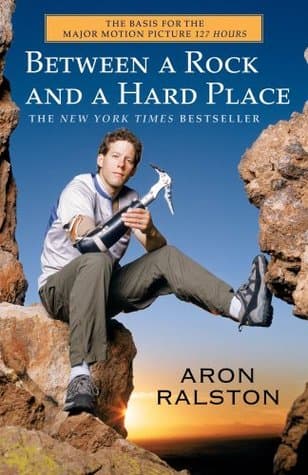
Between a Rock and a Hard Place cover
Archivist's Choice

Between a Rock and a Hard Place

Aron Ralston (2004)

Genre

Lifestyle / Biography / Memoir

Reading Time

360 min

Key Themes

See below

Track Your Reading

Sign in to track this book

Trapped by an 800-pound boulder in a remote Utah canyon, Aron Ralston's memoir recounts his six-day fight for survival, ending in self-amputation to escape death.

Core Idea

Aron Ralston's memoir shows how people can survive and rely on themselves when facing a life-threatening situation. It suggests that true strength comes from accepting vulnerability along with great mental toughness, cleverness, and the willingness to make an unthinkable sacrifice to live. The story emphasizes how extreme isolation and suffering can make someone appreciate life's simple joys and the importance of human connection.
Reading time
360 min
Difficulty
Medium
✓ Read this if...
You are fascinated by extreme survival stories, human resilience, the psychological aspects of isolation, or tales of ultimate sacrifice in the face of insurmountable odds. This book is for those who want to understand the limits of human endurance and the power of the will to live.
✗ Skip this if...
You are squeamish about graphic descriptions of injury and self-amputation, or if you prefer books with a broader philosophical scope over a highly detailed, personal survival narrative.

Core idea

The central argument and framework that powers the entire book.

Aron Ralston's memoir shows how people can survive and rely on themselves when facing a life-threatening situation. It suggests that true strength comes from accepting vulnerability along with great mental toughness, cleverness, and the willingness to make an unthinkable sacrifice to live. The story emphasizes how extreme isolation and suffering can make someone appreciate life's simple joys and the importance of human connection.

At a glance

Reading time

360 min

Difficulty

Medium

Read this if...

You are fascinated by extreme survival stories, human resilience, the psychological aspects of isolation, or tales of ultimate sacrifice in the face of insurmountable odds. This book is for those who want to understand the limits of human endurance and the power of the will to live.

Skip this if...

You are squeamish about graphic descriptions of injury and self-amputation, or if you prefer books with a broader philosophical scope over a highly detailed, personal survival narrative.

Key Takeaways

1

The Illusion of Invincibility

Even the most experienced adventurers can fall victim to unforeseen circumstances.

Quote

I was an expert. I was invincible. I was wrong.

Ralston's story shows that experience or preparation cannot fully protect someone from danger. Despite his extensive mountaineering background and careful planning for most trips, a simple solo hike in a familiar, yet remote, canyon became a disaster. His initial overconfidence and casual approach—not telling anyone his exact location—directly made his situation worse. This takeaway means that humility and recognizing risks, no matter one's skill level, are important for survival. Even a brief lapse in judgment can have severe consequ...

Supporting evidence

Ralston's decision to not inform anyone of his precise itinerary, a deviation from his usual safety protocols, is a key piece of evidence. The boulder incident itself, a freak accident where an 800-pound rock dislodged and pinned his arm, illustrates the unpredictable nature of the wilderness, even for a seasoned outdoorsman.

Apply this

Always communicate your detailed itinerary, including expected return times, to a trusted contact, even for seemingly 'easy' trips. Maintain a healthy respect for the environment and potential hazards, regardless of your experience level. Double-check gear and safety measures every time.

risk-managementsolo-adventurewilderness-safety
2

The Power of Mental Fortitude

Survival is as much a mental battle as it is a physical one.

Quote

The greatest victory is not in never falling, but in rising every time we fall.

Ralston's ordeal shows the power of the human mind in extreme survival situations. Trapped for days with little food and water and facing death, his ability to keep hope, plan, and prepare for his death (and eventual self-amputation) was essential. He used past experiences, his love for his family, and even dark humor to keep going. The mental strength to face the grim reality, yet still look for solutions, proves that the will to live can overcome seemingly impossible physical obstacles.

Supporting evidence

Ralston's use of his video camera to record goodbyes to his family and friends, documenting his last will and testament, demonstrates his mental processing of the situation. His internal monologues, detailed in the book, reveal his constant assessment of options, his emotional struggles, and his determination to find a way out.

Apply this

In challenging situations, practice mental visualization of positive outcomes. Break down overwhelming problems into smaller, manageable steps. Cultivate a strong 'why' (e.g., loved ones, future goals) to draw upon when facing adversity. Journaling or vocalizing thoughts can help process stress.

resiliencepsychological-survivalwill-to-live
3

Resourcefulness Under Duress

Extreme situations demand extreme creativity and adaptation.

Quote

When you're facing death, you discover what you're truly made of.

Ralston's clever use of his limited gear under extreme pressure shows human ingenuity. With few tools to escape, he carefully examined every item in his pack, from his multi-tool to his hydration tube, seeing many uses beyond their original purpose. This constant problem-solving, even when early attempts failed, kept his mind active and gave him a sense of control in an otherwise helpless situation. It shows that resourcefulness is not just about having the right tools, but about the mental flexibility to see new possibilities in what...

Supporting evidence

His attempts to chip away at the boulder with a dull multi-tool, fashioning a pulley system, and using his hydration hose to conserve water are examples. The most striking evidence is his eventual use of the multi-tool to perform the self-amputation, a horrifying but ultimately resourceful solution.

Apply this

Before any adventure, mentally 'inventory' your gear and brainstorm alternative uses for each item. Practice 'what-if' scenarios to train your mind for unexpected challenges. Cultivate a mindset that views problems as puzzles to be solved, rather than insurmountable obstacles.

problem-solvingimprovisationsurvival-skills
4

The Ultimate Sacrifice

Sometimes, the only way out is through an unimaginable act of self-preservation.

Quote

In that moment, I wasn't just saving my life; I was choosing life.

The heart of Ralston's story is the most extreme act of self-preservation imaginable: cutting off his own arm. This decision, made after days of pain, dehydration, and realizing all other options were gone, shows a deep and horrifying will to survive. It challenges what we understand about pain, determination, and the body's limits. The act was not one of despair, but a calculated, desperate choice for life, putting future existence over his physical body. It makes readers face the ethical and emotional challenges of such a sacrifice.

Supporting evidence

The detailed, graphic description of the self-amputation itself, using a dull multi-tool knife, is the central evidence. His meticulous planning, including breaking bones and applying a tourniquet, further underscores the deliberateness of this horrific act.

Apply this

While not directly applicable to most daily life, this takeaway emphasizes the importance of making difficult, even painful, decisions for long-term well-being. It encourages radical honesty with oneself about unworkable situations and the courage to pursue unconventional solutions when conventional ones fail. It also highlights the extreme value we place on life.

self-preservationextreme-choiceshuman-endurance
5

The Indispensable Value of Connection

Even in solitude, the thought of loved ones can be a powerful motivator for survival.

Quote

It was the thought of my family, their love, that kept me alive.

Even though he was completely alone in the canyon, Ralston felt connected to his family and friends through memories and the video messages he recorded. These connections gave him a strong psychological anchor, providing a powerful reason to fight for his life. The desire to see them again, to express his love, and to not cause them more grief, fueled his determination during his darkest moments. This shows that even in the most solitary struggles, our relationships provide a deep source of strength and meaning, proving we are rarely ...

Supporting evidence

Ralston's extensive use of his video camera to record goodbyes and messages to his family, detailing his love and gratitude, is a primary example. His vivid recollections of family moments and the thought of his future children also played a significant role in his decision to fight.

Apply this

Actively nurture and appreciate your relationships. Remind yourself of your 'why' – the people and values you care about – when facing personal challenges. Express gratitude to loved ones regularly, as these connections can be a vital source of strength in unforeseen circumstances.

human-connectionmotivationpsychological-support
6

Nature's Unforgiving Beauty

The wilderness is both breathtakingly beautiful and ruthlessly indifferent.

Quote

The canyon was beautiful, deadly, and utterly indifferent to my plight.

Ralston's story clearly shows nature's stark duality. The beautiful, calm Blue John Canyon, which first drew him in, became the trap that threatened his life. Nature, in its grandeur, acts without malice but also without mercy. It does not care about human intentions, experience, or suffering. This takeaway serves as a strong reminder that while we can appreciate and explore the wilderness, we must always respect its power and dangers. Our survival often depends not on conquering nature, but on understanding and adapting to its unchan...

Supporting evidence

The initial descriptions of the canyon's beauty and Ralston's joy in being there are juxtaposed with the subsequent terror and the unyielding grip of the boulder. The lack of rescue for days, despite the proximity of other hikers in the general area, highlights nature's vastness and indifference.

Apply this

Approach outdoor activities with a deep respect for the environment. Understand local conditions, weather patterns, and potential hazards. Never underestimate the power of nature, even in familiar settings. Always prioritize safety and preparedness over ambition.

wilderness-ethicsenvironmental-awarenessnatural-hazards
7

The Illusion of Control

Life can change irrevocably in an instant, highlighting our limited control.

Quote

One minute I was climbing, the next I was pinned. Everything changed.

Ralston's experience reminds us how quickly life can change from routine to crisis. His Saturday afternoon hike, a familiar and enjoyable activity, instantly became a fight for life due to a freak accident. This sudden shift shows the illusion of complete control we often feel in our daily lives. While we can plan and prepare, some things are always beyond our control. Accepting this unpredictability, rather than fighting it, can lead to greater adaptability and appreciation for the present, as well as a stronger approach to safety an...

Supporting evidence

The exact time of the accident, 2:41 P.M., is meticulously noted, emphasizing the suddenness of the event. The contrast between his casual enjoyment of the hike moments before and the immediate terror of being pinned illustrates this rapid shift.

Apply this

Cultivate adaptability and mental flexibility. Develop contingency plans for various aspects of life, not just adventures. Practice mindfulness to appreciate the present, as circumstances can change without warning. Embrace a mindset of 'expect the unexpected.'

unpredictabilityadaptabilitycontingency-planning
8

The Human Capacity for Hope

Even in the darkest despair, a flicker of hope can ignite the will to persist.

Quote

Even when I thought it was over, a part of me always searched for a way.

Despite facing overwhelming odds and preparing for his own death, Ralston kept finding reasons to regain hope. Whether it was the thought of a future family, a dream, or a sudden 'divine inspiration,' these moments of hope, however small, gave him the drive to keep fighting. This suggests that hope is not just wishful thinking, but an active psychological process that helps solve problems and endure. It shows the human spirit's ability to seek light even in darkness, and to find meaning in despair, leading to an almost miraculous reso...

Supporting evidence

His 'divine inspiration' on Thursday morning, where he envisioned freeing himself, is a key example. Dreams of his future child urging him to survive also served as powerful motivators, demonstrating the subconscious drive for hope.

Apply this

Actively seek out sources of inspiration and positivity, even during difficult times. Practice positive self-talk and focus on potential solutions rather than dwelling on problems. Cultivate a belief in your own capacity to overcome challenges, even if the path isn't immediately clear.

optimismperseverancespiritual-resilience
9

The Primacy of Instinct

When logic fails, primal instincts for survival can take over.

Quote

My body, my animal self, took over when my mind had given up.

Ralston's journey to survival ultimately tapped into a deep, primal instinct. After days of logical attempts to free himself failed and his body was very weak, the decision to self-amputate, though horrific, was driven by a basic, almost animalistic urge to live. This highlights that beneath our rational minds is a powerful, ancient survival mechanism that can override pain, fear, and even social norms when faced with extreme situations. It reminds us of the raw, wild force within us that can appear when all else is lost, pushing us t...

Supporting evidence

The physical act of breaking his own bones and then severing his arm, despite immense pain and the logical horror of it, demonstrates this primal drive. His description of his body taking over, almost independently of his conscious thought, further supports this idea.

Apply this

While not advocating for extreme acts, this takeaway encourages trusting your gut instincts in high-pressure situations. Understand that your body often has innate wisdom. In less extreme scenarios, listen to your physical and emotional signals, as they often guide you towards what's truly needed for your well-being.

instinctfight-or-flightprimal-survival
10

Redefining Success and Failure

Survival itself, not the absence of struggle, is the ultimate triumph.

Quote

I didn't 'beat' the canyon; I survived it. That was enough.

Ralston's story greatly redefines what success means. He did not 'conquer' the canyon or emerge unharmed; he endured an unimaginable ordeal and lost a limb. Yet, his survival is an undeniable victory. This emphasizes that success is not always about a perfect outcome or avoiding all hardship, but about persisting through difficulty and finding a way to keep living. It challenges a common view of success that often equates it with ease or flawlessness, instead highlighting the profound triumph in simply making it through, learning from...

Supporting evidence

His eventual rescue and the subsequent adaptation to life with one arm, as detailed in the later parts of the book, illustrate this. The fact that he continues to climb and live an adventurous life, despite his injury, is powerful evidence.

Apply this

Shift your perspective on personal challenges: focus on learning and growth rather than solely on ideal outcomes. Celebrate resilience and perseverance, even when the path is messy or involves setbacks. Recognize that 'failure' can often be a stepping stone to a different kind of success or a deeper understanding of oneself.

resiliencepost-traumatic-growthdefining-success

Critical analysis

Notable Quotes

I will not let this happen. I will not die here.

Aron's internal vow shortly after his arm becomes trapped.

The pucker factor in my sphincter is approaching critical mass.

Aron's humorous, albeit grim, internal monologue about his predicament.

I’ve been in dangerous situations before, but nothing like this.

Reflecting on past adventures compared to his current life-threatening one.

It was just me and the rock and the canyon and the sky.

Describing the isolation and raw elements of his entrapment.

If I want to live, I have to take it apart.

Aron's realization about the necessity of self-amputation.

I wasn't going to give up. I wasn't going to let go.

His unwavering resolve during the initial days of being pinned.

The rock won. And I don’t mean that it beat me, but that it was simply stronger, bigger, and heavier.

Acknowledging the physical impossibility of moving the boulder.

This is what I’ve been training for my whole life, not to be a great climber, but to be a great survivor.

A profound realization about the purpose of his adventurous life.

I saw myself playing with a one-armed man. And it was me.

A vivid hallucination or premonition of his future.

I had to choose. My arm, or my life.

The stark choice he faced when deciding on amputation.

The silence was deafening, except for the frantic beating of my own heart.

Describing the intense quiet of the canyon and his internal turmoil.

I had to be willing to do whatever it took.

His mindset leading up to and during the amputation.

I remember the smell of my own flesh.

A visceral detail from the act of self-amputation.

I went from being a trapped victim to an active survivor.

Reflecting on the shift in his mindset after deciding to amputate.

You can do anything you put your mind to, even when people tell you that you can't.

A broader message of inspiration drawn from his experience.

Quiz

Test Your Knowledge

Ready to see how well you understood this book? Take our interactive quiz with 10 questions.

10
Questions
~5
Minutes
?
Best Score

Key Questions (FAQ)

'Between a Rock and a Hard Place' is Aron Ralston's memoir detailing his harrowing six-day ordeal trapped by an 800-pound boulder in a remote Utah canyon, and his eventual self-amputation to survive.

About the author

Aron Ralston

Aron Ralston is an American adventurer and mechanical engineer, best known for his memoir "Between a Rock and a Hard Place." The book details his harrowing experience of being trapped by a boulder in a Utah canyon, an event that was later adapted into the critically acclaimed film "127 Hours." Ralston's story has inspired millions, highlighting his resilience and determination.