“The soul of a child is a delicate thing. One must not place too heavy a burden upon it.”
— Narrator reflecting on the pressures of academic life on young Hans Giebenrath.

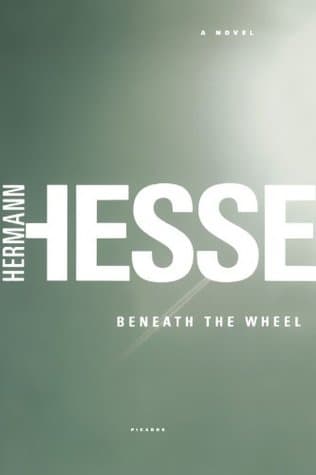
Hermann Hesse (1968)
Genre
Philosophy
Reading Time
240 min
Key Themes
See below
Sign in to track this book
In a Black Forest village, a brilliant young scholar, stifled by the rigid academic system and the crushing expectations of his community, finds a fleeting glimpse of freedom and self-discovery through a rebellious friendship, nature, and romance before succumbing to a tragic fate.
“The soul of a child is a delicate thing. One must not place too heavy a burden upon it.”
— Narrator reflecting on the pressures of academic life on young Hans Giebenrath.
“He who is too ambitious risks losing everything.”
— Commentary on Hans' relentless pursuit of academic success.
“The wheel of life grinds slowly, but it grinds exceedingly fine.”
— Metaphor for the inevitable and crushing nature of societal expectations.
“It is better to be a happy fool than a miserable scholar.”
— Hans' friend Hermann Heilner advocating for a life of passion over intellect.
“The world demands success, but nature demands truth.”
— Contrast between societal values and inner authenticity.
“A man can be destroyed by his own gifts if he does not know how to use them.”
— Observation on Hans' intellectual talents leading to his downfall.
“The school is a mill that grinds all grain to the same flour.”
— Critique of the educational system's homogenizing effect.
“To be alone is to be free, but to be free is to be alone.”
— Reflection on the isolation that comes with rejecting societal norms.
“The heart has its reasons which reason knows nothing of.”
— Echoing Pascal, highlighting the conflict between emotion and logic in Hans' life.
“Genius is a heavy burden for a young soul to bear.”
— On the psychological toll of Hans' exceptional abilities.
“We are all beneath the wheel of time, crushed by its relentless turning.”
— Philosophical musing on the inevitability of life's pressures.
“The pursuit of knowledge without wisdom is a path to ruin.”
— Warning about the dangers of intellectual ambition devoid of deeper understanding.
“In the end, we are all alone with our choices and their consequences.”
— Final reflection on personal responsibility and isolation.
Ready to see how well you understood this book? Take our interactive quiz with 10 questions.
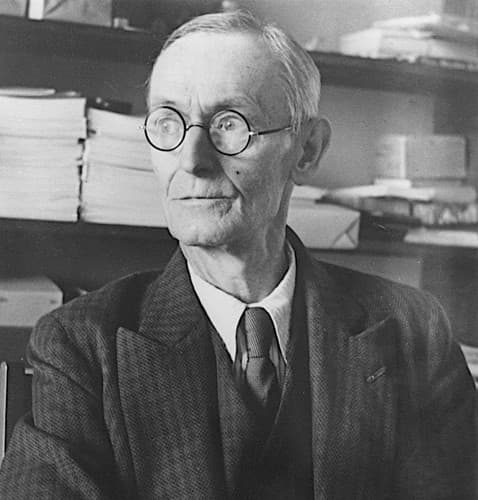
Hermann Karl Hesse was a German-Swiss poet, novelist, and painter. His best-known works include Demian, Steppenwolf, Siddhartha, and The Glass Bead Game, each of which explores an individual's search for authenticity, self-knowledge and spirituality. In 1946, he received the Nobel Prize in Literature.

Jeff Olson
4.4
Thomas Sowell
4.4
Walter Brueggemann
4.3

Rhonda Byrne
4.3

Robin Wall Kimmerer
4.3
George S. Clason
4.3
Elliot Aronson
4.3

Joseph Campbell
4.3