BookBrief
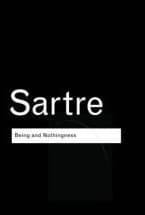
Being and Nothingness cover
Archivist's Choice

Being and Nothingness

Jean-Paul Sartre

Genre

Psychology / Philosophy

Reading Time

1500 min

Key Themes

See below

Track Your Reading

Sign in to track this book

Sartre's major work challenges traditional ideas of self and world, making readers face the difficult reality of absolute freedom and the heavy weight of their choices in a world without built-in meaning.

Core Idea

Sartre's main work states that 'existence precedes essence,' meaning people are born without a set purpose or nature and must be free. This freedom makes individuals define themselves through their choices and actions, taking full responsibility for who they are and, by extension, for everyone. The book closely examines consciousness (the 'for-itself') as a lack, a way of negating being, always trying to match itself but always escaping definition. It contrasts this with the unmoving, self-identical 'in-itself.' Using this idea, Sartre looks at the anxiety that comes from absolute freedom, the ways people deceive themselves ('bad faith') to avoid this responsibility, and the strong effect of how people relate to each other, especially 'the gaze' of others, which can make a person's inner experience an object and show their fixed reality. In the end, 'Being and Nothingness' deeply explores human life, saying that we are always making ourselves through our goals, always reaching for a complete state that we never achieve. This highlights the constant change and freedom at the heart of human experience.
Reading time
1500 min
Difficulty
Hard
✓ Read this if...
You are a serious student of philosophy, particularly phenomenology and existentialism, and are prepared for a challenging, dense, and deeply influential exploration of human consciousness, freedom, and responsibility.
✗ Skip this if...
You prefer light reading, introductory philosophy, or are looking for practical self-help advice. This book is an academic text requiring significant intellectual effort.

Core idea

The central argument and framework that powers the entire book.

Sartre's main work states that 'existence precedes essence,' meaning people are born without a set purpose or nature and must be free. This freedom makes individuals define themselves through their choices and actions, taking full responsibility for who they are and, by extension, for everyone. The book closely examines consciousness (the 'for-itself') as a lack, a way of negating being, always trying to match itself but always escaping definition. It contrasts this with the unmoving, self-identical 'in-itself.' Using this idea, Sartre looks at the anxiety that comes from absolute freedom, the ways people deceive themselves ('bad faith') to avoid this responsibility, and the strong effect of how people relate to each other, especially 'the gaze' of others, which can make a person's inner experience an object and show their fixed reality. In the end, 'Being and Nothingness' deeply explores human life, saying that we are always making ourselves through our goals, always reaching for a complete state that we never achieve. This highlights the constant change and freedom at the heart of human experience.

At a glance

Reading time

1500 min

Difficulty

Hard

Read this if...

You are a serious student of philosophy, particularly phenomenology and existentialism, and are prepared for a challenging, dense, and deeply influential exploration of human consciousness, freedom, and responsibility.

Skip this if...

You prefer light reading, introductory philosophy, or are looking for practical self-help advice. This book is an academic text requiring significant intellectual effort.

Key Takeaways

1

Existence Precedes Essence

We are condemned to be free, defining ourselves through our choices.

Quote

Man is condemned to be free; because once thrown into the world, he is responsible for everything he does.

Sartre's main idea, 'existence precedes essence,' changes how we understand human nature. Unlike an object, which has a set purpose (e.g., a hammer is for hammering), humans are born without a fixed nature or purpose. We exist first, and only through our actions, choices, and projects do we create who we are. This means there is no built-in meaning or divine plan telling us who we are or what we should become. This absolute freedom is both exciting and scary, as it puts the full burden of making ourselves and taking responsibility dir...

Supporting evidence

This is the central thesis underpinning all of Sartre's work, elaborated through numerous examples of human behavior and consciousness. He contrasts human being (being-for-itself) with inanimate objects (being-in-itself) to illustrate this distinction.

Apply this

Embrace the radical freedom of self-definition. Recognize that every choice, no matter how small, contributes to who you are becoming. Stop searching for an external purpose or prescribed identity and actively create your own meaning through engagement with the world. Take full responsibility for your actions and character, understanding that you are the sole author of your life's narrative.

radical-freedomself-definitionhuman-condition
2

The Anguish of Freedom

Our absolute freedom evokes profound anxiety and responsibility.

Quote

Anguish is the reflective apprehension of freedom by itself.

Anguish, for Sartre, is not just fear but a specific kind of anxiety that comes from knowing our absolute freedom and the complete responsibility that comes with it. When we realize there are no existing values or outside authorities to guide our choices, and that we are solely responsible for creating our values through our actions, a deep sense of dread appears. This anguish is especially strong when thinking about a future choice, as we face endless possibilities and the weight of deciding not just our own being, but also, in a way...

Supporting evidence

Sartre illustrates anguish through scenarios like standing on a precipice, where one feels not just fear of falling, but anguish over the freedom to jump; or the soldier who feels anguish not just over the fear of death, but over the freedom to desert or to fight heroically.

Apply this

Instead of fleeing from anguish, recognize it as a signal of your authentic freedom. Use it as a catalyst for conscious and responsible decision-making. Understand that the discomfort of not having a predetermined path is precisely what allows you to forge your own, more meaningful existence. Embrace the weight of responsibility as an opportunity for genuine self-creation.

responsibilitydreadchoice
3

Bad Faith and Self-Deception

Avoiding freedom by pretending to be an object or conforming to a role.

Quote

The one who tries to pass off his being-for-itself as a being-in-itself is in bad faith.

Bad faith (mauvaise foi) is Sartre's idea for self-deception, where people deny their absolute freedom and responsibility, often by pretending to be an object (being-in-itself) or by adopting a fixed social role as their entire identity. It is an attempt to escape the anguish of freedom by convincing oneself that one 'must' act a certain way due to circumstances, one's nature, or societal expectations, rather than freely choosing. Examples include the waiter who 'plays' at being a waiter, doing his role with too much precision, or the...

Supporting evidence

Sartre's famous examples include the café waiter, whose movements are 'too precise, too rapid,' embodying his role as if it were his essence; and the woman on a first date who leaves her hand in her suitor's, not acknowledging the gesture's meaning to avoid the choice of reciprocation or refusal.

Apply this

Be vigilant against self-deception. Question any thoughts or feelings that suggest you 'have no choice' or 'must' act a certain way. Recognize when you are adopting a role (e.g., 'the good student,' 'the dutiful employee') as an excuse to avoid genuine self-definition. Consciously acknowledge your freedom in every situation, even those that feel constrained, and make choices from a place of authenticity, however uncomfortable that may be.

authenticityself-deceptionsocial-roles
4

The Gaze of the Other

Our self-perception is profoundly shaped and objectified by others' consciousness.

Quote

The Other is first of all the Up-Surging of a Freedom.

Sartre says that other people greatly affect who we are. When we meet another conscious mind, we become aware of being an object for that person, seen and judged from an outside view. This 'gaze of the Other' (le regard) can be deeply unsettling because it briefly takes away our inner freedom, fixing us as an object in their world. For example, if I am looking through a keyhole and suddenly hear footsteps, I realize I might be seen. In that moment, I am no longer just 'looking through a keyhole' but 'the one who is looking through a k...

Supporting evidence

Sartre uses the example of a person peeping through a keyhole. When they hear footsteps and realize they might be seen, they instantly become aware of themselves as an object for another's gaze, feeling shame and realizing their freedom is being apprehended by another.

Apply this

Recognize that being seen and judged by others is an inescapable part of human existence. While the gaze can be objectifying, it also offers a mirror through which we can become more aware of ourselves. Strive for authenticity in the face of others' perceptions, understanding that their gaze does not define your ultimate freedom. Use the awareness of how others see you to refine your self-understanding, rather than allowing it to dictate your being in bad faith.

objectificationintersubjectivityshame
5

Facticity and Transcendence

We are a blend of our unchangeable past and our open-ended future.

Quote

Man is a useless passion.

Sartre defines human life as a constant tension between what is factual and what goes beyond it. What is factual refers to all the concrete, unchangeable truths of our existence: our past actions, our body, where we were born, our social setting, etc. These are the 'given' things we cannot change. What goes beyond, on the other hand, is our ability to see ourselves past our current situation, to define ourselves by our future possibilities and goals, and to always move past what is factual. We are always 'more' than our past or presen...

Supporting evidence

Sartre discusses how a person's past crimes (facticity) are undeniable, yet that person still has the freedom to choose how they will live in the future (transcendence), to act differently or to accept responsibility. He also uses the example of a worker whose job is part of their facticity, but their projects and dreams go beyond it.

Apply this

Acknowledge and accept your personal history and current circumstances (facticity) without letting them dictate your future entirely. Simultaneously, cultivate your capacity for transcendence by continuously envisioning new possibilities, setting goals, and making choices that propel you forward. Resist the urge to be defined solely by your past failures or successes, and always remember your capacity to choose and create anew.

past-present-futureself-overcominghuman-potential
6

The For-Itself and The In-Itself

Consciousness is a 'nothingness' that creates meaning in a world of inert objects.

Quote

Human reality is a being which is what it is not and which is not what it is.

Sartre separates two basic ways of being: the 'being-in-itself' (en-soi) and the 'being-for-itself' (pour-soi). The 'in-itself' refers to things, objects, inert matter that simply 'is' what it is, without consciousness, freedom, or potential. A rock, a tree, a table – they are complete, solid, and self-identical. The 'for-itself' refers to human consciousness. Unlike the in-itself, consciousness is marked by a basic 'lack' or 'nothingness.' It is always focused on something else, always looking to the future, always questioning and mo...

Supporting evidence

Sartre contrasts the stable, unchanging existence of a chair (in-itself) with the fluid, self-negating nature of human consciousness (for-itself), which is always becoming and always aware of what it is not.

Apply this

Understand that your consciousness is not a thing, but an activity of 'nothingness' that continually creates meaning. Embrace this 'lack' as the source of your creativity and freedom. Avoid treating yourself or others as mere objects (in-itself); recognize the inherent subjectivity and potential of every conscious being. Actively engage in the process of meaning-making rather than passively accepting pre-existing meanings.

consciousnessontologymeaning-making
7

Responsibility for All Humanity

Our choices define not only ourselves but also a vision of humanity.

Quote

In choosing myself, I choose man.

While Sartre stresses individual freedom, he extends responsibility beyond the personal. When we make a choice, especially an important moral one, we are not just choosing for ourselves but are also defining what we believe humanity 'should' be. Our actions show a universal value. For instance, if I choose to marry, I am not just choosing marriage for myself but implicitly saying that marriage is a valid or good human institution. This idea raises the importance of every decision, making us aware of how our actions serve as an example...

Supporting evidence

Sartre discusses the example of a young man during WWII torn between staying to care for his ailing mother and joining the Resistance. Whichever he chooses, he is not just making a personal decision but affirming a value (family duty or national duty) that he believes is universally applicable.

Apply this

Before making significant decisions, consider the broader implications. Ask yourself: 'If everyone acted as I am about to act, would that be a world I want to live in?' This thought experiment can help align your personal choices with a more universal ethical framework, fostering a deeper sense of responsibility not just for your own life, but for the kind of humanity you wish to see manifest in the world.

ethicsuniversal-valuesmoral-responsibility
8

Love as a Futile Project

Romantic love attempts to overcome objectification but ultimately fails.

Quote

Love is a conflict.

Sartre sees romantic love as a basically impossible and eventually pointless effort, rooted in a wish to escape the natural conflict of how people relate to each other. The lover tries to own the freedom of the beloved, to be the absolute center of their world, and to overcome being made into an object by the Other's gaze. However, this is a contradiction: if the beloved truly gives up their freedom to the lover, they become an object, and the lover no longer wants them as a free conscious being. Conversely, if the beloved remains fre...

Supporting evidence

Sartre dissects the dynamics of seduction, desire, and the 'appeal' of the loved one, arguing that the desire is always to possess the other's freedom, which is inherently contradictory. He contrasts love with sadism and masochism, which are other attempts to resolve the subject-object dilemma.

Apply this

Recognize the inherent challenges in romantic relationships, particularly the tension between individual freedom and the desire for connection. Acknowledge that you cannot truly 'possess' another's consciousness or freedom. Instead of trying to merge identities or control the other, strive for a relationship that respects individual autonomy and freedom, even if it means accepting a degree of existential solitude within the partnership. Focus on shared projects rather than attempting to overcome the fundamental separation of consciousnesses.

intersubjective-conflictdesirerelationship-dynamics
9

No Escape from Freedom

Even denial of freedom is an act of freedom.

Quote

We are left alone, without excuse.

Sartre's philosophy ends with the clear realization that there is no escape from our basic freedom. Even when we try to deny our freedom through bad faith, by pretending to be controlled by circumstances or a fixed nature, that very act of denial is itself a free choice. We choose to trick ourselves. This 'condemnation to be free' means that we are always responsible, always choosing, and always creating who we are, even when we try to give up that responsibility. There is no outside authority, no set path, and no 'human nature' that ...

Supporting evidence

The entire framework of 'bad faith' serves as evidence that even the attempt to escape freedom is an act of freedom. The waiter who 'is' his role still chooses to embody that role; the woman who denies the meaning of a gesture still chooses to not acknowledge it.

Apply this

Internalize the profound truth that you are always free and always responsible. Stop seeking excuses or blaming external factors for your choices and situation. Embrace the power that comes with this understanding: if you are always free, you always have the capacity to change, to choose differently, and to create a new future for yourself, regardless of your past or current circumstances. This realization should be a source of liberation, not despair.

autonomyself-determinationexistential-responsibility

Critical analysis

Notable Quotes

Man is condemned to be free; because once thrown into the world, he is responsible for everything he does.

Sartre's assertion of radical freedom and the burden of responsibility.

Existence precedes essence.

The fundamental tenet of existentialism, meaning we define ourselves through our choices and actions.

The Other is the hidden god.

Referring to the powerful influence of other people's gaze and judgment on our self-perception.

Hell is other people.

From the play 'No Exit,' illustrating the anguish of being defined and constrained by others' perceptions.

Bad faith is a lie to oneself, not a lie to others.

Describes the act of self-deception where one denies their radical freedom and responsibility.

The being of human reality is a for-itself which is its own nothingness.

A complex statement on human consciousness as a lack or a void, constantly creating itself.

To be is to choose oneself.

Emphasizes the active role of an individual in shaping their own being through continuous choices.

Man is a useless passion.

A somewhat pessimistic conclusion on the ultimate futility of human endeavors to achieve a 'for-itself-in-itself' state.

We are left alone, without excuse.

Highlights the isolation and lack of external justification for our choices in a world without inherent meaning.

The look of the Other is a perpetual danger to my freedom.

Explores how being perceived by others can objectify and limit one's sense of self and freedom.

Nothingness lies coiled in the heart of being—like a worm.

A vivid metaphor illustrating the inherent lack and possibility of negation within existence itself.

Every human reality is a project which has its own being to be its own nothingness.

Explains that human existence is a continuous striving, defined by what it is not yet, its future possibilities.

Anguish is the reflective apprehension of freedom by itself.

Describes anguish not as fear of punishment, but as the dizzying awareness of one's own absolute freedom and responsibility.

Quiz

Test Your Knowledge

Ready to see how well you understood this book? Take our interactive quiz with 10 questions.

10
Questions
~5
Minutes
?
Best Score

Key Questions (FAQ)

Being and Nothingness explores the nature of human existence, consciousness, and freedom. Sartre argues that humans are condemned to be free, meaning we are solely responsible for creating our own essence and meaning in a world devoid of inherent purpose.

About the author

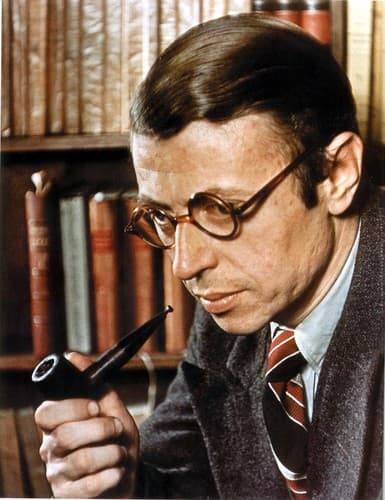
Jean-Paul Sartre

Jean-Paul Charles Aymard Sartre was a French philosopher, playwright, novelist, screenwriter, political activist, biographer, and literary critic, considered a leading figure in 20th-century French philosophy and Marxism. Sartre was one of the key figures in the philosophy of existentialism. His work has influenced sociology, critical theory, post-colonial theory, and literary studies, and continues to do so. He was awarded the 1964 Nobel Prize in Literature despite attempting to refuse it, saying that he always declined official honors and that "a writer should not allow himself to be turned into an institution."