“The wind was a living thing in Nightingale Wood, whispering secrets through the branches.”
— Early description of the woods' atmosphere.

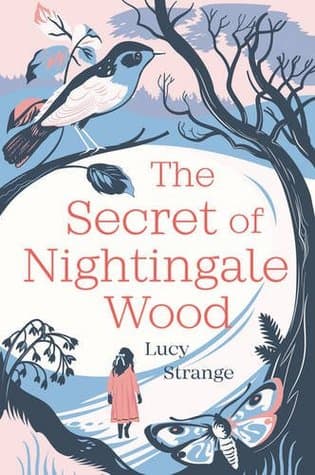
Lucy Strange (2016)
Genre
Psychology / Children's / Historical Fiction / Mystery / Young Adult
Reading Time
240 min
Key Themes
See below
Sign in to track this book
After her mother falls ill and her father leaves, a young girl named Henrietta must use stories to navigate the secrets of Hope House and the figures in Nightingale Wood, uncovering a truth that changes everything.
Ten-year-old Henrietta, or Henry, and her mother, Eliza, arrive at Hope House in the remote English countryside in 1919. Eliza, heavily pregnant and suffering from a mysterious illness with listlessness and nightmares, is accompanied by Nanny Jane, a stern woman. Henry's father, Dr. Edmund Fanshawe, is working in India. Hope House is a large, isolated property, and Henry immediately feels uneasy. She observes her mother's worsening condition and Nanny Jane's coldness, who dismisses Henry's concerns. Henry, a keen observer and reader, tries to understand her unsettling new surroundings.
Soon after arriving, Henry notices strange things. She hears whispers and footsteps when no one is around and sees fleeting shadows. One night, she spots a mysterious light in Nightingale Wood, next to their property. Nanny Jane dismisses Henry's observations as an overactive imagination, calling it her 'nervous disposition.' Henry, however, believes there is more to it. Her mother's condition worsens, with periods of clarity followed by deep sadness. She often speaks of 'secrets' and 'lies' when delirious, making Henry more uneasy about Hope House.
Driven by curiosity, Henry explores Hope House. She finds a hidden attic filled with dusty furniture, children's toys, and old clothes. She also finds a locked room, heavily bolted, which Nanny Jane strictly forbids her from approaching. Henry's imagination takes over as she pieces together overheard conversations and her observations. She begins to suspect the house has a tragic past, possibly involving children, and that the 'ghosts' she sees are connected to these secrets. Her mother's increasingly erratic behavior and Nanny Jane's secretive nature only make Henry more determined to find the truth.
Unable to ignore the flickering lights, Henry secretly goes into Nightingale Wood. Deep in the woods, she meets a wild, elusive girl, about her age, who seems to live in harmony with nature. This girl, who calls herself Moth, is wary at first but gradually warms to Henry. Moth speaks in riddles and knows the woods and its hidden paths intimately. She tells Henry tales of the 'Wood-Witch' and other local legends, which both fascinate and scare Henry. Moth becomes Henry's first true friend at Hope House, offering an escape from the oppressive atmosphere of her home.
Eliza's mental and physical health declines quickly. She becomes more withdrawn, suffering from strong delusions and hysterical fits. Nanny Jane, overwhelmed, calls Dr. Rivers, the local physician. Dr. Rivers examines Eliza and diagnoses her with 'melancholia,' suggesting she be sent away for 'rest and treatment' at an asylum. Henry is terrified, as institutions of that time were known for harsh treatments. She desperately wants to help her mother and believes there must be another explanation for her illness, fueled by her mother's fragmented warnings about secrets.
With Moth's help, Henry begins to understand the tragic history of Hope House. Moth reveals that the house was once owned by a family whose twin children died under mysterious circumstances. Moth, it turns out, is one of the twins; her sister died in a fire. The 'ghosts' Henry saw were memories and echoes of this past tragedy, and the locked room was the nursery. Moth explains that her family was persecuted, accused of witchcraft because of their unconventional ways and connection to the woods. This makes Henry realize that the 'ghosts' are not supernatural but a manifestation of a deeply buried, painful history.
Moth shares more about her family's past. Her grandmother, a wise woman who lived in harmony with nature and used herbal medicine, was called a 'Wood-Witch' by the superstitious villagers. This accusation led to the family's isolation and contributed to their tragedy. Moth's story shows the dangers of ignorance and prejudice, revealing how fear can lead to persecution. Henry begins to understand that the 'secrets' her mother spoke of might not just be about the house's past, but also about hidden truths and injustices people face, especially those society deems different. Moth's resilience deeply affects Henry.
In desperation, searching for clues, Henry finds a hidden journal belonging to her mother. The journal reveals that Eliza had suffered from postpartum depression after losing her previous child, a baby boy, before Henry was born. This deep grief, along with the isolation of Hope House and the pressure to hide her true feelings, had worsened her illness. The journal also contains Eliza's observations about the house's unsettling atmosphere and her growing belief that the house held dark secrets. Henry realizes her mother's 'delusions' are not entirely unfounded, but a manifestation of her own unresolved trauma and her subconscious connection to the house's past.
Armed with knowledge from Moth and her mother's journal, Henry confronts Nanny Jane. Under pressure, Nanny Jane breaks down and reveals the full truth: Eliza had a previous child, a boy, who died shortly after birth. Eliza suffered a severe mental breakdown after this loss, and her current illness is a recurrence of postpartum depression, intensified by her current pregnancy and isolation. Nanny Jane, a distant relative, was tasked by Dr. Fanshawe to care for Eliza and keep her condition a secret to protect the family's reputation, as mental illness was highly stigmatized. The 'cure' for Eliza's previous breakdown had been electroshock therapy, which Nanny Jane feared would be repeated.
Dr. Rivers returns to Hope House with an ambulance, determined to take Eliza to the asylum. Henry, now understanding her mother's illness and the dangers of the proposed 'treatment,' is desperate to prevent it. She knows that sending Eliza away will only cause more harm. She tries to explain the truth to Dr. Rivers, but he dismisses her, convinced Eliza is beyond help and Henry is just a distraught child. The imminent threat of her mother being institutionalized pushes Henry into action, realizing she must use all her newfound courage and understanding to protect her mother from a fate worse than her current suffering.
With Dr. Rivers and his orderlies about to forcibly remove Eliza, Henry, with Moth's support, plans to hide Eliza in Nightingale Wood, a place Moth knows intimately. Henry believes that fresh air, nature, and freedom from the oppressive house will help her mother more than an asylum. They quickly gather essentials and, with great difficulty, lead a disoriented Eliza out of the house and into the hidden depths of the wood, hoping to evade Dr. Rivers and buy time.
Henry and Moth hide Eliza in a secluded shelter in Nightingale Wood. They care for her, providing food and comfort. Away from the stresses of the house and the fear of the asylum, Eliza slowly begins to respond. The quiet of the woods, the sounds of nature, and Henry's constant, loving presence have a therapeutic effect. Eliza's delusions lessen, and she starts to regain moments of clarity. Henry realizes that her mother's 'illness' was worsened by external pressures and lack of emotional support, and that true healing comes from understanding, compassion, and a connection to nature. Moth's knowledge of herbs and the woods proves helpful during this time.
Eventually, Dr. Edmund Fanshawe returns from India, summoned by Nanny Jane. He is shocked to find Eliza missing and the truth about her previous breakdown, the hidden child, and the family's secrets revealed. Henry, with new confidence, explains everything to her father, including her mother's true condition and the dangers of the asylum. Dr. Fanshawe, initially resistant, slowly understands the depth of Eliza's suffering and his own part in trying to suppress her pain. He realizes that his attempts to 'protect' Eliza by hiding her illness only made things worse. This confrontation is a turning point for the family, as they begin to communicate openly and honestly.
Eliza gives birth to a healthy baby girl, a symbol of new life and hope. With her father's understanding and a more open approach to her mother's mental health, Henry sees Eliza's continued recovery. The family decides to stay at Hope House, changing it from a place of secrets and sorrow to a home of healing and acceptance. Dr. Fanshawe commits to supporting Eliza's recovery with empathy and understanding, rather than concealment. Henry's bond with Moth remains strong, and the woods become a place of shared memories and continued friendship. The ending marks a new beginning for the Fanshawe family, built on truth, love, and a deeper understanding of mental well-being.
The Protagonist
Henry transforms from a timid, imaginative child into a courageous and perceptive young woman who challenges adult authority to save her mother and uncover the truth.
The Supporting
Eliza slowly emerges from the depths of her mental illness through her daughter's love and the family's eventual acceptance of her condition.
The Supporting
Moth helps Henry uncover the past, finding a kindred spirit and a way to share her family's story.
The Supporting
Nanny Jane gradually reveals her hidden compassion and the weight of the secret she carries, ultimately confessing the truth.
The Supporting
Dr. Fanshawe moves from denial and concealment to understanding and acceptance of his wife's mental health.
The Mentioned
Dr. Rivers serves as a catalyst for Henry's desperate actions, representing the harsh medical realities of the time.
The novel shows the impact of mental illness stigma in the early 20th century. Eliza's postpartum depression is hidden and misunderstood, leading to isolation and the threat of institutionalization. Her husband and Nanny Jane's efforts to hide her condition, driven by societal shame, worsen her suffering. Henry's journey highlights how fear and ignorance prevent healing. The contrast between rigid medical approaches and Henry's empathy emphasizes the need for acceptance.
““Secrets are like shadows, Henry. They grow darker and bigger until they swallow everything.””
A main theme is the search for truth against a background of deception and hidden histories. Henry's quest to understand the 'ghosts' and her mother's illness leads her to uncover family secrets, from the lost child to the history of Hope House and Moth's family. The novel argues that truth, though painful, is essential for healing and connection. The 'secrets' kept by adults, meant to protect, ultimately cause more harm, emphasizing the importance of honesty and open communication.
““Sometimes, the things people don’t say are louder than the things they do.””
Henry, a reader, uses stories and imagination to cope and understand her confusing world. Her initial view of the 'ghosts' through fairy tales changes as she uncovers the real tragedies behind them. The novel suggests that while imagination can be a refuge, it must eventually face reality for true insight. Moth's stories about the 'Wood-Witch' also preserve a forgotten history, showing the lasting power of narrative.
““Stories are like maps, Henry. They show you where you’ve been, and sometimes, they show you where you’re going.””
Nightingale Wood is not just a setting but a source of healing. For Moth, it is home and sanctuary, a place of freedom and resilience. For Eliza, the natural environment, away from the oppressive house and societal pressures, helps more than any institutional 'cure.' The woods symbolize wildness, ancient wisdom, and a natural order that contrasts with human constructs. Henry learns to trust her instincts and finds solace and strength in nature, aiding her mother's recovery.
““The wood remembers. It always remembers.””
Hope House initially appears to be haunted, creating an atmosphere of mystery and suspense.
The novel skillfully employs the haunted house trope, with Henry experiencing whispers, shadows, and flickering lights, leading her to believe Hope House is genuinely haunted. This device creates immediate suspense and draws the reader into Henry's perspective. However, it gradually subverts the supernatural expectation by revealing that the 'ghosts' are not spectral beings but echoes of human tragedy, forgotten history, and the psychological impact of past events. This transformation from supernatural horror to psychological and historical mystery deepens the narrative's themes.
The story is told primarily through Henry's innocent yet perceptive eyes, shaping the reader's initial understanding.
The narrative is filtered through Henry's perspective, a ten-year-old child who interprets the world through her vivid imagination and limited understanding of adult complexities. This creates an initial sense of mystery and allows for misinterpretations of events, as Henry struggles to distinguish between reality and her own fears and fantasies. As Henry matures and uncovers more truths, her perspective becomes more reliable, mirroring her growth and the gradual unveiling of the plot's secrets. This device effectively builds suspense and fosters empathy for Henry's journey of discovery.
The dense, ancient wood surrounding Hope House symbolizes wildness, mystery, and natural healing.
Nightingale Wood is a powerful symbol in the novel. Initially, it represents the unknown and potentially dangerous, a place where 'ghosts' and strange lights appear. However, as Henry ventures deeper, it transforms into a sanctuary, a source of ancient wisdom (through Moth), and ultimately, a place of healing and refuge for Eliza. It symbolizes the wild, untamed aspects of nature that contrast with the rigid societal norms and the confining atmosphere of Hope House. The wood's ability to 'remember' also ties into the theme of hidden histories and the enduring power of the past.
Eliza's secret journal serves as a crucial exposition device, revealing past traumas and motivations.
The discovery of Eliza's hidden journal is a pivotal plot device. It acts as a direct link to her inner world and the past events that led to her current condition, particularly the loss of her first child and her previous bout of postpartum depression. The journal provides Henry, and the reader, with essential exposition that clarifies Eliza's 'delusions' and offers a more nuanced understanding of her illness. It serves as a tangible piece of evidence that helps Henry piece together the family's secrets and challenges the adult narratives presented by Nanny Jane and Dr. Fanshawe.
“The wind was a living thing in Nightingale Wood, whispering secrets through the branches.”
— Early description of the woods' atmosphere.
“Sometimes, the only way to find your way through the dark is to hold onto the smallest light.”
— Mama's advice to Henry after Papa's death.
“Grief was a heavy cloak, smothering everything else, but sometimes, a small hand could tug at its edge.”
— Henry's internal reflection on his mother's state.
“The mind is a strange and wonderful place, capable of creating both beauty and shadows.”
— Mrs. Boden's observation about mental health.
“A secret is like a seed. Once planted, it grows, and sometimes, it can choke the life out of everything around it.”
— Henry's thoughts on the hidden truths in the family.
“Even in the darkest of places, there is always a flicker of light, if you only know where to look.”
— Eliza's comforting words to Henry.
“Sometimes, the things we fear the most are not real, but the shadows our own minds create.”
— A conversation about Henry's anxieties.
“The past is never truly gone; it echoes in the present, if you listen carefully enough.”
— Henry's realization about the family history.
“Love is not always gentle; sometimes it is fierce, protective, and even a little bit wild.”
— Henry's understanding of his mother's actions.
“Children see things adults often miss, because their eyes are not yet clouded by expectation.”
— Mrs. Boden's reflection on Henry's observations.
“Bravery isn't about not being scared; it's about being scared and doing what needs to be done anyway.”
— Henry's internal monologue when facing a difficult truth.
“The most important stories are often the ones we tell ourselves, even if they're not entirely true.”
— A discussion about coping mechanisms and narratives.
“Healing is not a straight path; it has twists and turns, and sometimes, you have to go back to move forward.”
— Mrs. Boden's insight into the recovery process.
“Even the smallest voice can make a difference, if it speaks with truth and conviction.”
— Henry finding his courage to speak up.
Ready to see how well you understood this book? Take our interactive quiz with 10 questions.
Rhonda Byrne
4.3

Menno Henselmans
4.3
Sylvia Plath
4.3
Elliot Aronson
4.3
Joseph Campbell
4.3
Erich Fromm
4.3
Irvin D. Yalom
4.2
Rollo Tomassi
4.2