BookBrief
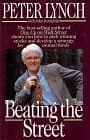
Beating the Street cover
Archivist's Choice

Beating the Street

Peter Lynch (1993)

Genre

Business / Reference / Economics / Finance

Reading Time

6-8 hours

Key Themes

See below

Track Your Reading

Sign in to track this book

Peter Lynch, the well-known mutual fund manager, shares his stock-picking methods through real examples and his 1992 Barron's Roundtable selections, helping individual investors find successful companies in any market.

Core Idea

Peter Lynch, one of the most successful mutual fund managers, believes individual investors have advantages over Wall Street professionals. They can achieve better returns by using common sense, personal knowledge, and careful research. He simplifies the stock market, stating that good investment opportunities are often in everyday companies and industries familiar to individuals, not in complex ventures. Success depends on finding companies with strong finances, a good growth story, and a clear competitive edge, while avoiding market trends and overly diverse portfolios that reduce returns.
Reading time
6-8 hours
Difficulty
Medium
✓ Read this if...
You are an individual investor looking for practical, actionable strategies to pick winning stocks and beat the market using fundamental analysis and common sense, rather than complex financial models.
✗ Skip this if...
You are seeking a theoretical academic treatise on market efficiency, prefer passive index investing exclusively, or are looking for quick trading tips rather than a long-term investment philosophy.

Core idea

The central argument and framework that powers the entire book.

Peter Lynch, one of the most successful mutual fund managers, believes individual investors have advantages over Wall Street professionals. They can achieve better returns by using common sense, personal knowledge, and careful research. He simplifies the stock market, stating that good investment opportunities are often in everyday companies and industries familiar to individuals, not in complex ventures. Success depends on finding companies with strong finances, a good growth story, and a clear competitive edge, while avoiding market trends and overly diverse portfolios that reduce returns.

At a glance

Reading time

6-8 hours

Difficulty

Medium

Read this if...

You are an individual investor looking for practical, actionable strategies to pick winning stocks and beat the market using fundamental analysis and common sense, rather than complex financial models.

Skip this if...

You are seeking a theoretical academic treatise on market efficiency, prefer passive index investing exclusively, or are looking for quick trading tips rather than a long-term investment philosophy.

Key Takeaways

1

Invest in What You Know

Leverage your everyday experiences and expertise to find winning stocks.

Quote

The best place to begin looking for the next winning stock is in your own backyard.

Lynch suggests individual investors use their personal knowledge and observations. Instead of following professional analysts, look at companies whose products or services you use, understand, and see others adopting. This gives you an 'edge' to spot trends and promising businesses before Wall Street does, often when the stock is still cheap. Your job, hobbies, shopping, or even your children's preferences can show insights into a company's success or failure that a financial analyst might miss. This is about informed observation and ...

Supporting evidence

Lynch frequently cites examples of investors, including himself, discovering multi-baggers from everyday observations: Dunkin' Donuts (popular coffee), La Quinta (motels for travelers), or even Taco Bell (a fast-growing restaurant chain he observed). He often tells stories of his wife or daughters pointing out popular products or services that later became successful investments.

Apply this

Pay attention to products or services gaining traction among your friends, family, or in your professional circle. Investigate the companies behind these successes. Ask yourself: 'Is this product genuinely improving people's lives or solving a problem? Is the company financially sound and growing?'

everyday-investinginformation-edgeconsumer-trends
2

The Six Categories of Stocks

Classify companies to understand their growth potential and inherent risks.

Quote

Every company you investigate can be put into one of six categories. Knowing which category it falls into will tell you what to expect from the stock.

Lynch introduces a way to evaluate stocks by putting them into six types: Slow Growers, Stalwarts, Fast Growers, Cyclicals, Asset Plays, and Turnarounds. Each type has different features, growth potential, and risk levels. Knowing which type a company is helps investors set realistic return expectations, find good buying and selling times, and avoid common mistakes. For example, fast growers offer high potential but also higher risk, while stalwarts provide stability. Cyclicals need good timing, and turnarounds are high-risk, high-rew...

Supporting evidence

Lynch details each category with specific examples: utilities as slow growers, Coca-Cola as a stalwart, The Gap as a fast grower in its prime, Ford as a cyclical, a company with valuable real estate as an asset play, and Chrysler as a turnaround story. He explains how his approach to investing in each differed.

Apply this

Before investing, identify which of Lynch's six categories the company belongs to. This will help you understand its typical growth pattern, revenue drivers, and what kind of financial metrics are most relevant to analyze. Adjust your expectations and research accordingly.

stock-categoriesgrowth-stocksvalue-investingcyclical-stocks
3

The Power of the Story

Look beyond the numbers to understand the qualitative narrative driving a company.

Quote

Behind every stock is a company. Find out what it's doing.

Financial statements are important, but Lynch stresses understanding a company's main 'story.' What is its core business? What are its competitive advantages? Who are its customers? What are its future growth chances? A good story is not just marketing; it is a clear explanation of how the company makes money and how it plans to keep doing so. This understanding helps investors judge a business's stability, its ability to handle competition, and its potential for long-term growth. Without a clear story, even good numbers can be mislea...

Supporting evidence

Lynch frequently recounts how he would visit stores, talk to employees, and even call company headquarters to understand their operations. He shares the story of Taco Bell, where the 'story' was clear: efficient, high-volume fast food with a simple menu, appealing to a wide demographic, leading to rapid expansion. He also discusses how understanding the story of Waste Management, a company he invested in, helped him see its long-term potential in a fragmented industry.

Apply this

Before investing, articulate the company's story in a few sentences. Could you explain it to a 10-year-old? If not, you probably don't understand the business well enough. Focus on its core product/service, competitive advantage, and growth drivers.

qualitative-analysisbusiness-modelcompetitive-advantagenarrative-investing
4

Avoid the Hottest Stocks

Resist the urge to chase popular, overhyped companies; they often disappoint.

Quote

If you find a stock that's a red-hot stock, and everybody knows about it, and everybody loves it, and everybody owns it, then it's probably too late.

Lynch often warns against investing in popular stocks or industries that get a lot of media attention. By the time a company becomes popular, its stock price has often already risen to reflect much of its future potential, making big further gains unlikely. These companies are often overpriced, and any small disappointment can cause a big sell-off. The best opportunities are often in overlooked, less exciting companies that have not yet caught Wall Street's interest. Patience and thinking differently are key to finding these hidden ge...

Supporting evidence

Lynch discusses the dot-com bubble (though 'Beating the Street' predates its peak, his warnings were prescient) and other fads where investors piled into popular stocks, only to see them crash. He cites the example of high-tech industries in the past, where many 'hot' companies failed, while less glamorous, but fundamentally strong, businesses thrived.

Apply this

Be skeptical of companies that are constantly in the news or universally recommended. Do your own research to determine if the hype is justified by fundamental value, or if the stock price has already run too far ahead of the business's reality. Look for solid companies in overlooked sectors.

contrarian-investingmarket-sentimentovervaluationfads
5

The Importance of Scuttlebutt

Gather information firsthand by talking to people and visiting companies.

Quote

Scuttlebutt is just talking to people who are involved in the business: customers, suppliers, competitors, employees, anybody who can give you a better insight.

Lynch supports 'scuttlebutt,' which means gathering informal, direct information. This involves looking beyond financial reports and analyst advice to get a real sense of a company's operations. Talk to store managers, employees, customers, suppliers, and even competitors. This direct interaction gives valuable insights into customer satisfaction, product quality, efficiency, and the competitive situation that official documents might not show. Scuttlebutt helps confirm or deny your initial ideas and offers a ground-level view that la...

Supporting evidence

Lynch describes visiting shopping malls to observe customer traffic at various retailers, calling company investor relations departments, and even speaking with employees about their experiences. He shares how conversations with customers helped him understand the competitive advantages of certain restaurant chains or retailers.

Apply this

When considering an investment, visit a store, try the product, or talk to someone who works there or uses their service. Ask probing questions to understand the company's strengths and weaknesses from a practical perspective.

due-diligenceprimary-researchcompetitive-intelligencefield-research
6

Understand the Balance Sheet

Assess a company's financial health to avoid bankruptcy and identify hidden value.

Quote

The balance sheet tells you whether a company is going to go broke.

While earnings growth often gets attention, Lynch says understanding a company's balance sheet is most important. A strong balance sheet, with low debt and plenty of cash, offers security during tough times and flexibility for future growth. On the other hand, too much debt is a big warning sign, as it can quickly lead to bankruptcy, even for companies with seemingly good earnings. Investors must check debt-to-equity ratios, cash reserves, and inventory levels. An asset play, for example, relies entirely on understanding the hidden va...

Supporting evidence

Lynch emphasizes looking at cash and debt levels, especially for cyclical companies that need to weather downturns. He discusses how understanding the balance sheet helped him identify companies with valuable, unappreciated assets, like real estate, or avoid those teetering on the brink due to overwhelming debt.

Apply this

Always check a company's balance sheet. Look for manageable debt levels, sufficient cash reserves, and a healthy current ratio. Understand how the company funds its operations and growth, and be wary of excessive reliance on borrowing.

financial-healthdebt-analysiscash-flowasset-valuation
7

Don't Overemphasize Macroeconomics

Focus on individual companies, not the unpredictable broader economy.

Quote

Nobody can predict interest rates, the future direction of the economy, or the stock market. Dismiss all such forecasts and concentrate on what's actually happening to the companies in which you've invested.

Lynch advises against making investment decisions based on broad economic forecasts, like interest rate predictions or GDP growth. These larger economic trends are very hard to predict consistently, and even professional economists often get them wrong. Instead, investors should focus on understanding the basics of the specific companies they own or are thinking about. A good company can do well even in a difficult economy, and a bad company will struggle regardless of a booming economy. Focusing too much on big economic factors distr...

Supporting evidence

Lynch often points out that during his tenure at Fidelity Magellan, he rarely paid attention to economic forecasts. He highlights how many economists predicted recessions that never materialized, or booms that fizzled, demonstrating the futility of such predictions for stock picking. His focus was always on the individual company's story and numbers.

Apply this

Ignore the daily financial news headlines about the economy or market predictions. Instead, dedicate your research time to understanding your companies' earnings, competitive position, and growth prospects. A strong business will perform regardless of macro noise.

micro-analysiseconomic-forecastingmarket-timingfundamental-analysis
8

Patience and Long-Term Vision

Let your winners run and resist the urge to trade frequently.

Quote

The single most important decision in evaluating a business is whether it has a product or service that will be as essential to its customers in ten years as it is today.

Investing is a long-term activity. Lynch suggests a long-term view, stressing the importance of patience. Once you find a good company with a strong story and solid finances, hold onto it as long as the business keeps doing well. Frequent trading, driven by fear or greed, often leads to lower returns due to trading costs and missed growth. The biggest gains come from letting successful investments grow over many years. He encourages investors to think like an owner, not a trader, focusing on the company's lasting success rather than s...

Supporting evidence

Lynch's own track record with the Magellan Fund, where he held many stocks for years, demonstrates the power of long-term investing. He often discusses how his biggest winners were companies he held for extended periods, allowing them to grow exponentially. He cites Coca-Cola as an example of a company whose product remained essential for decades.

Apply this

Once you've made a well-researched investment, resist the urge to sell at the first sign of trouble or because the stock has gone up a bit. Regularly review the company's fundamentals, but only sell if the original reasons for your investment have fundamentally changed, or if the stock has become drastically overvalued.

buy-and-holdcompoundinglong-term-investingowner-mentality
9

Know What You Own and Why You Own It

Have a clear, concise investment thesis for every stock in your portfolio.

Quote

If you can't explain why you own a stock in two minutes or less, you shouldn't own it.

This is perhaps Lynch's most basic advice. Every stock in your portfolio should be there for a specific, clear reason. You should be able to explain the company's business, its competitive strengths, and your investment idea simply and quickly. If you cannot, it shows a lack of understanding, which makes you open to market noise and emotional choices. This clarity forces you to do your research and ensures you are investing based on company fundamentals, not speculation or rumors. It helps you have conviction and avoid 'hope and pray'...

Supporting evidence

Lynch challenges investors to write down their reasons for owning each stock. He suggests that if they can't do this, they should reconsider their holding. He often uses the analogy of a poker game: you wouldn't bet on a hand you don't understand, so why bet on a stock?

Apply this

For every stock you own, write down a one-paragraph summary explaining what the company does, why it's a good business, and why you believe its stock will appreciate. Review this periodically and update it as circumstances change.

investment-thesisconviction-investingdue-diligenceclarity-of-purpose
10

The Dangers of Diversification (and its Misconception)

Concentrate your investments in a few well-understood companies, not dozens of unknowns.

Quote

Diversify, diversify, diversify. That is the war cry of the mutual fund industry, and it's a good one for them, but it's a terrible one for the individual investor.

While often taught as essential, Lynch argues that too much diversification can hurt individual investors. Owning too many stocks (e.g., 30-50+) makes it impossible to truly understand each business. This results in a portfolio where the investor has no real conviction or information advantage. Instead, he suggests a more focused portfolio of 10-15 well-researched, deeply understood companies. This allows investors to spend enough time watching their holdings and using their 'edge.' Real diversification comes from owning different typ...

Supporting evidence

Lynch often notes that the best investors he knew, including Warren Buffett, ran concentrated portfolios. He argues that if you've done your homework, you should have high conviction in your choices. He contrasts this with mutual funds, which need to diversify across many holdings due to their size and mandates.

Apply this

Aim for a portfolio of 10-15 companies that you thoroughly understand. Avoid buying stocks simply to 'fill out' your portfolio. If you can't articulate why you own each one, you're likely over-diversified and under-informed.

concentrated-portfolioover-diversificationhigh-convictionfocused-investing

Critical analysis

Notable Quotes

Go for a walk around the mall and you'll find ten baggers.

Lynch often uses everyday observations to find investment ideas.

The public always knows something before the professionals.

Highlighting how consumers often spot trends before Wall Street analysts.

If you can't explain what you own in two minutes, you shouldn't own it.

Emphasizing the importance of understanding your investments simply.

Selling your winners and holding your losers is like cutting the flowers and watering the weeds.

A common mistake made by many investors, illustrated with a vivid analogy.

Behind every stock is a company. Find out what it's doing.

A fundamental principle of Lynch's investing philosophy: focus on the underlying business.

Nobody can predict interest rates, the future direction of the economy, or the stock market.

A warning against trying to time the market or rely on macroeconomic predictions.

You get recessions, you have stock market declines. If you don't understand that's going to happen, then you're not ready, you won't do well in the stock market.

Acknowledging the cyclical nature of markets and the importance of being prepared for downturns.

Big companies have small moves, small companies have big moves.

Explaining the potential for higher growth in smaller, lesser-known companies.

Know what you own, and know why you own it.

A concise summary of his philosophy on due diligence and conviction.

In the stock market, the most important organ is the stomach. It's not the brain.

Highlighting the emotional fortitude required to endure market volatility.

It's not a good idea to buy a stock because it's going up. It's also not a good idea to sell a stock because it's going down.

Warning against chasing performance or panic selling based on price movements alone.

The best stock to buy is the one that you already own.

Often implying that if a company's fundamentals are still strong, adding to a winning position can be beneficial.

Never invest in any idea you can't illustrate with a crayon.

A vivid way to stress the importance of understanding an investment's business model simply.

You don't have to be right all the time. If you're right six times out of ten, you'll be a millionaire.

Reassuring investors that perfection isn't required for success and focusing on overall positive outcomes.

Quiz

Test Your Knowledge

Ready to see how well you understood this book? Take our interactive quiz with 10 questions.

10
Questions
~5
Minutes
?
Best Score

Key Questions (FAQ)

'Beating the Street' serves as a more practical, real-world application of the investing principles introduced in 'One Up on Wall Street.' It delves into specific examples of how Peter Lynch researched and selected companies for the 1992 Barron's Roundtable, offering readers a direct look at his analytical process.

About the author