Conflicting Freedoms
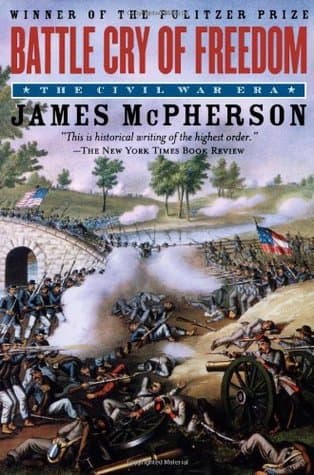
The Civil War was a clash of two diametrically opposed interpretations of 'freedom.'
Quote
The South seceded in the name of that freedom of self-determination and self-government for which their fathers had fought in 1776, while the North stood fast in defense of the Union founded by those fathers as the bulwark of American liberty.
McPherson argues that the Civil War was about two opposing ideas of freedom rooted in the American revolutionary tradition. The South supported 'negative liberty'—freedom from outside control, the right to self-govern, and the freedom to maintain its social and economic order, which included slavery. For southerners, secession was a revolutionary act like 1776. The North, in contrast, defended 'positive liberty' embodied in the Union itself—a government that could secure liberty for all citizens and ensure the nation's continued exist...
Supporting evidence
McPherson analyzes the rhetoric of secessionist leaders and Northern politicians, showing how both sides invoked the legacy of the Founding Fathers to justify their positions, demonstrating how the very concept of liberty became a battleground.
Apply this
When evaluating modern political conflicts, look beyond surface-level issues to identify the underlying, often unstated, competing definitions of fundamental values like 'freedom,' 'justice,' or 'equality.' Understanding these deeper ideological divides is crucial for meaningful analysis.