BookBrief
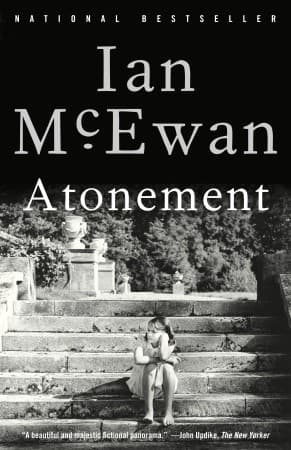
Atonement cover
Archivist's Choice

Atonement

Ian McEwan (2001)

Genre

General

Reading Time

9-12 hours

Key Themes

See below

Track Your Reading

Sign in to track this book

A child's lie, born from imagination, changes lives forever, its impact echoing through war-torn decades in a quest for redemption.

Core Idea

Atonement examines the devastating effects of a child's misunderstanding and the lasting weight of guilt. It shows how one impulsive act can permanently alter many lives. The novel explores truth, memory, and the power of stories, asking if art can ever truly make up for real suffering and injustice. It suggests that while people may seek reconciliation, some wounds are too deep to heal, and the past, once shaped by error, can only be rewritten by the author's final, ethically complex control.
Reading time
9-12 hours
Difficulty
Medium
✓ Read this if...
You are fascinated by the intricate interplay of truth, memory, and narrative, and enjoy character-driven stories exploring guilt, class, and the devastating impact of war.
✗ Skip this if...
You prefer straightforward plots without narrative trickery or find stories centered on profound injustice and unresolvable guilt too distressing.

Core idea

The central argument and framework that powers the entire book.

Atonement examines the devastating effects of a child's misunderstanding and the lasting weight of guilt. It shows how one impulsive act can permanently alter many lives. The novel explores truth, memory, and the power of stories, asking if art can ever truly make up for real suffering and injustice. It suggests that while people may seek reconciliation, some wounds are too deep to heal, and the past, once shaped by error, can only be rewritten by the author's final, ethically complex control.

At a glance

Reading time

9-12 hours

Difficulty

Medium

Read this if...

You are fascinated by the intricate interplay of truth, memory, and narrative, and enjoy character-driven stories exploring guilt, class, and the devastating impact of war.

Skip this if...

You prefer straightforward plots without narrative trickery or find stories centered on profound injustice and unresolvable guilt too distressing.

Key Takeaways

1

The Perilous Power of Childhood Imagination

Unchecked youthful perception can shatter lives with catastrophic consequences.

Quote

How can a thirty-five-year-old woman be held to account for what she did at thirteen?

Briony Tallis's young imagination, fueled by an incomplete grasp of adult relationships and a growing sense of self-importance, causes the novel's main tragedy. Her smart mind, good at making up elaborate stories, misunderstands the subtle interactions between Cecilia and Robbie. This is more than a childish mistake; it shows how subjective interpretation, especially without empathy or full understanding, can become a destructive force. McEwan shows how a child's inner world, full of fantasy and mistaken observations, can lead to perm...

Supporting evidence

Briony's observation of Cecilia by the fountain, her misinterpretation of the letter Robbie intended for Cecilia, and her subsequent 'witnessing' of Lola's assault, all filtered through her nascent writer's mind, lead directly to Robbie's wrongful accusation.

Apply this

Cultivate critical thinking and empathy, especially when interpreting ambiguous situations. Recognize the limitations of your own perspective and actively seek to understand others' viewpoints before drawing conclusions, particularly when significant consequences are at stake. Challenge your initial interpretations and consider alternative narratives.


childhood-perceptionunreliable-narratormisinterpretation
2

The Enduring Scar of Guilt

A lifetime of regret can consume, driving a desperate need for redemption.

Quote

The problem these fifty-nine years has been the same one: how to achieve atonement when the original participants are all dead.

Briony's false accusation affects more than just Robbie and Cecilia; it casts a long, inescapable shadow over her entire life. The novel powerfully explores the crushing weight of guilt and its ability to define one's existence. Briony's journey, especially her writing career, becomes a lifelong, though ultimately unsuccessful, attempt to make up for her past wrong. McEwan explores the psychological toll of deep regret, showing how guilt can be a relentless tormentor, shaping decisions, relationships, and even one's creative work. It ...

Supporting evidence

Briony's decision to become a nurse during the war, her persistent attempts to contact Cecilia, and her ultimate act of writing the 'true' story as a form of literary atonement, all stem from her lifelong burden of guilt.

Apply this

Acknowledge and address past wrongs, even if the path to resolution is difficult. Understand that while some mistakes are irreparable, genuine efforts towards making amends or living a life dedicated to greater good can offer a form of personal peace. Confronting guilt, rather than suppressing it, is crucial for psychological well-being.

guilt-psychologyatonement-questmoral-responsibility
3

Love Forged in Adversity

True affection perseveres against societal barriers and devastating injustice.

Quote

He knew that he was not in love with Briony. He was in love with Cecilia.

The love story between Cecilia Tallis and Robbie Turner is a powerful, almost fated connection that defies the strict class structures of 1930s England. Their bond is passionate and deeply resilient, enduring separation, war, and the devastating injustice of Robbie's imprisonment. McEwan contrasts this genuine, strong affection with the superficiality and misunderstandings around it. Their love becomes a symbol of purity and steadfastness in a world marked by prejudice and betrayal. The heartbreaking reality of their final fate emphas...

Supporting evidence

Cecilia's unwavering belief in Robbie's innocence, her decision to cut ties with her family, and her dedication to him throughout his imprisonment and military service, are all testaments to their profound love.

Apply this

Recognize the strength and value of authentic connections, especially when facing external pressures or societal expectations. Prioritize genuine affection and loyalty, understanding that true love often requires sacrifice and perseverance. Fight for what you believe in, even when the odds are stacked against you.

forbidden-loveclass-divideresilience-in-love
4

The Unreliable Narrator and Narrative Control

The act of storytelling is inherently manipulative, shaping reality to fit a desired outcome.

Quote

Was there an original? An authentic version? Or was there always, already, a story?

McEwan uses the unreliable narrator device skillfully, revealing late in the novel that Briony Tallis herself wrote the story we've been reading. This meta-narrative twist profoundly changes the reader's understanding, showing the inherent subjectivity and potential for manipulation within storytelling. Briony's 'atonement' through fiction is a desperate attempt to rewrite her past, to give Robbie and Cecilia the happiness they were denied in reality. This highlights the great power of the author, not just to recount events, but to sh...

Supporting evidence

The revelation in the final section that the entire novel is Briony's fictionalized account, and that Robbie and Cecilia did not, in fact, live happily ever after, but died during the war.

Apply this

Approach all narratives, whether historical or fictional, with a critical eye. Question the source, the intent, and the potential biases of the storyteller. Understand that every account is a constructed reality, and seek out multiple perspectives to form a more complete picture. Be conscious of the power you wield when telling your own stories.

metafictionnarrative-theoryauthorial-intent
5

The Brutality of War

Conflict ravages not only bodies but also the human spirit and the fabric of society.

Quote

The world was not a stage, it was a slaughterhouse.

The novel vividly shows the horrors of World War II, especially through Robbie's experiences in France during the retreat to Dunkirk and Briony's work as a nurse in London. McEwan does not romanticize war; instead, he depicts its raw brutality, senseless suffering, psychological trauma, and dehumanizing conditions. The war is a larger backdrop for the personal tragedies, showing how individual lives are swept up and permanently changed by bigger historical forces. It emphasizes the fragility of life and the immense cost of conflict, b...

Supporting evidence

Robbie's graphic descriptions of his journey to Dunkirk, the wounded soldiers he encounters, the constant threat of death, and Briony's experiences tending to horrific injuries in the hospital.

Apply this

Reflect on the devastating human cost of war and conflict, recognizing its far-reaching and long-lasting consequences. Support efforts towards peace and humanitarian aid. Understand that even in times of peace, the echoes of past conflicts continue to shape societies and individuals.

war-traumadunkirk-evacuationhistorical-impact
6

Class and Social Injustice

Societal hierarchies can dictate fate and perpetuate cycles of inequality.

Quote

He was the son of a charwoman. She was the daughter of a baronet.

The strict class differences of pre-war England play a significant role in the unfolding tragedy. Robbie Turner, despite his intelligence and education, is disadvantaged by his working-class background. His status as the son of a servant makes him an easy target for suspicion and accusation, especially when compared with the privileged Tallis family. McEwan subtly but powerfully shows how social standing can influence justice, opportunity, and even the perception of innocence or guilt. The novel criticizes a system where birthright of...

Supporting evidence

Robbie's initial imprisonment is largely facilitated by his lower social standing, making him a more 'believable' perpetrator in the eyes of the police and the Tallis family, despite the lack of concrete evidence.

Apply this

Challenge and question systems of social inequality. Advocate for equitable treatment and opportunities regardless of socioeconomic background. Recognize how unconscious biases related to class can influence judgment and perception in everyday interactions.

social-stratificationclass-prejudiceinjustice-system
7

The Elusiveness of Truth

Objective reality is often obscured by subjective perception, memory, and desire.

Quote

The truth was a slippery thing, always just out of reach.

At its heart, 'Atonement' is a deep reflection on the nature of truth. The novel shows how a single event can be interpreted in very different ways, leading to wildly different 'truths.' Briony's youthful interpretation, later her guilt-driven adult story, and the reader's changing understanding, all highlight how subjective and changeable reality is. McEwan suggests that absolute, objective truth is often hard to find, especially when filtered through human consciousness, memory, and the desire for a particular outcome. This theme is...

Supporting evidence

The multiple perspectives on the fountain scene, the ambiguity surrounding the assault on Lola, and ultimately, the revelation that Briony's published novel is not a factual account but a constructed one.

Apply this

Practice intellectual humility and recognize that your understanding of 'truth' is always partial. Be open to revising your beliefs when presented with new information or perspectives. Understand that memory is reconstructive, not a perfect record, and can be influenced by present desires.

epistemologysubjective-realitymemory-bias
8

The Power and Limits of Art

Art can offer solace and a form of redemption, but cannot undo real-world harm.

Quote

How can a novelist achieve atonement when, with her last breath, she is still making things up?

Briony's lifelong pursuit of writing is her chosen path to atonement. She tries to use her art to rewrite history, to give her victims the happy ending they were denied in life. McEwan explores the great power of fiction to shape understanding, evoke empathy, and even provide a form of catharsis for the creator. However, he also carefully exposes its limitations. While art can offer emotional truth and a sense of resolution, it cannot change historical facts or ease the suffering of real people. Briony's 'atonement' through her novel ...

Supporting evidence

Briony's decision to write 'Atonement' as her final novel, her struggle with how to end it, and her ultimate confession that the happy ending she crafted for Robbie and Cecilia was a fabrication.

Apply this

Appreciate the transformative power of art and storytelling, but maintain a clear distinction between fictional narratives and factual reality. Recognize that while art can inspire change, it is not a substitute for direct action or genuine reconciliation in the real world. Consider the ethical implications of your creative work.

artistic-responsibilityfiction-vs-realityredemption-through-art
9

The Irreversibility of Actions

Some mistakes, once made, create ripples that can never be fully smoothed away.

Quote

The past was not a thing to be undone. It was a thing to be lived with.

A core, tragic lesson of 'Atonement' is that some actions cannot be undone. Briony's false accusation, made in a moment of childish misjudgment, starts a chain of events that permanently changes the lives of Robbie and Cecilia. Despite Briony's lifelong efforts to atone, and her final literary attempt to rewrite their fate, the real-world consequences of her actions remain fixed and devastating. McEwan emphasizes that some wounds cannot heal, some losses cannot be recovered, and some injustices cannot be truly undone. This theme gives...

Supporting evidence

Robbie's years in prison, his experiences in the war, Cecilia's estrangement from her family and her eventual death, and the fact that Robbie and Cecilia never truly reunite or live out their dreamed-of future.

Apply this

Approach decisions with careful consideration, especially those with potentially far-reaching consequences. Understand that while forgiveness and personal growth are possible, some actions create permanent changes that cannot be reversed. Live mindfully, recognizing the weight of your choices.

consequence-of-actionsfate-vs-choiceirrevocable-loss

Critical analysis

Notable Quotes

The problem with trying to make yourself a better person is that you're still stuck with yourself.

Reflecting on self-improvement and the inescapable nature of one's own character.

How can a novelist achieve atonement when he is one of the gods of his universe?

Briony Tallis, as an author, grapples with the ethical implications of her power over her characters' fates.

She knew that her sister was a woman in love, and that a woman in love was a dangerous thing.

Briony observes Cecilia and Robbie's growing affection, misinterpreting its nature.

Was there an original sin, or was there only original error?

Briony ponders the nature of her childhood mistake and its far-reaching consequences.

The world was a moral maze, and only the innocent could find their way through.

Briony's early, naive perspective on morality and justice.

It was not a lie, not a half-truth, but a truth that could not be told.

Describing the complex nature of Briony's testimony and its impact.

He had never understood the human capacity for self-deception.

Robbie Turner's realization about the flaws in human judgment and perception.

She would never be able to make amends, but she could at least make a record.

Briony's motivation for writing her novel, seeking a form of reparation.

The moment of greatest happiness is the moment of greatest vulnerability.

Reflecting on the fragility of joy and how it precedes misfortune.

To be able to write down a thing, to put it on paper, was to make it real, to make it undeniable.

Briony's belief in the power of written words to solidify and legitimize events.

How can a writer make amends for a lifetime of mistakes?

Briony's ongoing struggle with guilt and her attempt to find redemption through her art.

The past was a foreign country; they did things differently there.

A general reflection on the distance and difference of past events and perspectives.

It was a story that could only be told, never undone.

Emphasizing the irreversible nature of the events and the power of narrative.

She was not a monster, but she had done monstrous things.

A nuanced description of Briony's character, acknowledging her humanity despite her grave error.

Quiz

Test Your Knowledge

Ready to see how well you understood this book? Take our interactive quiz with 10 questions.

10
Questions
~5
Minutes
?
Best Score

Key Questions (FAQ)

'Atonement' explores profound themes of guilt, responsibility, memory, and the power of storytelling. It delves into how a single act of misjudgment can have devastating, long-lasting consequences and the human desire for redemption.

About the author

Ian McEwan

Ian Russell McEwan is an English novelist and screenwriter. In 2008, The Times featured him on its list of "The 50 greatest British writers since 1945" and The Daily Telegraph ranked him number 19 in its list of the "100 most powerful people in British culture".