“The question isn't who is going to let me; it's who is going to stop me.”
— Often attributed to Francisco d'Anconia, embodying the individualist spirit against societal constraints.

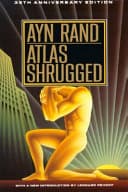
Ayn Rand (2005)
Genre
Politics / Economics / Science Fiction / Philosophy
Reading Time
25-35 hours
Key Themes
See below
Sign in to track this book
In a world collapsing under collectivism, a railroad executive and a mysterious genius lead a strike of the nation's best minds, forcing humanity to confront who truly holds up the world.
“The question isn't who is going to let me; it's who is going to stop me.”
— Often attributed to Francisco d'Anconia, embodying the individualist spirit against societal constraints.
“Do not let your fire go out, spark by irreplaceable spark in the hopeless swamps of the not-quite, the not-yet, and the not-at-all. Do not let the hero in your soul perish in lonely frustration for the life you deserved and have never been able to reach. The world you desire can be won. It exists, it is real, it is possible, it's yours.”
— Howard Roark's speech in The Fountainhead, but the sentiment strongly echoes throughout Atlas Shrugged, particularly in the struggles of the productive.
“I swear by my life and my love of it that I will never live for the sake of another man, nor ask another man to live for mine.”
— John Galt's Oath, a central tenet of Objectivism and the philosophy driving the strike.
“Money is only a tool. It will take you wherever you wish, but it will not replace you as the driver.”
— Francisco d'Anconia's speech on money, explaining its moral nature as a symbol of production.
“Contradictions do not exist. Whenever you think that you are facing a contradiction, check your premises. You will find that one of them is wrong.”
— A fundamental philosophical principle stated by Objectivist characters, emphasizing reason and logic.
“The only power any government has is the power to crack down on criminals. Well, when there aren't enough criminals, one makes them. One declares so many things to be a crime that it becomes impossible to live without breaking laws.”
— A comment reflecting on the expansive and arbitrary nature of government control in the dying society.
“To say 'I love you' one must know first how to say the 'I'.”
— Francisco d'Anconia, emphasizing the importance of a strong, self-sufficient individual identity before genuine love can exist.
“Every man is an end in himself, not the means to the ends of others.”
— A core Objectivist principle, rejecting altruism as a primary moral code.
“Achievement of your happiness is the only moral purpose of your life, and that happiness, not pain or mindless self-indulgence, is the proof of your integrity, since it is the proof and the result of your loyalty to the achievement of your values.”
— John Galt's speech, defining happiness as the ultimate moral goal and outcome of productive living.
“The greatest good for the greatest number is a maxim which is held to justify any atrocity.”
— A critique of collectivist ethics, particularly utilitarianism, by one of the novel's protagonists.
“Civilization is the process of setting man free from men.”
— A reflection on the purpose of societal advancement, to protect individual rights and autonomy.
“When you see that money is exchanged for goods and not for favors, that men work longer and harder when there is a reward for them, not a threat—you may know that your society is doomed.”
— Francisco d'Anconia's speech on money, describing the signs of a collapsing economic system.
“The symbol of all relationships among men, the symbol of your moral code, the symbol of the sacred duty you owe to yourselves, to your lives, to your happiness, is money.”
— Francisco d'Anconia's speech on money, elevating its significance beyond mere currency to a moral indicator.
“There are two sides to every issue: one side is right and the other is wrong, but the middle is always evil.”
— This encapsulates the book's stark moral absolutism, rejecting compromise between good and evil.
Ready to see how well you understood this book? Take our interactive quiz with 10 questions.
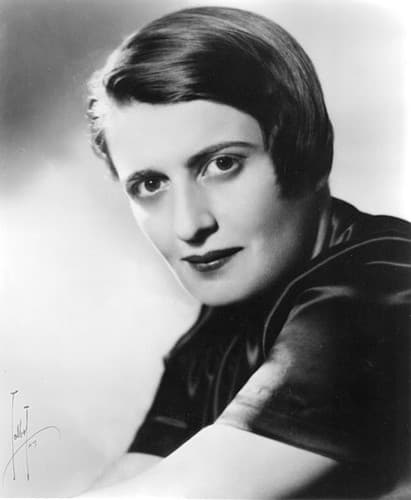
Alice O'Connor, better known by her pen name Ayn Rand, was a Russian-born American writer and philosopher. She is known for her fiction and for developing a philosophical system she named Objectivism. Born and educated in Russia, she moved to the United States in 1926. After two early novels that were initially unsuccessful and two Broadway plays, she achieved fame with her 1943 novel, The Fountainhead. In 1957, Rand published her best-selling work, the novel Atlas Shrugged. Afterward, until her death in 1982, she turned to non-fiction to promote her philosophy, publishing her own periodicals and releasing several collections of essays.

Brett Casper
5.0
Dirk Uffelmann
4.7

Winston S. Churchill
4.5

Chimamanda Ngozi Adichie
4.5
Will Durant
4.4
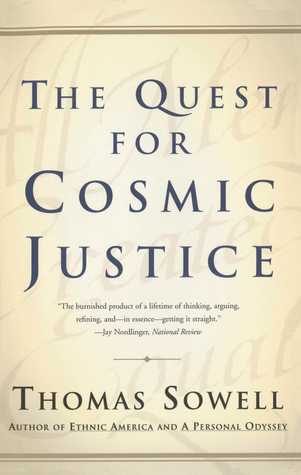
Thomas Sowell
4.4
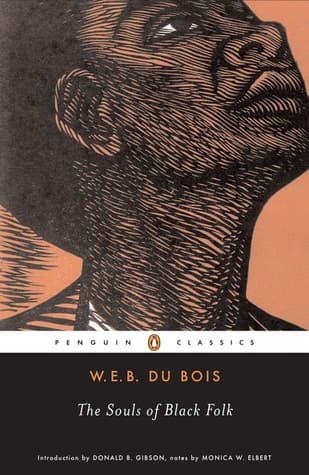
W.E.B. Du Bois
4.3

Alan Moore
4.3