BookBrief
Aristotle's "Art of Rhetoric" cover
Archivist's Choice

Aristotle's "Art of Rhetoric"

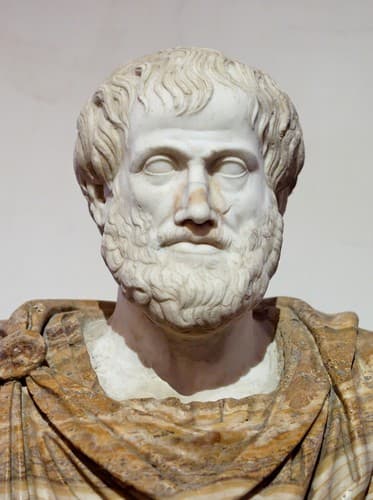
Aristotle (2019)

Genre

Politics / Philosophy

Reading Time

180 min

Key Themes

See below

Track Your Reading

Sign in to track this book

Aristotle's guide to persuasive speech teaches how to master rhetoric for public discussion and how to guard against its manipulative uses.

Core Idea

Aristotle's "Art of Rhetoric" explains the principles of effective persuasion. He argues that rhetoric is a practical skill important for civic life, legal arguments, and public debate. He states that good arguments rely on three things: the speaker's credibility (ethos), the audience's emotional connection (pathos), and the argument's logical sense (logos). The book shows how understanding people, emotions, and logical errors, along with good organization and style, helps speakers find ways to persuade in any situation. This shapes public opinion and influences decisions.
Reading time
180 min
Difficulty
Hard
✓ Read this if...
You want to understand the foundational principles of persuasion, argumentation, and public speaking from a classical perspective, or if you're interested in the historical roots of communication theory.
✗ Skip this if...
You are looking for a light, modern self-help guide to public speaking, or if you prefer contemporary communication theories over dense philosophical texts.

Core idea

The central argument and framework that powers the entire book.

Aristotle's "Art of Rhetoric" explains the principles of effective persuasion. He argues that rhetoric is a practical skill important for civic life, legal arguments, and public debate. He states that good arguments rely on three things: the speaker's credibility (ethos), the audience's emotional connection (pathos), and the argument's logical sense (logos). The book shows how understanding people, emotions, and logical errors, along with good organization and style, helps speakers find ways to persuade in any situation. This shapes public opinion and influences decisions.

At a glance

Reading time

180 min

Difficulty

Hard

Read this if...

You want to understand the foundational principles of persuasion, argumentation, and public speaking from a classical perspective, or if you're interested in the historical roots of communication theory.

Skip this if...

You are looking for a light, modern self-help guide to public speaking, or if you prefer contemporary communication theories over dense philosophical texts.

Key Takeaways

1

The Three Pillars of Persuasion

Ethos, Pathos, and Logos are the fundamental appeals for effective rhetoric.

Quote

Of the modes of persuasion some belong strictly to the art of rhetoric, and some do not. Of the former are ethos, pathos, and logos.

Aristotle divides persuasion into three core appeals: Ethos, Pathos, and Logos. Ethos refers to the speaker's credibility. An audience is more likely to be persuaded by someone they see as trustworthy, knowledgeable, and kind. Pathos appeals to the audience's emotions, recognizing that feelings like anger, pity, fear, or joy often sway human decisions. Logos, the most intellectual appeal, relies on logical reasoning and evidence, building arguments through examples or deductions. An effective speaker, Aristotle says, combines all thre...

Supporting evidence

Aristotle dedicates significant portions of Book I and II to defining and dissecting each of these modes, providing detailed classifications of emotions for pathos, and logical argument forms for logos, alongside the qualities that build ethos.

Apply this

When preparing any persuasive communication (presentation, email, negotiation), consciously evaluate how you are establishing your credibility (ethos), connecting with your audience's emotions (pathos), and presenting a logical, evidence-based argument (logos). For example, start with a brief anecdote to build rapport (ethos/pathos), then present data (logos), and conclude with a call to action that taps into shared values (pathos).

ethospathoslogos
2

Rhetoric's Dual Nature

A powerful tool for truth and justice, yet susceptible to manipulative misuse.

Quote

Rhetoric is useful because things that are true and things that are just are by nature stronger than their opposites.

Aristotle sees rhetoric as an essential skill for civic life, especially in politics and justice. He argues that truth and justice naturally persuade more strongly than lies and injustice. So, when used well, rhetoric helps bring these truths to light and ensures they succeed in public discussion and legal cases. However, Aristotle is aware that rhetoric can be corrupted. He knows that dishonest people can twist rhetorical methods to mislead, manipulate emotions, and hide facts, harming justice and rational debate. This dual nature me...

Supporting evidence

Aristotle explicitly states that rhetoric is 'the counterpart of dialectic' and discusses its utility for defending truth, persuading in public assemblies, and exposing sophistry. He also warns against its misuse by those who would 'make the worse appear the better reason.'

Apply this

Before engaging in any persuasive effort, reflect on your intentions. Are you genuinely seeking to inform, persuade toward a just outcome, or clarify truth? Or are you attempting to obscure, manipulate, or misrepresent? Always strive for transparency and integrity, even when employing sophisticated rhetorical techniques. Challenge others when their rhetoric seems designed to mislead rather than enlighten.

rhetoricjusticeethics
3

Three Kinds of Rhetoric

Different contexts demand distinct persuasive strategies.

Quote

There are three kinds of rhetoric: deliberative, judicial, and epideictic.

Aristotle divides rhetoric into three genres, each for a specific audience, purpose, and time. Deliberative rhetoric, about future actions, aims to convince a group (like a political body) to accept or reject a plan, focusing on what is helpful or harmful. Judicial (or forensic) rhetoric, about past events, is used in courts to accuse or defend, deciding what is fair or unfair. Epideictic (or ceremonial) rhetoric, about the present, is used for praise or blame, often at public events. It aims to honor or dishonor a person, group, or i...

Supporting evidence

Aristotle dedicates the initial chapters of Book I to meticulously defining these three genres, outlining their respective goals, audiences, and the types of arguments most effective within each.

Apply this

Before crafting any persuasive message, identify which of the three rhetorical genres it falls into. This will help you define your primary goal (expediency, justice, or honor), the relevant time frame (future, past, or present), and the most effective topics and appeals to employ. For instance, a performance review (judicial/epideictic blend) requires different language than a project proposal (deliberative).

deliberative-rhetoricjudicial-rhetoricepideictic-rhetoric
4

The Power of Enthymemes

Persuasion often relies on audience-supplied premises.

Quote

The enthymeme is a sort of syllogism, and the topics from which enthymemes are derived are the common topics and the specific topics.

Aristotle identifies the enthymeme as the most powerful type of logical persuasion in rhetoric. Unlike a formal syllogism, which states all its premises, an enthymeme is a rhetorical syllogism where one or more premises are unstated. The audience is assumed to understand and accept them. This makes the argument shorter and lets the audience participate in the reasoning, making the conclusion feel like their own idea. An enthymeme works if the speaker correctly assesses the audience's existing beliefs, values, and common knowledge. If ...

Supporting evidence

Aristotle extensively discusses enthymemes in Book I and II, contrasting them with scientific syllogisms and detailing the 'common topics' (e.g., possibility, degree) and 'specific topics' (e.g., justice, honor) from which their premises can be drawn.

Apply this

When constructing an argument, consider what common knowledge or widely accepted beliefs your audience already holds. Instead of explicitly stating every step of your logic, strategically omit premises that are obvious or universally accepted, allowing your audience to connect the dots. This makes your argument more engaging and impactful. For example, instead of 'Exercise improves health; therefore, you should exercise,' try 'You want to be healthy, right? Then you should exercise.' (The unstated premise: Exercise improves health).

enthymemesyllogismlogic
5

The Importance of Character (Ethos)

A speaker's perceived character is their most potent persuasive tool.

Quote

There are three things that gain belief for a speaker, independently of the proofs: practical wisdom, virtue, and goodwill.

Aristotle states that a speaker's character, or ethos, is the most effective way to persuade. He argues that an audience is far more likely to be persuaded by someone they see as having practical wisdom (phronesis), moral virtue (arete), and goodwill (eunoia) toward them. Practical wisdom means competence and good judgment; the speaker knows their subject and can make good decisions. Moral virtue suggests integrity and trustworthiness; the speaker is honest and fair. Goodwill shows that the speaker cares about the audience's best inte...

Supporting evidence

Aristotle dedicates extensive discussion in Book II to the components of ethos and how a speaker can project these qualities through their rhetorical choices, rather than relying solely on pre-existing reputation.

Apply this

Cultivate and project genuine qualities of wisdom, virtue, and goodwill in all your communications. Be prepared, demonstrate empathy, and always be transparent about your intentions. In a presentation, this means not just knowing your facts but also showing you care about your audience's challenges and offering solutions that truly benefit them. Your reputation and how you conduct yourself are your most powerful persuasive assets.

ethoscharactercredibilityphronesis
6

Mastering the Emotions (Pathos)

Understanding and evoking audience emotions is crucial for moving them to action.

Quote

The emotions are those things through which, by undergoing change, people come to differ in their judgments.

Aristotle recognizes that people are not purely rational; their judgments and decisions are deeply affected by their emotions. A skilled speaker must understand various emotions—like anger, pity, fear, shame, joy, and envy—and know how to create and calm them in an audience. He analyzes each emotion, describing its causes, its targets, and the feelings of those who experience it. The goal is not just to manipulate, but to align the audience's emotional state with the speaker's purpose, making them more open to the logical arguments. A...

Supporting evidence

Book II of 'Rhetoric' contains a detailed psychological treatise on various emotions, outlining their definitions, the conditions under which they arise, and how they can be used to influence an audience's judgment.

Apply this

Before speaking, consider the current emotional state of your audience and the emotional state you want them to be in to accept your message. Use vivid language, storytelling, and relatable examples to evoke appropriate emotions. If you want action, evoke hope or urgency; if you want sympathy, evoke pity. Always ensure your emotional appeals are congruent with your overall message and ethical intentions, avoiding cheap manipulation.

pathosemotionpsychologyaudience-analysis
7

Diction and Style Matter

The clarity and appropriateness of language enhance persuasive impact.

Quote

The virtue of diction is to be clear and not mean.

Beyond arguments and appeals, Aristotle stresses the importance of word choice (diction) and style in effective rhetoric. He argues that clarity is most important: a speech that is hard to understand is ineffective. But clarity alone is not enough; the style must also avoid being vulgar and instead have dignity and suit the subject, audience, and speaker. He advises against overly poetic or artificial language in prose, favoring a natural, yet refined, style. Metaphors, similes, and vivid imagery are good for making language engaging,...

Supporting evidence

Book III is largely dedicated to the discussion of diction, arrangement, and style, including the use of metaphor, rhythm, and appropriate language for different parts of a speech.

Apply this

When writing or speaking, prioritize clarity and conciseness. Choose words that are precise and easily understood by your specific audience. Avoid jargon where possible. Employ metaphors and analogies to clarify complex ideas, but don't overdo it. Ensure your tone and style are appropriate for the context – a formal presentation requires different language than a casual team meeting. Read your work aloud to catch awkward phrasing and ensure a natural flow.

dictionstyleclaritymetaphor
8

Arrangement for Maximum Impact

The structure of a speech is vital for logical flow and memorability.

Quote

A speech has two parts: for it is necessary to state the subject, and then to prove it.

Aristotle believes that a well-structured speech is as important as its content. While some rhetoricians might divide a speech into many parts, he simplifies the essential structure to two: the statement of the case (prothesis) and the proof (pistis). However, he also describes the common practice of including an introduction (prooemion), a statement of facts (narration), a proof, and a conclusion (epilogos). The introduction aims to make the audience receptive. The narration provides necessary background clearly. The proof presents a...

Supporting evidence

Book III discusses the parts of a speech, their functions, and how to arrange them effectively, from the introduction to the conclusion.

Apply this

Always outline your persuasive messages. Start with an engaging introduction that grabs attention and states your purpose. Provide necessary background information clearly. Organize your main arguments logically, using transitions to guide your audience. Conclude with a strong summary, a call to action, and a final appeal that leaves a lasting impression. Think of it as a journey you're taking your audience on.

arrangementstructureprothesisepilogos
9

The Role of Common and Specific Topics

Discovering arguments from universal and particular lines of reasoning.

Quote

For the enthymemes of rhetoric, as for the syllogisms of dialectic, the 'topics' are the places from which arguments are derived.

Aristotle introduces 'topics' (topoi) as sources from which a speaker can find arguments. He distinguishes between 'common topics' and 'specific topics.' Common topics are general arguments that apply to any subject and any of the three rhetorical genres. Examples include arguments about possibility/impossibility, greater/lesser, past/future fact, and definition. These provide general ways to build logical appeals. Specific topics, however, are arguments from specialized knowledge relevant to a particular field, such as ethics, physic...

Supporting evidence

Aristotle elaborates on common topics in Book II and specific topics related to the three rhetorical genres in Book I, providing examples for each category.

Apply this

When brainstorming arguments, consciously consider both common and specific topics. For a business proposal, first think about universal arguments like 'This is possible' (common topic) and 'It will save more money than it costs' (common topic of greater/lesser). Then, delve into specific topics like market trends, competitor analysis, or regulatory compliance unique to your industry. This dual approach ensures comprehensive argument generation.

topicstopoicommon-topicsspecific-topics
10

Rhetoric as a Necessary Art

Despite potential misuse, rhetoric is indispensable for public discourse and decision-making.

Quote

If it is urged that an abuse of the rhetorical faculty can work great mischief, the same charge can be brought against all good things.

Aristotle defends rhetoric as a necessary skill, even acknowledging its potential for misuse. He argues against critics who might dismiss rhetoric as manipulation by stating that almost any powerful tool or skill—like strength, health, wealth, or military strategy—can be misused. The fact that something can be used for harm does not negate its value or proper use. For Aristotle, rhetoric is essential because it allows for the clear presentation and defense of truth and justice in public forums. In a democratic society, where decisio...

Supporting evidence

Aristotle's initial defense of rhetoric in Book I, where he likens its potential for misuse to that of other beneficial skills, and his consistent emphasis on its role in civic life.

Apply this

Embrace rhetoric as a valuable skill for positive change. Recognize that being articulate and persuasive is not about trickery, but about effectively communicating ideas and advocating for what is right. Actively seek to improve your rhetorical abilities to contribute more effectively to discussions, influence decisions positively, and defend principles you believe in, whether in your community, workplace, or personal life.

civic-engagementpersuasiontruthdialectic

Critical analysis

Notable Quotes

Rhetoric may be defined as the faculty of observing in any given case the available means of persuasion.

Opening definition of rhetoric.

Of the modes of persuasion some belong strictly to the art of rhetoric, and some are outside the art.

Distinguishing between artistic and non-artistic proofs.

There are, then, these three means of effecting persuasion: the speaker's character, and the state of mind of the hearer, and the nature of the argument itself.

Introducing Ethos, Pathos, and Logos.

We persuade through the hearers, when they are brought into a state of emotion by our speech; for the judgments we deliver are not the same when we are influenced by joy or sorrow, love or hate.

Explaining the role of Pathos.

The orator must not only try to make the argument of his speech demonstrative and credible but also to make his own character look right and to put his hearers, who are to decide, into the right state of mind.

Emphasizing the importance of all three persuasive appeals.

The true and the honourable are by nature stronger than their opposites.

Arguing for the inherent advantage of truth in debate.

It is not right to pervert the judge by moving him to anger or envy or pity—one might as well warp a carpenter’s rule before using it.

Critiquing the misuse of emotional appeals in legal settings.

The enthymeme is a rhetorical syllogism.

Defining the core logical tool of rhetoric.

We must not, therefore, make our premisses too remote, nor, again, too near.

Advice on constructing effective enthymemes.

A speech has two parts. You must state your case, and you must prove it.

Simplifying the basic structure of a rhetorical speech.

Style to be good must be clear, and it must be appropriate.

Discussing the virtues of rhetorical style.

The proper qualities of diction are clearness, and propriety.

Further elaboration on effective language use.

It is not enough to know what one ought to say, but one must also know how to say it.

Highlighting the importance of delivery and style.

The most important quality of a good style is to be clear without being mean.

Balancing clarity with dignity in rhetorical expression.

It is a sign of a good style that it is appropriate both to the subject and to the audience.

Emphasizing adaptability in rhetorical style.

Quiz

Test Your Knowledge

Ready to see how well you understood this book? Take our interactive quiz with 10 questions.

10
Questions
~5
Minutes
?
Best Score

Key Questions (FAQ)

Aristotle's 'Art of Rhetoric' is a foundational text on the theory and practice of persuasive speech. It explores what rhetoric is, its different types, modes of persuasion, and the elements of a successful speech, while also defending rhetoric as a vital tool for politics.

About the author

Aristotle

Aristotle was a Greek philosopher and polymath whose writings covered many subjects, including physics, ethics, politics, and art. He is renowned for his seminal works such as "Physics," "Poetics," and "Politics," which laid the groundwork for Western philosophy and scientific inquiry. A student of Plato and tutor to Alexander the Great, Aristotle's intellectual contributions continue to influence thought across numerous disciplines.