BookBrief
Apology cover
Archivist's Choice

Apology

Plato

Genre

Politics / History / Philosophy

Reading Time

90 min

Key Themes

See below

Track Your Reading

Sign in to track this book

Before the Athenian court, Socrates, charged with impiety and corrupting youth, shows his commitment to truth and the examined life, a defense that seals his fate but makes his philosophy immortal.

Core Idea

Plato's Apology presents Socrates' defense against charges of impiety and corrupting the youth. He argues that true wisdom is recognizing one's own ignorance and that seeking moral truth and examining life are essential to human existence. Socrates claims his philosophical mission, guided by a divine sign, is a 'gadfly' to the state, urging citizens to care for their souls more than material wealth and reputation, even if it leads to persecution and death. He says a good person cannot be harmed by a bad one, as moral integrity is an internal state safe from external problems, including death, which he sees as either peaceful sleep or a chance for more philosophical talk.
Reading time
90 min
Difficulty
Medium
✓ Read this if...
You are interested in the foundational texts of Western philosophy, the origins of critical thinking, or a powerful example of moral conviction in the face of injustice. It's essential for understanding Socrates' philosophy and his trial.
✗ Skip this if...
You prefer modern philosophical arguments or are looking for a light, easy read without engaging with ancient Greek thought and its historical context.

Core idea

The central argument and framework that powers the entire book.

Plato's Apology presents Socrates' defense against charges of impiety and corrupting the youth. He argues that true wisdom is recognizing one's own ignorance and that seeking moral truth and examining life are essential to human existence. Socrates claims his philosophical mission, guided by a divine sign, is a 'gadfly' to the state, urging citizens to care for their souls more than material wealth and reputation, even if it leads to persecution and death. He says a good person cannot be harmed by a bad one, as moral integrity is an internal state safe from external problems, including death, which he sees as either peaceful sleep or a chance for more philosophical talk.

At a glance

Reading time

90 min

Difficulty

Medium

Read this if...

You are interested in the foundational texts of Western philosophy, the origins of critical thinking, or a powerful example of moral conviction in the face of injustice. It's essential for understanding Socrates' philosophy and his trial.

Skip this if...

You prefer modern philosophical arguments or are looking for a light, easy read without engaging with ancient Greek thought and its historical context.

Key Takeaways

1

The Unexamined Life

Socrates's unwavering commitment to philosophical inquiry as the highest human good.

Quote

The unexamined life is not worth living.

Socrates famously states that a life without critical self-reflection and philosophical inquiry is not worth living. This is not just intellectual pride; for Socrates, seeking wisdom and virtue through constant questioning is the core of human flourishing. He believes that by examining our beliefs, values, and actions, we can get closer to truth and live a more ethical and meaningful life. This pursuit is not about gathering facts but about understanding ourselves and our place in the world, even if it means facing difficult truths. H...

Supporting evidence

Socrates's entire defense hinges on this principle, as he explains his mission to question fellow Athenians (craftsmen, poets, politicians) to expose their false wisdom, all in obedience to the Delphic Oracle's pronouncement.

Apply this

Regularly engage in self-reflection through journaling, meditation, or philosophical discussions. Question your assumptions, beliefs, and motivations, and be open to changing your mind based on reasoned arguments.

socratic-methodepistemologyvirtue-ethics
2

Wisdom as Knowing What You Don't Know

True wisdom lies in recognizing the limits of one's own knowledge.

Quote

I am wiser than this man; for neither of us by any possibility knows anything of beauty and goodness, but he fancies that he knows, and I do not fancy that I know: so I am wiser than he is in this small matter, that I do not fancy that I know what I do not know.

Socrates' journey to understand the Delphic Oracle's statement—that no one was wiser than he—led him to a realization: his wisdom was in knowing his own ignorance. Unlike those who claimed to know much but, when questioned, showed their shallow understanding, Socrates truly admitted his lack of absolute knowledge. This humility is not a weakness but a strength, as it allows for real learning and intellectual growth. It criticizes intellectual arrogance and calls for intellectual honesty, suggesting that true wisdom begins with recogni...

Supporting evidence

Socrates recounts his systematic interrogation of prominent Athenians—politicians, poets, and craftsmen—who were reputed to be wise but were found lacking in true knowledge, especially regarding 'the greatest matters.'

Apply this

Cultivate intellectual humility. When approaching new topics or engaging in debates, start with the assumption that there is always more to learn. Be wary of overconfidence in your own understanding.

socratic-ignorancehumilityepistemic-modesty
3

The Daimonion and Moral Guidance

Socrates's internal divine sign as a guide against wrongdoing.

Quote

For my part, I have a divine sign, which is a voice that comes to me, and when it comes it always holds me back from what I am about to do, but never urges me forward.

Socrates talks about a 'divine sign' or 'daimonion' that often intervenes in his life, always as a preventing force, never as a positive command. This inner voice acts as a moral guide, leading him away from actions that would be unjust or unwise. It is not a god in the traditional sense, but a personal, almost intuitive, warning system. This idea highlights Socrates' belief in an internal moral ability that can guide individuals toward ethical behavior, even when external laws or societal pressures might suggest otherwise. It is an i...

Supporting evidence

Socrates mentions his daimonion multiple times, using it as part of his defense against the charge of introducing 'new gods' and explaining why he did not engage in politics or prepare a conventional defense speech.

Apply this

Pay attention to your 'gut feelings' or internal moral compass, especially when facing decisions that feel ethically ambiguous. Develop self-awareness to recognize your own internal signals that caution against certain actions.

daimonionconsciencemoral-intuition
4

Prioritizing the Soul Over Possessions

The importance of caring for one's soul above wealth, reputation, or physical well-being.

Quote

Are you not ashamed of heaping up the greatest amount of money and honor and reputation, and caring so little about wisdom and truth and the greatest improvement of your soul?

Socrates criticizes the Athenian focus on external things like wealth, fame, and physical comfort. He argues these are less important than developing the soul. For him, the soul—representing one's moral and intellectual character—is the most valuable possession, and improving it should be life's main goal. Ignoring the soul for material gain or temporary reputation leads to moral decline and an unfulfilled life. This radical change in priorities challenges common societal values, urging individuals to focus on inner virtue rather than...

Supporting evidence

Socrates consistently admonishes his fellow citizens for their focus on money and status, stating his mission is to persuade them to care for their souls above all else.

Apply this

Regularly assess your priorities. Dedicate time and effort to activities that foster personal growth, ethical reflection, and intellectual development, rather than solely pursuing material or superficial gains.

virtueeudaimoniamaterialism
5

The Gadfly of the State

Socrates's self-appointed role as an irritant to awaken the sluggish state.

Quote

For if you kill me you will not easily find another like me, who, if I may use a ludicrous figure, am a sort of gadfly given to the state by God; and the state is a great and noble steed who is tardy in his motions owing to his very size, and requires to be stirred into life.

Socrates compares himself to a 'gadfly' sent by the gods to awaken Athens, the 'great and noble steed,' from its intellectual and moral sleep. He sees his constant questioning and challenging of authority not as rebellion, but as a necessary public service. A state, like a person, can become comfortable and self-satisfied, leading to stagnation and moral decay. The gadfly's sting, though uncomfortable, is meant to provoke thought, encourage self-correction, and prevent the city from becoming too slow. This comparison clearly shows the...

Supporting evidence

Socrates uses this analogy during his defense to explain why he believes his mission is beneficial to Athens, despite the irritation it causes.

Apply this

Be willing to be a constructive critic within your community or organization. Challenge prevailing assumptions and comfortable norms (respectfully) to encourage growth and prevent stagnation.

social-criticismdissentcivic-duty
6

Death as a Philosophical Unknown

Socrates's serene acceptance of death, viewing it as either annihilation or a journey to a better place.

Quote

For to fear death, gentlemen, is nothing else than to think oneself wise when one is not; for it is to think that one knows what one does not know. No one knows whether death may not be the greatest of all blessings for a man, but men fear it as if they knew that it is the greatest of evils.

Socrates faces his coming death with remarkable calm. He argues that fearing death is a type of intellectual arrogance—assuming one knows it is evil when its true nature is unknown. He considers two possibilities: either death is a dreamless sleep (annihilation), which he finds appealing, or it is the soul moving to another place where he can continue philosophical talks with heroes and wise figures. In either case, he sees no reason to fear, only potential benefit. This view shows his consistent commitment to reason and his deep beli...

Supporting evidence

Socrates's final address to the jury after his condemnation, where he discusses the nature of death and his lack of fear.

Apply this

Adopt a more philosophical perspective on mortality. Instead of fearing the unknown, focus on living a virtuous life, which, according to Socrates, ensures that no true harm can befall your soul.

mortalitystoicismafterlife
7

The Incorruptible Public Servant

Socrates's refusal to compromise his principles, even at the cost of his life.

Quote

And if you think that by killing men you can prevent someone from reproaching you for your evil lives, you are mistaken; that is not an escape which is either possible or honorable; the easiest and noblest way is not to be disabling others, but to be improving yourselves.

Socrates consistently refused to yield to political pressure, whether during his brief time on the Council of 500 (where he alone opposed an illegal vote) or his refusal to help arrest Leon of Salamis under the Thirty Tyrants. He puts justice and law above personal safety or popular opinion. His defense is not an attempt to gain favor or avoid punishment, but a principled stand for his way of life. This strong integrity, even when facing death, is a powerful example of someone who values moral conviction above everything else, showing...

Supporting evidence

Socrates recounts two specific instances of his public service: opposing the illegal trial of the generals after the Battle of Arginusae and refusing to obey the Thirty Tyrants' order to arrest Leon of Salamis.

Apply this

Identify your core ethical principles and commit to upholding them, even when it's difficult or unpopular. Resist the temptation to compromise your values for personal gain or to avoid conflict.

integritymoral-couragecivil-disobedience
8

The Limitations of Democracy

The vulnerability of democratic systems to demagoguery and mob mentality.

Quote

I was convicted because I had no words to persuade you. And this was not for lack of trying, but for lack of the time to persuade you.

Socrates' trial and condemnation show a darker side of Athenian democracy. Despite his logical arguments and commitment to truth, he is ultimately condemned by a jury swayed by bias, fear, and the clever words of his accusers. This raises difficult questions about a popular assembly's ability to make fair decisions, especially when dealing with complex philosophical arguments or individuals who challenge the norm. It suggests that even in a democracy, the search for truth and justice can be overridden by popular feeling, highlighting ...

Supporting evidence

The outcome of the trial itself, where Socrates is condemned despite his compelling (to a philosopher) defense, and his observation that he lacked time to truly persuade the large jury.

Apply this

Be a discerning citizen. Don't blindly accept popular opinions or easily swayed arguments. Critically evaluate information and challenge your own biases, especially when making collective decisions.

demagoguerymob-mentalitytyranny-of-the-majority
9

The Power of Questioning

Socrates's method of relentless inquiry as a tool for intellectual and moral purification.

Quote

For I do nothing but go about persuading you all, old and young alike, not to take thought for your persons or your properties, but first and most earnestly to take care of your souls, how they may be made best.

The Socratic method, known for its persistent questioning, is not just a debate tactic but a basic approach to intellectual and moral improvement. Socrates believed that by revealing contradictions and inconsistencies in people's beliefs, he could help them shed false knowledge and get closer to true understanding. This process, though often uncomfortable, helped 'purify' the soul by challenging unexamined assumptions and encouraging deeper self-awareness. It shows the power of critical inquiry, arguing that true wisdom is not given b...

Supporting evidence

Socrates describes his lifelong practice of questioning individuals in the marketplace, seeking to understand the Delphic Oracle's pronouncement and exposing the ignorance of those who claimed wisdom.

Apply this

Employ the Socratic method in your own learning and discussions. Instead of just stating opinions, ask probing questions to understand underlying assumptions and encourage deeper thought in yourself and others.

socratic-methodcritical-thinkingdialectic
10

No Harm to a Good Man

The ultimate conviction that a virtuous life protects against true evil.

Quote

No evil can happen to a good man, either in life or after death.

Despite being condemned to death, Socrates firmly believes that no real harm can come to a good man. He distinguishes between external misfortunes (like death, imprisonment, or financial ruin) and true evil, which he equates with moral corruption of the soul. A virtuous person, living according to reason and justice, is immune to this deeper, more significant kind of harm. This belief provides a strong psychological defense against fear and despair, stating that moral integrity is the ultimate protection and that external suffering ca...

Supporting evidence

Socrates states this conviction directly at the end of his defense, reassuring his friends and asserting his belief in divine providence regarding the fate of the virtuous.

Apply this

Focus on cultivating your character and living virtuously. Understand that while you cannot control external events, you can control your response and maintain your moral integrity, which is the true measure of well-being.

virtue-ethicsmoral-resilienceinner-peace

Critical analysis

Notable Quotes

I am a gadfly given to the state by God, and you are a great and noble steed who is a bit sluggish because of his size and needs to be stirred up by a gadfly.

Socrates describes his role in Athenian society during his trial.

The unexamined life is not worth living.

Socrates's most famous declaration about the importance of philosophical inquiry.

No evil can happen to a good man, either in life or after death.

Socrates's belief in the ultimate triumph of virtue, even in the face of his own impending death.

For I know that I have no wisdom, small or great.

Socrates explains his famous 'wisdom' – that he knows he knows nothing.

An oracle of the god said that I was the wisest of all men.

Socrates recounts the story of Chaerephon's visit to the Oracle at Delphi.

I went to one of those who had a reputation for wisdom, and I cross-examined him... and I came to the conclusion that, although he thought that he was wise, he was not.

Socrates describes his method of questioning the 'wise' men of Athens.

If you put me to death, you will not easily find another like me.

Socrates warns the jury about the loss they would incur by executing him.

I will obey the god rather than you.

Socrates asserts his commitment to his divine mission over the commands of the Athenian court.

Are you not ashamed that you give your attention to acquiring as much money as possible, and similarly with reputation and honor, but you do not care or give any thought to wisdom or truth or how your soul may be improved?

Socrates questions the values of the Athenian citizens.

The difficulty, my friends, is not to avoid death, but to avoid unrighteousness; for that runs faster than death.

Socrates emphasizes the greater importance of moral integrity over physical survival.

To fear death, gentlemen, is nothing other than to think oneself wise when one is not; for it is to think one knows what one does not know.

Socrates argues against the fear of death, as it is based on ignorance.

A man who is really fighting for justice must lead a private, not a public, life if he is to survive for even a short time.

Socrates explains why he avoided direct political involvement.

Now it is time that we were going, I to die and you to live; but which of us has the happier prospect is unknown to anyone but God.

Socrates's concluding remarks to the jury after his condemnation.

Quiz

Test Your Knowledge

Ready to see how well you understood this book? Take our interactive quiz with 10 questions.

10
Questions
~5
Minutes
?
Best Score

Key Questions (FAQ)

Plato's 'Apology' is a non-fiction account of the speech Socrates gave during his trial in 399 BCE. It details his defense against charges of impiety and corrupting the youth, offering insight into Socratic philosophy and the Athenian legal system.

About the author

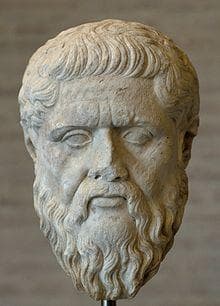
Plato

Biography coming soon.