BookBrief
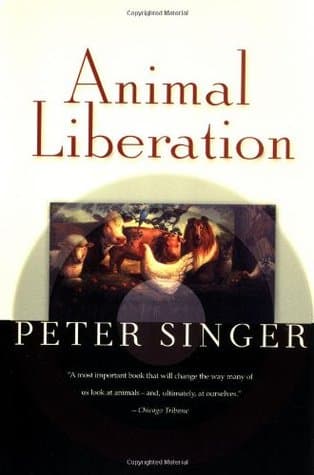
Animal Liberation cover
Archivist's Choice

Animal Liberation

Peter Singer (1975)

Genre

Politics / Science / Philosophy

Reading Time

9-12 hours

Key Themes

See below

Track Your Reading

Sign in to track this book

Peter Singer's "Animal Liberation" sparked a global movement by showing the abuse of animals in labs and factory farms, urging readers to extend justice beyond humans.

Core Idea

Peter Singer's "Animal Liberation" argues that speciesism—prejudice for one's own species over others—is wrong, like racism and sexism. He believes the ability to suffer, not intelligence or species, is what matters morally. The book describes the suffering of animals in factory farms and experiments, stating that our current practices are a moral failure caused by an unfair speciesist view. Singer suggests we rethink how we treat animals. He wants readers to see animal suffering as equally important as human suffering. He calls for an end to practices that cause animals great pain, specifically through vegetarianism/veganism and stopping most animal testing. This would extend equal ethical consideration to all beings that can feel.
Reading time
9-12 hours
Difficulty
Medium
✓ Read this if...
You are interested in the philosophical foundations of animal rights, want to understand the ethical arguments against factory farming and animal experimentation, or are considering a vegetarian/vegan lifestyle from a moral standpoint.
✗ Skip this if...
You are firmly convinced of human exceptionalism and believe animals have no moral standing, or you are looking for a light read without challenging ethical dilemmas. Also, if you are easily disturbed by graphic descriptions of animal cruelty.

Core idea

The central argument and framework that powers the entire book.

Peter Singer's "Animal Liberation" argues that speciesism—prejudice for one's own species over others—is wrong, like racism and sexism. He believes the ability to suffer, not intelligence or species, is what matters morally. The book describes the suffering of animals in factory farms and experiments, stating that our current practices are a moral failure caused by an unfair speciesist view. Singer suggests we rethink how we treat animals. He wants readers to see animal suffering as equally important as human suffering. He calls for an end to practices that cause animals great pain, specifically through vegetarianism/veganism and stopping most animal testing. This would extend equal ethical consideration to all beings that can feel.

At a glance

Reading time

9-12 hours

Difficulty

Medium

Read this if...

You are interested in the philosophical foundations of animal rights, want to understand the ethical arguments against factory farming and animal experimentation, or are considering a vegetarian/vegan lifestyle from a moral standpoint.

Skip this if...

You are firmly convinced of human exceptionalism and believe animals have no moral standing, or you are looking for a light read without challenging ethical dilemmas. Also, if you are easily disturbed by graphic descriptions of animal cruelty.

Key Takeaways

1

Speciesism: The Unjust Discrimination

Challenging the arbitrary moral hierarchy based solely on species membership.

Quote

If a being suffers, there can be no moral justification for refusing to take that suffering into consideration. No matter what the nature of the being, the principle of equality requires that its suffering be counted equally with the like suffering—insofar as rough comparisons can be made—of any other being.

Singer explains "speciesism" as prejudice for one's own species over others. He argues it is wrong, like racism or sexism, because it uses an arbitrary trait (species) instead of morally relevant ones (like the ability to suffer). Singer's main ethical idea is that the ability to suffer, not intelligence, language, or species, is what matters. If a being can suffer, its suffering deserves equal consideration. This does not mean treating all beings the same, but giving equal weight to similar interests. Singer wants to end the injustic...

Supporting evidence

Singer draws parallels between historical justifications for racism and sexism and the current justifications for speciesism, highlighting the arbitrary nature of 'group membership' as a basis for moral exclusion. He points to the consistent human tendency to rationalize exploitation of 'the other.'

Apply this

Reflect on your own biases when considering animal welfare. Ask: Is my concern for human suffering genuinely greater than my concern for animal suffering, or is it merely a reflection of my species membership? Actively challenge the notion that human interests automatically trump all other species' interests, especially when comparable suffering is involved.


speciesismmoral-equalitysuffering
2

The Brutality of Factory Farming

Unveiling the horrific reality behind industrial animal agriculture.

Quote

The vast majority of animals now raised for food live in conditions that are a disgrace to humanity.

Singer details the systematic cruelty in modern factory farming. He describes how animals, like chickens, pigs, and cattle, are treated as production units. They cannot act naturally and suffer physically and psychologically. This includes extreme confinement, mutilations without pain relief, forced growth, and dirty conditions. Factory farming means billions of animals live in constant misery for cheap meat, eggs, and dairy. Singer believes the convenience and economic efficiency of these systems come at too high a moral cost, showin...

Supporting evidence

Detailed descriptions of broiler chicken farms, battery cage systems for laying hens, gestation crates for sows, and veal calf crates, citing industry practices and scientific observations of animal behavior under these conditions.

Apply this

Critically examine your dietary choices. Consider reducing or eliminating consumption of animal products, especially those from factory farms. Support local, ethical farms if you choose to consume animal products, or explore plant-based alternatives to align your actions with the rejection of systemic cruelty.

factory-farminganimal-crueltyindustrial-agriculture
3

The Ethics of Experimentation

Questioning the moral justification of animal research for human benefit.

Quote

The great majority of experiments performed on animals are not performed for the purpose of saving human lives or even of preventing human suffering. They are performed for reasons of sheer curiosity, or to test the safety of some new product, or simply because it has become a habit.

Singer closely examines animal experimentation, questioning the idea that it is always right if it helps humans. He argues that much animal research is trivial, repetitive, poorly designed, or could be replaced. He uses the speciesism argument: if we would not experiment on a human infant or a severely disabled human (because they can suffer), then there is no moral reason to do it on an animal with a similar ability to suffer, simply because it is not human. He points out experiments that cause great pain for questionable scientific ...

Supporting evidence

Examples of specific, often gruesome, experiments conducted on animals (e.g., psychological experiments involving induced learned helplessness in dogs, toxicity testing on rabbits, brain lesion studies on monkeys), questioning their scientific merit and ethical necessity.

Apply this

Support organizations advocating for alternatives to animal testing and ethical research practices. When considering products, choose those certified as cruelty-free. Advocate for stricter regulations and increased funding for non-animal research methods.

animal-testingvivisectionresearch-ethics
4

Utilitarianism and Animal Welfare

Applying the greatest good for the greatest number to all sentient beings.

Quote

The question is not, Can they reason? nor, Can they talk? but, Can they suffer?

Singer's ethical framework in "Animal Liberation" is based on utilitarianism, specifically preference utilitarianism. The goal is to maximize overall happiness or preference satisfaction and minimize suffering. Singer extends this idea beyond humans, arguing that the suffering of any being that can feel must be considered equally. The ability to suffer is the only morally relevant factor. This means that when making decisions, we should weigh the interests of all beings that can suffer, not just humans. If an action causes great suffe...

Supporting evidence

Singer frequently references Jeremy Bentham's foundational utilitarian principle regarding the capacity to suffer. He applies the utilitarian calculus to various scenarios, such as the suffering of animals in factory farms versus the pleasure of eating meat.

Apply this

When faced with ethical dilemmas involving animals, consider the total sum of suffering and pleasure for all sentient beings involved. Strive to choose actions that reduce overall suffering, regardless of species. This encourages a shift from anthropocentric thinking to a more inclusive ethical perspective.

utilitarianismsentiencepreference-utilitarianism
5

The Consumer's Complicity

Highlighting how everyday choices perpetuate animal exploitation.

Quote

To protest about factory farming while continuing to buy its products is like protesting about sweatshops while continuing to buy clothes made in them.

Singer argues that consumers are not just observers but active participants in animal exploitation through their purchases. By buying meat, dairy, eggs, or products tested on animals, consumers directly fund the practices they might condemn. He highlights the direct link between demand and supply: if there were no demand for factory-farmed products, the industry would not exist in its current cruel form. This point calls for personal responsibility, urging readers to match their actions with their moral values. It challenges the commo...

Supporting evidence

Singer uses the economic principle of supply and demand to illustrate how consumer choices directly fuel the animal agriculture and animal testing industries. He points to the sheer volume of products derived from these practices.

Apply this

Consciously choose to purchase products that are cruelty-free and vegan/vegetarian where possible. Educate yourself on the origins of your food and other consumer goods. See your purchasing power as a vote for the kind of world you want to live in, and vote for compassion.

consumer-ethicsethical-consumptionpersonal-responsibility
6

Beyond the 'Human' Exception

Deconstructing the various arguments for human moral superiority.

Quote

The fact that a being is a member of the species Homo sapiens does not, in itself, give it any moral rights that are not equally possessed by any other being capable of feeling pain.

Singer examines and refutes common arguments for human exceptionalism and animal exploitation. These often involve claims about human intelligence, reason, language, self-awareness, or religious authority. Singer shows that none of these traits offer a consistent or moral reason to deny basic moral consideration to animals. He uses the "argument from marginal cases," noting that if intelligence or reason were the only criteria for moral consideration, then human infants, severely disabled people, or those in persistent vegetative stat...

Supporting evidence

Singer directly addresses and debunks arguments based on human intelligence, language, and 'soul,' often using logical counter-arguments and the 'argument from marginal cases' (comparing animals to humans with limited cognitive abilities).

Apply this

Challenge anthropocentric biases in your thinking. When evaluating moral claims, question whether the criteria you are using are truly universal or if they are arbitrarily designed to exclude non-human animals. Practice empathy by imagining yourself in the position of different sentient beings.

anthropocentrismhuman-exceptionalismargument-from-marginal-cases
7

The Path to Animal Liberation

Advocating for a societal shift towards veganism and ethical living.

Quote

For the great majority of human beings, especially in industrialized societies, the most direct form of speciesism they encounter is in their diet.

Singer's vision for "animal liberation" aims to end severe cruelty and fundamentally change our relationship with animals. He strongly advocates for a vegan diet as the most effective personal step to reduce animal suffering, especially from factory farming. Beyond diet, he calls for ending animal experimentation when alternatives exist and rethinking how animals are used in entertainment, clothing, and other industries. The "liberation" he envisions is a world where the interests of beings that can feel are considered equally, regard...

Supporting evidence

Singer repeatedly emphasizes the practical impact of dietary choices, noting that the sheer number of animals consumed far outweighs those used in research or entertainment, making veganism the most significant individual action.

Apply this

Actively explore and adopt a plant-based diet. Support legislative efforts to improve animal welfare and reduce animal exploitation. Engage in respectful dialogue about animal ethics with others to raise awareness and encourage critical thinking.

veganismanimal-rights-movementethical-living
8

The Limits of Reformism

Why incremental improvements are insufficient without a fundamental shift.

Quote

To improve the conditions in which animals are exploited, without challenging the exploitation itself, is ultimately to perpetuate the wrong.

While acknowledging that immediate animal welfare improvements (e.g., larger cages, less painful slaughter) can reduce suffering, Singer argues these reforms are not enough if they do not challenge the basic idea of animal exploitation. He suggests that focusing only on "humane" treatment within an unjust system can be counterproductive, as it might ease public conscience and prolong the problem. True animal liberation, he contends, requires rejecting speciesism itself and ending the use of animals as mere resources for human ends. Re...

Supporting evidence

Singer discusses efforts to improve conditions in factory farms (e.g., 'cage-free' eggs) and argues that while they might reduce some suffering, they don't address the fundamental issue of treating sentient beings as commodities.

Apply this

When considering animal welfare initiatives, evaluate whether they address the root cause of exploitation (speciesism) or merely ameliorate symptoms. Advocate for systemic changes that challenge the commodification of animals, rather than just superficial improvements.

animal-welfareabolitionismspeciesism-critique
9

The Call for Consistency

Demanding logical and ethical coherence in our treatment of all beings.

Quote

The principle of the equality of human beings is not a description of an actual equality between humans; it is a prescriptive principle of how we should treat humans.

At its core, "Animal Liberation" is a strong plea for ethical consistency. Singer argues that if we accept the principle of equal consideration for humans (regardless of intelligence, strength, or other traits), then we must logically extend that principle to other beings that can feel and have comparable interests. The book makes readers confront the arbitrary nature of drawing a moral line only at the species boundary. It challenges us to examine our double standards: condemning cruelty to pets while ignoring farm animal suffering, ...

Supporting evidence

Singer consistently applies the 'principle of equal consideration of interests' across different species and scenarios, highlighting inconsistencies in human moral reasoning when it comes to animals.

Apply this

Regularly question your own ethical framework for consistency. If you believe certain actions are wrong when applied to humans, ask yourself why they might be considered acceptable when applied to animals. Strive for a moral philosophy that is coherent and universally applicable to all sentient beings.

ethical-consistencymoral-philosophyequal-consideration

Critical analysis

Notable Quotes

The question is not, Can they reason? nor, Can they talk? but, Can they suffer?

Challenging traditional anthropocentric views on animal welfare.

If a being suffers, there can be no moral justification for refusing to take that suffering into consideration.

Establishing the fundamental principle of equal consideration of interests.

Speciesism—the prejudice or bias in favour of the interests of members of one's own species and against those of members of other species.

Defining the central concept of discrimination against non-human animals.

All the arguments to prove man's superiority cannot shatter this simple fact: in suffering, the animals are our equals.

Highlighting the shared capacity for suffering across species.

To protest about bullfighting in Spain, the taking of baby seals in Canada, the slaughter of whales and dolphins in Japan, and animal experimentation in the United States while continuing to eat farm-animals is a breathtaking example of moral inconsistency.

Critiquing the hypocrisy of selective concern for animal welfare.

We have to ask ourselves whether we are prepared to take the suffering of animals seriously, or whether we are just going to continue to give lip service to the idea of animal welfare.

Calling for genuine commitment to animal welfare beyond mere rhetoric.

The pain and suffering of animals is not something to be taken lightly.

Emphasizing the gravity of animal suffering.

The expansion of the circle of compassion to include animals is not a matter of sentimentality, but of justice.

Framing animal liberation as a matter of justice rather than mere emotion.

Every time we buy a product that has been tested on animals, we are contributing to their suffering.

Illustrating the consumer's role in perpetuating animal exploitation.

If we are to be consistent, we must extend the principle of equality to all beings, human or nonhuman, who are capable of suffering.

Arguing for the consistent application of moral principles.

The time has come to extend the basic principle of equality from humans to nonhuman animals.

Announcing the core thesis of the book and the need for a paradigm shift.

When it comes to pain, they are like us.

A concise statement highlighting the shared capacity for pain.

The idea of human beings as separate from and superior to all other animals is a deeply ingrained prejudice.

Identifying the root of speciesism as a deep-seated prejudice.

To ignore suffering that we can prevent is to be culpable.

Asserting moral responsibility to prevent preventable suffering.

Quiz

Test Your Knowledge

Ready to see how well you understood this book? Take our interactive quiz with 10 questions.

10
Questions
~5
Minutes
?
Best Score

Key Questions (FAQ)

Speciesism is a prejudice or attitude of bias in favor of the interests of members of one's own species and against those of members of other species. Peter Singer argues that this prejudice is morally indefensible, akin to racism or sexism, because it disregards the capacity for suffering in non-human animals.

About the author