“All animals are equal, but some animals are more equal than others.”
— The final commandment after the pigs fully adopt human behaviors.

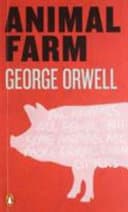
George Orwell (2004)
Genre
Politics / Fantasy / Science Fiction
Reading Time
90 min
Key Themes
See below
Sign in to track this book
A farm animals' rebellion against humans turns into a pig-led dictatorship, showing how power corrupts and revolutionary ideals are betrayed.
At Manor Farm, animals gather to hear old Major, a respected boar, tell about a dream and a vision of a world without humans. He says humans exploit animals, taking their labor without giving anything back. Major introduces 'Beasts of England' as an anthem for their future revolution. He says 'All animals are equal.' He urges them to overthrow Mr. Jones, their careless farmer, and create a society where animals rule themselves. Major dies shortly after this speech, leaving the other animals, especially the pigs, to plan the revolution.
Inspired by Old Major, the animals, led by pigs Snowball and Napoleon, successfully revolt against Mr. Jones. One evening, Jones forgets to feed them and tries to whip them, starting the uprising. The animals drive Jones and his men off the farm. They destroy human symbols like whips and harnesses. They rename the farm 'Animal Farm.' They create the Seven Commandments, painted on the barn wall. The most important ones are 'Whatever goes upon two legs is an enemy' and 'All animals are equal.' The pigs, being the smartest, take charge of farm work and educating the others.
In the early days, Animal Farm does well. The animals work harder than before, motivated by their freedom, and have a good harvest. Boxer, the strong carthorse, becomes an excellent worker, saying 'I will work harder.' Snowball organizes committees for animal welfare and education, including a literacy class where most animals learn to read some words. However, the pigs, especially Napoleon and Snowball, quickly become leaders, keeping the milk and apples for themselves. They say it is for their brainwork. This starts their shift from the initial idea of equality.
Snowball and Napoleon's disagreements grow, especially about building a windmill for electricity and easier labor. Snowball strongly supports the windmill, showing detailed plans. Napoleon shows he does not care for it. During a main debate about the windmill, Napoleon sends out nine fierce dogs he had secretly raised. They chase Snowball off the farm. With Snowball gone, Napoleon says he is the only leader. He stops the Sunday morning meetings and debates. He announces that a special committee of pigs will make all decisions, ending the animals' say in things.
After Snowball leaves, Napoleon immediately says the windmill will be built. He claims it was his idea and Snowball just stole his plans. Squealer, Napoleon's minister of propaganda, convinces the other animals of this lie. He twists facts and calls Snowball a traitor. The animals, especially Boxer, work very hard to build the windmill, facing many problems. When a storm destroys the half-built windmill, Napoleon blames Snowball. He says Snowball is a saboteur working with Mr. Frederick and Mr. Pilkington, the neighboring farmers. This event further supports Napoleon's story of an outside enemy and justifies more control.
As food runs low and conditions worsen, Napoleon becomes more paranoid and cruel. He holds public confessions and executions. Various animals, including pigs, hens, and sheep, are forced to confess to crimes they supposedly did under Snowball's influence or for human farmers. Napoleon's dogs brutally kill these 'traitors' in front of the horrified animals. These killings create fear and remove any possible opposition, giving Napoleon complete power. The song 'Beasts of England' is banned. A new song praising Napoleon replaces it, as the old song is deemed unnecessary now that the revolution is 'finished.'
Despite the initial rule against trading with humans, Napoleon announces that Animal Farm will start trading with neighboring farms for needed supplies, especially for the windmill. Mr. Whymper, a human lawyer, acts as a go-between. The animals are uneasy, but Squealer manipulates them. He says no such rule ever existed or that it was misunderstood. Napoleon sells timber to Mr. Frederick, a cruel farmer. Frederick pays with fake money. This betrayal leads to a violent attack on Animal Farm. The windmill is destroyed a second time, and several animals are killed or hurt.
Boxer, the most loyal and hardworking animal, collapses from overwork and injury. The pigs promise to send him to a veterinary hospital. However, Benjamin, the cynical donkey, reads the side of the van that takes Boxer away. He realizes it belongs to a knacker, a horse slaughterer. Despite Benjamin's frantic warnings, the other animals are too late. Squealer quickly invents a story that Boxer died peacefully in the hospital, getting the best care. Meanwhile, Squealer repeatedly changes the Seven Commandments on the barn wall to justify the pigs' actions. For example, 'No animal shall drink alcohol' becomes 'No animal shall drink alcohol TO EXCESS.'
Years pass, and most animals who remembered the Rebellion have died. The farm is richer, but only the pigs and dogs benefit. They live in luxury while other animals remain overworked and underfed. The pigs openly adopt human customs: they walk on two legs, carry whips, wear clothes, and drink alcohol. Squealer teaches the sheep to chant 'Four legs good, two legs BETTER!' The last commandment on the barn wall changes to one principle: 'ALL ANIMALS ARE EQUAL BUT SOME ANIMALS ARE MORE EQUAL THAN OTHERS.' This final change shows the complete corruption of the revolution's first ideals.
The novel ends with a dinner party at Animal Farm. Napoleon hosts human farmers from neighboring properties. He announces that Animal Farm will go back to its original name, Manor Farm. He says the animals will no longer call each other 'Comrade.' He praises the human farmers for their efficiency and says he stands with them, especially in their struggle against their own lower classes. The other animals, led by Benjamin, look through the farmhouse window. They watch the pigs and humans arguing over a card game, unable to tell them apart. The pigs have become identical to the oppressive humans they replaced. This signifies the revolution's complete failure to achieve equality and freedom.
The Antagonist
Transforms from a revolutionary leader into a brutal, totalitarian dictator, embodying the very tyranny he fought against.
The Supporting
Begins as a revolutionary leader, is unjustly exiled, and is then demonized as a traitor by the new regime.
The Supporting
Remains steadfastly loyal and hardworking, only to be betrayed and sent to the knacker's yard when he is no longer useful.
The Supporting
Evolves from a convincing speaker into a master of deceit, becoming the voice of Napoleon's oppressive regime.
The Supporting
Initiates the revolutionary fervor but dies before witnessing the revolution's implementation or its ultimate corruption.
The Supporting
Remains largely unchanged in his cynical outlook, serving as a quiet witness to the revolution's downfall.
The Supporting
Witnesses the gradual corruption of the farm with growing unease but remains unable to prevent it.
The Antagonist
Driven from his farm, he attempts to regain control but ultimately fails, serving as a symbolic representation of the old regime.
The Mentioned
Flees after the rebellion, returns later as a tolerated figure, symbolizing the regime's eventual embrace of religion as a means of control.
The main theme looks at how revolutionary ideals, at first good and fair, can be corrupted by those who gain power. Old Major's vision of 'All animals are equal' is slowly taken apart by Napoleon and the pigs. They use the animals' ignorance and fear to create a totalitarian government. The slow changes to the Seven Commandments, the pigs' growing privileges, and their final change into human-like rulers clearly show how absolute power corrupts completely, turning liberators into rulers.
““All animals are equal, but some animals are more equal than others.””
Orwell shows how propaganda helps maintain totalitarian control. Squealer, Napoleon's speaker, skillfully uses words, fear, and rewriting history to control what the animals believe. He convinces them Snowball is a traitor, that Napoleon's decisions are always right, and that their living conditions are getting better, even when facts show otherwise. The constant changes to the Seven Commandments and blaming Snowball for all failures show how a government can twist truth to justify its actions and stop disagreement, keeping people unaware and obedient.
““Surely, comrades, you do not want Jones back?””
The novel shows the dangers of an uneducated and unquestioning population. Most animals, because they are not smart, cannot read, or are blindly loyal (like Boxer), cannot see the pigs' lies. They accept Squealer's explanations without question. They forget the original commandments, and fear easily sways them. Benjamin, the cynical donkey, is the smart one who sees the truth but chooses to do nothing, which helps the government succeed. This theme shows how the oppressed can accidentally help their own control by not thinking critically or acting together.
““Four legs good, two legs bad.””
Despite the first promise of equality, Animal Farm quickly develops a new class system. The pigs become the smart elite, keeping privileges and resources for themselves. The other animals, especially the horses and hens, become the working class. The pigs live well, eat the best food, and avoid manual labor, while the working animals labor hard and suffer. This mirrors human society's class structures, showing how even a revolutionary movement can recreate the very systems of exploitation it tried to end.
““The animals worked like slaves. But they were happy in their work; they grudged no effort or sacrifice, well aware that everything that they did was for the benefit of themselves and those of their kind, not for a pack of idle, thieving human beings.””
Animal Farm is an allegory for how totalitarian states rise and work. It shows key features: a powerful leader (Napoleon), a propaganda system (Squealer), a secret police (the dogs), the use of scapegoats (Snowball), killings, rewriting history, and stopping individual thought. The farm's change from a freeing revolution to a harsh dictatorship, where individual freedom is crushed and the government controls everything, warns about totalitarianism's methods and dangers.
““No animal must ever tyrannise over his own kind. Weak or strong, clever or simple, we are all brothers. No animal must ever kill any other animal. All animals are equal.””
The entire narrative acts as a symbolic representation of the Russian Revolution and the rise of the Soviet Union.
Animal Farm functions as an extended allegory, where characters and events directly parallel historical figures and occurrences of the Russian Revolution and the subsequent Stalinist era. Mr. Jones represents Tsar Nicholas II, Old Major is a blend of Karl Marx and Lenin, Napoleon symbolizes Joseph Stalin, Snowball embodies Leon Trotsky, and the dogs represent the secret police (KGB). The rebellion, the building of the windmill, and the purges all correspond to specific historical events, allowing Orwell to critique totalitarianism through a seemingly simple animal fable.
A moral tale featuring anthropomorphic animals to convey a political message.
The story is structured as a fable, using animals with human characteristics and speech to deliver a clear moral and political lesson. By detaching the narrative from specific human characters, Orwell creates a universal commentary on power, corruption, and oppression that transcends its immediate historical context. The animal characters simplify complex political dynamics, making the underlying critique of totalitarianism accessible and impactful, while also giving the story a timeless quality.
The use of humor, irony, or exaggeration to expose and criticize political folly and vice.
Orwell employs satire throughout the novel to expose the hypocrisy and brutality of totalitarian regimes. The pigs' gradual adoption of human vices, the absurdity of Squealer's propaganda, and the ultimate transformation of the farm's motto to 'All animals are equal, but some animals are more equal than others' are all examples of biting satire. This device allows Orwell to make his political critique both entertaining and devastatingly effective, highlighting the inherent contradictions and moral bankruptcy of the system he condemns.
Objects and characters representing broader ideas or historical entities.
Numerous elements in Animal Farm carry symbolic weight. The 'Seven Commandments' symbolize the initial revolutionary ideals and constitution, which are progressively eroded. The 'windmill' represents the grand industrial projects and economic plans of the Soviet Union, often built at great cost to the populace. 'Sugarcandy Mountain' symbolizes the promise of an afterlife or religious solace, used to pacify the exploited. The 'farmhouse' symbolizes the seat of power and luxury, forbidden to the common animals but eventually occupied by the pigs, signifying their complete corruption.
“All animals are equal, but some animals are more equal than others.”
— The final commandment after the pigs fully adopt human behaviors.
“Four legs good, two legs bad.”
— A simplified slogan taught by the pigs to the other animals.
“Man is the only creature that consumes without producing.”
— Old Major's speech describing human exploitation.
“The creatures outside looked from pig to man, and from man to pig, and from pig to man again; but already it was impossible to say which was which.”
— The final scene showing the pigs' complete transformation.
“I will work harder.”
— Boxer's personal motto, repeated as he is exploited.
“No one believes more firmly than Comrade Napoleon that all animals are equal. He would be only too happy to let you make your decisions for yourselves. But sometimes you might make the wrong decisions, comrades, and then where should we be?”
— Squealer justifying Napoleon's authoritarian rule.
“Windmill or no windmill, he said, life would go on as it had always gone on—that is, badly.”
— Benjamin's cynical view of the farm's situation.
“The only good human being is a dead one.”
— Snowball's militant stance during the rebellion.
“If she could have spoken her thoughts, it would have been to say that this was not what they had aimed at when they had set themselves years ago to work for the overthrow of the human race.”
— Clover reflecting on the farm's decline.
“Donkeys live a long time. None of you has ever seen a dead donkey.”
— Benjamin's response to the animals' concerns.
“The truest happiness, he said, lay in working hard and living frugally.”
— Squealer promoting the pigs' ideology to the animals.
“It was a pig walking on his hind legs.”
— The shocking moment when the pigs start behaving like humans.
“Man serves the interests of no creature except himself.”
— Old Major's indictment of human selfishness.
“Napoleon is always right.”
— Boxer's addition to his personal motto, showing blind loyalty.
Ready to see how well you understood this book? Take our interactive quiz with 10 questions.
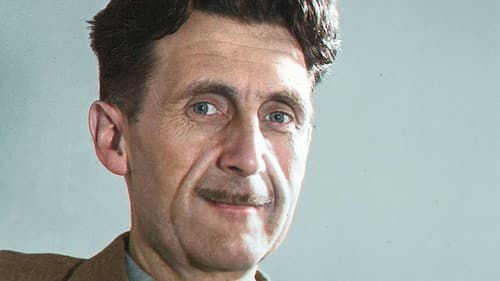
Eric Arthur Blair, better known by his pen name George Orwell, was an English novelist, essayist, journalist, and critic. His work is characterised by lucid prose, social criticism, opposition to totalitarianism, and support of democratic socialism.

Brett Casper
5.0
Dirk Uffelmann
4.7
Winston S. Churchill
4.5
Chimamanda Ngozi Adichie
4.5
Will Durant
4.4
Thomas Sowell
4.4
W.E.B. Du Bois
4.3
Alan Moore
4.3