“All animals are equal, but some animals are more equal than others.”
— From Animal Farm, describing the pigs' hypocrisy after they become indistinguishable from humans.

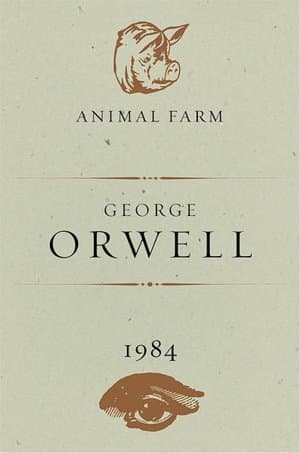
George Orwell (1945)
Genre
Politics / Fantasy / Science Fiction / Philosophy
Reading Time
450 min
Key Themes
See below
Sign in to track this book
A pig's revolution becomes a tyranny, and Big Brother's gaze crushes freedom, showing the chilling depths of totalitarian control.
On Manor Farm, the animals suffer under the cruel and neglectful farmer, Mr. Jones. One night, the old boar, Old Major, gathers the animals. He shares a dream of a world free from human tyranny, where animals live equally. He teaches them 'Beasts of England,' a revolutionary song, and urges them to rebel. After Old Major's death, the pigs Napoleon and Snowball lead the animals in a rebellion against Mr. Jones when he forgets to feed them. They drive him off the farm, destroy symbols of human oppression, and rename the property 'Animal Farm.' They establish the Seven Commandments of Animalism as their rules.
After the rebellion, the animals work hard to harvest crops, achieving a record yield. Snowball, an articulate and idealistic pig, organizes the farm, sets up committees, and tries to teach the animals to read and write. Napoleon, a cunning and ruthless pig, shows little interest in Snowball's committees. Instead, he secretly educates a litter of nine puppies. The Seven Commandments are painted on the barn wall, with 'All animals are equal' as the main rule. However, the pigs quickly claim intellectual superiority, taking the milk and apples for themselves, saying it is needed for their brainwork.
The differences between Snowball and Napoleon grow, especially over building a windmill. Snowball passionately supports it as a way to mechanize the farm and improve life. Napoleon strongly opposes it. During a debate about the windmill's future, Napoleon releases the nine dogs he trained. They violently chase Snowball off the farm. With Snowball gone, Napoleon ends debates and creates a pig-only committee to run the farm, with himself as the leader. He immediately announces the windmill will be built, claiming it was his idea all along. Squealer, his propagandist, convinces the other animals.
The animals start the hard task of building the windmill. They work longer hours and face severe food shortages, all while being told it is for Animal Farm's good. Boxer, the loyal and hardworking cart-horse, inspires everyone, always saying 'I will work harder' and 'Napoleon is always right.' Napoleon begins trading with human farmers, which violates the original commandments, and moves into the farmhouse. Squealer constantly manipulates the animals' memories and changes the Seven Commandments to justify the pigs' growing privileges and actions, such as sleeping in beds and drinking alcohol. He blames all problems on the absent Snowball.
After years of hard work, the windmill is finished, but the animals' lives have not improved; they are worse. Boxer, weakened by overwork, collapses while hauling stone. Napoleon promises to send him to a veterinary hospital, but the animals realize too late that Boxer is being sent to the knackers. Squealer quickly explains away the incident with lies. The pigs grow fatter and more human-like. They walk on two legs, carry whips, and wear clothes. The Seven Commandments are replaced by one rule: 'All Animals Are Equal, But Some Animals Are More Equal Than Others.' In the final scene, the pigs host a dinner with human farmers. The other animals, looking from pig to man and from man to pig, cannot tell them apart, showing the revolution's complete corruption.
Winston Smith, a low-ranking member of the Outer Party in Airstrip One (formerly London), lives in a society monitored by the Party and Big Brother. He works at the Ministry of Truth, changing historical records to fit the Party's current story. Winston is deeply unhappy with the Party's control over truth, history, and individual thought. He starts a secret diary, an act of thoughtcrime punishable by death. He remembers a time before the Party's absolute rule and wants to understand and resist the regime. He feels a mix of fascination and fear towards O'Brien, an Inner Party member he suspects might share his rebellious thoughts.
Winston's life changes when he gets a note from Julia, a young woman from the Fiction Department, saying 'I love you.' They begin a secret affair, meeting in hidden places, mainly a rented room above Mr. Charrington's antique shop in the prole district. Julia rebels against the Party's rules on personal freedom and sex, but she is more interested in personal satisfaction than large-scale political revolution. Their relationship gives Winston great joy and a sense of shared humanity. This strengthens his resolve to fight the Party, even though they know discovery means torture and death.
Winston believes O'Brien is part of the legendary Brotherhood, an underground resistance movement against the Party, so he approaches him. O'Brien welcomes Winston and Julia into what seems to be the Brotherhood. He gives Winston a copy of 'The Theory and Practice of Oligarchical Collectivism,' supposedly written by Emmanuel Goldstein, the Party's enemy. This book explains the true nature of the Party's power and perpetual war. However, their secret activities and meetings in Mr. Charrington's room are discovered. Mr. Charrington reveals himself to be a member of the Thought Police, and Winston and Julia are arrested and taken to the Ministry of Love.
In the Ministry of Love, Winston is subjected to physical and psychological torture, overseen by O'Brien. O'Brien reveals he is a loyal Party member and a master interrogator. He explains that the Party's only goal is power, and Winston must be 'cured' of his rebellious thoughts. Winston confesses to many crimes, but his spirit remains unbroken as long as he loves Julia and believes in objective truth. He endures beatings, starvation, and sleep deprivation, slowly losing his sense of self and reality, yet he holds onto some resistance.
Winston is brought to Room 101, the ultimate torture chamber, where people face their worst fears. For Winston, this is rats. As a cage of starving rats is brought near his face, he screams, begging O'Brien to torture Julia instead of him. This act of betrayal, sacrificing his love for Julia to save himself, shatters his last bit of resistance and humanity. After his 're-education,' Winston is released, a hollow person, completely brainwashed. He sits in the Chestnut Tree Cafe, a broken man, having learned to love Big Brother, his spirit crushed.
The Protagonist
Winston moves from quiet intellectual rebellion to active personal and political defiance, only to be completely broken and re-educated into loving Big Brother.
The Supporting
Julia's initial confident, pragmatic rebellion is ultimately shattered by the Party's psychological torture, leading her to betray Winston.
The Antagonist
O'Brien remains an unyielding, consistent enforcer of the Party's will, serving as the instrument of Winston's destruction.
The Antagonist
Big Brother remains a static, symbolic figure of absolute power and surveillance throughout the narrative.
The Antagonist
Napoleon transforms from a co-leader of the revolution into a tyrannical dictator, ultimately becoming indistinguishable from the human oppressors the animals overthrew.
The Supporting
Snowball is a driving force in the early revolution, only to be violently ousted and continuously slandered by Napoleon's regime.
The Supporting
Boxer's unwavering dedication and loyalty are exploited to the point of his tragic death, highlighting the regime's ultimate betrayal of its most faithful followers.
The Supporting
Squealer consistently serves as Napoleon's voice, evolving to justify every increasing betrayal of Animalism and becoming a master of deception.
The Supporting
Old Major's vision initiates the revolution, but his ideals are ultimately corrupted and betrayed by those who claim to follow him.
The Antagonist
Mr. Jones is driven from his farm, symbolizing the overthrow of the old regime, and ultimately fails to regain control.
Both novels show the oppressive nature of totalitarian regimes. In '1984,' the Party, led by Big Brother, controls every part of life: thought (Thought Police), history (Ministry of Truth), and relationships. It uses constant surveillance and fear. In 'Animal Farm,' Napoleon's regime changes from an idealistic rebellion into a brutal dictatorship. The pigs oppress other animals with force, propaganda, and the erosion of their rights. Both works show how power, once held, can crush individual liberty and maintain control through terror and manipulation.
“If you want a picture of the future, imagine a boot stamping on a human face—for ever.”
A main theme in both books is how totalitarian states control reality by manipulating truth and history. In '1984,' Winston's job at the Ministry of Truth involves constantly rewriting historical documents, news articles, and statistics to match the Party's current story, ensuring the past serves the present. The Party also uses 'doublethink' to make people accept contradictory ideas. Similarly, in 'Animal Farm,' Squealer continually changes the Seven Commandments and revises the animals' memories of events, like Snowball's role in the Battle of the Cowshed or the pigs' early sacrifices, to justify Napoleon's actions and keep the idea of a fair society alive.
“Who controls the past controls the future: who controls the present controls the past.”
'Animal Farm' is an allegory for the corruption of revolutionary ideals. The initial vision of Animalism, based on equality and freedom from human oppression, is systematically twisted by the pigs, especially Napoleon. The Seven Commandments are slowly changed until they are meaningless, ending with 'All Animals Are Equal, But Some Animals Are More Equal Than Others.' The dream of a utopian society becomes a tyranny worse than Mr. Jones's. In '1984,' though not a direct revolution, the Party's origins are hinted at as a movement that promised a better future but delivered perpetual war and absolute control. This shows how noble goals can be twisted into tools of oppression.
“All animals are equal, but some animals are more equal than others.”
Both novels highlight the role of language and propaganda in maintaining totalitarian control. In '1984,' Newspeak, the Party's engineered language, aims to remove words linked to rebellion or independent thought, making such concepts unthinkable. Slogans like 'WAR IS PEACE, FREEDOM IS SLAVERY, IGNORANCE IS STRENGTH' are everywhere. In 'Animal Farm,' Squealer is a master of propaganda, using persuasive but deceptive words to convince the other animals, justify the pigs' privileges, and demonize Snowball. He uses fear (the return of Jones) and appeals to loyalty ('Napoleon is always right') to manipulate the animals, showing how language can be used to control perception and reality.
“The greatest enemy of truth is very often not the lie—deliberate, contrived, and dishonest—but the myth—persistent, persuasive, and unrealistic.”
Both books explore how totalitarian rule systematically destroys individual identity and personal freedom. In '1984,' Winston struggles to keep his inner self, his memories, and his ability for independent thought and emotion, which the Party wants to erase. Love, sex, and family bonds are controlled or suppressed. In 'Animal Farm,' the animals lose their freedom to speak, question, and even remember the revolution's original ideals. They become a collective, exploited workforce, their individuality lost to the state's demands. Both stories show the psychological cost of living without personal autonomy.
“Freedom is the freedom to say that two plus two make four. If that is granted, all else follows.”
Animal Farm as a symbolic representation of the Russian Revolution and the rise of Stalinism.
'Animal Farm' functions as a political allegory, where the characters and events directly parallel historical figures and occurrences of the Russian Revolution and the early Soviet Union. Mr. Jones represents Tsar Nicholas II, Old Major is Karl Marx/Lenin, Napoleon is Joseph Stalin, Snowball is Leon Trotsky, and Boxer symbolizes the exploited working class. The farm's transformation from a revolutionary ideal to a totalitarian state mirrors the corruption of the Soviet communist experiment, allowing Orwell to critique real-world political developments through a simplified, animal fable format.
The creation of a grim, oppressive future world to critique societal dangers.
'1984' is a seminal work of dystopian fiction, presenting a terrifying future society (Oceania) characterized by extreme totalitarianism, constant surveillance (telescreens), psychological manipulation, and perpetual war. This bleak setting serves as a warning against the dangers of unchecked government power, technological control, and the erosion of individual freedoms. The grim atmosphere, impoverished living conditions, and ever-present threat of the Thought Police amplify the sense of fear and hopelessness that pervades Winston's world, making the Party's control feel absolute and inescapable.
Objects and figures imbued with deeper political and social meaning.
Both novels utilize powerful symbols. In '1984,' Big Brother is not just a leader but a ubiquitous symbol of the Party's omnipresent surveillance, unquestionable authority, and psychological control. His image reinforces the idea that 'BIG BROTHER IS WATCHING YOU,' inducing fear and conformity. In 'Animal Farm,' the windmill initially symbolizes the promise of a better, easier life through hard work and technological advancement. However, as it is built and rebuilt under increasingly harsh conditions and ultimately benefits only the pigs, it becomes a symbol of the animals' endless, exploited labor and the broken promises of the revolution, a monument to their enslavement rather than their liberation.
The systematic breaking down of an individual's will and identity.
In '1984,' the Ministry of Love employs sophisticated psychological torture and brainwashing techniques to break Winston's spirit and force him to conform to Party ideology. This goes beyond physical pain, aiming to alter his thoughts, memories, and even his perception of reality, culminating in Room 101 where he is confronted with his deepest fear, leading him to betray Julia. This device illustrates the Party's ultimate goal: not just obedience, but complete ideological conversion and the annihilation of independent thought, demonstrating the terrifying power of a totalitarian state over the human mind.
The use of repetitive, manipulative language to control public opinion.
Both novels heavily rely on propaganda and catchy, misleading slogans to shape public perception and maintain control. In 'Animal Farm,' Squealer's constant revision of history, fear-mongering about Mr. Jones's return, and the repetitive 'Four legs good, two legs bad' (later 'Four legs good, two legs better!') are crucial in manipulating the less intelligent animals. In '1984,' the Party's slogans like 'WAR IS PEACE, FREEDOM IS SLAVERY, IGNORANCE IS STRENGTH' and 'BIG BROTHER IS WATCHING YOU' are ubiquitous, designed to instill contradictory beliefs and unquestioning loyalty, demonstrating how simplified, repeated messages can override critical thinking and shape collective consciousness.
“All animals are equal, but some animals are more equal than others.”
— From Animal Farm, describing the pigs' hypocrisy after they become indistinguishable from humans.
“War is peace. Freedom is slavery. Ignorance is strength.”
— From 1984, the three slogans of the Party that illustrate its use of doublethink.
“Four legs good, two legs bad.”
— From Animal Farm, a simplified maxim used by the animals to unite against humans.
“Who controls the past controls the future. Who controls the present controls the past.”
— From 1984, explaining the Party's manipulation of history to maintain power.
“Man is the only creature that consumes without producing.”
— From Animal Farm, Old Major's speech criticizing human exploitation of animals.
“If you want a picture of the future, imagine a boot stamping on a human face—forever.”
— From 1984, O'Brien's description of the Party's ultimate goal of perpetual tyranny.
“The creatures outside looked from pig to man, and from man to pig, and from pig to man again; but already it was impossible to say which was which.”
— From Animal Farm, the final line showing the pigs' complete corruption and betrayal of the revolution.
“Big Brother is watching you.”
— From 1984, the omnipresent slogan reminding citizens of the Party's surveillance.
“No one believes more firmly than Comrade Napoleon that all animals are equal. He would be only too happy to let you make your decisions for yourselves. But sometimes you might make the wrong decisions, comrades, and then where should we be?”
— From Animal Farm, Squealer justifying Napoleon's authoritarian rule to the other animals.
“Doublethink means the power of holding two contradictory beliefs in one's mind simultaneously, and accepting both of them.”
— From 1984, defining the mental manipulation required to accept the Party's lies.
“The only good human being is a dead one.”
— From Animal Farm, a sentiment expressed by the animals during their rebellion.
“In the end the Party would announce that two and two made five, and you would have to believe it.”
— From 1984, illustrating the Party's control over reality and truth.
“I do not understand why we are in such a hurry. What we have we can hold.”
— From Animal Farm, Boxer's simple, loyal response to the pigs' demands for more work.
“The past was erased, the erasure was forgotten, the lie became truth.”
— From 1984, describing how the Party constantly rewrites history to suit its needs.
Ready to see how well you understood this book? Take our interactive quiz with 10 questions.
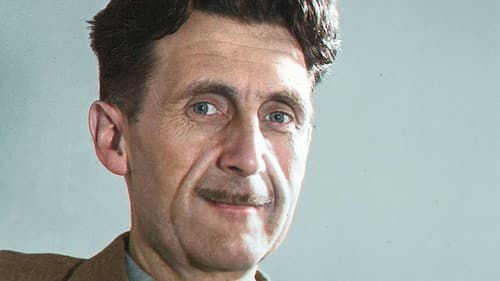
Eric Arthur Blair, better known by his pen name George Orwell, was an English novelist, essayist, journalist, and critic. His work is characterised by lucid prose, social criticism, opposition to totalitarianism, and support of democratic socialism.

Brett Casper
5.0
Dirk Uffelmann
4.7
Winston S. Churchill
4.5
Chimamanda Ngozi Adichie
4.5
Will Durant
4.4
Thomas Sowell
4.4
W.E.B. Du Bois
4.3
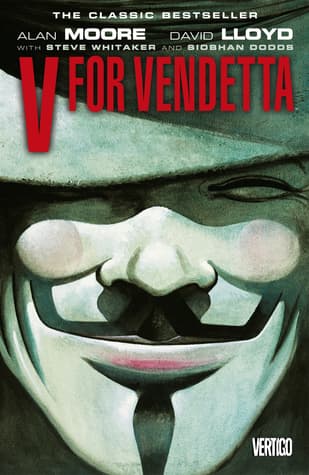
Alan Moore
4.3