BookBrief
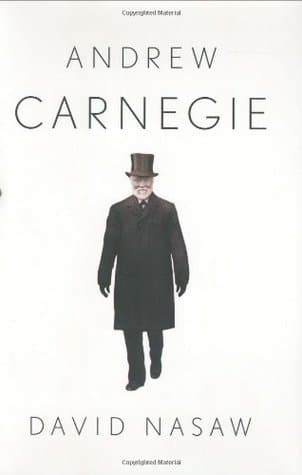
Andrew Carnegie cover
Archivist's Choice

Andrew Carnegie

David Nasaw (2006)

Genre

Business / Biography / History / Economics / Finance

Reading Time

20-25 hours

Key Themes

See below

Track Your Reading

Sign in to track this book

This biography explores the life of Andrew Carnegie, from his start in Scotland to his rise as an American steel magnate, detailing how he built and then gave away the world's largest fortune.

Core Idea

David Nasaw's "Andrew Carnegie" tells the story of one of America's most influential industrialists. It argues that Carnegie's success came from ambition, smart business strategies like vertical integration and tough competition, and a dedication to learning. The book shows how Carnegie, despite his humble beginnings, created an empire. Then, driven by his beliefs, he spent his later life giving away his wealth. This was his way of balancing the money he made through harsh industrial practices with a sense of social duty. Nasaw highlights the many sides of Carnegie. He was not just an industry leader but also a complex person shaped by Scottish radicalism, a clever negotiator, a family man, an anti-war activist, and a supporter of education and libraries. The biography looks at the contradictions in his life: he created great wealth but also promoted the 'Gospel of Wealth,' competed fiercely but sought global peace, and was a self-made man who struggled with the pressures of his fortune.
Reading time
20-25 hours
Difficulty
Medium
✓ Read this if...
You are fascinated by the Gilded Age, the rise of American industry, the lives of self-made tycoons, or the history and philosophy of modern philanthropy. This is also for those who appreciate comprehensive, well-researched historical biographies.
✗ Skip this if...
You prefer concise narratives over detailed, exhaustive biographies, or if you are looking for a quick overview of Carnegie's life rather than a deep dive into his business practices, personal philosophy, and the socio-economic context of his era.

Core idea

The central argument and framework that powers the entire book.

David Nasaw's "Andrew Carnegie" tells the story of one of America's most influential industrialists. It argues that Carnegie's success came from ambition, smart business strategies like vertical integration and tough competition, and a dedication to learning. The book shows how Carnegie, despite his humble beginnings, created an empire. Then, driven by his beliefs, he spent his later life giving away his wealth. This was his way of balancing the money he made through harsh industrial practices with a sense of social duty.

Nasaw highlights the many sides of Carnegie. He was not just an industry leader but also a complex person shaped by Scottish radicalism, a clever negotiator, a family man, an anti-war activist, and a supporter of education and libraries. The biography looks at the contradictions in his life: he created great wealth but also promoted the 'Gospel of Wealth,' competed fiercely but sought global peace, and was a self-made man who struggled with the pressures of his fortune.

At a glance

Reading time

20-25 hours

Difficulty

Medium

Read this if...

You are fascinated by the Gilded Age, the rise of American industry, the lives of self-made tycoons, or the history and philosophy of modern philanthropy. This is also for those who appreciate comprehensive, well-researched historical biographies.

Skip this if...

You prefer concise narratives over detailed, exhaustive biographies, or if you are looking for a quick overview of Carnegie's life rather than a deep dive into his business practices, personal philosophy, and the socio-economic context of his era.

Key Takeaways

1

From Poverty to Power: The Unyielding Drive of a Self-Made Man

Carnegie's relentless ambition and early experiences forged a path from destitution to industrial dominance.

Quote

The secret of success is not to do what you like but to like what you do.

Andrew Carnegie's path from a poor Scottish weaver's son to the world's richest man shows an unusual drive and a sharp sense of opportunity. Arriving in America at thirteen, he quickly adopted values of self-improvement and hard work. His first jobs, from bobbin boy to telegraph messenger, were chances to learn and build connections. He learned about new industries, watched successful men, and formed relationships that helped him later. This time taught him to value education (though self-taught) and the power of industry, setting the...

Supporting evidence

Nasaw details Carnegie's arrival in Allegheny, Pennsylvania, and his rapid ascent through various roles, highlighting his initiative in learning telegraphy and his key position as a personal telegrapher and secretary to Thomas A. Scott of the Pennsylvania Railroad, which provided invaluable insights into the burgeoning railroad industry.

Apply this

Cultivate a 'student of life' mindset, viewing every role and interaction as an opportunity to learn, network, and identify future trends. Don't merely perform tasks; understand the underlying systems and cultivate relationships with influential figures.

rags-to-richesself-made-manindustrial-revolutionentrepreneurship
2

Strategic Vertical Integration: Mastering the Supply Chain

Carnegie's genius lay in controlling every aspect of steel production, from raw materials to distribution.

Quote

Put all your eggs in one basket, and then watch that basket.

Carnegie's success in steel was not just about making steel, but making it more efficiently and cheaply than anyone else. He was a leader in vertical integration, a strategy that meant owning and controlling every step of production. This included coal mines, iron ore fields, coke ovens, railroads, and even transport ships. By not relying on outside suppliers, Carnegie Steel cut costs, kept quality consistent, and gained a major edge over competitors. This foresight helped him manage economic downturns and quickly increase production ...

Supporting evidence

Nasaw meticulously describes Carnegie's acquisition of H.C. Frick Coke Company, his investments in iron ore mines in the Lake Superior region, and his control over transportation networks, all designed to minimize external costs and dependencies.

Apply this

Analyze your business or project's entire value chain. Identify areas where external dependencies create vulnerabilities or increase costs. Explore opportunities to integrate key components internally to gain control and efficiency.

vertical-integrationsupply-chain-managementindustrial-strategycost-efficiency
3

The Power of Partnership and Ruthless Competition

Carnegie excelled at forming strategic alliances while maintaining a fierce, often brutal, competitive edge.

Quote

The man who acquires the ability to take full possession of his own mind may take possession of anything else to which he is justly entitled.

Carnegie's business approach combined collaboration with fierce competition. He knew the value of working with skilled partners, like Henry Clay Frick, delegating tasks, and rewarding good performance. These partnerships were important for managing the large Carnegie Steel empire. However, when it came to market control, Carnegie was ruthless. He would cut prices, find new ways to gain an advantage, and even confront workers in disputes, as seen in the Homestead Strike. This dual method allowed him to use talent and money effectively ...

Supporting evidence

The book details the fraught but ultimately productive partnership with Henry Clay Frick, who managed the coke operations, as well as the intense price wars Carnegie engaged in with other steel producers. The Homestead Strike of 1892 serves as a stark example of his uncompromising stance against labor demands.

Apply this

Identify and cultivate strong partnerships that complement your skills and resources. Simultaneously, develop a clear, assertive competitive strategy to differentiate yourself and protect your market position.

business-partnershipscompetitive-advantagelabor-relationsindustrial-barons
4

The Gospel of Wealth: Philanthropy as a Moral Obligation

Carnegie believed the wealthy had a duty to use their fortunes for public good, not personal extravagance.

Quote

The man who dies rich, dies disgraced.

Beyond his industrial skill, Carnegie is known for his views on philanthropy, which he wrote about in 'The Gospel of Wealth.' He believed it was fine to earn great wealth, but wrong to keep it for personal luxury or leave it to heirs. Instead, the wealthy were 'trustees' of their fortunes, expected to give away their extra money to help society during their lives. This was not just charity; it was planned giving meant to provide 'ladders upon which the aspiring can rise.' He funded libraries, universities, research centers, and peace ...

Supporting evidence

Nasaw explores the origins and impact of 'The Gospel of Wealth' and details Carnegie's systematic approach to giving, including the establishment of the Carnegie Corporation of New York, the Carnegie Endowment for International Peace, and the funding of over 2,500 public libraries worldwide.

Apply this

Consider how your accumulated resources, whether financial, intellectual, or social, can be strategically deployed to create lasting positive impact beyond personal gain. Think about investing in infrastructure that empowers others, rather than simply giving handouts.

philanthropygospel-of-wealthsocial-responsibilitylegacy-building
5

The Burden of Wealth: Solitude and Scrutiny

Carnegie's immense fortune brought not just power, but also isolation and intense public judgment.

Quote

The amassing of wealth is one of the worst species of idolatry.

Despite his public statements about the duties of wealth, Carnegie's life as the world's richest man had its own internal and external challenges. Making his fortune involved harsh business practices and labor conflicts, especially the Homestead Strike, which damaged his reputation and caused him personal distress. His vast wealth also brought constant public scrutiny, with every action and statement analyzed. This often made him feel isolated, as few could truly understand his position. Nasaw shows a man who, despite his grand giving...

Supporting evidence

The biography delves into Carnegie's personal correspondence and the public's reaction to the Homestead Strike, showing his deep regret and the lasting impact it had on his public image and personal conscience. His later years were marked by a determined effort to give away his fortune, partly as an atonement for the methods used to acquire it.

Apply this

Recognize that significant success, in any field, often comes with increased scrutiny and responsibility. Proactively consider the ethical implications of your actions and be prepared to face criticism, understanding that true legacy involves more than just accumulation.

wealth-managementpublic-imagemoral-dilemmaspersonal-sacrifice
6

Lifelong Learning: The Power of Self-Education

Carnegie's lack of formal schooling fueled a voracious appetite for knowledge and intellectual growth.

Quote

The man who dies rich, dies disgraced.

Andrew Carnegie had little formal education, but he was one of the most curious and well-read people of his time. This self-education was an active, lifelong effort that shaped his worldview, business plans, and charitable work. He read many books, debated with thinkers like Herbert Spencer, and befriended writers and intellectuals. This commitment to ongoing learning helped him adapt to changing industries, explain complex ideas, and imagine major societal improvements. It shows that education is not limited to schools but is a conti...

Supporting evidence

Nasaw highlights Carnegie's extensive personal library, his regular correspondence with prominent intellectuals, and his active participation in literary and philosophical discussions, demonstrating his commitment to self-improvement and intellectual development throughout his life.

Apply this

Prioritize continuous learning, regardless of formal qualifications. Actively seek out knowledge through reading, engaging with diverse perspectives, and cultivating intellectual friendships. View education as a lifelong journey, not a finite destination.

self-educationlifelong-learningintellectual-curiositypersonal-growth
7

The Anti-War Crusader: From Industrialist to Peacemaker

After building his fortune, Carnegie dedicated himself to preventing global conflict, believing war was the 'foulest blot' on humanity.

Quote

The greatest curse is war.

After building a huge fortune, Carnegie focused his energy and money on an ambitious goal: international peace. He saw war as an old, barbaric custom, a waste of human potential and resources, and morally wrong. His anti-war work was not just symbolic; he actively campaigned against American involvement in conflicts like the Spanish-American War and later lobbied presidents, prime ministers, and international groups for arbitration and disarmament. He founded organizations like the Carnegie Endowment for International Peace, putting m...

Supporting evidence

The book details Carnegie's extensive correspondence with political leaders, his public speeches against war, and the founding of the Carnegie Endowment for International Peace, outlining his concerted efforts to promote arbitration and prevent international conflict in the early 20th century.

Apply this

Identify a cause larger than yourself and dedicate a portion of your resources, time, or influence to its advancement. Consider how your skills and network can be leveraged for significant societal impact beyond your primary profession.

peace-activisminternational-relationsdisarmamentglobal-citizenship
8

The Art of the Exit: Knowing When to Sell

Carnegie's strategic sale of Carnegie Steel at its peak demonstrated unparalleled business acumen.

Quote

I should like to leave a sum of money to found a college for orphans of millionaires.

One of Carnegie's smartest business moves, and perhaps his biggest financial success, was selling Carnegie Steel to J.P. Morgan in 1901, which created U.S. Steel. This deal, valuing the company at an amazing $480 million (over $14 billion today), happened at the peak of the industrial boom and just before market changes and possible anti-trust reviews. Carnegie, seeing the right moment, got an extraordinary price, essentially cashing out at the height of his industrial empire. This move not only made him the richest man in the world b...

Supporting evidence

Nasaw provides a detailed account of the negotiations with J.P. Morgan, highlighting Carnegie's shrewd bargaining tactics and his understanding of the market's appetite for consolidation, leading to the creation of U.S. Steel and Carnegie's immense personal fortune.

Apply this

Develop a clear exit strategy for your ventures, whether it's a business, a project, or a career phase. Understand market cycles and be prepared to capitalize on peak opportunities, allowing you to transition to new endeavors or focus on legacy projects.

mergers-acquisitionsexit-strategymarket-timingbusiness-valuation
9

The Paradox of Progress: Wealth Creation and Social Cost

Carnegie's empire built modern America but often at the expense of worker welfare and ethical considerations.

Quote

The greatest good you can do for another is not just to share your riches but to reveal to him his own.

Carnegie's story clearly shows the contradictions of industrial progress. His steel empire helped build modern America's infrastructure—railroads, bridges, skyscrapers—and fundamentally changed the nation. However, this creation of immense wealth had significant social costs. The relentless pursuit of efficiency and profit often led to harsh working conditions, long hours, low pay, and brutal suppression of labor movements, most famously at Homestead. Nasaw does not ignore these conflicts, presenting Carnegie as a figure who, while tr...

Supporting evidence

The detailed accounts of the working conditions in Carnegie's mills, the low wages, and the violent suppression of the Homestead Strike starkly contrast with his later 'Gospel of Wealth' and his extensive philanthropic giving, highlighting the ethical dilemmas inherent in his business practices.

Apply this

When pursuing ambitious goals, critically evaluate the potential social and ethical costs. Strive for a balance between progress and human welfare, recognizing that short-term gains can have long-term societal repercussions that may ultimately tarnish your legacy.

industrial-capitalismlabor-rightssocial-justiceethical-leadership
10

The Enduring Power of Narrative: Shaping One's Own Story

Carnegie actively cultivated his public image and shaped the narrative of his life and legacy.

Quote

The older I get, the more I become convinced that the past is the best prophet of the future.

Andrew Carnegie was not only a leader in industry and philanthropy, but also skilled at managing his public image and story. From his early writings to his autobiography and 'The Gospel of Wealth,' he carefully created a public image of himself as the ultimate self-made man, the kind capitalist, and the enlightened giver. He understood the power of the press and actively used it to shape public opinion, often downplaying the harsher realities of his business. While Nasaw's biography offers a more balanced and critical view, it also sh...

Supporting evidence

Nasaw analyzes Carnegie's various writings, including his autobiography and essays, and his interactions with journalists and public figures, revealing how he strategically constructed his public persona and controlled the message surrounding his wealth and philanthropy.

Apply this

Be intentional about your personal and professional narrative. Actively communicate your values, achievements, and vision through various channels. Understand that your story is a powerful tool for influence and legacy, and it requires careful cultivation.

personal-brandinglegacy-planningpublic-relationsstorytelling

Critical analysis

Notable Quotes

The man who dies rich dies disgraced.

Carnegie's famous dictum on wealth distribution, reflecting his later philanthropic endeavors.

Put all your eggs in one basket and then watch that basket.

Carnegie's advice on focus and dedication in business, contrary to common diversification wisdom.

Pioneering don't pay.

His view on the risks of being the first to innovate, preferring to let others prove concepts before adopting them.

And here, in the midst of my work, I will stop and say to you, 'My heart is in the work.'

Reflecting his passionate engagement and commitment to his industrial pursuits.

The first man gets the oyster, the second man gets the shell.

Emphasizing the importance of being proactive and seizing opportunities quickly.

It is more difficult to give money away intelligently than to earn it in the first place.

Highlighting the challenges he faced in effectively distributing his vast fortune for the public good.

I resolved to stop accumulating and begin the higher work of distributing, and I did.

His pivotal decision to transition from a wealth accumulator to a philanthropist.

Take away my factories, my plants, take away my railroads, my ships, my money. Leave me my men and I will rebuild.

Underscoring his belief in human capital as the most valuable asset in business.

The problem of our age is the proper administration of wealth, so that the ties of brotherhood may still bind together the rich and the poor.

Carnegie's articulation of the social challenge posed by wealth inequality and the role of philanthropy.

The man who works for wages, and is the best of his class, is the man who is most likely to rise to the top.

His belief in meritocracy and the potential for upward mobility through hard work and skill.

All my life I have been a hero worshiper, and I confess that I have never been able to get rid of the habit.

Reflecting his admiration for great figures and his own aspirational nature.

The parent who leaves his son enormous wealth generally deadens the talents and energies of the son, and tempts him to lead a less useful and less worthy life.

Explaining his philosophy on not leaving vast inheritances to his children, believing it detrimental.

As I grow older I pay less attention to what men say. I just watch what they do.

A statement on his practical approach to evaluating character and intentions, focusing on actions over words.

Quiz

Test Your Knowledge

Ready to see how well you understood this book? Take our interactive quiz with 10 questions.

10
Questions
~5
Minutes
?
Best Score

Key Questions (FAQ)

Nasaw's biography provides a comprehensive and definitive account of Andrew Carnegie's life, from his humble Scottish origins to becoming the richest man in the world and his subsequent philanthropic endeavors. It delves into how he amassed his fortune, why he gave it away, and his passionate advocacy for international peace.

About the author

David Nasaw

David Nasaw is a distinguished historian and author, widely recognized for his insightful biographies of prominent American figures. His acclaimed work, 'Andrew Carnegie,' offers a comprehensive look at the life of the influential industrialist and philanthropist. Nasaw's rigorous research and engaging narrative style have earned him critical praise and a reputation for illuminating complex historical subjects.