“The most dangerous of all truths is that which is only half a truth.”
— Dr. Stockmann reflecting on the public's understanding.

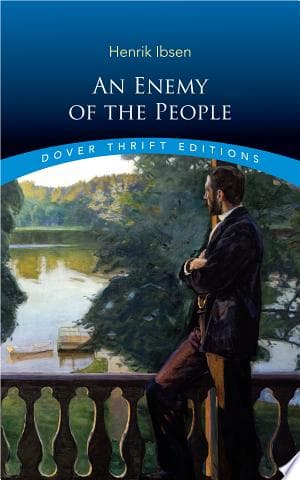
Henrik Ibsen (1999)
Genre
Politics
Reading Time
99 min
Key Themes
See below
Sign in to track this book
In a town where money matters more than truth, a doctor's discovery of contaminated baths turns him into a public enemy, showing the high cost of integrity when it goes against what everyone else wants.
“The most dangerous of all truths is that which is only half a truth.”
— Dr. Stockmann reflecting on the public's understanding.
“A party is like a sausage machine; it grinds up all sorts of heads, and out comes sausages, all alike.”
— Dr. Stockmann's cynical view of political parties.
“The strongest man in the world is he who stands most alone.”
— Dr. Stockmann's defiant declaration after being ostracized.
“You should never wear your best trousers when you go out to fight for freedom and truth.”
— Petra's practical advice to her father.
“The majority is never right.”
— Dr. Stockmann's controversial assertion about democratic decision-making.
“It is not the people who are in power who are the most dangerous, but those who are not.”
— Hovstad discussing the influence of different groups.
“What does it help to have the truth on your side if you haven't got the power?”
— Aslaksen's pragmatic questioning of Dr. Stockmann's approach.
“The people are like sheep; they follow the leader, no matter where he leads them.”
— Peter Stockmann's dismissive view of the public.
“The compact majority has the power, and they have the right to be wrong.”
— Dr. Stockmann's bitter observation on the majority's control.
“To be an enemy of the people means to be a friend of the truth.”
— Dr. Stockmann reinterpreting the title given to him.
“There are times when one must tell the world the truth, even if it brings down the whole town.”
— Dr. Stockmann's determination to expose the truth about the baths.
“The things we've inherited are not always blessings.”
— Petra considering the societal norms and institutions.
“The most dangerous thing in life is to be right when the world is wrong.”
— A general sentiment reflecting Dr. Stockmann's predicament.
“It's the duty of an enlightened man to clear away old prejudices.”
— Dr. Stockmann's belief in his role as a reformer.
Ready to see how well you understood this book? Take our interactive quiz with 10 questions.
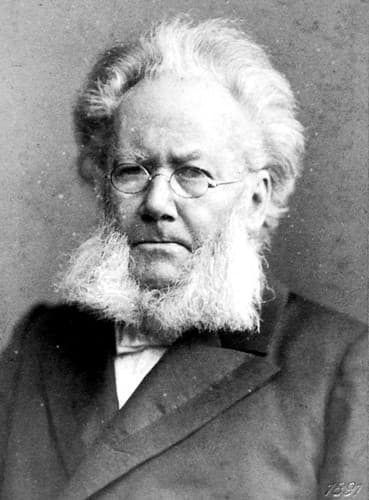
Henrik Johan Ibsen was a Norwegian playwright and theatre director. As one of the founders of modernism in theatre, Ibsen is often referred to as "the father of realism" and one of the most influential playwrights of his time. His major works include Brand, Peer Gynt, An Enemy of the People, Emperor and Galilean, A Doll's House, Hedda Gabler, Ghosts, The Wild Duck, When We Dead Awaken, Rosmersholm, and The Master Builder. Ibsen is the most frequently performed dramatist in the world after Shakespeare, and A Doll's House was the world's most performed play in 2006.

Brett Casper
5.0
Dirk Uffelmann
4.7
Winston S. Churchill
4.5
Chimamanda Ngozi Adichie
4.5
Will Durant
4.4
Thomas Sowell
4.4
W.E.B. Du Bois
4.3
Alan Moore
4.3