BookBrief
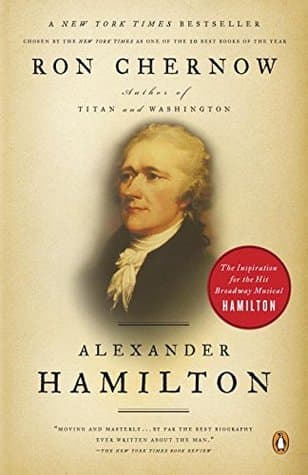
Alexander Hamilton cover
Archivist's Choice

Alexander Hamilton

Ron Chernow (2004)

Genre

Politics / Biography / History

Reading Time

15-20 hours

Key Themes

See below

Track Your Reading

Sign in to track this book

From an illegitimate orphan to a leading architect of American finance and government, Alexander Hamilton's turbulent life was a relentless fight against obscurity and opposition, forging the very foundations of a nation.

Core Idea

Ron Chernow's "Alexander Hamilton" is a thoroughly researched and extensive biography of one of America's most important, yet often misunderstood, Founding Fathers. The book argues that Hamilton, despite his humble beginnings as an illegitimate orphan, was the main architect of America's modern economic, political, and legal systems. His vision for a strong federal government, a national bank, and a strong industrial economy set the stage for American prosperity and power, fundamentally shaping the nation's identity and future course, often clashing with the agrarian ideas of his contemporaries.
Reading time
15-20 hours
Difficulty
Medium
✓ Read this if...
You want a comprehensive, deeply researched, and engaging narrative of Alexander Hamilton's life, his profound impact on early American politics and economics, and the complex relationships between the Founding Fathers.
✗ Skip this if...
You prefer concise biographies, are looking for a quick overview of Hamilton, or dislike extensive detail and historical context in your non-fiction reading.

Core idea

The central argument and framework that powers the entire book.

Ron Chernow's "Alexander Hamilton" is a thoroughly researched and extensive biography of one of America's most important, yet often misunderstood, Founding Fathers. The book argues that Hamilton, despite his humble beginnings as an illegitimate orphan, was the main architect of America's modern economic, political, and legal systems. His vision for a strong federal government, a national bank, and a strong industrial economy set the stage for American prosperity and power, fundamentally shaping the nation's identity and future course, often clashing with the agrarian ideas of his contemporaries.

At a glance

Reading time

15-20 hours

Difficulty

Medium

Read this if...

You want a comprehensive, deeply researched, and engaging narrative of Alexander Hamilton's life, his profound impact on early American politics and economics, and the complex relationships between the Founding Fathers.

Skip this if...

You prefer concise biographies, are looking for a quick overview of Hamilton, or dislike extensive detail and historical context in your non-fiction reading.

Key Takeaways

1

From Orphan to Architect

Hamilton's improbable rise forged America's financial bedrock.

Quote

The story of Hamilton's life is a testament to the power of meritocracy, a self-made man who, against all odds, rose to shape the destiny of a nation.

Alexander Hamilton's path from an illegitimate orphan in the Caribbean to a main architect of the United States' financial system is a core part of the American story. Without inherited wealth or status, Hamilton rose through intellect, ambition, and a strong work ethic. He used his talents, first as a military aide to George Washington, then as a writer and lawyer, to place himself at the center of the new nation's political and economic development. This unlikely rise highlights the American idea that talent and determination, not b...

Supporting evidence

Chernow details Hamilton's early life in Nevis and St. Croix, his intellectual precocity noted by local patrons who funded his education in America, and his subsequent rapid integration into the revolutionary cause, culminating in his indispensable role as Washington's aide-de-camp during the Revolutionary War.

Apply this

Recognize that personal circumstances do not define potential. Cultivate relentless self-improvement, intellectual curiosity, and a strong work ethic to overcome obstacles and make significant contributions, regardless of your starting point.


meritocracyself-made-manfounding-fathers
2

The Federalist Vision

A strong central government and national unity were Hamilton's enduring legacies.

Quote

Hamilton possessed a profound conviction that a strong, energetic national government was essential for the survival and prosperity of the American republic.

Hamilton strongly supported a robust federal government, believing it was the only way to ensure national stability, economic growth, and respect on the international stage. His vision sharply contrasted with the anti-federalist preference for decentralized power and states' rights. Through his role in drafting and promoting the Constitution, especially in The Federalist Papers, Hamilton made a strong case for a unified nation able to act decisively. He understood that a fragmented collection of states would be open to internal conf...

Supporting evidence

His authorship of the majority of *The Federalist Papers*, particularly essays discussing the necessity of a strong executive and judiciary, and the dangers of factionalism, clearly articulates his federalist philosophy. His arguments for a national bank and federal assumption of state debts further exemplify this vision.

Apply this

When facing organizational or national challenges, consider the long-term benefits of centralized coordination and unified action over fragmented, localized approaches. Advocate for strong, clear leadership and shared strategic direction.

federalismthe-federalist-papersnational-unity
3

Financial Genius

Hamilton's economic policies created the foundation for American capitalism.

Quote

Hamilton's financial system was a stroke of genius, transforming a bankrupt nation into a credible economic power and laying the groundwork for American capitalism.

As the first Secretary of the Treasury, Hamilton designed a groundbreaking financial system that saved the young United States from economic collapse. His bold proposals, including the federal assumption of state debts, the creation of a national bank, and the promotion of domestic manufacturing through tariffs, were radical for their time but were key to stabilizing the national currency, restoring public credit, and attracting foreign investment. He understood that a sound financial system was not just an economic need but a crucial...

Supporting evidence

Chernow details the 'Report on Public Credit,' 'Report on a National Bank,' and 'Report on Manufactures,' explaining how these foundational documents outlined Hamilton's comprehensive economic vision and directly led to the establishment of the U.S. financial system.

Apply this

In any financial undertaking, prioritize establishing clear credit, managing debt strategically, and creating stable institutions. Understand that long-term economic health often requires bold, sometimes unpopular, decisions to build trust and attract investment.

national-bankpublic-crediteconomic-policycapitalism
4

The Duality of Ambition

Hamilton's drive was both his greatest asset and his ultimate downfall.

Quote

Hamilton's ambition was a double-edged sword: it propelled him to extraordinary heights but also fueled the rivalries and controversies that shadowed his career.

Hamilton's ambition was a driving force behind his great achievements, but it also made him a target for criticism and powerful enemies. His relentless pursuit of his vision, often with an uncompromising and confrontational style, alienated many, including fellow Founding Fathers like Jefferson, Madison, and Adams. While his ambition allowed him to conceive and carry out grand plans for the nation, it also led to personal and political mistakes, such as the Reynolds Affair and his repeated clashes with opponents, which ultimately cont...

Supporting evidence

The detailed accounts of his contentious relationships with Jefferson and Madison over the national bank and federal power, his public feud with John Adams, and the scandal of the Reynolds Affair, all illustrate how his ambition and confrontational nature created powerful adversaries.

Apply this

Channel ambition towards constructive goals, but temper it with diplomacy, self-awareness, and an understanding of political realities. Recognize that unchecked ambition can lead to isolation and self-sabotage, even when pursuing noble aims.

ambitionpolitical-rivalrieshubrischaracter-flaws
5

A Pragmatic Visionary

Hamilton prioritized practical solutions over ideological purity.

Quote

Unlike some of his contemporaries, Hamilton was a pragmatist, less concerned with abstract ideological purity than with what genuinely worked to build a strong, functioning nation.

While often seen as an elitist, Hamilton was a pragmatic statesman. He was not tied to abstract ideals in the same way Jefferson was, preferring instead to implement policies that clearly strengthened the nation, even if they were unpopular or challenged existing beliefs. His proposals for a national bank, assumption of state debts, and even his support for a standing army, were all based on a clear assessment of what the young republic needed to survive and thrive, rather than strict adherence to a particular philosophy. This pragmat...

Supporting evidence

Chernow contrasts Hamilton's practical approach to governance with Jefferson's more agrarian, idealized vision, especially concerning economic policy and the role of government. Hamilton's willingness to use government power to stimulate industry, for example, demonstrates his focus on tangible results.

Apply this

In problem-solving, prioritize effective, workable solutions over rigid ideological adherence. Be willing to adapt and experiment, focusing on outcomes that genuinely advance your goals rather than adhering strictly to a single 'correct' method.

pragmatismstatesmanshippolicy-makingideology
6

The Power of the Pen

Hamilton's prolific writing shaped public opinion and national discourse.

Quote

From *The Federalist Papers* to countless pamphlets and newspaper essays, Hamilton wielded his pen with unmatched ferocity and brilliance, shaping the intellectual and political landscape of his era.

Hamilton was a strong intellectual and a master of political rhetoric, using his writing skills to explain complex ideas, defend his policies, and attack his adversaries. His contributions to The Federalist Papers are considered fundamental texts of American political thought, but his influence went much further. He engaged in many newspaper debates, published pamphlets under fake names, and crafted compelling arguments that swayed public opinion and influenced national policy. His ability to write clearly, persuasively, and extensi...

Supporting evidence

The sheer volume of Hamilton's written output, from his early revolutionary pamphlets like 'A Full Vindication of the Measures of Congress' to his extensive contributions to *The Federalist Papers* (51 of 85 essays), and his later defense of the Jay Treaty, showcases his command of written persuasion.

Apply this

Cultivate strong communication skills, particularly in written form. Understand that articulating your ideas clearly, logically, and persuasively is essential for influencing others and achieving your objectives, whether in professional or personal life.

rhetoricpolitical-writingpublic-opinionpersuasion
7

The Duel and Its Legacy

Hamilton's death underscored the brutal realities of early American politics.

Quote

The duel between Hamilton and Burr was a tragic culmination of years of bitter rivalry, exposing the raw, often violent, undercurrents of political life in the young republic.

The duel with Aaron Burr was not just a personal fight but a dramatic example of the intense, often deadly, political rivalries that marked the early American republic. Hamilton's death robbed the nation of one of its most brilliant minds at a critical time, highlighting the destructive potential of unchecked political hostility and the old 'code of honor' that was still in place. Though tragic, the duel serves as a stark reminder of the high stakes and personal cost involved in creating a new nation, where political differences could...

Supporting evidence

Chernow meticulously reconstructs the events leading up to the duel, the correspondence between Hamilton and Burr, and the immediate aftermath, including the public reaction and the lasting impact on Burr's political career, effectively illustrating the cultural and political context.

Apply this

Recognize the importance of managing conflict constructively and de-escalating personal animosities, especially in high-stakes environments. Understand that while passion is vital, allowing personal vendettas to overshadow shared goals can lead to destructive outcomes.

duelingpolitical-rivalrycode-of-honortragedy
8

Washington's Indispensable Man

Hamilton's unique relationship with Washington was crucial for his influence.

Quote

Hamilton served as Washington's 'indispensable aide,' a relationship of profound trust and mutual respect that afforded him unparalleled access and influence.

George Washington's trust in Alexander Hamilton was a cornerstone of Hamilton's political power and effectiveness. From his role as Washington's aide-de-camp during the Revolutionary War to his appointment as the first Secretary of the Treasury, Hamilton had a unique relationship with the nation's most respected figure. Washington gave Hamilton the platform and protection needed to implement his ambitious policies, often shielding him from political attacks. This support was critical, allowing Hamilton's ideas to gain traction and bec...

Supporting evidence

Chernow highlights numerous instances of Washington relying heavily on Hamilton for strategic advice, drafting important documents, and managing critical administrative tasks, both during the war and throughout his presidency, underscoring the depth of their professional and personal bond.

Apply this

Seek out mentors and build strategic relationships with influential figures who can provide guidance, support, and a platform for your ideas. Understand that even the most brilliant individuals often require the backing of respected leaders to achieve their full potential.

mentorshippolitical-patronageleadershipinfluence
9

A Vision for Industry

Hamilton championed manufacturing and urban development over agrarianism.

Quote

Hamilton envisioned an America that was not merely an agrarian republic but a dynamic industrial and commercial power, capable of competing on the global stage.

While Jefferson envisioned an agrarian republic of farmers, Hamilton foresaw and actively promoted an America built on manufacturing, commerce, and urban centers. His 'Report on Manufactures' outlined a detailed plan for federal support of domestic industries through tariffs, subsidies, and infrastructure development. He understood that economic independence and national strength would come from a diverse economy, not solely from agriculture. This forward-thinking vision set the course for America's industrial future and laid the grou...

Supporting evidence

The 'Report on Manufactures' (1791) is the primary evidence, detailing his arguments for protective tariffs, bounties, and infrastructure to foster domestic industry, directly contrasting with the agrarian vision of his rivals.

Apply this

When considering economic development, look beyond traditional sectors to identify and foster emerging industries. Understand that strategic investment in manufacturing, technology, and infrastructure can drive long-term growth and national competitiveness.

industrializationmanufacturingeconomic-developmenturbanization
10

The Modern Man in the Founding Era

Hamilton's ideas resonate with contemporary challenges and solutions.

Quote

To repudiate his legacy is, in many ways, to repudiate the modern world.

Chernow argues that Hamilton was remarkably modern in his thinking, anticipating many of the challenges and solutions that would define the United States for centuries. His emphasis on a strong national government, a robust financial system, industrial development, and a merit-based society are principles that continue to underpin America's success. Unlike some of his contemporaries who looked backward, Hamilton looked forward, understanding that the young nation needed to adapt and evolve to survive in a complex global environment. H...

Supporting evidence

Chernow's overarching thesis throughout the biography, frequently reiterated in his analysis of Hamilton's policies and their long-term impact on the U.S. financial system, industrial growth, and federal structure, directly supports this claim.

Apply this

Study historical figures and events not just for context, but for enduring principles and foresight that can inform current decisions. Recognize that the seeds of present-day systems and challenges often lie in the foundational ideas of the past.

legacymodernityhistorical-relevancefounding-principles

Critical analysis

Notable Quotes

I never expect to see a perfect work from imperfect man.

Hamilton's realistic view on governance and human nature.

Your people, sir, is a great beast!

Hamilton's famous, if perhaps apocryphal, remark to Jefferson, reflecting his distrust of pure democracy.

A national debt, if it is not excessive, will be to us a national blessing.

From his 'First Report on Public Credit,' arguing for the benefits of a well-managed national debt.

The sacred rights of mankind are not to be rummaged for among old parchments or musty records. They are written, as with a sunbeam, in the whole volume of human nature, by the hand of the Divinity itself, and can never be erased or obscured by mortal power.

From 'The Farmer Refuted,' arguing for natural rights.

Energy in the Executive is a leading character in the definition of good government.

From 'Federalist No. 70,' arguing for a strong, unitary executive.

Why has government been instituted at all? Because the passions of men will not conform to the dictates of reason and justice without constraint.

From 'Federalist No. 15,' explaining the necessity of government.

The voice of the people has been said to be the voice of God; and, however generally this maxim has been quoted and believed, it is not true to fact. The people are turbulent and changing; they seldom judge or determine right.

Another instance of Hamilton's skepticism about direct popular rule, from a speech at the Constitutional Convention.

Those who stand for nothing fall for anything.

A general reflection on conviction and principle, often attributed to Hamilton.

The truth is, that all men, and in all ages, have been actuated by the same passions, and have been victims to the same errors.

A philosophical observation on the consistency of human behavior throughout history.

Real liberty is neither found in despotism or the extremes of democracy, but in moderate governments.

From his 'Continentalist No. 2,' advocating for a balanced form of government.

Men often oppose a thing merely because they have had no agency in planning it, or because it may have been planned by those whom they dislike.

A keen observation on human psychology and political opposition.

Safety from external danger is the most powerful director of national conduct.

From 'Federalist No. 8,' emphasizing the importance of national security.

It is the lot of human nature to be the sport of accident.

A reflection on the unpredictable nature of life and fortune.

I have been in the army almost five years, and have not yet rendered myself and my family independent.

A personal lament about his financial struggles while serving in the Revolutionary War.

Quiz

Test Your Knowledge

Ready to see how well you understood this book? Take our interactive quiz with 10 questions.

10
Questions
~5
Minutes
?
Best Score

Key Questions (FAQ)

Alexander Hamilton's most significant contribution was laying the groundwork for America's modern financial system. As the first Secretary of the Treasury, he established the national bank, a stable currency, and public credit, which were crucial for the young nation's economic stability and growth.

About the author