BookBrief
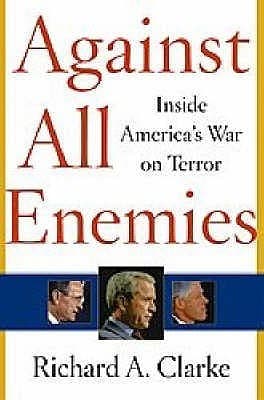
Against All Enemies cover
Archivist's Choice

Against All Enemies

Richard A. Clarke (2004)

Genre

Politics / Biography / Memoir / History

Reading Time

7-8 hours

Key Themes

See below

Track Your Reading

Sign in to track this book

America's former counterterrorism chief offers a sharp, insider view of how the Bush administration, focused on Iraq, mishandled the fight against al Qaeda before and after 9/11, leaving the country more exposed.

Core Idea

Richard Clarke's 'Against All Enemies' argues that the 9/11 attacks were preventable, caused by a lack of political will and strategic foresight in two administrations, especially the Bush administration's shift away from the growing Al-Qaeda threat after the election. Clarke, a career counterterrorism official, claims the U.S. government had enough intelligence and plans to stop Al-Qaeda, but these efforts were consistently ignored, underfunded, and sidelined by other priorities. This led to resources and attention moving towards Iraq. He states that this strategic error not only allowed 9/11 to happen but also weakened America's long-term counterterrorism stance, making the world more dangerous.
Reading time
7-8 hours
Difficulty
Medium
✓ Read this if...
You want an insider's critical account of U.S. counterterrorism policy from the Clinton to Bush administrations, particularly regarding the lead-up to and immediate aftermath of 9/11, and are interested in the argument that the attacks were preventable.
✗ Skip this if...
You are looking for a purely objective historical account without a strong personal viewpoint or if you are not interested in detailed critiques of specific presidential administrations' national security decisions.

Core idea

The central argument and framework that powers the entire book.

Richard Clarke's 'Against All Enemies' argues that the 9/11 attacks were preventable, caused by a lack of political will and strategic foresight in two administrations, especially the Bush administration's shift away from the growing Al-Qaeda threat after the election. Clarke, a career counterterrorism official, claims the U.S. government had enough intelligence and plans to stop Al-Qaeda, but these efforts were consistently ignored, underfunded, and sidelined by other priorities. This led to resources and attention moving towards Iraq. He states that this strategic error not only allowed 9/11 to happen but also weakened America's long-term counterterrorism stance, making the world more dangerous.

At a glance

Reading time

7-8 hours

Difficulty

Medium

Read this if...

You want an insider's critical account of U.S. counterterrorism policy from the Clinton to Bush administrations, particularly regarding the lead-up to and immediate aftermath of 9/11, and are interested in the argument that the attacks were preventable.

Skip this if...

You are looking for a purely objective historical account without a strong personal viewpoint or if you are not interested in detailed critiques of specific presidential administrations' national security decisions.

Key Takeaways

1

Averting 9/11: A Missed Opportunity

The Bush administration's pre-9/11 inaction and dismissal of al-Qaeda warnings contributed directly to the tragedy.

Quote

The Bush administration has squandered the opportunity to eliminate al Qaeda....Most disturbing of all are Clarke's revelations about the Bush administration's lack of interest in al Qaeda prior to September 11.

Clarke, as the counterterrorism head for both the Clinton and Bush administrations, had unmatched insight into the growing al-Qaeda threat. He carefully describes his repeated, urgent attempts to inform the incoming Bush team about the serious danger from Usama bin Laden and his network. These warnings were consistently downplayed, ignored, or met with an unexplained focus on Iraq, even when there was no direct evidence linking Iraq to al-Qaeda. The administration's failure to prioritize counterterrorism, even to grant Clarke a meetin...

Supporting evidence

Clarke's personal accounts of attempting to brief key Bush officials, including Condoleezza Rice and Paul Wolfowitz, about al-Qaeda, only to be met with disinterest or an obsessive focus on Iraq and long-discredited conspiracy theories linking Saddam Hussein to previous attacks.

Apply this

Leaders must actively seek and heed expert warnings, especially on complex national security threats, rather than allowing pre-conceived agendas or political biases to dictate intelligence assessments and strategic priorities. Establish clear channels for critical information to reach decision-makers without bureaucratic obstruction.


pre-9/11-intelligencebush-administration-failuresal-qaeda-threat-assessment
2

The Iraq Diversion

The Bush administration's obsession with Iraq diverted critical resources and attention away from the genuine al-Qaeda threat, both before and after 9/11.

Quote

He encountered key officials who gave the impression that they had never heard of al Qaeda; who focused incessantly on Iraq; who even advocated long-discredited conspiracy theories about Saddam's involvement in previous attacks on the United States.

Clarke argues that the Bush administration wanted to confront Iraq, even before 9/11. This obsession created a dangerous blind spot, causing officials to ignore intelligence on al-Qaeda while actively looking for connections between Saddam Hussein and terrorism that did not exist. After 9/11, this existing agenda unfortunately took over the counterterrorism response. Instead of a focused, global effort against al-Qaeda, the administration immediately turned to Iraq, presenting it as a central part of the 'War on Terror.' This shift of...

Supporting evidence

The immediate post-9/11 discussions within the White House, where officials like Donald Rumsfeld and Paul Wolfowitz pushed for military action against Iraq, even in the absence of evidence linking Baghdad to the attacks, as described by Clarke, who was present in the Situation Room.

Apply this

National security strategies must be evidence-driven, not ideologically or politically motivated. Avoid 'confirmation bias' where intelligence is cherry-picked to support a pre-determined policy outcome. Prioritize threats based on objective assessment, not pre-existing grievances.

iraq-war-justificationdiversion-of-resourcessaddam-al-qaeda-link
3

A New, Stronger Al-Qaeda

The invasion of Iraq and subsequent U.S. actions inadvertently created a more resilient and dangerous al-Qaeda network.

Quote

A new al Qaeda has emerged and is growing stronger, in part because of our own actions and inactions. It is in many ways a tougher opponent than the original threat we faced before September 11...

Clarke makes the alarming claim that the 'War on Terror,' especially the Iraq War, did not weaken al-Qaeda but instead gave it more power. By invading Iraq, the U.S. unintentionally provided a training ground and recruiting tool for jihadists, turning a secular dictatorship into a center of extremist activity. The removal of Saddam Hussein created a power vacuum and conflict between religious groups, which al-Qaeda used to gain new followers and operational abilities. The perceived occupation of a Muslim nation fueled anti-American fe...

Supporting evidence

Clarke's analysis of how the Iraq War provided a new narrative for jihadist recruitment, created a training ground for foreign fighters, and exacerbated sectarian tensions that al-Qaeda capitalized on, leading to the rise of groups like Al-Qaeda in Iraq (AQI).

Apply this

Before engaging in military intervention, thoroughly assess potential blowback and unintended consequences, particularly the risk of radicalization and the creation of new enemies. Understand the complex geopolitical and cultural landscapes to avoid inadvertently strengthening adversaries.

blowback-terrorismiraq-war-consequencesal-qaeda-resurgence
4

The Clinton Administration's Counterterrorism Efforts

Despite challenges, the Clinton administration took the al-Qaeda threat seriously, initiating significant, albeit sometimes constrained, counterterrorism measures.

Quote

He knows, better than anyone, the hidden successes and failures of the Clinton years.

Clarke contrasts the Bush administration's lack of action with the Clinton administration's more active stance against al-Qaeda. Under Clinton, Clarke and his team recognized the growing threat, starting secret actions, intelligence gathering efforts, and international cooperation to fight bin Laden's network. While they faced limits, including legal restrictions, intelligence gaps, and a lack of public urgency, the Clinton team genuinely tried to disrupt al-Qaeda operations and even planned direct action. This time period saw the cre...

Supporting evidence

Clarke's detailed accounts of specific counterterrorism operations, intelligence efforts, and policy discussions within the Clinton administration aimed at targeting al-Qaeda, including discussions about capturing or killing bin Laden.

Apply this

Continuity of government and institutional knowledge is crucial for national security. New administrations should build upon existing expertise and strategies, rather than dismissing or reinventing the wheel, particularly when dealing with persistent and evolving threats.

clinton-counterterrorismpre-9/11-responseinstitutional-knowledge
5

The Crisis Manager on 9/11

Clarke's firsthand account reveals the chaos and immediate strategic missteps in the White House during the 9/11 attacks.

Quote

Clarke was the nation's crisis manager on 9/11, running the Situation Room -- a scene described here for the first time -- and then watched in dismay at what followed.

As the nation's crisis manager, Clarke was at the center of the government's response on September 11th. His story offers a raw and unique look into the Situation Room, detailing the frantic efforts to coordinate defenses, track the attacks, and understand the unfolding tragedy. This unique view highlights the immediate challenges of command and control, but also the underlying strategic confusion. Clarke's dismay comes from seeing not only the attacks themselves, but also the immediate turn towards Iraq afterward, signaling a major m...

Supporting evidence

Clarke's minute-by-minute description of his actions and observations in the White House Situation Room on 9/11, including interactions with various officials and the initial policy discussions.

Apply this

Effective crisis management requires clear chains of command, pre-established protocols, and the ability to maintain strategic focus under extreme pressure. Debriefing and analyzing real-time crisis responses are vital for continuous improvement in national security preparedness.

9/11-crisis-managementsituation-room-accountpost-9/11-decision-making
6

The Dangers of Ideological Blindness

Pre-conceived ideological frameworks can fatally compromise objective threat assessment and effective policy formulation.

Quote

After ignoring existing plans to attack al Qaeda when he first took office, George Bush made disastrous decisions when he finally did pay attention.

Clarke's book is a clear warning about the dangers of letting ideology outweigh intelligence. The Bush administration, according to Clarke, came into office with a pre-existing ideological framework that prioritized state-based threats (like Iraq) over non-state actors (like al-Qaeda). This ideological view twisted their understanding of reality, making them resistant to evidence that went against their beliefs. This blindness not only prevented them from addressing the immediate threat of al-Qaeda but also led to 'disastrous decision...

Supporting evidence

The administration's consistent dismissal of Clarke's warnings about al-Qaeda, coupled with their immediate post-9/11 pivot to Iraq, despite the lack of direct evidence, illustrates a policy driven by ideology rather than intelligence.

Apply this

Cultivate a culture of intellectual honesty in policymaking, where dissenting opinions are valued and evidence is prioritized over political dogma. Leaders must be willing to challenge their own assumptions and adapt strategies when new information emerges.

ideological-biaspolicy-failuresintelligence-distortion
7

Accountability and Resignation

Clarke's resignation underscores the profound disagreement and frustration with the Bush administration's counterterrorism strategy.

Quote

Richard Clarke served seven presidents and worked inside the White House for George H.W. Bush, Bill Clinton, and George W. Bush until he resigned in March 2003.

Clarke's decision to resign in March 2003, after decades of dedicated public service across several administrations, is telling. It was not just a career change, but a deep act of conscience, showing his strong disagreement with the direction of the Bush administration's 'War on Terror,' especially the invasion of Iraq. His resignation, before the book's publication, gave his later criticisms great weight and credibility. It showed a fundamental breakdown in trust and policy alignment between a seasoned expert and the political leader...

Supporting evidence

The timing of Clarke's resignation in March 2003, just before the invasion of Iraq, as a culmination of his growing disillusionment and disagreement with the administration's strategic priorities and actions.

Apply this

Individuals in positions of expertise and integrity have a moral obligation to speak truth to power, even when it means personal sacrifice. Leaders should foster environments where dissenting expert opinions are heard and considered, preventing a 'yes-man' culture.

whistleblower-accountabilitypolitical-dissentpublic-service-ethics
8

The Enduring Threat of Terrorism

The book serves as a powerful reminder that terrorism remains an evolving, complex threat requiring persistent, adaptable, and intelligence-led responses.

Quote

A new al Qaeda has emerged and is growing stronger...and we are not doing what is necessary to make America safe from that threat.

Clarke's work is not just a historical account but a serious warning. He argues that the U.S. response to 9/11, particularly the Iraq War, changed the terrorist landscape, making the threat more spread out, resilient, and ideologically strong. His claim that 'we are not doing what is necessary to make America safe' suggests a continued vulnerability due to wrong strategies and a failure to understand the changing nature of global jihadism. The book implicitly calls for a continuous re-evaluation of counterterrorism policies, stressing...

Supporting evidence

Clarke's overall thesis that the post-9/11 strategy inadvertently strengthened al-Qaeda and created new threats, underscoring the dynamic and adaptive nature of terrorist organizations.

Apply this

National security strategies must be dynamic and adaptive, continuously learning from past mistakes and evolving alongside the threats they aim to counter. Prioritize intelligence gathering, international cooperation, and soft power initiatives alongside military responses.

evolving-threatscounterterrorism-strategyglobal-jihadism

Critical analysis

Notable Quotes

The American people have been told that there is a group of terrorists who hate us for our freedoms, and that we must fight them wherever they are. This is a lie.

Clarke's central thesis challenging the Bush administration's rationale for the War on Terror.

I find it ironic that some of the very people who most loudly proclaimed the need for a missile defense system that didn't work were also the ones who most loudly opposed measures that would have actually protected the country from terrorism.

Critiquing the priorities and perceived hypocrisy of certain political figures regarding national security spending.

Your government failed you. Those entrusted with protecting you failed you. And I failed you.

Clarke's opening apology during his testimony to the 9/11 Commission, taking personal responsibility.

It was as if we had been hit by an asteroid, and the President's chief concern was whether we were going to find the asteroid's address and bomb it.

Describing the immediate aftermath of 9/11 and the administration's perceived focus on Iraq.

We were fighting the last war, not the next one.

Reflecting on the pre-9/11 intelligence and counter-terrorism strategies.

There was a complete disconnect between the rhetorical commitment to fighting al Qaeda and the actual resources and attention devoted to it.

Highlighting the gap between public statements and practical actions in combating terrorism.

The administration's obsession with Iraq was a distraction, a diversion from the real threat.

Arguing that the focus on Iraq diverted attention and resources from al Qaeda.

I resigned because I could no longer be part of an administration that was making decisions I believed were fundamentally wrong and dangerous for the country.

Explaining his reasons for leaving his position within the Bush administration.

The problem was not that we didn't have enough intelligence, but that we didn't connect the dots.

Discussing the pre-9/11 intelligence failures and the lack of analytical synthesis.

Terrorism is a tactic, not an enemy. You don't declare war on a tactic.

Challenging the framing of the 'War on Terror' as a war against a concept.

The greatest danger to America is not terrorism, but the erosion of our civil liberties in the name of fighting terrorism.

Expressing concern about the Patriot Act and other post-9/11 governmental powers.

If we had done even half of what we knew we should have done, 9/11 might have been prevented.

A stark assessment of missed opportunities and failures leading up to the attacks.

The history of American foreign policy is often a history of overreaction and unintended consequences.

A broader reflection on the patterns and pitfalls of US engagement abroad.

It was a meeting where the decision was made, not to focus on al Qaeda, but to focus on Iraq.

Recalling a specific high-level meeting shortly after 9/11 where the strategic shift occurred.

Quiz

Test Your Knowledge

Ready to see how well you understood this book? Take our interactive quiz with 10 questions.

10
Questions
~5
Minutes
?
Best Score

Key Questions (FAQ)

Richard Clarke argues that the Bush administration squandered the opportunity to eliminate al Qaeda after 9/11 and that their actions and inactions led to a stronger, more resilient al Qaeda. He criticizes their pre-9/11 disinterest in the threat and their post-9/11 policy decisions.

About the author