“Of course, the police are the people who defend the law, but not just the law as it exists, but the law as it is going to be.”
— The Maniac explaining the police's future-oriented role.

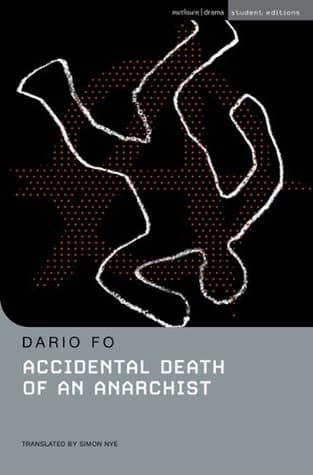
Dario Fo (2016)
Genre
Politics
Reading Time
176 min
Key Themes
See below
Sign in to track this book
A madcap imposter infiltrates a police station, twisting the absurd truth of an anarchist's suspicious 'fall' into a hilarious, biting indictment of state corruption.
“Of course, the police are the people who defend the law, but not just the law as it exists, but the law as it is going to be.”
— The Maniac explaining the police's future-oriented role.
“If you want to know what the truth is, you must first invent it.”
— The Maniac discussing the creation of truth in investigations.
“The police are always right, even when they’re wrong. Especially when they’re wrong.”
— A cynical observation on police infallibility.
“A good anarchist is a dead anarchist. A good policeman is a dead anarchist.”
— A darkly humorous play on words, highlighting the conflict.
“We are here to discover the truth, not to create it.”
— A police officer asserting the official goal of the investigation, ironic given the play's events.
“The only way to be truly free is to be mad.”
— The Maniac's perspective on freedom through feigned insanity.
“Justice is like a bus. It always comes, but sometimes you have to wait a very long time, and sometimes it's the wrong bus.”
— A metaphor for the elusive nature of justice.
“We are not dealing with a simple suicide, but a complex act of ideological self-elimination.”
— The Maniac re-framing the anarchist's death with elaborate political jargon.
“In Italy, there are two kinds of people: those who believe in justice, and those who know what it is.”
— A cynical remark about the reality of justice in Italy.
“If you don't use your head, you'll end up losing it.”
— A warning about critical thinking in a world of deception.
“The state is a machine designed to make the powerful more powerful.”
— A critique of the inherent nature of the state.
“The truth is a dangerous weapon, especially when it's aimed at the powerful.”
— Reflecting on the risks of exposing uncomfortable truths.
“We live in a time where the absurd is the only logical response to reality.”
— A philosophical statement on the nature of contemporary reality.
“To govern is to make people believe that they are governing themselves.”
— A definition of governance as a form of manipulation.
“The only thing worse than a lie is a truth that nobody believes.”
— Highlighting the futility of truth without acceptance.
Ready to see how well you understood this book? Take our interactive quiz with 10 questions.
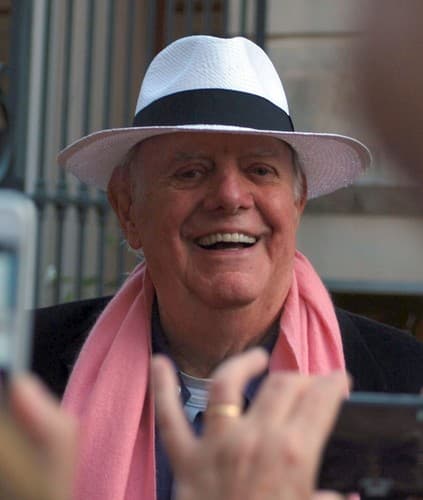
Dario Fo was an Italian actor, playwright, theater director, and satirist whose work often criticized authority and celebrated the downtrodden. A Nobel Prize laureate in Literature, he is best known for his political farces, including the internationally acclaimed "Accidental Death of an Anarchist." His innovative use of commedia dell'arte techniques and sharp political commentary made him a significant figure in 20th-century theater.

Brett Casper
5.0

Dirk Uffelmann
4.7
Winston S. Churchill
4.5
Chimamanda Ngozi Adichie
4.5
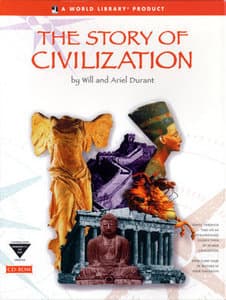
Will Durant
4.4
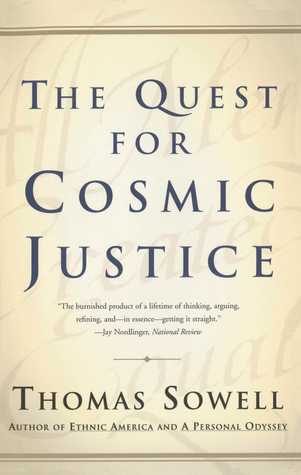
Thomas Sowell
4.4
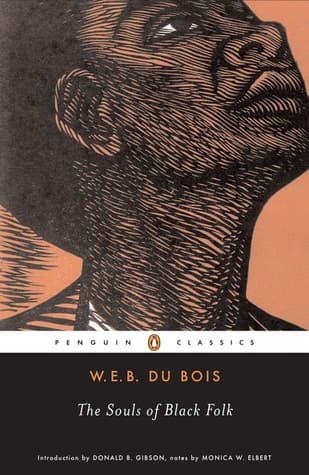
W.E.B. Du Bois
4.3
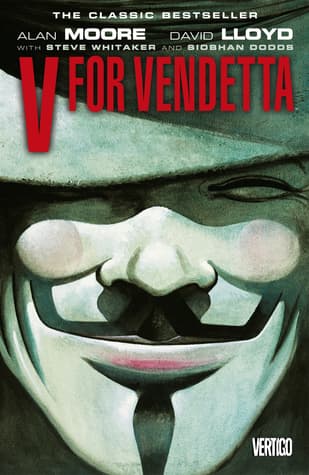
Alan Moore
4.3