BookBrief
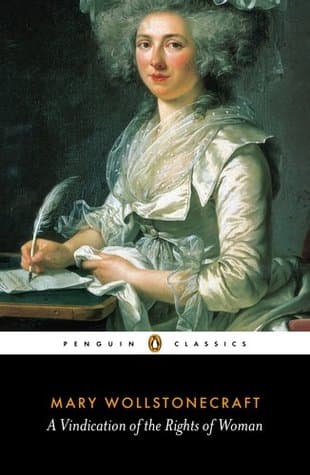
A Vindication of the Rights of Woman cover
Archivist's Choice

A Vindication of the Rights of Woman

Mary Wollstonecraft (1792)

Genre

Politics / History / Philosophy

Reading Time

600 min

Key Themes

See below

Track Your Reading

Sign in to track this book

Mary Wollstonecraft, the audacious mother of modern feminism, ignited the spark of female independence in a world alive with the rights of man. She demanded equal education and professional identity over docile decorum.

Core Idea

Mary Wollstonecraft argues that women, like men, are rational beings who should cultivate virtue through reason. She believes that women's perceived inferiority and 'feminine' vices are not natural. Instead, they come from poor education and societal structures that value superficial traits like beauty over intellectual growth. For women to become virtuous, useful members of society and companions to men, they need the same access to reason-based education and professional opportunities. This would allow them to reach their human potential and contribute to a more just and enlightened society.
Reading time
600 min
Difficulty
Hard
✓ Read this if...
You are interested in the foundational texts of feminism, political philosophy, or the Enlightenment era's views on education and human rights. You want to understand the historical arguments for gender equality based on reason and virtue.
✗ Skip this if...
You are looking for a modern feminist analysis or a light read. The prose is dense, argumentative, and reflective of 18th-century philosophical writing, which may not appeal to all readers.

Core idea

The central argument and framework that powers the entire book.

Mary Wollstonecraft argues that women, like men, are rational beings who should cultivate virtue through reason. She believes that women's perceived inferiority and 'feminine' vices are not natural. Instead, they come from poor education and societal structures that value superficial traits like beauty over intellectual growth. For women to become virtuous, useful members of society and companions to men, they need the same access to reason-based education and professional opportunities. This would allow them to reach their human potential and contribute to a more just and enlightened society.

At a glance

Reading time

600 min

Difficulty

Hard

Read this if...

You are interested in the foundational texts of feminism, political philosophy, or the Enlightenment era's views on education and human rights. You want to understand the historical arguments for gender equality based on reason and virtue.

Skip this if...

You are looking for a modern feminist analysis or a light read. The prose is dense, argumentative, and reflective of 18th-century philosophical writing, which may not appeal to all readers.

Key Takeaways

1

Reason, Not Sentiment, Defines Humanity

Women's subjugation stems from a societal denial of their rational faculties.

Quote

The power of generalizing ideas, of drawing comprehensive conclusions from individual observations, is the only acquirement, for which an immortal being, as an individual, is to be esteemed.

Wollstonecraft argues that reason is what makes humans distinct. It allows for moral and intellectual growth. She says that women, historically confined to emotional roles, are denied the chance to develop their reason. This denial not only stops their individual growth but also makes them unable to contribute fully to society or fulfill their duties as mothers and citizens. By valuing emotions and outward beauty over intellectual rigor, society treats women like children. This prevents them from becoming virtuous and independent. Tru...

Supporting evidence

Wollstonecraft contrasts the education of boys, which aims to develop their understanding, with that of girls, which focuses on acquiring superficial accomplishments like music, drawing, and needlework, all designed to make them appealing to men rather than self-sufficient.

Apply this

Actively challenge societal expectations that prioritize emotional responses or superficial appearances over logical thought and intellectual development in women. Seek out and promote educational and professional opportunities that foster critical thinking and autonomy.

rationalismenlightenmentgender-roles
2

Education as the Cornerstone of Emancipation

Equal education is essential for women to become virtuous, independent, and contributing members of society.

Quote

If children are to be educated to understand the true principle of patriotism, their mother must be a patriot; and the love of mankind, from which patriotism springs, can only be produced by the cultivation of the understanding.

Wollstonecraft's most revolutionary demand is for a national education system that would include both sexes and all social classes. She claims the current system, which either ignores women's intellect or trains them only for domestic life and flirting, causes their subjugation. An enlightened education, one that develops reason, critical thinking, and moral principles, is not just a privilege. It is essential for women to reach their potential. Without it, they remain dependent, ignorant, and unable to make informed decisions in thei...

Supporting evidence

She proposes a national system of day-schools, where boys and girls would be educated together, learning the same subjects, including history, politics, and science, alongside practical skills.

Apply this

Advocate for and support educational reforms that promote gender equality in curriculum, access, and opportunities from early childhood through higher education. Encourage girls to pursue STEM fields and leadership roles.

co-educationuniversal-educationintellectual-development
3

The Tyranny of Beauty and Sentiment

Societal obsession with female beauty and emotionality traps women in a cycle of dependence and triviality.

Quote

Taught from their infancy that beauty is woman's sceptre, the mind shapes itself to the body, and, roaming round its gilt cage, only seeks to adorn its prison.

Wollstonecraft examines how society trains women from childhood to prioritize physical attractiveness and emotional sensitivity. She argues this focus is not natural but a societal construct designed to keep women dependent on men. By valuing superficial charm and fleeting emotions, women cannot develop their intellect and moral compass. They become slaves to fashion and temporary passions. They cannot form deep, rational relationships or contribute meaningfully to public life. This 'gilt cage' may seem comfortable, but it stifles the...

Supporting evidence

She critiques the popular conduct books of her era, which advised women to cultivate 'feminine graces,' modesty, and a delicate constitution, rather than strength of mind or body.

Apply this

Challenge and deconstruct the pervasive influence of beauty standards and emotional stereotypes in media, advertising, and personal interactions. Promote the value of intellectual achievements, character, and competence over physical appearance for all genders.

gender-stereotypesobjectificationsocial-conditioning
4

Marriage as a Rational Partnership

True marital happiness and societal stability depend on intellectual equality and mutual respect, not subservience.

Quote

Make women rational creatures, and free citizens, and they will quickly become good wives, and mothers; that is, if men do not neglect the present duty, which they owe to themselves, and to society.

Wollstonecraft sees marriage as a rational partnership between equals, not a relationship of master and subordinate. She argues that when women are denied education and encouraged to be frivolous, they cannot be true companions to their husbands or good educators for their children. A marriage based on fleeting physical attraction or economic dependence will lead to unhappiness, resentment, and moral decay. Only when both partners are educated and morally upright can they form a lasting bond based on friendship and mutual respect. Thi...

Supporting evidence

She criticizes marriages based solely on physical attraction, arguing that passion inevitably fades, leaving a void that only intellectual companionship and shared principles can fill.

Apply this

Foster relationships, particularly marital ones, based on intellectual compatibility, shared values, and mutual respect rather than traditional gender roles or superficial attraction. Encourage open communication and shared decision-making.

marital-equalitycompanionshipfamily-values
5

Virtue is Universal, Not Gendered

Moral excellence is achieved through reason and autonomy, applicable to all human beings.

Quote

The most perfect education, in my opinion, is such an exercise of the understanding as is best calculated to strengthen the body and form the heart; or, in other words, to enable the individual to attain such habits of virtue as will render it independent.

Wollstonecraft strongly rejects the idea of separate virtues for men and women. She believes that virtue, meaning moral excellence and acting according to reason, is a universal human trait. To suggest that women's virtue lies in passive obedience, modesty, and delicate sensibilities is to deny them their full humanity and moral agency. True virtue requires independent thought, the courage to act on one's beliefs, and the ability to contribute to the greater good. By limiting women to a narrow, 'feminine' idea of virtue, society stifl...

Supporting evidence

She directly challenges Rousseau's ideas in 'Emile,' where he prescribes a distinctly different education for Sophie (Emile's female counterpart), designed to make her pleasing and subservient to Emile, rather than to develop her own independent reason or moral compass.

Apply this

Promote a gender-neutral understanding of virtue, emphasizing qualities like integrity, courage, and intellectual honesty for everyone. Challenge narratives that define 'goodness' in women as passive or submissive.

moral-philosophyethicsautonomy
6

The Perils of 'Feminine' Weakness

Cultivated physical and mental weakness in women leads to dependency and societal stagnation.

Quote

Weakness may excite tenderness, and be interesting in the eyes of a man; but the truly feminine character should be independent of it.

Wollstonecraft criticizes how society encourages female physical and mental weakness. She argues it is not natural but a harmful construct. Women are often taught that delicacy and fragility are attractive. This leads to a sedentary lifestyle and a lack of intellectual challenge. This deliberate cultivation of weakness makes them dependent on men for protection and provision. It undermines their independence and ability to contribute meaningfully. Such dependence creates a superficial existence, where women cannot think deeply, endure...

Supporting evidence

She points to the common practice of girls being confined indoors, discouraged from physical activity, and adorned in restrictive clothing that impedes movement and health, all contributing to a delicate constitution.

Apply this

Promote physical activity, health, and resilience for women. Challenge the idea that fragility is an attractive or desirable trait. Encourage girls to engage in challenging activities that build both physical and mental strength.

physical-educationresiliencedependency
7

Critique of Arbitrary Power

The subjugation of women mirrors broader injustices stemming from unreasoned authority.

Quote

Tyrants are always fond of a servile observance of forms.

Wollstonecraft extends her critique beyond gender relations to the broader concept of arbitrary power. She compares the subjugation of women to other forms of oppression, such as absolute monarchy or slavery. In each case, one group holds power over another not because of superior reason or moral right, but through custom, physical force, or economic leverage. This unreasoned authority creates ignorance, vice, and resentment in both the oppressor and the oppressed. For true liberty and justice to grow, all forms of arbitrary power mus...

Supporting evidence

She frequently compares the condition of women to that of soldiers or the poor, who are also denied the opportunity to cultivate their reason and are expected to obey without question.

Apply this

Identify and challenge systems of arbitrary power and unreasoned authority in all contexts, not just gender relations. Advocate for meritocracy, transparency, and accountability in leadership.

tyrannyenlightenment-idealssocial-justice
8

The Interconnectedness of Vice

Societal vices are often symptoms of systemic injustice, affecting both genders.

Quote

Men have been led astray by the same power, that has rendered women their property, and made them both slaves of vice.

Wollstonecraft argues that the moral degradation seen in women (like vanity, cunning, and superficiality) is not natural but a direct result of their societal position and lack of education. More importantly, she believes that men, too, are corrupted by this system. By being given unearned power and encouraged to see women as property, men become arrogant, tyrannical, and equally prone to vice. The system that subjugates women ultimately harms men by creating an environment of moral compromise, intellectual stagnation, and superficial...

Supporting evidence

She observes that men who treat women as mere playthings or objects of desire often become licentious and morally bankrupt themselves, losing their own capacity for true virtue and rational thought.

Apply this

Recognize how societal inequalities and gender stereotypes can negatively impact everyone, not just the directly oppressed group. Work towards systemic changes that promote equitable interactions and relationships for collective moral improvement.

moral-corruptionsystemic-injusticegender-equality
9

Motherhood as a Rational Duty

Educated mothers are essential for raising virtuous citizens and strengthening the nation.

Quote

To be a good mother, a woman must have sense, and that independence of mind which few women possess who are taught to depend entirely on their husbands.

Wollstonecraft elevates motherhood from a biological function to a civic duty. She argues that an ignorant, dependent mother cannot effectively raise rational, virtuous children. She believes that for women to properly educate and instill moral principles in their children, they must first have reason, knowledge, and independence themselves. A mother who is just a 'gentle domestic animal' will produce children who are equally superficial and unprepared for citizenship. So, educating women comprehensively is not just for their individu...

Supporting evidence

She contrasts the ideal of an educated mother, capable of guiding her children's intellectual and moral development, with the reality of a frivolous mother who teaches them only vanity and superficial accomplishments.

Apply this

Support policies and cultural shifts that empower mothers with education, resources, and autonomy, recognizing their critical role in shaping future generations. Value the intellectual labor involved in parenting.

civic-dutyparentingchild-development
10

The Need for Professional Opportunities

Economic independence through diverse professions is crucial for women's autonomy and societal progress.

Quote

How many women thus waste life away, who might have been useful and active, if they had been permitted to choose their own condition?

Beyond education, Wollstonecraft implicitly argues for women to have access to more professions. Confined mainly to marriage or limited, often low-paying, domestic roles, women lack economic independence. This reinforces their dependence on men. She laments the wasted potential of women who, with proper training and opportunity, could contribute significantly to various fields. Opening up professions would give women financial independence and a sense of purpose. It would also enrich society by using a neglected half of its talent poo...

Supporting evidence

While not explicitly detailing a list of professions, her frustration with women's limited options and their forced idleness or dependence underpins her call for education that would make them 'useful and active.' Her own career as a writer and translator exemplifies the potential for women in intellectual professions.

Apply this

Advocate for equal opportunities and access for women in all professions, including leadership roles and male-dominated fields. Support policies that address the gender pay gap and promote work-life balance for all workers.

economic-independencecareer-opportunitiesprofessional-equality

Critical analysis

Notable Quotes

I do not wish them to have power over men; but over themselves.

Arguing for women's self-governance and autonomy.

Strengthen the female mind by enlarging it, and there will be an end to blind obedience.

Advocating for female education as a means to critical thinking and independence.

The mind has no sex.

Challenging the notion that intellect differs between men and women.

It is time to effect a revolution in female manners—time to restore to them their lost dignity—and make them, as a part of the human species, labour by reforming themselves to reform the world.

Calling for a transformation in women's societal roles and self-perception.

Contending for the rights of woman, my main argument is built on this simple principle, that if she be not prepared by education to become the companion of man, she will stop the progress of knowledge and virtue; for truth must be common to all, or it will be inefficacious with respect to its influence on general practice.

Laying out the foundational argument for women's education as essential for societal progress.

Taught from their infancy that beauty is woman's scepter, the mind shapes itself to the body, and, roaming round its gilt cage, only seeks to adorn its prison.

Criticizing the societal emphasis on women's beauty over their intellect and potential.

For man and woman, truth, if I understand the meaning of the word, must be the same.

Asserting the universality of truth and reason for both sexes.

A truly benevolent mind often suffers more than the person who occasions the suffering.

Reflecting on the nature of empathy and the pain of witnessing injustice.

How can a being be noble who is only good because she is afraid to be wicked?

Questioning the moral value of actions driven by fear rather than principle.

The divine right of husbands, like the divine right of kings, may, it is to be hoped, in this enlightened age, be contested without danger.

Comparing patriarchal authority in marriage to monarchical tyranny, suggesting both should be challenged.

Pleasure is the business of woman's life, according to the present modification of society.

Lamenting that women are often reduced to seeking pleasure and superficiality due to societal expectations.

Virtue can only flourish amongst equals.

Arguing that true moral development requires a foundation of equality.

Make women rational creatures, and free citizens, and they will quickly become good wives;—that is, if men do not neglect the duties of husbands and fathers.

Suggesting that educated and independent women will make better partners, but men also have responsibilities.

False notions of beauty and delicacy stop the growth of the mind, and instead of inspiring love, breed contempt.

Critiquing how societal ideals of female beauty hinder intellectual development and lead to negative outcomes.

To be a good mother, a woman must have sense, and that independence of mind which few women possess who are taught to depend entirely on their husbands.

Emphasizing the need for maternal intelligence and independence for effective parenting.

Quiz

Test Your Knowledge

Ready to see how well you understood this book? Take our interactive quiz with 10 questions.

10
Questions
~5
Minutes
?
Best Score

Key Questions (FAQ)

Mary Wollstonecraft argues for the intellectual and moral equality of women with men, advocating for equal education for both sexes. She contends that women appear inferior due to a lack of proper education and societal conditioning, not inherent natural differences.

About the author