BookBrief
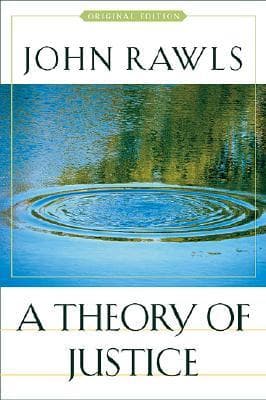
A Theory of Justice cover
Archivist's Choice

A Theory of Justice

John Rawls (1971)

Genre

Politics / Economics / Philosophy

Reading Time

1500+ min

Key Themes

See below

Track Your Reading

Sign in to track this book

Rawls's 'A Theory of Justice' is a philosophical work that defines justice as fairness, offering an alternative to utilitarianism and supporting individual rights in a democratic society.

Core Idea

John Rawls's "A Theory of Justice" states that a just society has a basic structure chosen by rational individuals in a hypothetical 'Original Position.' In this position, behind a 'Veil of Ignorance,' they do not know their social status, talents, or beliefs. This thought experiment leads to two main principles of justice: the first guarantees equal basic liberties for all, and the second (the Difference Principle) allows social and economic inequalities only if they are tied to positions open to all under fair equality of opportunity and benefit the least advantaged members of society. Rawls's theory offers an alternative to utilitarianism, prioritizing individual rights and a fair distribution of goods, thus rethinking the social contract tradition.
Reading time
1500+ min
Difficulty
Hard
✓ Read this if...
You are a serious student of political philosophy, ethics, or law, interested in foundational theories of justice, the social contract tradition, or a rigorous alternative to utilitarianism. Essential for understanding contemporary liberal thought.
✗ Skip this if...
You are looking for a light introduction to political ideas, prefer empirical analyses over abstract philosophical arguments, or are not prepared for a dense, highly structured, and extensive theoretical work.

Core idea

The central argument and framework that powers the entire book.

John Rawls's "A Theory of Justice" states that a just society has a basic structure chosen by rational individuals in a hypothetical 'Original Position.' In this position, behind a 'Veil of Ignorance,' they do not know their social status, talents, or beliefs. This thought experiment leads to two main principles of justice: the first guarantees equal basic liberties for all, and the second (the Difference Principle) allows social and economic inequalities only if they are tied to positions open to all under fair equality of opportunity and benefit the least advantaged members of society. Rawls's theory offers an alternative to utilitarianism, prioritizing individual rights and a fair distribution of goods, thus rethinking the social contract tradition.

At a glance

Reading time

1500+ min

Difficulty

Hard

Read this if...

You are a serious student of political philosophy, ethics, or law, interested in foundational theories of justice, the social contract tradition, or a rigorous alternative to utilitarianism. Essential for understanding contemporary liberal thought.

Skip this if...

You are looking for a light introduction to political ideas, prefer empirical analyses over abstract philosophical arguments, or are not prepared for a dense, highly structured, and extensive theoretical work.

Key Takeaways

1

Justice as Fairness: The Original Position

Designing a just society from behind a 'veil of ignorance'

Quote

The guiding idea is that the principles of justice for the basic structure of society are the object of the original agreement. They are the principles that free and rational persons concerned to further their own interests would accept in an initial position of equality as defining the fundamental terms of their association.

Rawls suggests a thought experiment: the 'Original Position,' where individuals choose society's justice principles from behind a 'veil of ignorance.' This veil hides their social status, talents, beliefs, gender, or race. Without this self-knowledge, individuals must make impartial decisions, ensuring the chosen principles are fair to everyone, regardless of their future place in society. This hypothetical situation is designed to prevent selfish biases and lead to truly just principles, reflecting an unbiased agreement among rationa...

Supporting evidence

The entire conceptual framework of the 'Original Position' and the 'veil of ignorance' is the cornerstone of Rawls's theory, serving as the primary device for deriving his principles of justice.

Apply this

When making decisions about public policy or social structures, imagine you don't know your own position or characteristics. Would you still find the policy fair? This helps uncover inherent biases.

original-positionveil-of-ignorancejustice-as-fairness
2

Two Principles of Justice

Lexical ordering of fundamental liberties and socio-economic equality

Quote

Each person is to have an equal right to the most extensive scheme of equal basic liberties compatible with a similar scheme of liberties for others. Social and economic inequalities are to be arranged so that they are both (a) to the greatest benefit of the least advantaged, and (b) attached to offices and positions open to all under conditions of fair equality of opportunity.

Rawls argues that rational individuals in the Original Position would choose two main principles of justice, in a specific 'lexical order.' The First Principle guarantees extensive equal basic liberties for all citizens, such as political liberty, free speech, and the right to personal property. This principle comes first; no social or economic gains can justify violating these basic rights. The Second Principle addresses social and economic inequalities, stating they must meet two conditions: they must benefit the least advantaged me...

Supporting evidence

Rawls explicitly states and elaborates on these two principles throughout the book, particularly in Part I, Section 11, detailing their content and lexical priority.

Apply this

When evaluating societal policies, first ensure that basic liberties are universally protected. Only then consider policies addressing economic inequality, prioritizing those that uplift the most vulnerable and ensure open access to opportunities.

first-principle-of-justicesecond-principle-of-justicedifference-principlelexical-priority
3

Critique of Utilitarianism

Rejecting the sacrifice of individuals for the greater good

Quote

Each person possesses an inviolability founded on justice that even the welfare of society as a whole cannot override. For this reason justice denies that the loss of freedom for some is made right by a greater good shared by others.

Rawls directly challenges utilitarianism, the main political philosophy of his time, which aims to maximize overall societal happiness or welfare. He argues that utilitarianism can justify sacrificing the rights or well-being of a minority if it leads to a greater total good for the majority. Rawls rejects this, stating that individuals have inherent rights and dignity that cannot be overridden, even for collective benefit. His theory says that justice sets boundaries that no amount of social utility can cross, emphasizing the unique ...

Supporting evidence

Rawls dedicates significant portions of his introduction and early chapters to explicitly contrasting his theory with utilitarianism, highlighting its ethical shortcomings regarding individual rights.

Apply this

Before endorsing a policy that promises overall societal benefit, critically assess if it unfairly burdens or infringes upon the fundamental rights of any individual or minority group. Prioritize individual inviolability over aggregate utility.

utilitarianisminviolability-of-personsindividual-rights
4

Fair Equality of Opportunity

Beyond formal equality to genuine life chances

Quote

Offices and positions are to be open to all under conditions of fair equality of opportunity. This means that not only are public offices and social positions open in the sense that individuals are not legally prevented from attaining them, but that all should have a fair chance to attain them.

Rawls's idea of fair equality of opportunity goes beyond simply removing legal barriers to advancement (formal equality). He argues that individuals with similar talents and motivation should have similar life chances, regardless of their socio-economic background. This means society must actively reduce the effects of social and economic circumstances on individuals' prospects. For example, a child from a poor family should have access to the same quality of education and cultural opportunities as a child from a wealthy family, allow...

Supporting evidence

This is the second part of Rawls's Second Principle of Justice, elaborated upon in Part I, Section 12, where he distinguishes it from 'formal equality of opportunity' and discusses its implications for education and social institutions.

Apply this

Advocate for policies that actively level the playing field, such as high-quality universal education, affordable healthcare, and programs that support early childhood development, ensuring that background doesn't predetermine one's future.

fair-equality-of-opportunityformal-equalitylife-chances
5

The Difference Principle

Inequalities are just only if they benefit the least advantaged

Quote

Social and economic inequalities are to be arranged so that they are ... to the greatest benefit of the least advantaged.

The Difference Principle is perhaps the most debated part of Rawls's theory. It states that social and economic inequalities are allowed only if they work to the greatest benefit of society's least advantaged members. This is not about strict equality of outcome, but about ensuring that any inequality clearly improves the prospects of those at the bottom. For example, if allowing higher salaries for certain jobs encourages innovation that creates jobs and improves services for the poor, then such inequality could be justified. However...

Supporting evidence

The Difference Principle is the first part of Rawls's Second Principle of Justice, thoroughly discussed in Part I, Section 13, where he provides examples of how it might operate in practice.

Apply this

When evaluating economic policies, always ask: 'How does this specifically benefit the poorest and most vulnerable in society?' If the answer is 'not at all' or 'it harms them,' then the inequality is unjust according to Rawls.

difference-principleleast-advantagedeconomic-inequalitysocial-justice
6

Reflective Equilibrium

Balancing considered judgments with theoretical principles

Quote

It is a search for a reflective equilibrium between general principles and our considered judgments on particular cases.

Rawls introduces 'reflective equilibrium' as the way we reach and justify our justice principles. It is a dynamic back-and-forth, not a one-way path from abstract principles to concrete judgments. We start with our intuitive 'considered judgments' about justice (e.g., slavery is wrong). We then try to create general principles that explain these judgments. If the principles conflict with some judgments, we can either change the principles or revise our judgments, aiming for a consistent set of beliefs. This process, moving between spe...

Supporting evidence

Rawls describes reflective equilibrium in Part I, Section 9, as the method for justifying the choice of principles in the Original Position and for refining our moral intuitions.

Apply this

When faced with a moral or ethical dilemma, don't just rely on intuition or rigid rules. Reflect on your specific judgment, then see if it aligns with broader principles. If not, consider refining both until they are in harmony.

reflective-equilibriumconsidered-judgmentsmoral-philosophyjustification
7

The Social Contract Reimagined

Hypothetical agreement for a just basic structure

Quote

My aim is to present a conception of justice which generalizes and carries to a higher level of abstraction the familiar theory of the social contract.

Rawls updates the social contract tradition (linked to Locke, Rousseau, and Kant) with a key change. Unlike historical social contract theories that often describe an actual agreement, Rawls's contract is purely hypothetical. It is an agreement that rational, free, and equal individuals would make under fair conditions (the Original Position). This hypothetical contract's purpose is not to explain government origins, but to determine the basic principles for society's 'basic structure' – its main political, social, and economic inst...

Supporting evidence

Rawls explicitly states his intention to generalize the social contract theory in his preface and early chapters, setting the stage for the Original Position as his primary contractual device.

Apply this

When evaluating the legitimacy of social institutions, ask if their fundamental rules could reasonably be agreed upon by free and equal people who don't know their own future position or advantages within that system.

social-contracthypothetical-contractbasic-structure-of-societypolitical-philosophy
8

Primary Goods as a Metric

Measuring well-being with universally desired resources

Quote

Primary goods... are things that every rational man is presumed to want. These goods normally have a use whatever a person's rational plan of life.

To compare individuals and assess fair distributions, Rawls uses 'primary goods.' These are not subjective measures of happiness or utility, but objective necessities that any rational person would want, regardless of their specific life plans. They include basic rights and liberties, freedom of movement and occupation, powers and responsibilities of offices, income and wealth, and the social bases of self-respect. By focusing on primary goods, Rawls avoids the complexities of comparing individual utility and provides a clear way to e...

Supporting evidence

Rawls defines and lists primary goods in Part I, Section 15, explaining their role as the metric for assessing the distribution of benefits and burdens in society.

Apply this

When designing social programs or policies, focus on ensuring equitable access to these fundamental primary goods rather than trying to quantify subjective happiness, which is far more complex and prone to bias.

primary-goodssocial-bases-of-self-respectdistribution-of-resourcesmetric-of-justice
9

Stability and Public Reason

A just society must be inherently stable and publicly justifiable

Quote

For a society to be stable, its basic structure must satisfy the principles of justice, and citizens must acquire a sense of justice, a desire to act in accordance with these principles.

Rawls argues that a just society must also be stable. This stability comes not from force, but because citizens willingly accept the principles of justice. When a society's institutions follow principles from the Original Position, citizens, after thinking about them, will recognize these principles as fair and reasonable. This builds a 'sense of justice' in individuals, causing them to support and act according to just institutions. Also, political decisions should be justifiable through 'public reason,' meaning they should be explai...

Supporting evidence

Rawls dedicates Part III of the book to the concept of stability, particularly Sections 76-87, discussing the sense of justice and the conditions under which a just society can endure.

Apply this

When advocating for a policy, frame your arguments in terms of shared values and principles that are accessible and agreeable to a broad public, rather than relying solely on personal beliefs or specific doctrines. Ensure institutions foster a sense of fairness.

stability-of-justicepublic-reasonsense-of-justiceoverlapping-consensus
10

The Priority of Right over Good

Justice defines the boundaries for pursuing individual conceptions of the good

Quote

The principles of right, and so of justice, put limits on which satisfactions have value; they impose restrictions on what are reasonable conceptions of one's good.

A main idea of Rawls's philosophy is the 'priority of right over good.' This means that justice principles (the 'right') are set before and independently of any specific idea of what makes a good life (the 'good'). In a diverse society, individuals have varied and often conflicting ideas about what makes a life worthwhile. Justice, as fairness, provides a framework of rights and duties that all can agree on, regardless of their personal 'good.' These justice principles then set the limits within which individuals are free to pursue ...

Supporting evidence

Rawls discusses the priority of right throughout the book, particularly in contrast to teleological theories (like utilitarianism) that define the good first and then the right as that which maximizes the good.

Apply this

When considering public policy, ensure that the rules and laws prioritize fundamental rights and fairness for all, allowing individuals the freedom to pursue their own life goals, rather than imposing a single vision of the 'good life' on everyone.

priority-of-rightconceptions-of-the-goodliberalismpluralism

Critical analysis

Notable Quotes

Justice is the first virtue of social institutions, as truth is of systems of thought.

Opening statement emphasizing the foundational role of justice.

Each person is to have an equal right to the most extensive scheme of equal basic liberties compatible with a similar scheme of liberties for others.

The first principle of justice, concerning basic liberties.

Social and economic inequalities are to be arranged so that they are both (a) to the greatest benefit of the least advantaged, and (b) attached to offices and positions open to all under conditions of fair equality of opportunity.

The second principle of justice, concerning social and economic inequalities (the Difference Principle and Fair Equality of Opportunity).

The original position is a hypothetical situation characterized so as to lead to a certain conception of justice.

Introducing the conceptual device used to derive principles of justice.

No one knows his place in society, his class position or social status, nor does anyone know his fortune in the distribution of natural assets and abilities, his intelligence, strength, and the like.

Describing the 'veil of ignorance' within the original position.

The principles of justice are chosen behind a veil of ignorance.

Summary of the choice procedure in the original position.

In justice as fairness the original position of equality corresponds to the state of nature in the traditional theory of the social contract.

Connecting his theory to the social contract tradition.

An injustice is tolerable only when it is necessary to avoid an even greater injustice.

Discussing the limits and necessity of tolerating injustice.

The greater expectations of those better off are just if and only if they work as part of a scheme which improves the expectations of the least advantaged members of society.

Elaborating on the implications of the Difference Principle.

The basic structure of society is the primary subject of justice.

Defining the scope of his theory of justice.

The two principles of justice are in lexical order.

Explaining that basic liberties take priority over social and economic inequalities.

A just society is a society that its members would agree to if they did not know how they would fare in it.

A concise summary of the core idea of justice as fairness.

The principles of justice apply to the basic structure of society and govern the assignment of rights and duties and regulate the distribution of social and economic advantages.

Clarifying the domain and function of the principles of justice.

From the standpoint of justice as fairness, the primary subject of justice is the basic structure of society, or more exactly, the way in which the major social institutions distribute fundamental rights and duties and determine the division of advantages from social cooperation.

A more detailed explanation of the primary subject of justice.

Quiz

Test Your Knowledge

Ready to see how well you understood this book? Take our interactive quiz with 10 questions.

10
Questions
~5
Minutes
?
Best Score

Key Questions (FAQ)

Rawls's A Theory of Justice proposes 'justice as fairness' as an alternative to utilitarianism, arguing that basic rights and liberties of individuals are inviolable and cannot be overridden by the welfare of society as a whole. It aims to identify principles of justice that free and equal persons would agree to under fair conditions.

About the author