BookBrief
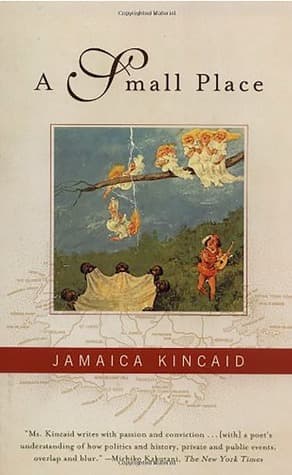
A Small Place cover
Archivist's Choice

A Small Place

Jamaica Kincaid (1988)

Genre

Lifestyle / Memoir / History

Reading Time

90 min

Key Themes

See below

Track Your Reading

Sign in to track this book

Jamaica Kincaid's "A Small Place" is a sharp, lyrical critique of post-colonial Antigua, showing the difficult realities of tourism and corrupt government beneath the island's beautiful surface.

Core Idea

Jamaica Kincaid's "A Small Place" is a sharp essay that questions the idealized view of Antigua held by Western tourists. It shows the country as a post-colonial nation struggling with the lasting effects of British exploitation and a corrupt, local government. Kincaid argues that tourists often miss the real problems, ignoring the historical wrongs, poverty, and psychological harm caused by colonialism. She believes that tourism itself, with its demand for perfect beaches and friendly service, can continue a colonial dynamic, treating Antiguans and their land as something to be consumed rather than a country dealing with its complex past and present. The book's main idea is that Antigua's beauty is tied to its harsh history of slavery and British rule, and that current corruption and lack of development are a direct result of this past. Kincaid criticizes both the former colonizers for their supposed 'generosity' and the independent Antiguan government for failing to move past the colonial way of doing things, instead repeating patterns of exploitation. With her direct, accusing writing, she makes readers face uncomfortable truths about privilege, power, and the long-term impact of imperialism on a nation's identity and future.
Reading time
90 min
Difficulty
Medium
✓ Read this if...
You want a powerful, unflinching critique of colonialism, post-colonial corruption, and the ethics of tourism, delivered with lyrical rage.
✗ Skip this if...
You prefer gentle narratives, are easily offended by direct accusation, or are looking for a traditional travelogue or memoir.

Core idea

The central argument and framework that powers the entire book.

Jamaica Kincaid's "A Small Place" is a sharp essay that questions the idealized view of Antigua held by Western tourists. It shows the country as a post-colonial nation struggling with the lasting effects of British exploitation and a corrupt, local government. Kincaid argues that tourists often miss the real problems, ignoring the historical wrongs, poverty, and psychological harm caused by colonialism. She believes that tourism itself, with its demand for perfect beaches and friendly service, can continue a colonial dynamic, treating Antiguans and their land as something to be consumed rather than a country dealing with its complex past and present.

The book's main idea is that Antigua's beauty is tied to its harsh history of slavery and British rule, and that current corruption and lack of development are a direct result of this past. Kincaid criticizes both the former colonizers for their supposed 'generosity' and the independent Antiguan government for failing to move past the colonial way of doing things, instead repeating patterns of exploitation. With her direct, accusing writing, she makes readers face uncomfortable truths about privilege, power, and the long-term impact of imperialism on a nation's identity and future.

At a glance

Reading time

90 min

Difficulty

Medium

Read this if...

You want a powerful, unflinching critique of colonialism, post-colonial corruption, and the ethics of tourism, delivered with lyrical rage.

Skip this if...

You prefer gentle narratives, are easily offended by direct accusation, or are looking for a traditional travelogue or memoir.

Key Takeaways

1

The Tourist's Gaze is Blind

Tourism, by its nature, demands a willful ignorance of the host country's reality.

Quote

An ugly thing, that you can only see the beauty of the landscape with the knowledge that the people who live there are not as happy as you, since they are not free.

Kincaid argues that the tourist experience relies on a surface-level view that avoids the complex realities, historical injustices, and daily struggles of local people. Tourists look for an ideal, clean version of a place, a 'paradise' that exists only because deeper, often painful truths are hidden. This deliberate blindness lets tourists enjoy their vacation without facing the post-colonial scars, economic differences, and systemic corruption that often support the very services they use. The beautiful landscape becomes a misleading...

Supporting evidence

Kincaid directly addresses the 'you' (the tourist), detailing their arrival at the airport, their journey through dilapidated roads, and their eventual relaxation at pristine resorts, all while remaining oblivious to the historical context of these surroundings.

Apply this

Before traveling, research the historical and political context of your destination. Seek out local perspectives beyond tourist brochures and consider how your presence impacts the local economy and culture, aiming for engagement rather than mere consumption.

tourism-critiquepost-colonialismprivilege
2

The Lingering Stain of Colonialism

Antigua's present struggles are direct consequences of its colonial past, not inherent failings.

Quote

For make no mistake about it, it was out of the strenuously exploited produce of these islands, produce that was grown out of the strenuously exploited labour of these islands, that Great Britain maintained its splendour.

Kincaid shows how British colonialism did not simply end but changed, leaving a lasting mark on Antigua's institutions, buildings, and way of thinking. The systems of government, education, and economy were designed to benefit the colonizer, not the colonized. Even after independence, the legacy of exploitation continues: old public services, reliance on tourism (a new form of outside control), and a deep-seated feeling of inferiority among Antiguans. Britain's 'splendor' was built directly on the 'hard-worked' labor and resources of ...

Supporting evidence

The historical account of Antigua's sugar plantations and the slave trade, explicitly linking the wealth of Britain to the suffering of Antiguans. She points out the former slave-owner's house turned into a bank.

Apply this

Educate yourself on the colonial history of places you visit or products you consume. Support organizations working for restorative justice and equitable development in post-colonial nations.

colonial-legacyexploitationpost-independence-struggles
3

Corruption as a Colonial Inheritance

The current corruption in Antigua's government is a perversion of colonial power structures.

Quote

The people in a small place, these people, they are not to be trusted. They are corrupt.

Kincaid presents government corruption in Antigua not as a single moral failure but as a direct, though twisted, result of colonial rule. The British set up power and control systems that were unfair and not accountable to local people. When Antiguans gained independence, they inherited these flawed structures, often repeating similar patterns of self-enrichment and ignoring the common good. The new ruling class, instead of getting rid of the oppressive system, simply took the place of the former colonizers, using their positions to b...

Supporting evidence

The example of the Antiguan prime minister and his family driving luxury cars while public services crumble, and the unexplained wealth of government officials.

Apply this

Support investigative journalism and anti-corruption initiatives in developing nations. Advocate for transparent governance and accountability, recognizing that systemic issues often have deep historical roots.

government-corruptionneo-colonialismpower-dynamics
4

The Tourist as a Modern Colonizer

The act of tourism, though seemingly benign, mirrors colonial power dynamics.

Quote

You are a tourist. A tourist is an ugly human being.

Kincaid's strong criticism of tourists comes from her belief that their presence, despite economic benefits, creates a power dynamic much like colonialism. Tourists arrive with a sense of entitlement, expecting services and comforts without truly understanding or respecting the local culture and struggles. They use the landscape and labor of Antiguans for their own pleasure, often without fair pay or real interaction. This dynamic reinforces a hierarchy where the 'developed' visitor sets the terms, turning locals into service provider...

Supporting evidence

The detailed description of the tourist's journey from the airport to the hotel, highlighting their insulation from the local reality and their expectation of being served.

Apply this

Practice conscious travel: learn basic phrases, engage respectfully with locals, support local businesses directly, and challenge your own assumptions and expectations about the 'paradise' you seek.

responsible-tourismcultural-imperialismentitlement
5

Lost History, Stolen Identity

The erasure of Antiguan history is a profound act of identity theft.

Quote

The people in a small place, these people, they are not to be trusted. They are corrupt.

Kincaid regrets the systematic removal and hiding of Antiguan history, especially the history of its enslaved people, under colonial rule. The education system, public records, and even collective memory were shaped to reflect a British-focused story, effectively denying Antiguans their own past. This historical gap is not accidental; it is a deliberate act of control, meant to weaken a sense of shared identity and resistance. Without a strong understanding of their own origins, struggles, and successes, Antiguans are left without dir...

Supporting evidence

The lack of a proper national library or historical archive in Antigua, and the colonial-era education that taught British history while ignoring Antiguan history.

Apply this

Support initiatives that preserve and promote indigenous histories and oral traditions. Advocate for decolonizing curricula and ensuring diverse historical narratives are taught globally.

historical-erasurecultural-identitydecolonization-of-knowledge
6

The Psychological Scars of Subjugation

Generations of colonial rule have left deep psychological wounds on the Antiguan people.

Quote

An ugly thing, that you can only see the beauty of the landscape with the knowledge that the people who live there are not as happy as you, since they are not free.

Beyond economic and political effects, Kincaid reveals the deep psychological harm caused by centuries of being controlled. Antiguans internalize a feeling of being 'less than' the colonizers, which shows up in different ways: relying on outside approval, lacking trust in their own institutions, and struggling to define their identity outside the colonial framework. This psychological inheritance contributes to ongoing corruption and a collective lack of action, as the trauma of the past continues to shape current behaviors and attitu...

Supporting evidence

Kincaid's own personal reflections and observations of how Antiguans view themselves and their leaders, often with a sense of resignation or self-deprecation.

Apply this

Recognize the long-term psychological impacts of oppression. Support mental health initiatives and cultural programs that foster self-esteem and pride within communities that have experienced historical trauma.

intergenerational-traumacolonial-mentalityself-perception
7

The Hypocrisy of British 'Benevolence'

Britain's self-congratulatory narrative of 'civilizing' was a thinly veiled justification for exploitation.

Quote

The people in a small place, these people, they are not to be trusted. They are corrupt.

Kincaid sharply criticizes the British idea that their colonial project was a kind act of bringing civilization to 'savage' lands. She shows this as a deep lie, arguing that every act presented as help or improvement was ultimately designed to serve British interests. Schools taught British history, not Antiguan; buildings were built for trade that benefited Britain; and the 'order' imposed was for efficient exploitation. The supposed 'gifts' of language and law came at the cost of suppressed local cultures and the imposition of forei...

Supporting evidence

The ironic observation that the only well-maintained roads in Antigua lead to hotels and the airport, benefiting tourists and foreign businesses, not the local populace.

Apply this

Critically examine narratives of historical 'progress' and 'aid,' especially from former colonial powers. Seek out alternative histories and perspectives that challenge dominant, often self-serving, accounts.

colonial-propagandahistorical-revisionismimperialism
8

The Pain of Returning Home

For the diasporic native, returning home means confronting uncomfortable truths.

Quote

An ugly thing, that you can only see the beauty of the landscape with the knowledge that the people who live there are not as happy as you, since they are not free.

Kincaid, writing as a native Antiguan who has lived abroad, describes the complex and often painful experience of returning home after gaining an outside perspective. The 'small place' is no longer just home; it is seen through the critical lens of post-colonial thought and personal experience. This dual vision allows her to feel a deep connection to the land and its people while also feeling deep disappointment and anger at the visible signs of corruption, neglect, and the lasting effects of colonialism. This tension between love for...

Supporting evidence

Kincaid's personal reflections woven throughout the essay, where she contrasts her childhood memories with the current state of Antigua, particularly the deteriorated infrastructure.

Apply this

For those in diaspora, engage with your homeland's issues not just through nostalgia but with critical awareness. For others, understand that 'home' can be a source of both profound love and deep frustration for those who experience its complexities.

diasporabelongingdisillusionment
9

The Silence of the Oppressed

The inability or reluctance of the oppressed to speak out perpetuates their suffering.

Quote

The people in a small place, these people, they are not to be trusted. They are corrupt.

Kincaid implicitly critiques the Antiguan people's apparent acceptance of their situation, whether due to fear, apathy, or a deeply ingrained colonial mindset. While she feels deep empathy for their difficulties, she also suggests a tragic cycle where the inability to collectively challenge corruption and injustice allows it to continue. This silence is not a lack of suffering, but perhaps a lack of power, a result of generations of being disempowered and having their voices silenced. The book itself, a strong act of speaking out, con...

Supporting evidence

Kincaid's observations of Antiguans' interactions with tourists and their government, often appearing compliant or resigned, despite their visible struggles.

Apply this

Support freedom of speech and expression globally. Listen to and amplify marginalized voices. Recognize that silence can be a complex outcome of systemic oppression, not an endorsement of the status quo.

agencyresistancesystemic-oppression
10

The Power of Lyrical Rage

Kincaid's distinctive prose transforms anger into a potent tool for truth-telling.

Quote

An ugly thing, that you can only see the beauty of the landscape with the knowledge that the people who live there are not as happy as you, since they are not free.

Beyond its content, the book's power comes from Kincaid's unique writing style: a lyrical, almost poetic prose filled with raw, honest anger and sarcastic humor. She does not just present facts; she embodies the anger and disappointment, making the reader feel the injustice. Her repeated sentence structures and direct address to the 'you' (the tourist/colonizer) are not just stylistic choices but rhetorical tools meant to disarm, provoke, and encourage self-reflection. This 'lyrical rage' is essential to her message, showing that emot...

Supporting evidence

The entire structure and tone of the book, particularly the direct, accusatory 'you' and the long, flowing sentences that build a sense of inescapable truth.

Apply this

Recognize that powerful writing can take many forms beyond traditional academic discourse. Appreciate how literary style can convey profound emotional and political truths, challenging readers to engage on a deeper level.

literary-activismrhetoricsardonic-tone

Critical analysis

Notable Quotes

Antigua is beautiful. Antigua is a small island. Antigua is a former British colony.

Opening lines, establishing the setting and its colonial past.

When you go to Antigua as a tourist, this is what you see. When you go to Antigua as a tourist, this is what you do.

Direct address to the reader, setting up the tourist's limited perspective.

An ugly thing, that is what you are when you go on holiday to these places.

Critique of the tourist's often unwitting role in perpetuating colonial dynamics.

The people in a small place can’t be too happy to see you, the tourist, because in a way you are a reminder of their powerlessness.

Explaining the resentment felt by locals towards tourists.

For isn’t it true that the people who own the hotel don’t look like you?

Highlighting the racial and economic disparities in the tourism industry.

A tourist is an ugly human being. You are not an ugly human being all the time; you are only an ugly human being when you are a tourist.

Distinguishing between the person and the role they play as a tourist.

The people in a small place, they are not to be envied; it is a small place, and so you live in a small way.

Describing the limited opportunities and struggles of the local population.

This is a fact: you can go to the library in Antigua and you will see that it is a ruin.

Illustrating the neglect of public institutions and the legacy of colonialism.

The whole island is a slum, a slum with a five-star hotel at its edge.

Juxtaposing the poverty of the island with the luxury of tourism.

But what I see is the remains of an empire, and how it has continued to shape and distort the lives of the people who were once its subjects.

Reflecting on the enduring impact of British colonialism.

The people in Antigua have been brainwashed into believing that everything British is good and everything Antiguan is bad.

Critiquing the internalized self-hatred resulting from colonial education.

It was as if the people who had built the library had been so busy enjoying their lives that they had forgotten to build a library.

Sarcastic observation about the state of the public library, implying neglect.

Every native of every place is a potential tourist, and every tourist is a potential native.

A more nuanced reflection on the interchangeability of roles, though still critical.

The beauty of the place, it is a beauty that is for sale.

Highlighting how the island's natural beauty is commodified for tourism.

Quiz

Test Your Knowledge

Ready to see how well you understood this book? Take our interactive quiz with 10 questions.

10
Questions
~5
Minutes
?
Best Score

Key Questions (FAQ)

'A Small Place' is a powerful essay and memoir by Jamaica Kincaid that critically examines the impact of European colonization and tourism on her home island of Antigua. It addresses the traveler directly, revealing the complex realities and injustices faced by the Antiguan people behind the picturesque scenery.

About the author

Jamaica Kincaid

Jamaica Kincaid is an Antiguan-American novelist, essayist, gardener, and gardening writer. She was born in St. John's, Antigua. She lives in North Bennington, Vermont and is Professor of African and African American Studies in Residence at Harvard University during the academic year.