“I pity the man who can travel from Dan to Beersheba, and cry, 'Tis all barren;”
— Yorick's reflection on the importance of an open mind and heart during travel.

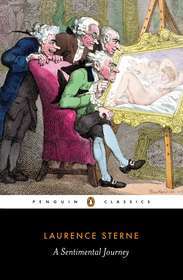
Laurence Sterne (2017)
Genre
Lifestyle
Reading Time
134 min
Key Themes
See below
Sign in to track this book
Ignoring grand sights for human connection, a witty parson travels through France, finding emotional and erotic encounters more important than any destination.
Yorick, the narrator, arrives in Calais and realizes he has forgotten his passport. This causes him worry, as a Custom-house officer tells him he cannot go on without it. While thinking about this, he is approached by Father Lorenzo, a Franciscan friar, asking for donations for his monastery. Yorick, at first dismissive and somewhat biased against the friar, refuses him sharply. However, a moment of thought and guilt makes him regret his harshness. He decides to make amends if he sees the friar again. This sets an early tone for his journey's focus on human connection and feeling over strict rules.
Bothered by his unkindness, Yorick looks for Father Lorenzo. He finds the friar in the street and offers a sincere apology, explaining his earlier bad mood. The friar, with grace, accepts. To confirm their new friendship, they exchange snuff-boxes—a small, personal gesture that shows mutual respect and breaks down initial barriers. This meeting deeply affects Yorick, softening his heart and making him open to more kind interactions with the people he meets. It starts a pattern of Yorick's inner thoughts and his ability to grow emotionally throughout his travels.
Continuing his journey, Yorick finds himself in a coach with a beautiful lady and her young maid, a glove-maker's daughter. The small space and the lady's charm lead to a series of playful and subtle flirtations. Yorick watches the lady's every move and look, finding joy in her innocence and beauty. He engages in lighthearted talk, his thoughts often drifting to romantic ideas, though he keeps up a show of proper behavior. This part shows Yorick's attraction to women and his enjoyment of the delicate social dance, often with a hint of romantic speculation.
While at an inn, Yorick sees a starling trapped in a cage, repeatedly chirping, 'I can't get out – I can't get out.' This simple sight moves Yorick deeply, making him think about liberty and imprisonment. He reflects on the many ways people are confined, both physically and emotionally. The starling becomes a strong symbol of the universal desire for freedom and the suffering caused by its absence. This scene is a classic example of Sterne using seemingly ordinary events to spark deeper thoughts and feelings in Yorick.
In Paris, Yorick sees a touching scene with a distinguished Marquis and a poor, elderly man. The Marquis, despite his noble status, stops to help and comfort the old man, who seems to be in distress. This spontaneous act of kindness impresses Yorick deeply. He compares it to the perceived coldness and formality often linked with Parisian nobility. He admires the Marquis's true humanity and thinks about the good that can be found across social classes, strengthening his belief in empathy and connection.
Yorick enters a shop in Paris, intending to buy something, but is immediately charmed by the young shop girl, a grisette. Their interaction quickly turns into a delightful and innocent flirtation. Yorick admires her wit, grace, and lively spirit. He engages her in playful talk, enjoying the lighthearted exchange and the subtle attraction. This scene shows Yorick's appreciation for female company and his ability to find joy and connection in even casual meetings, highlighting his 'sentimental' approach to human interaction.
Yorick finds himself in a public coach-house waiting for a carriage, where he meets a group of servants belonging to a French Count. He watches their interactions and tries to talk to them, but feels a sense of social unease. He thinks about the strict class differences and the difficulty of bridging such gaps, even in casual settings. This episode contrasts with his earlier, more easy interactions with commoners, showing the complexities of social navigation in 18th-century France and Yorick's occasional discomfort outside his usual social circles.
At an inn, Yorick must share supper with a chambermaid because there are no other rooms. What starts as a practical need quickly becomes a highly intimate encounter. The close space, the late hour, and the maid's inviting presence lead to suggestive remarks and actions. Yorick struggles to stay composed and proper, constantly fighting his own desires. This scene is a prime example of the novel's mix of humor, feeling, and underlying erotic tension, showing Yorick's inner conflict and human weakness.
After supper, the chambermaid, Fille de Chambre, and Yorick find themselves in a more compromising situation. The story builds tension through suggestive talk and actions, hinting at a near-consummation of their mutual attraction. Yorick's inner thoughts show his struggle between his morals and his physical desires. The scene abruptly ends with Yorick's hand on the door, poised between entering her room or retreating, leaving the outcome unclear for the reader to guess. This cliffhanger is typical of Sterne's writing, focusing on psychology over explicit action.
Yorick talks with a Monsieur, discussing the differences between French and English customs and temperaments. The Monsieur, carrying a sword, shows a certain French style and pride. Yorick engages in a witty exchange, thinking about national traits and social norms. This dialogue allows Sterne to subtly mock and comment on the cultural stereotypes of the time, while also showing Yorick's observation skills and his ability to engage in intellectual discussion, even in casual settings. It adds another layer to his journey beyond personal meetings.
Yorick meets a Count de B- who, upon seeing Yorick's snuff-box (the one exchanged with Father Lorenzo), immediately recognizes its meaning. The Count reveals that the friar has spoken highly of Yorick's generosity and kindness. This unexpected recognition pleases Yorick, showing how small acts of compassion can spread and shape one's reputation. It reinforces the theme of human connection and the idea that true feeling is understood and valued by everyone, regardless of social standing or nationality.
Yorick attends a public dance, watching the participants with his usual mix of amusement and thought. He is especially struck by the grace and natural joy shown by the dancers. He thinks about the beauty of human movement and the unrestrained expression of happiness. This scene offers a moment of lighthearted observation, letting Yorick appreciate life's simple pleasures and the human capacity for celebration, further showing his open and appreciative attitude toward the world around him.
As Yorick continues his journey toward Italy, the story shifts from specific events to his inner thoughts and expectations. He imagines the people he will meet, the experiences he will have, and the feelings they will bring out. The physical destination becomes less important than the psychological journey. This section emphasizes the 'sentimental' part of the novel, where Yorick's inner world of feeling and thought comes before outside events. He is less a tourist and more a collector of human emotions and experiences.
Yorick sees the body of a dead ass on the roadside, a sight that affects him deeply. He thinks about the animal's life, its loyalty, and its humble existence, feeling great pity and tenderness. This seemingly small event triggers a strong emotional response in Yorick, showing his capacity for empathy not just for humans, but for all living creatures. It highlights the novel's broader theme of compassion and the connection of all beings, even in death.
The novel ends suddenly as Yorick finds himself in a room with a Piedmontese girl and no beds, forcing them to share. The final sentence has Yorick accidentally touching the girl's hand in the dark, followed by the story breaking mid-sentence: '—So that when I stretch'd out my hand, I caught hold of the Fille de Chambre's—'. This famous ending leaves the reader in a moment of ambiguous intimacy and humor, perfectly capturing Yorick's character and the novel's mix of wit, feeling, and suggestive storytelling, without ever explicitly stating the outcome.
The Protagonist
Yorick's journey is less about physical destination and more about an internal exploration of sentiment, empathy, and his own moral and emotional boundaries.
The Supporting
He serves as an early catalyst for Yorick's journey into sentiment and empathy, demonstrating the value of compassion.
The Supporting
She provides an early opportunity for Yorick to engage in lighthearted, sentimental interactions, setting a tone for his journey.
The Supporting
She offers a momentary, joyful diversion and reinforces Yorick's appreciation for charming female company.
The Supporting
She is the catalyst for the novel's most intense and ambiguous exploration of Yorick's desires and moral struggles.
The Mentioned
He serves as an example of genuine human kindness, inspiring Yorick's reflections on compassion.
The Mentioned
Its captivity sparks a significant introspective moment for Yorick on the nature of freedom.
The Supporting
He establishes the initial conflict of the journey, highlighting the contrast between bureaucratic rules and Yorick's free-spirited nature.
The Supporting
He facilitates a discussion on national character and cultural differences.
The novel explores 'sentiment' deeply—not just emotion, but a refined ability to feel, empathize, and judge morally. Yorick's journey is shaped by his reactions to people and situations, often leading to thoughts on human nature. His pity for the caged starling, his regret after offending Father Lorenzo, and his tender feelings for the dead ass all show this theme. Sterne suggests that true travel is an inner journey of the heart, where observations are seen through a sensitive and empathetic lens, valuing genuine feeling over detached reason.
“I pity the man who can travel from Dan to Beersheba, and cry, 'Tis all barren; and so it is; and so is all the world to him who will not cultivate the fruits it offers.”
The theme of liberty, both physical and symbolic, appears throughout various parts of the story. The most notable example is the caged starling, whose repeated cry 'I can't get out' deeply moves Yorick and makes him think about freedom. This extends to human conditions, like the limits of social rules, national borders (Yorick's passport issue), and even the confinement of one's own desires and moral codes, as seen in his inner struggles with the Fille de Chambre. The novel suggests that true freedom is not just physical movement, but the liberation of the spirit and the ability to empathize.
“Disguise thyself as thou wilt, still, Slavery! still thou art a bitter draught.”
A main idea of the novel is the celebration of true human connection, moving past social barriers, nationality, and initial biases. Yorick actively seeks and values interactions with people from all walks of life—friars, ladies, grisettes, chambermaids. His initial coldness toward Father Lorenzo, followed by sincere regret and reconciliation, sets the tone. The exchange of snuff-boxes, the shared supper, and even simply observing kindness (like the Marquis) highlight the novel's belief in empathy and mutual understanding to enrich life and bridge differences, making the journey meaningful.
“There is a mysterious harmony in the working of souls, which makes them like a well-tuned instrument, where every string vibrates to the touch of the master.”
Sterne redefines the travelogue, shifting from factual descriptions of landmarks (as hinted by his critique of Smollett) to a subjective, emotional, and introspective journey. Yorick is less interested in monuments than in human faces, gestures, and feelings. His observations are very personal and often lead to philosophical thoughts or emotional discoveries. The 'journey' becomes a symbol for self-discovery and an exploration of the human heart, where the traveler's inner world shapes their view of the outside world, making every encounter a source of feeling and thought.
“I think I can see the precise point where vulgarity begins, and where sentiment ends.”
Beneath its surface of sentiment and wit, the novel has a subtle but constant hint of eroticism and suggestive desire. Yorick, despite being a clergyman, is often drawn to attractive women, and his encounters often have unspoken tension and flirtation. The clearest example is his long supper and near-indiscretion with the Fille de Chambre, ending ambiguously. Sterne uses suggestive language and hints rather than direct descriptions, letting the reader's imagination fill in the gaps, making the exploration of human desire a central, often humorous, and sometimes morally complex, part of Yorick's journey.
“There is a certain dignity in the very attempts to do right, which makes us sometimes in love with the man, and sometimes with his mistakes.”
The literary movement emphasizing feeling, emotion, and moral sensitivity.
Sterne's novel is a quintessential example of sentimentalism. It uses Yorick's heightened emotional responses and capacity for empathy to explore human nature. Instead of focusing on grand adventures or intellectual discourse, the narrative prioritizes Yorick's subjective feelings, his tender pity for the starling and the dead ass, his remorse towards Father Lorenzo, and his delicate flirtations. This device allows Sterne to delve into the nuances of human emotion and moral sensibility, making the 'sentimental journey' an internal exploration as much as a physical one.
The story is told entirely through the subjective lens of the protagonist, Yorick.
The entire novel is presented through Yorick's highly personal, often digressive, and introspective first-person perspective. This device allows the reader direct access to his thoughts, feelings, and moral reflections, making him a deeply intimate and relatable character. His subjective observations, witty asides, and philosophical musings shape the entire narrative, blurring the lines between author and character, and inviting the reader to experience the journey through his unique 'sentimental' lens. This narrative choice is crucial for establishing the novel's tone and thematic focus on individual perception.
Frequent departures from the main plot to insert stories, reflections, or philosophical musings.
Sterne masterfully employs digressions and anecdotes, often interrupting the linear progression of Yorick's journey to insert seemingly unrelated stories, philosophical reflections, or witty observations. For example, the detailed account of the caged starling, or Yorick's internal debates on propriety. This device creates a conversational, rambling style that mimics the flow of human thought, adding depth, humor, and intellectual richness. It allows Sterne to explore multiple themes and ideas without being constrained by a strict plot, making the journey less about destination and more about the diverse experiences and thoughts encountered along the way.
The use of suggestive language and unfinished scenes to imply meaning without explicit statement.
Sterne frequently uses ambiguity and innuendo, particularly in scenes involving Yorick's romantic or erotic encounters. Rather than explicitly describing events, he relies on suggestive dialogue, subtle gestures, and Yorick's internal struggles to imply what is happening or what might happen. The ending with the Fille de Chambre, breaking off mid-sentence, is the most famous example. This device engages the reader's imagination, creating humor, tension, and a sense of tantalizing mystery, while also allowing Sterne to navigate potentially controversial subjects with wit and decorum for his 18th-century audience.
“I pity the man who can travel from Dan to Beersheba, and cry, 'Tis all barren;”
— Yorick's reflection on the importance of an open mind and heart during travel.
“The learned Smelfungus travelled from Boulogne to Paris—from Paris to Rome—and so on—but he set out with the spleen and jaundice, and every object he pass'd by was discolour'd and distorted—He wrote an account of them, but it was nothing but an account of his miserable feelings.”
— Yorick's criticism of a cynical traveler, highlighting how one's internal state affects perception.
“I had been a quiet journey, in the way I described it, from Paris to Versailles—I had taken up my pen, and wrote it to the world; and had it been to send to a friend, I should have written it just the same; and had it been to send to a mistress—I should have written it ten times better.”
— Yorick musing on the motivations and audiences for his writing.
“Dear sensibility! source inexhausted of all that's precious in our joys, or costly in our sorrows!”
— An exclamation celebrating the power and value of human emotion.
“I had left my servant at Paris; and as I had taken up this journey merely as a journey of the heart, I determined to take no more trouble with any thing than the carrying it through.”
— Yorick's decision to travel light and focus on internal experience.
“There is nothing so exquisitely tender as the first few hours of a tender event.”
— Yorick reflecting on the delicate nature of new experiences or affections.
“When a man has been with his mistress, he can talk of nothing else.”
— A humorous observation on the consuming nature of romantic affection.
“The pulsation of the heart, which I felt, was not of that kind which arises from the agitation of the blood, but of that which is caused by the vibration of the soul.”
— Yorick describing a profound emotional or spiritual experience.
“I will not write a word, quoth I, of the journey from Calais to Paris—I have set out with a design of writing a book of travels—but not a book of travels after the usual mode, to tell of great towns, and stately edifices, and formidable mountains, and rapid rivers, but of what passes in my own mind.”
— Yorick declaring his intention to write a subjective, internal travelogue.
“The hand of the mind, I think, is the hand of the heart.”
— A poetic statement linking intellect and emotion.
“I speak of the thing as it is;—the world will not be put out of its way for me, and I see no reason why I should be put out of my way for the world.”
— Yorick's assertion of individuality and self-acceptance.
“The great pleasure of a journey is to feel the heart beating against the ribs, and to say, 'I am alive!'”
— Yorick expressing the joy of simply being alive and experiencing the world.
“Grant me, O ye powers which preside over the gentle passions! grant me, I beseech you, your assistance.”
— A plea from Yorick for inspiration and guidance in exploring human emotions.
“Digressions, incontestably, are the sunshine;—they are the life, the soul of reading!”
— Yorick's defense of his own digressive writing style.
“There are worse occupations in this world than feeling a woman's pulse.”
— A humorous and suggestive remark by Yorick, hinting at romantic or intimate interests.
Ready to see how well you understood this book? Take our interactive quiz with 10 questions.
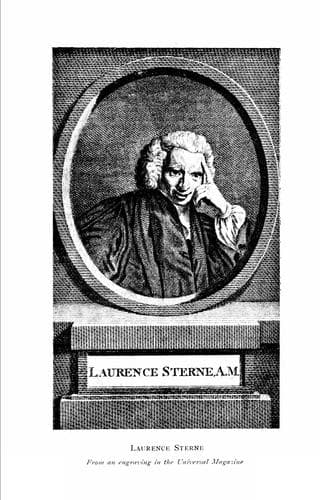
Laurence Sterne was an Anglo-Irish novelist and Anglican cleric who wrote the novels The Life and Opinions of Tristram Shandy, Gentleman and A Sentimental Journey Through France and Italy, published sermons and memoirs, and indulged in local politics. He grew up in a military family, travelling mainly in Ireland but briefly in England. An uncle paid for Sterne to attend Hipperholme Grammar School in the West Riding of Yorkshire, as Sterne's father was ordered to Jamaica, where he died of malaria some years later. He attended Jesus College, Cambridge on a sizarship, gaining bachelor's and master's degrees. While Vicar of Sutton-on-the-Forest, Yorkshire, he married Elizabeth Lumley in 1741. His ecclesiastical satire A Political Romance infuriated the church and was burnt.