BookBrief
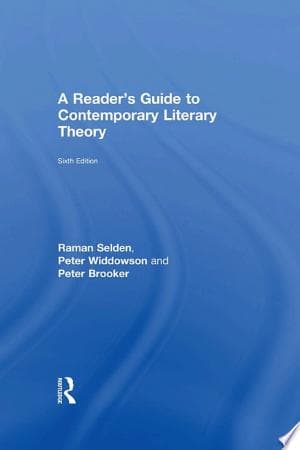
A Reader's Guide to Contemporary Literary Theory cover
Archivist's Choice

A Reader's Guide to Contemporary Literary Theory

Raman Selden (2016)

Genre

General

Reading Time

Varies significantly by reader, likely several hours to fully digest.

Key Themes

See below

Track Your Reading

Sign in to track this book

Selden's guide explains literary theory, from basic ideas to current discussions on ecocriticism, posthumanism, and digital humanities, making complex topics clear for any reader.

Core Idea

Raman Selden's "A Reader's Guide to Contemporary Literary Theory" is a primer for modern literary criticism. The book explains theoretical movements like structuralism, post-structuralism, postcolonialism, feminism, queer theory, and ecocriticism. Selden shows that these theories go beyond simple authorial intent, focusing instead on language's instability, how meaning is socially made, and the link between power, knowledge, and text. He argues that understanding these frameworks helps readers engage with literature more deeply, changing reading from passive to active critical thought.
Reading time
Varies significantly by reader, likely several hours to fully digest.
Difficulty
Medium
✓ Read this if...
You are a student or general reader looking for a clear, comprehensive, and accessible introduction to the major schools of contemporary literary theory.
✗ Skip this if...
You are already well-versed in literary theory and seeking advanced, in-depth critiques or original theoretical contributions.

Core idea

The central argument and framework that powers the entire book.

Raman Selden's "A Reader's Guide to Contemporary Literary Theory" is a primer for modern literary criticism. The book explains theoretical movements like structuralism, post-structuralism, postcolonialism, feminism, queer theory, and ecocriticism. Selden shows that these theories go beyond simple authorial intent, focusing instead on language's instability, how meaning is socially made, and the link between power, knowledge, and text. He argues that understanding these frameworks helps readers engage with literature more deeply, changing reading from passive to active critical thought.

At a glance

Reading time

Varies significantly by reader, likely several hours to fully digest.

Difficulty

Medium

Read this if...

You are a student or general reader looking for a clear, comprehensive, and accessible introduction to the major schools of contemporary literary theory.

Skip this if...

You are already well-versed in literary theory and seeking advanced, in-depth critiques or original theoretical contributions.

Key Takeaways

1

Beyond the Author's Intent

Meaning resides not solely with the author, but within the text and reader.

Quote

The death of the author is the birth of the reader.

A main change in contemporary literary theory, especially with structuralism and post-structuralism, is moving the author from the center. Old literary criticism often looked for the author's original goal as the text's true meaning. But theorists like Barthes said that focusing on authorial intent limits possible interpretations and the active link between reader and text. The text becomes its own thing, a 'fabric of quotations,' where meaning comes from how language, cultural rules, and the reader interact. This view frees the text ...

Supporting evidence

Selden's discussion of Roland Barthes's 'The Death of the Author' and its implications for how meaning is produced and consumed in literary analysis.

Apply this

When analyzing any text, consciously move beyond simply asking 'what did the author mean?' Instead, explore 'how does this text mean?' or 'what meanings can be constructed from this text through different theoretical frameworks?' Consider the text as a self-sufficient system of signs.


authorial-intentstructuralismpost-structuralismreader-response-criticism
2

Language as a System, Not a Mirror

Language doesn't merely reflect reality, but actively shapes and constitutes it.

Quote

Language is not a nomenclature... but a system of interdependent terms in which the value of each term results solely from the simultaneous presence of the others.

Structuralism, much influenced by Saussurean linguistics, says that language does not simply show reality, but is a complex system of signs. Meaning is not in single words but comes from how they differ within the larger language structure. Words get meaning by being distinct from other words. This idea affects literary theory greatly because it suggests texts work like language systems, where literary tools, genres, and stories get meaning from their place within broader literary and cultural rules. Understanding this system lets cri...

Supporting evidence

Selden's explanation of Ferdinand de Saussure's theories of language, particularly the concepts of 'signifier' and 'signified,' and the arbitrary nature of the linguistic sign.

Apply this

When encountering a text, analyze not just what is said, but how it is said. Look for patterns, binary oppositions, and recurring motifs. Consider how the text's language creates its reality, rather than just describing an existing one. Examine the underlying 'grammar' or 'code' of the narrative or genre.

structuralismsemioticslinguisticssignifier-signified
3

The Unstable Sign

Meaning is always deferred, never fully present or fixed.

Quote

There is no outside-text.

Post-structuralism, particularly deconstruction, takes structuralism's ideas about language further, saying meaning is unstable and hard to pin down. Jacques Derrida's 'différance' idea suggests meaning is always delayed, always pointing to other signs, never reaching a final start or end. This means texts have contradictions, paradoxes, and are hard to decide. Deconstruction tries to show these instabilities, revealing how texts undermine their own claims to clear meaning. This is not about destroying meaning, but showing its complex...

Supporting evidence

Selden's chapter on deconstruction, focusing on Derrida's 'différance' and his critique of 'logocentrism' – the Western philosophical tradition's emphasis on a central, foundational truth or origin.

Apply this

Approach texts with a critical eye for internal contradictions, ambiguities, and hierarchical oppositions (e.g., speech/writing, presence/absence). Try to 'decenter' the apparent main argument and identify how the text's own language or structure undermines its stated purpose or creates alternative readings. Look for moments where the text gestures beyond its own boundaries.

post-structuralismdeconstructiondifférancelogocentrism
4

Power and Knowledge Intertwined

Knowledge is never neutral; it is always entangled with power structures.

Quote

Power is everywhere; not because it embraces everything, but because it comes from everywhere.

Foucauldian theory, central to much current criticism, says power is not just about stopping things but about creating them. It shapes what is seen as 'truth,' 'knowledge,' and 'normal' in a society. Discourses—ways of thinking, speaking, and acting—are how power works, defining what can be said and known. Literary texts are not innocent reflections of reality but take part in these discourses, either supporting or quietly challenging main power structures. Analyzing texts with a Foucauldian view means finding the 'epistemes' (histori...

Supporting evidence

Selden's explanation of Michel Foucault's concepts of discourse, power/knowledge, and the panopticon, showing how institutions and language regulate individuals and shape understanding.

Apply this

When reading, ask: Whose voices are prioritized? Whose are silenced? What forms of knowledge are presented as authoritative? How does the text reinforce or challenge prevailing norms about gender, class, race, or sexuality? Identify the 'rules' governing what can be said or thought within the text's world.

foucaultpower-knowledgediscourseepistemecultural-studies
5

The Subject is Constructed

Our identities are not inherent but formed by social and linguistic forces.

Quote

The unconscious is structured like a language.

Psychoanalytic criticism, especially Lacanian thought, moves from Freud's biological drives to show how the self is formed within language and social structures. Lacan says the 'I' is not a single, independent thing but a broken construct, always split between conscious desire and unconscious drives, and shaped by the 'symbolic order' (language and social law). This means literary characters are not just psychological pictures but show these constructed selves. Analyzing texts this way involves looking at how characters deal with iden...

Supporting evidence

Selden's overview of Jacques Lacan's reinterpretation of Freud, including the 'mirror stage,' the symbolic order, and the role of language in forming the subject and the unconscious.

Apply this

Analyze how characters' identities are presented as fluid, contested, or shaped by external forces (e.g., societal expectations, linguistic limitations). Look for instances of repression, desire, anxiety, or the 'other' within character psychology. Consider how language itself creates and limits a character's sense of self.

psychoanalytic-criticismlacansubjectivityunconscioussymbolic-order
6

The Materiality of Existence

Beyond human-centric views, matter itself possesses agency and significance.

Quote

We are not just in the world, but of the world.

The 'New Materialisms' chapter introduces a current change, moving past only language or cultural analyses to focus again on the role of matter, bodies, and the non-human world. This includes ecocriticism (on environment and nature), animal studies (questioning human specialness), posthumanism (rethinking being human with technology and other species), and thing theory (giving agency or importance to objects). These views say that matter is not passive but active, connected, and helps make meaning. Literary texts are explored for how ...

Supporting evidence

Selden's discussion of 'New Materialisms,' encompassing ecocriticism's focus on environmental degradation, animal studies' ethical concerns, and posthumanism's re-evaluation of human-technology interfaces.

Apply this

When reading, pay attention to the environment, animals, objects, and technology within the text. How are they depicted? Do they have agency? How do they shape human experience or narrative? Challenge anthropocentric readings and consider the ecological or material implications of the text's world.

new-materialismsecocriticismanimal-studiesposthumanismthing-theory
7

The Digital Turn

Technology reshapes how we create, consume, and analyze literature.

Quote

The digital humanities are not simply about using computers to study literature, but about rethinking what literature is in a digital age.

The 21st Century and Future Developments chapter points out how technology and digital humanities affect literary theory. This is not just about reading e-books, but how digital tools allow new ways to analyze texts (e.g., distant reading, text mining), how digital media creates new literary forms (e.g., hypertexts, interactive fiction), and how authorship and readership change online. It questions old ideas of a stable, contained text and raises questions about data, algorithms, and the ethics of digital engagement. This area require...

Supporting evidence

Selden's exploration of digital humanities, including 'distant reading' pioneered by Franco Moretti, the rise of electronic literature, and the ethical considerations of data and algorithmic influence.

Apply this

Consider how digital platforms influence the production and reception of a text. If analyzing digital literature, explore its interactive elements, non-linearity, and multimedia components. If analyzing traditional texts, consider how digital tools could reveal new patterns or insights (e.g., word frequency, character networks).

digital-humanitiesdistant-readingelectronic-literaturehypertextaffect-theory
8

Affect and Embodied Experience

Literature engages us not just intellectually, but emotionally and physically.

Quote

Affect is distinct from emotion; it is a pre-personal intensity, a force that precedes and conditions conscious feeling.

The 'affect theory' inclusion means a return to looking at the physical and emotional parts of reading, but with a critical difference. Unlike earlier, more subjective 'reader-response' methods, affect theory looks at the pre-personal, unconscious intensities and forces that move among texts, bodies, and environments. It separates 'affect' (raw, unformed intensity) from 'emotion' (named, cultural feeling). This means literary texts are seen not just as conveying ideas or stories, but as creating specific emotional states that affect r...

Supporting evidence

Selden's introduction to affect theory, distinguishing it from traditional emotion, and discussing its focus on intensities, atmospheres, and the non-representational aspects of experience.

Apply this

Beyond analyzing plot and character, consider the 'mood' or 'atmosphere' a text creates. How does the language, imagery, or rhythm evoke a particular feeling or bodily sensation in the reader? What implicit, non-cognitive responses does the text invite? Explore moments where the text seems to 'move' beyond mere representation.

affect-theoryembodimentreader-response-criticismphenomenology
9

Ethics Beyond Morality

Literary theory increasingly grapples with the ethical dimensions of representation and critique.

Quote

The ethical demand is not simply to be 'good,' but to respond responsibly to the alterity of the other.

Contemporary literary theory, especially in its later forms, goes beyond just finding moral messages in texts to question the ethical impact of representation itself. This involves questions of duty to the 'Other,' the politics of recognition, and whether literature can cause harm or build empathy. Ethical criticism, often using philosophers like Levinas or Butler, asks how texts build subjects, what violence might be in certain ways of representing, and how we, as readers and critics, engage responsibly with different voices and expe...

Supporting evidence

Selden's discussion of ethics in contemporary theory, touching upon Levinas's philosophy of the 'face of the Other,' and the ethical challenges posed by postcolonial or feminist critiques of representation.

Apply this

When analyzing a text, consider: How does the text represent marginalized groups? Does it flatten or complexify their humanity? What are the ethical implications of its narrative choices? How does your own interpretation engage with or potentially silence certain voices? Consider the 'violence' of categorization or misrepresentation.

ethicsalteritypostcolonialismfeminist-criticismresponsibility
10

Theory as a Lens, Not a Dogma

Literary theory offers diverse tools for inquiry, not definitive answers.

Quote

Theory is not a set of answers, but an invitation to think critically and to ask better questions.

Selden's guide implies that contemporary literary theory is not a single, fixed system, but an active and often conflicting area of study. Each approach—from structuralism to new materialisms—offers a different 'lens' to see and understand literature. These lenses show different parts of a text (language, power, psychology, materiality) and reveal meanings that might otherwise stay hidden. The value is not in picking one 'correct' theory, but in understanding their strengths and limits, and in using them to ask more complex questions ...

Supporting evidence

The book's structure itself, presenting a range of theories historically and thematically, allowing readers to compare and contrast their methodologies and insights, rather than advocating for one over others.

Apply this

Instead of feeling overwhelmed by the sheer volume of theories, view them as a toolkit. For any given text, consciously select a few theoretical approaches that seem most relevant to its content or form. Experiment with applying different lenses to the same text to see how new interpretations emerge. Always be aware of the assumptions and blind spots of the theory you are using.

critical-thinkinghermeneuticsmethodologyinterdisciplinarity

Critical analysis

Notable Quotes

Theory is not a set of texts but a practice of reading.

Introduction, defining the nature of literary theory.

The author is dead, but the reader is born.

Discussion of Roland Barthes' and reader-response theories.

Meaning is not discovered but produced in the act of reading.

Explaining reader-centered approaches to interpretation.

Structuralism seeks the grammar of narrative.

Overview of structuralist analysis of stories.

Deconstruction is not destruction but a careful teasing out of contradictions.

Clarifying Jacques Derrida's method in literary analysis.

Feminist theory exposes the patriarchal assumptions in literary texts.

Introduction to feminist literary criticism.

Marxist criticism reads literature as a product of material conditions.

Explaining the base-superstructure model in literary analysis.

Postcolonial theory interrogates the legacy of imperialism in culture.

Defining the scope of postcolonial literary studies.

The unconscious structures of language shape our thought.

Discussing psychoanalytic and linguistic influences.

New Historicism reads literary texts alongside non-literary documents.

Describing the contextual approach of New Historicism.

Queer theory challenges normative categories of sexuality and identity.

Introduction to queer theoretical perspectives in literature.

Ecocriticism examines the relationship between literature and the environment.

Overview of emerging ecological approaches in literary studies.

The text is a site of ideological struggle.

Summarizing political and ideological critiques in theory.

Intertextuality suggests that no text exists in isolation.

Explaining Julia Kristeva's concept in literary analysis.

Quiz

Test Your Knowledge

Ready to see how well you understood this book? Take our interactive quiz with 10 questions.

10
Questions
~5
Minutes
?
Best Score

Key Questions (FAQ)

Contemporary literary theory refers to the diverse set of critical frameworks and approaches developed since the mid-20th century for analyzing and interpreting literature. It moves beyond traditional formal analysis to examine how literature intersects with politics, psychology, gender, culture, and other social forces.

About the author