BookBrief
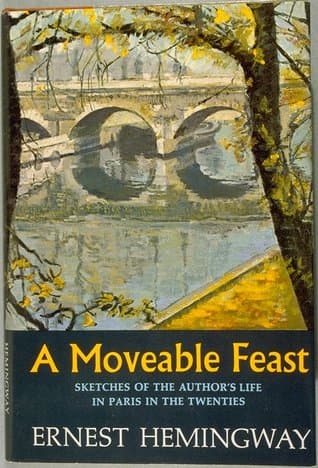
A Moveable Feast cover
Archivist's Choice

A Moveable Feast

Ernest Hemingway (1964)

Genre

Lifestyle / Biography / Memoir

Reading Time

240 min

Key Themes

See below

Track Your Reading

Sign in to track this book

In this posthumous memoir, Ernest Hemingway vividly recaptures the intoxicating poverty and creative camaraderie of his youth among literary giants in 1920s Paris, a time when he discovered his voice while living on the edge of starvation and brilliance.

Core Idea

Ernest Hemingway's "A Moveable Feast" is a posthumously published memoir that reconstructs his early years as an expatriate writer in 1920s Paris. Through a series of stories, Hemingway explores the beauty of living with little money while dedicated to his craft, finding inspiration in the city's cafes, people, and art. The book shows the discipline needed to develop artistic talent amid personal and financial hardship. It also considers the complex connections of mentorship, friendship, and the often fragile nature of happiness and memory.
Reading time
240 min
Difficulty
Easy
✓ Read this if...
You are a writer, artist, or creative seeking inspiration on discipline, observation, and living authentically on a budget, or if you are fascinated by the Lost Generation in Paris.
✗ Skip this if...
You prefer a linear narrative with a strong plot, or if you are looking for a comprehensive historical account rather than a subjective, impressionistic memoir.

Core idea

The central argument and framework that powers the entire book.

Ernest Hemingway's "A Moveable Feast" is a posthumously published memoir that reconstructs his early years as an expatriate writer in 1920s Paris. Through a series of stories, Hemingway explores the beauty of living with little money while dedicated to his craft, finding inspiration in the city's cafes, people, and art. The book shows the discipline needed to develop artistic talent amid personal and financial hardship. It also considers the complex connections of mentorship, friendship, and the often fragile nature of happiness and memory.

At a glance

Reading time

240 min

Difficulty

Easy

Read this if...

You are a writer, artist, or creative seeking inspiration on discipline, observation, and living authentically on a budget, or if you are fascinated by the Lost Generation in Paris.

Skip this if...

You prefer a linear narrative with a strong plot, or if you are looking for a comprehensive historical account rather than a subjective, impressionistic memoir.

Key Takeaways

1

The Art of Living on Little

Poverty can sharpen focus and deepen appreciation for life's simple pleasures.

Quote

When we were very poor, we could afford to buy a kilo of mandarines and we would eat them and throw the peels in the fire. We had many things to be happy about.

Hemingway vividly recounts his early days in Paris, where financial hardship was constant. This scarcity often helped him prioritize and appreciate the basic elements of his existence: good food, stimulating conversation, and, most importantly, his writing. He describes the deliberate joy found in a simple meal, the warmth of a café, or the quiet focus of a writing session. This period shows how living with strict means can remove distractions and lead to a deep connection to one's core purpose, building resilience and a unique view o...

Supporting evidence

Hemingway's detailed descriptions of frugal meals, such as oysters and white wine, or bread and cheese, and his practice of frequenting specific, inexpensive cafes like the Closerie des Lilas or La Rotonde, where he could write for hours with just a single coffee.

Apply this

Embrace periods of financial constraint as opportunities to simplify, identify true priorities, and cultivate gratitude for essential experiences. Practice mindful consumption and seek joy in simple, non-materialistic pursuits to enhance focus on long-term goals.
frugal-livingmindful-consumptioncreative-constraint
2

The Sanctuary of the Café

Cafés provided essential space for creation, observation, and intellectual exchange.

Quote

The café was warm and clean and friendly, and I sat at a table by the window and wrote.

For Hemingway, Parisian cafés were more than just places to eat or drink; they were vital to his creative process. They offered warmth, light, and a sense of belonging for a young, struggling writer. He used them as his office, a place where he could escape the cold of his unheated apartment, observe Parisian life, and engage with other artists and intellectuals. The hum of conversation provided a backdrop, while the anonymity offered freedom to concentrate. This highlights the importance of finding one's 'third place' – a neutral, in...

Supporting evidence

His frequent mentions of writing in specific cafes like La Rotonde and the Closerie des Lilas, and his detailed observations of other patrons, which often found their way into his prose.

Apply this

Identify and utilize 'third places' – libraries, coffee shops, parks – that provide a conducive atmosphere for focused work, observation, and creative thought, distinct from your primary living and working spaces.

third-place-theorycreative-environmenturban-inspiration
3

Discipline in Craft

Consistent, disciplined effort is paramount to artistic mastery, even amidst distraction.

Quote

I would stand and look out over the roofs of Paris and think, 'Do not worry. You have always written before and you will write now.'

Hemingway's memoir shows the sheer discipline required to be a writer. Despite poverty, hunger, and the temptations of bohemian Paris, he maintained a rigorous writing schedule, often working through the morning. He describes the internal struggle, the moments of doubt, and the steady commitment to his craft. This dedication shows that talent alone is not enough; consistent, deliberate practice, even when inspiration is low, is the true engine of artistic development. His method of stopping when he knew what would happen next allowed ...

Supporting evidence

His daily routine of writing in the mornings, often in a café or his apartment, and his mental strategy of never draining the well of inspiration, always leaving something for the next day.

Apply this

Establish a consistent routine for your creative or professional work, even if it's for a short, dedicated period daily. Learn to stop work at a point where you know your next step, ensuring continuity and reducing inertia for the following session.

creative-disciplinewriting-routineartistic-perseverance
4

The Perils of Pity

Beware of those who drain your energy and talent under the guise of friendship or need.

Quote

Pity was a great thing for a writer. It made you understand people and it made you feel sorry for them. But it was a bad thing for a writer to feel pity for himself.

Hemingway offers sharp, often unflattering portraits of his contemporaries, notably Scott and Zelda Fitzgerald. He depicts Fitzgerald as a brilliant but self-destructive talent, constantly undermined by self-pity, insecurity, and the draining demands of his wife, Zelda. Hemingway suggests that excessive pity, for oneself and for others, can be a destructive force, eroding one's creative energy and focus. His interactions with Fitzgerald serve as a cautionary tale about protecting one's mental and emotional resources from individuals w...

Supporting evidence

His detailed, critical observations of Fitzgerald's drinking habits, his anxieties about his work, and Zelda's often erratic and demanding behavior, which Hemingway believed directly impacted Fitzgerald's output and well-being.

Apply this

Cultivate discernment in your relationships, recognizing individuals who genuinely support your growth versus those who consistently drain your energy. Prioritize protecting your mental and creative space from chronic negativity or excessive demands.

energy-vampirescreative-boundariestoxic-relationships
5

Mentorship and Influence

Seek out mentors, but learn to distill their wisdom and forge your own path.

Quote

When I was writing, I wrote as well as I could, and I tried to learn from everyone.

Hemingway reflects on the influence of Gertrude Stein, Ezra Pound, and other literary figures he encountered. He clearly valued their insights and critiques, particularly Stein's famous advice about sentences. However, he also demonstrates a critical distance, absorbing what was useful and discarding what wasn't, rather than blindly imitating. This speaks to the balance between seeking guidance from experienced individuals and developing one's unique voice and style. True growth comes not from replication, but from a thoughtful combin...

Supporting evidence

His recounting of Gertrude Stein's critiques of his early stories and her advice on language, and his observations of Pound's generosity and intellectual rigor, contrasted with his later disillusionment with certain aspects of their personalities or teachings.

Apply this

Actively seek mentors and learn from their experience, but maintain a critical perspective. Filter advice through your own values and goals, integrating what resonates and developing your unique approach rather than simply imitating.

literary-mentorshipcreative-autonomycritical-learning
6

The Power of Observation

Keen observation of the world around you fuels authentic storytelling.

Quote

I learned to write by looking at things and seeing them, and then writing them down.

Throughout the memoir, Hemingway's keen powers of observation are evident. He meticulously describes the weather, the people in the cafés, the nuances of conversations, and the changing seasons of Paris. This attention to detail, external and internal, formed the bedrock of his 'iceberg theory' of writing, where much of the story's depth remains beneath the surface. His ability to capture specific sensory experiences and emotional undercurrents of his environment shows how deep observation is an active, conscious practice essential fo...

Supporting evidence

His descriptions of specific cafes, the horse races at Enghien, the changing light over the Seine, and the mannerisms and speech patterns of his friends and acquaintances.

Apply this

Cultivate a habit of mindful observation in your daily life. Pay attention to sensory details, human interactions, and environmental nuances. Keep a notebook to record these observations, using them as fodder for creative projects or to deepen your understanding of the world.

sensory-detailiceberg-theorymindful-observation
7

Protecting Your 'Good Place'

Identify and guard the core source of your creative energy and happiness.

Quote

I had a good place to work and I was in love and I had a girl that loved me and I was writing and there was a great feeling of happiness.

Hemingway often refers to feeling 'clean and pleasant' when his writing was going well and his life was in order. This 'good place' was a state of mental clarity and emotional contentment, crucial for his creative output. He recognized that this fragile state could be easily disrupted by external pressures, negative influences, or internal turmoil. The memoir implicitly teaches the importance of identifying what constitutes your personal 'good place' – whether it's a specific routine, relationship, or environment – and actively safegu...

Supporting evidence

His contrast between periods of productive writing and contentment with times of distraction, financial stress, or difficult social interactions, and his attempts to create ideal conditions for his work.

Apply this

Reflect on what conditions, routines, and relationships contribute most positively to your mental clarity and creative energy. Actively prioritize and protect these elements, setting boundaries against distractions and negative influences that deplete your 'good place.'

creative-sanctuarymental-clarityself-preservation
8

The Elusive Nature of Memory

Memoir is a subjective reconstruction, shaped by the present and past.

Quote

This book is a work of fiction. But it is possible that there were such people and places as I have written about.

While presented as memories, Hemingway's 'A Moveable Feast' is a reconstruction, filtered through the lens of his later life, fame, and personal struggles. Written decades after the events, and published posthumously, the memoir offers a romanticized, often critical, view of his younger self and his contemporaries. This highlights the subjective nature of memory and autobiography; all memoirs are interpretations, shaped by nostalgia, regret, and the author's evolving perspective. It reminds readers that even seemingly factual accounts...

Supporting evidence

The often harsh and unflattering portrayals of figures like Fitzgerald and Ford Madox Ford, which some biographers argue were colored by later resentments or a need to establish his own literary dominance. The posthumous publication and editorial choices also highlight its reconstructed nature.

Apply this

When consuming any memoir or personal history, recognize it as a subjective interpretation rather than objective fact. Consider the author's context, motivations, and the time elapsed, and approach personal narratives with an understanding of memory's inherent malleability.

subjective-memoryautobiographical-truthnarrative-construction
9

The Romance of the Struggling Artist

Early hardship and dedication can forge a lasting, powerful artistic identity.

Quote

There is no friend as loyal as a book.

Hemingway's Paris memoir shows the quintessential 'struggling artist' narrative, but with a deep sense of purpose and underlying joy. He recounts the physical hunger and financial strain, yet frames these challenges not as deterrents, but as integral components of his formation as a writer. This period of intense dedication, living simply and focusing solely on his craft, became the crucible in which his distinctive voice was forged. The book romanticizes this era, suggesting that true artistic identity is often born out of such found...

Supporting evidence

His descriptions of walking through Paris, often hungry, but feeling a profound sense of contentment and purpose in his work, and his fierce dedication to writing every day despite his circumstances.

Apply this

Embrace periods of focused effort and even hardship in pursuit of a long-term goal. Recognize that foundational struggles can deepen your commitment and shape a resilient, authentic identity, rather than viewing them solely as obstacles.

artist-journeycreative-identitypurpose-driven-life
10

The Fleeting Nature of Happiness

True happiness is often recognized in retrospect, a 'moveable feast' that can be lost.

Quote

But Paris was a very old city and we were young and nothing was simple there, not even poverty, nor sudden money, nor the moonlight, nor the right and wrong, nor the breathing of the others, nor the quality of love. But that is how Paris was in the early days when we were very poor and very happy.

The title 'A Moveable Feast' itself alludes to the transient nature of true happiness and fulfillment. Hemingway reflects on his early Paris years as a time of pure, unadulterated joy and creative potential, a 'feast' that he carried with him but ultimately could lose. This poignant reflection, written towards the end of his life, suggests that while certain periods of happiness are profound, they are not permanent. They are memories, resources we can draw upon, but also reminders of what can be irrevocably altered by time, choices, a...

Supporting evidence

The melancholic tone throughout the memoir, particularly in the later sections, and the explicit dedication to his first wife, Hadley, hinting at a lost happiness that he later regretted.

Apply this

Practice mindfulness and appreciation for present moments of contentment, recognizing their inherent transience. Cultivate gratitude for past joys, allowing them to serve as valuable memories and lessons, rather than striving to perfectly recreate them.

ephemeral-happinessnostalgiaimpermanence

Critical analysis

Notable Quotes

If you are lucky enough to have lived in Paris as a young man, then wherever you go for the rest of your life, it stays with you, for Paris is a moveable feast.

The book's famous opening dedication.

We ate well and cheaply and drank well and cheaply and slept warm together and loved each other.

Describing the simple pleasures of his early life with Hadley.

I was learning very much from him, but I was not learning how to be a writer. I was learning to be a man.

Reflecting on his relationship with Gertrude Stein.

Write one true sentence. Write the truest sentence that you know.

His advice to himself when struggling with writing.

There is no friend as loyal as a book.

A general reflection on the importance of books.

When you stopped doing things for money, you had to keep on doing them or you went sour.

Discussing the motivation behind his writing.

All of the good ones are a little crazy.

His observation about successful artists and writers.

Hunger is a good discipline.

Recalling times when he was poor but focused on his writing.

You belong to me and all Paris belongs to me and I belong to this notebook and this pencil.

A moment of deep contentment and belonging while writing in a café.

The rich were dull and they were not even happy.

His view on wealth and happiness, contrasting with his own simple life.

It was in the winter of that year that I first learned to be careful.

A subtle reference to a turning point or lesson learned, often implying hardship.

I had gone to the bookshop and bought some books and I was happy.

A simple statement reflecting the joy he found in literature.

There was no way to get rid of the feelings. I had them and I knew them and I was going to write them.

Describing his commitment to expressing authentic emotions in his work.

In those days, there was no money, but there was much good writing.

Contrasting the financial struggles with the artistic richness of the period.

Quiz

Test Your Knowledge

Ready to see how well you understood this book? Take our interactive quiz with 10 questions.

10
Questions
~5
Minutes
?
Best Score

Key Questions (FAQ)

'A Moveable Feast' is a memoir by Ernest Hemingway, recounting his early years as a struggling writer in Paris during the 1920s. It offers a deeply personal and affectionate look at his life, his discovery of his vocation, and his interactions with other notable literary figures of the time.

About the author

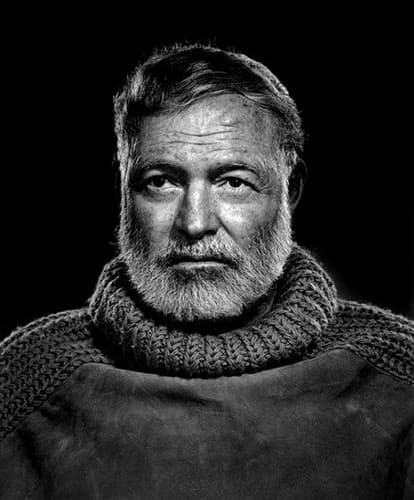
Ernest Hemingway

Ernest Miller Hemingway was an American novelist, short-story writer, and journalist. His economical and understated style—which included his iceberg theory—had a strong influence on 20th-century fiction, while his adventurous lifestyle and public image brought him admiration from later generations. Hemingway produced most of his work between the mid-1920s and the mid-1950s, and he was awarded the 1954 Nobel Prize in Literature. He published seven novels, six short-story collections, and two nonfiction works. Three of his novels, four short-story collections, and three nonfiction works were published posthumously. Many of his works are considered classics of American literature.